Friendships during the middle years of childhood are both joyful and complicated — especially in grades 2–5. Students are no longer in the preschool–K–1 phase where friendships are mostly rooted in shared play and proximity (“We like the same blocks — we’re friends!”).
As kids move into upper elementary, friendships begin shaping identity, confidence, and emotional well-being. They’re figuring out who they are socially and how to belong in a world that suddenly feels bigger, more important, and more nuanced. And while that can bring amazing growth, it also introduces new challenges — the kind that can ripple through our classrooms if left unsupported.
As educators, part of our work during these years is helping students navigate friendship shifts with empathy, skill-building, and perspective, so they can move into adolescence with confidence and compassion.

FRIENDSHIP CHALLENGES ARE NORMAL
During these years, children are transitioning from friendships built on play to relationships based on:
- Shared interests
- Mutual trust and loyalty
- Understanding and empathy
With deeper connection comes deeper feeling — which means more opportunities for missteps, misunderstandings, and hurt feelings.
Kids in upper elementary are learning big social-emotional skills simultaneously, including how to:
- Communicate clearly
- Regulate emotions and impulses
- Collaborate and compromise
- Share power in relationships
- Repair mistakes and move forward
Struggle doesn’t mean “something is wrong.” It means their social world is growing, and they’re stretching right along with it.
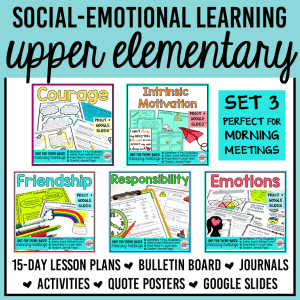
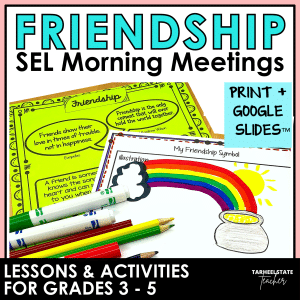
 You can do any of these suggested friendship activities for students with a reflection journal and materials you have around the classroom, but if you want some of the work done for you, you can check out my full Friendship SEL unit, complete with lesson plans that make it super easy to implement and enjoy!
WHAT WE TEND TO SEE IN GRADES 2-5
While every child is unique, these common patterns appear more frequently in upper elementary than in younger grades:
BEST-FRIEND BONDS
Many students crave a “best friend” and may worry something is wrong if they don’t have one. Best-friend loyalty can be intense — and losing that connection can feel huge.
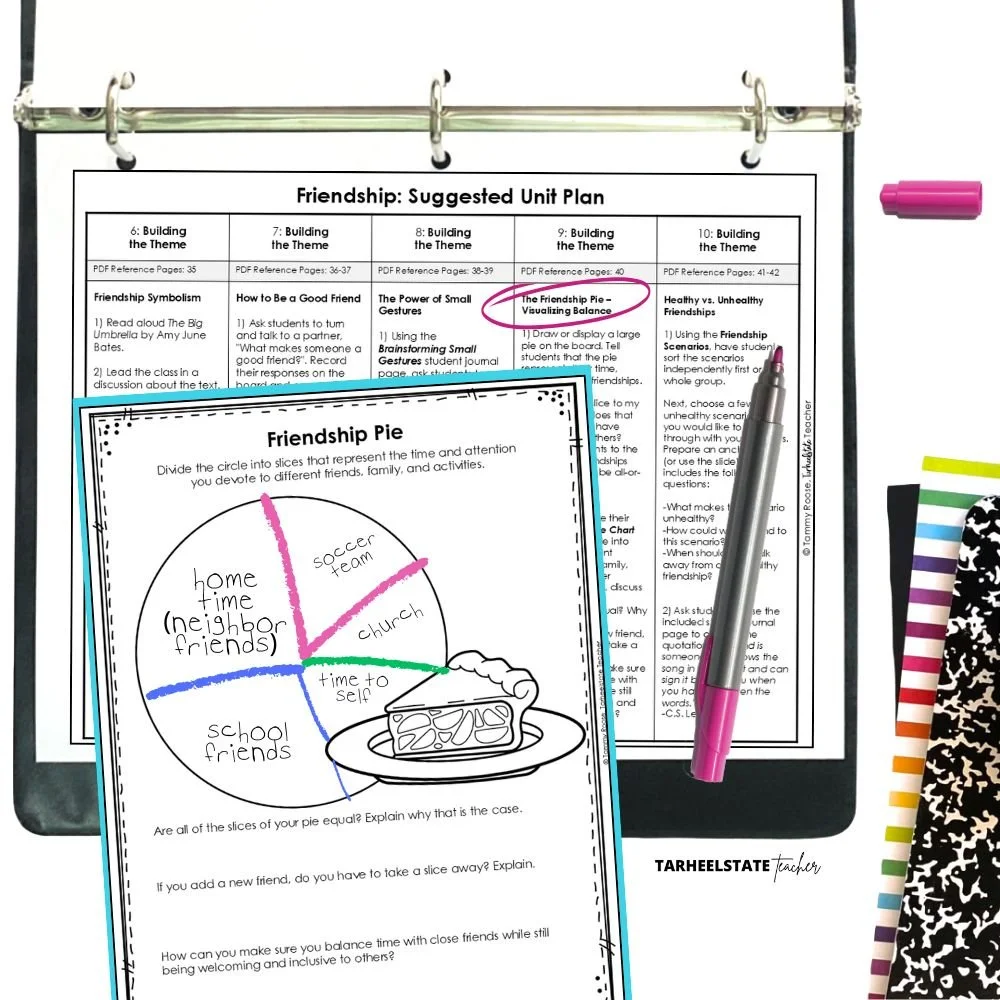
A simple visual that resonates with kids is the Friendship Pie activity. Students divide a circle into “slices” representing the people and activities in their lives, realizing that having a best friend doesn’t mean there’s no room for others. It’s a gentle way to teach that friendships don’t have to be all-or-nothing — and being close to someone doesn’t exclude building new connections.
SHIFTING FRIEND GROUPS
Friendships change more often, influenced by classes, clubs, interests, or lunch tables. Students may need reassurance that shifting relationships are normal — not a personal failure.
One way I help normalize this in the classroom is through an activity called Different Ways Friendships Can Change. Students brainstorm why friendships shift over time — new interests, changing classes, growing up — and discuss how change doesn’t have to mean something “went wrong.” Bringing this conversation into the open helps students see that friendship evolution is natural, not negative.

INCREASED SENSITIVITY
Teasing, exclusion, or even “joking” lands differently now. Students notice more, feel more, and often need support naming and processing those emotions.
SOCIAL COMPARISON
Kids start comparing clothes, abilities, friend groups, birthday parties, even grades. Self-esteem and identity grow more tied to peer dynamics.
LOYALTY TESTS & BIG FEELINGS
Kids may develop strong expectations about loyalty — and big reactions if they feel slighted or replaced. Relationship repair skills become essential.
This is a powerful time to explore what Being The Friend We Want To Have really means. Students identify qualities they value in a friend — kindness, honesty, patience — and then reflect on whether they show those same qualities themselves. It’s a meaningful shift from “They should…” to “I can…”, building accountability and empathy in peer relationships.

When we recognize these behaviors as developmental, we can stay calm, patient, and proactively supportive.
OUR ROLE: GUIDING, NOT CONTROLLING
Students this age don’t need us to solve every friendship moment for them — but they do need:
- Language for how to express feelings and needs
- Coaching on conflict resolution and perspective-taking
- Support understanding boundaries and empathy
- Encouragement to build multiple friendships and flexible circles
- Gentle reminders that friendships evolve — and that’s okay
Helping students thrive socially doesn’t mean eliminating social bumps — it means walking alongside them as they learn to navigate real-world relationships.
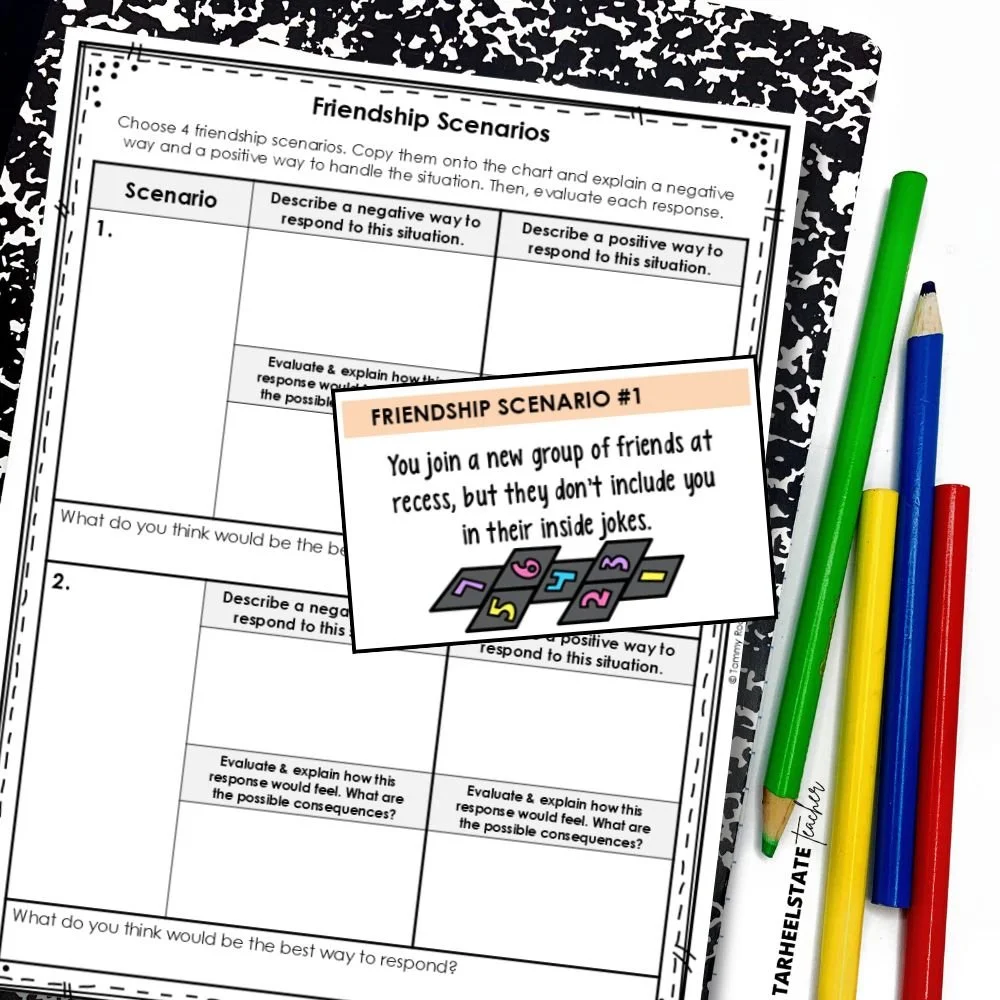
Structured practice goes a long way here. I love using friendship role-play scenarios where students act out common tricky moments and try different ways to respond. It gives them language for big feelings, helps them practice conflict resolution, and opens thoughtful conversations about boundaries, jealousy, and making repair when mistakes happen.
WHY THIS WORK MATTERS
Upper elementary friendships are a training ground for emotional intelligence, collaboration, and belonging. When we validate the experience, teach the tools, and normalize the ups and downs, we give students skills that serve them far beyond our classroom walls.
And that’s the beauty of these years: watching kids learn not just how to make friends — but how to be a friend in a growing, changing world.
If you’re looking for more ways to keep building friendship skills with your students, here are some other resources you may be interested in:
- How to Help Students Navigate Friendship Challenges with Relatable Friendship Scenarios gives you ready-made scenarios students can talk through to practice handling the tricky moments friendships throw at them.
- Healthy Friendships vs Unhealthy: Helping Students Recognize the Difference helps students name what makes a friendship healthy and spot the warning signs when one isn’t.
- How To Be A Good Friend: Lessons and Activities for Teaching About Friendship breaks down what being a good friend looks like in practice, with lessons and activities you can use right away.
- Complete Friendship SEL Unit for upper elementary—this unit includes all of the activities you see in this post, editable lesson plans, suggested read alouds, student notebooks, and a bulletin board to help your unit make a lasting impression!
NEED A DONE-FOR-YOU FRIENDSHIP UNIT?
The Friendship SEL-Morning Meeting unit is a 20 day unit for upper elementary. It includes
 20 Days of Printable & Editable Lesson Plans — includes suggested read alouds, discussion questions, friendship activities, extension ideas, and linked online resources
Student Journals & Activities — friendship-related discussion prompts, self-reflection and goal setting exercises, and social emotional learning worksheets to deepen students’ understanding of friendship, with activities like How to Be A Good Friend, Role-play with Friendship Scenarios Cards, Seasons of Friendship, Healthy vs Unhealthy Friendship Scenario Sort, and more!
Friendship Bulletin Board that includes important vocabulary like friendship, acquaintance, forgiveness, inclusion, selflessness, and loyalty and inspirational quotations for a visual reminder of your friendship skills lessons
Google Slides — Teacher and student versions to implement this unit digitally or use as visual prompts and discussion starters on your interactive whiteboard