Few things shape how upper elementary students approach school more than the beliefs they hold about their own intelligence and ability. When kids think their abilities are set in stone, they shy away from challenges, give up quickly when things get hard, and avoid taking academic risks. When they believe their brain can grow and change, they lean into difficulty, recover from setbacks, and keep trying even when something doesn’t click right away.
That’s why teaching the difference between growth mindset vs fixed mindset is one of the most valuable conversations you can have with students. The good news is that mindset is teachable. With consistent language, the right activities, and time to reflect, students can shift how they think and talk about learning.
WHAT IS THE DIFFERENCE BETWEEN GROWTH MINDSET AND FIXED MINDSET?
The terms growth mindset and fixed mindset were coined by Dr. Carol Dweck, whose research found that the beliefs humans hold about intelligence directly affect our motivation, resilience, and academic achievement.
A growth mindset is the belief that intelligence, skills, and talents can grow and develop with hard work, effort, and determination.
Students with a growth mindset:
- See challenges as chances to learn
- Understand that mistakes help them improve
- Welcome feedback and use it to grow
- Keep trying when something feels hard
- Believe effort leads to progress
A fixed mindset is the belief that a person’s intelligence, skills, and talents are already determined and cannot be changed.
Students with a fixed mindset:
- Avoid challenges that might expose weakness
- See mistakes as proof they aren’t smart
- Take criticism personally and shut down
- Give up when things get difficult
- Believe ability is something you either have or don’t
Most students (and adults) move between both mindsets depending on the situation. The goal is to help students notice when fixed-mindset thinking shows up and give them tools to tap into a growth-minded response.
WHY TEACHING GROWTH MINDSET MATTERS
Research on growth mindset has linked it to higher academic achievement, increased motivation, stronger resilience after failure, lower stress, less anxiety, and even better sleep quality. Students who believe they can improve are more willing to ask for help, accept feedback, and keep trying when learning gets hard.
Teachers play a huge role in shaping students’ beliefs about themselves. The language we use and how we praise effort versus ability affects how students think about their own learning.
You likely won’t build growth-minded students with a single lesson; however, you can help them develop a growth-mindset over time by teaching shared vocabulary, having important discussions, and implementing a few memorable activities that you can call back to when needed.
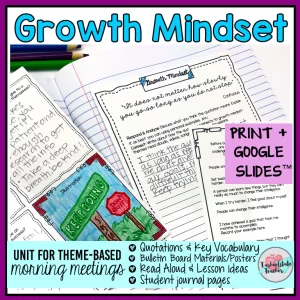
 You can do each of these suggested growth mindset activities for students with a reflection journal and materials you have around the classroom, but if you want some of the work done for you, you can check out my full Growth Mindset SEL unit, complete with lesson plans that make it super easy to implement and enjoy!
GROWTH MINDSET ACTIVITIES FOR STUDENTS
Here are 10 growth mindset activities for students that help them understand the difference between growth mindset and fixed mindset and put what they learn into practice.
1) INTRODUCE IMPORTANT VOCABULARY
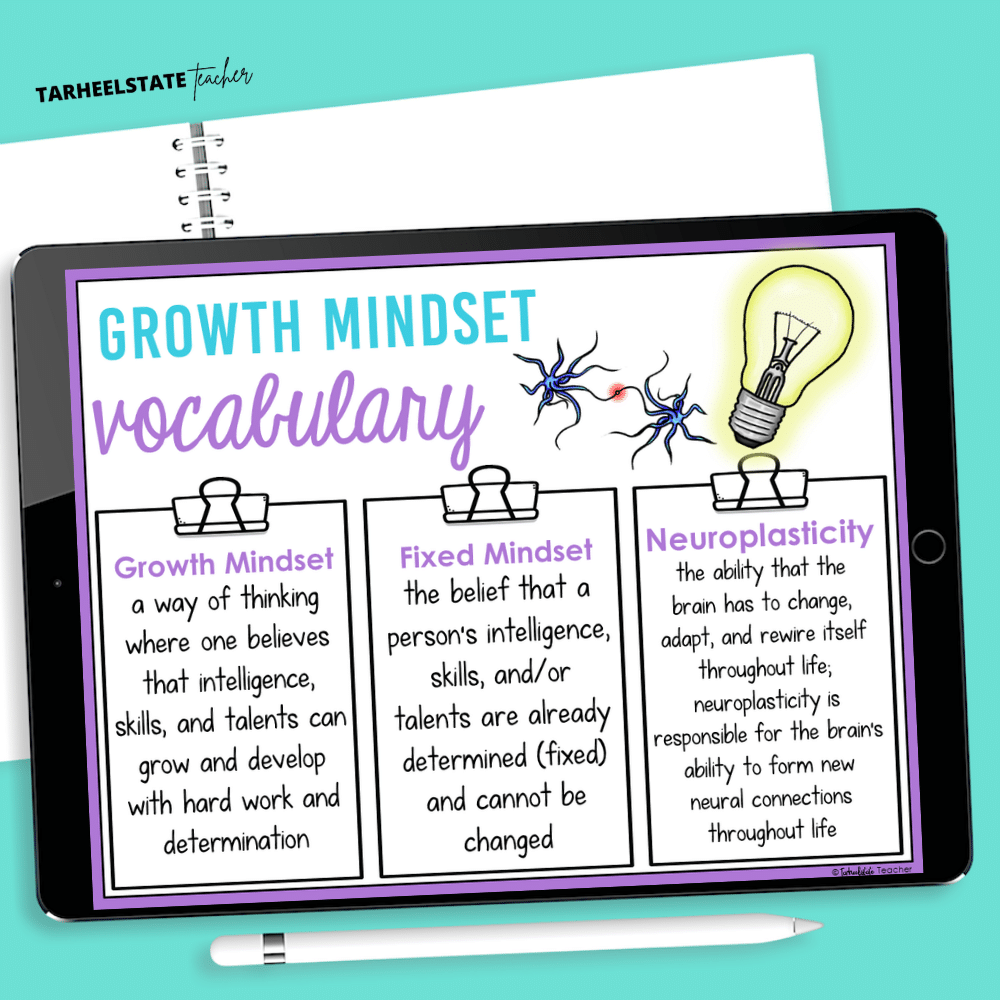
Picture books are one of the most natural ways to open a conversation about the difference between growth mindset and fixed mindset. A good story gives students a character to think about before they have to think about themselves, which lowers the stakes and lets the ideas land. After the read aloud, introduce the key vocabulary students will use throughout the unit: growth mindset, fixed mindset, neuroplasticity, effort, resilience, and perseverance are some of the important terms I teach.
Post these where students can refer back to them and use them in discussions during your unit and all year long.
🌟 In my Growth Mindset SEL Unit, I include vocabulary cards that work perfect for a growth mindset bulletin board and a student notebook page with kid-friendly definitions so students can keep the terms in their morning meeting journals and revisit them throughout the unit. For read aloud picks to launch the unit, I’ve rounded up my favorite growth mindset read alouds in this post: Best Read Alouds for Teaching Growth Mindset.
2) START WITH A SELF-ASSESSMENT AND GOAL
Before diving into instruction, give students a chance to reflect on where they are. A short rating scale with prompts like “I keep working on things even when they feel hard” or “I avoid trying things that seem too difficult” helps students notice their own patterns. Help students pair the self-assessment with a personal goal so they have something specific to work on.
🌟 I use pre and post self-reflections in all of my social emotional learning units and my Growth Mindset Unit is no different. Students rate themselves on prompts about challenges, mistakes, and effort at the start, then come back to the same scale at the end, so they can see how their thinking has shifted.
3) TEACH THE BRAIN SCIENCE BEHIND MINDSET
One of the most powerful ways to shift students toward a growth mindset is to teach them how their brains actually work. When kids understand that neurons form new connections through effort and repetition, they have a real reason to believe practice changes their ability.
Short videos are one of the easiest ways to capture student attention when discussing an SEL topic that could otherwise feel abstract, and it’s nice to mix up the ways we engage them in these big topics.
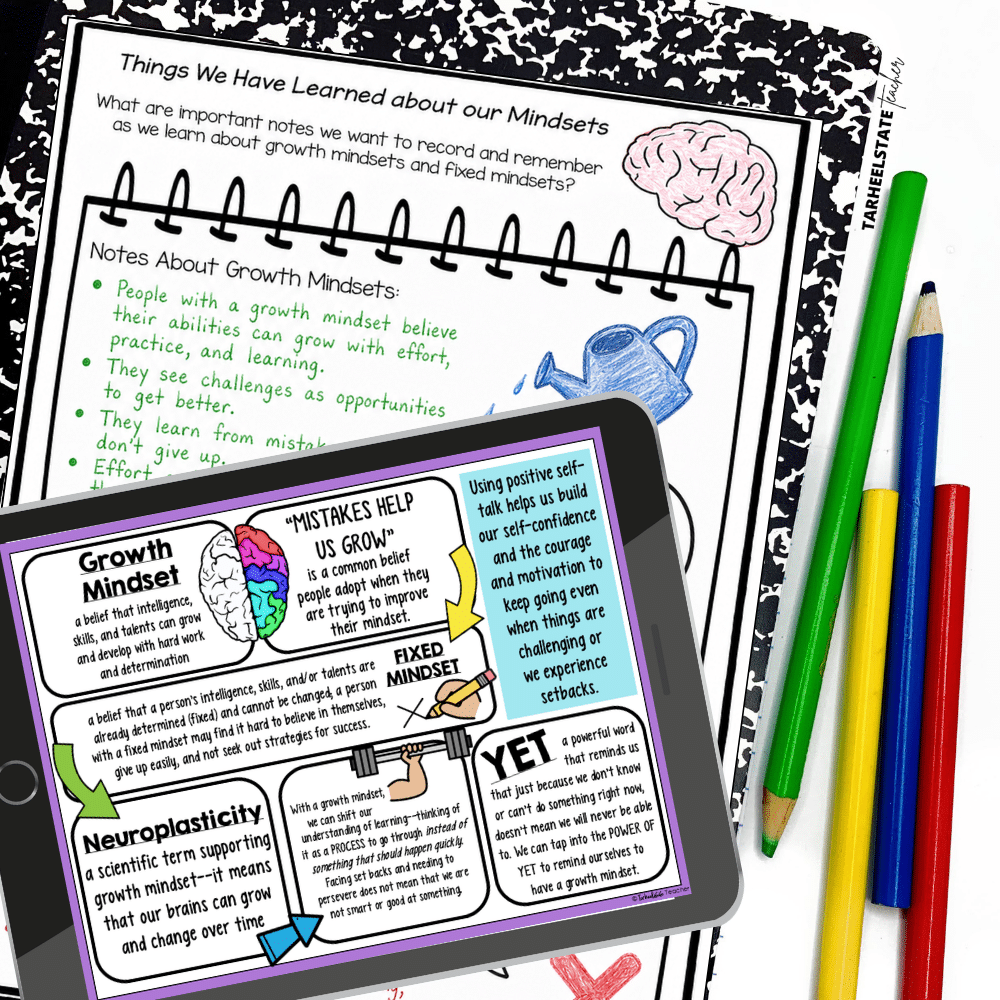
🌟 My go-to video clips for teaching Growth Mindset are Brain Jump with Ned the Neuron or Growth Mindset from ClassDojo. I give my students a Things We Have Learned About Our Mindsets note-taking page so they can capture key ideas as they watch.
4) CREATE A GROWTH MINDSET VS FIXED MINDSET T-CHART
After teaching the brain science behind growth mindset, have students brainstorm how each mindset shows up. A two-column T-chart works well. One column captures how a person with a growth mindset thinks and behaves. The other captures how a person with a fixed mindset thinks and behaves.
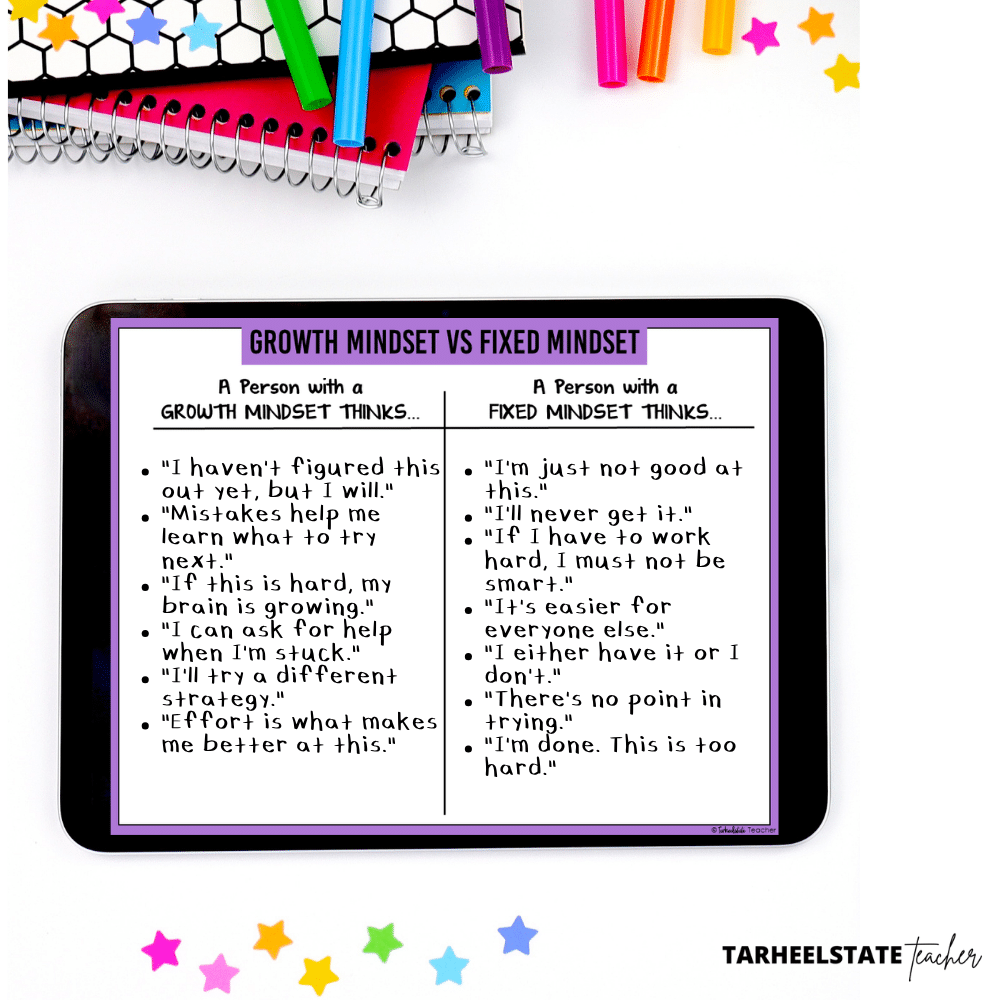
🌟 I love using graphic organizers like this as anchor charts throughout the Growth Mindset SEL Unit. Every time we read a new book or watch a new video, we add to it. By the end of the unit, students have built a rich, visible reference for what each mindset actually looks and sounds like, and they start catching examples of both in their everyday school life.
5) USE A MINDSET THOUGHTS SORT
A hands-on sort is one of the best ways to help students recognize growth mindset vs fixed mindset examples in real student language. Print statements like “I’m just not good at this” or “Mistakes help me learn and improve” and have students sort them into the correct category. Some will be easy. Others will spark good debate, which is exactly what you want.
🌟 The Identifying Mindset Thoughts sorting activity is one of my favorites because it gets students talking. I print out 20 mindset statements, hand them out to partners, and let them debate the trickier ones. Some statements seem like a clear growth mindset at first glance but have a fixed mindset twist underneath, and those are the moments where students really sharpen their thinking.
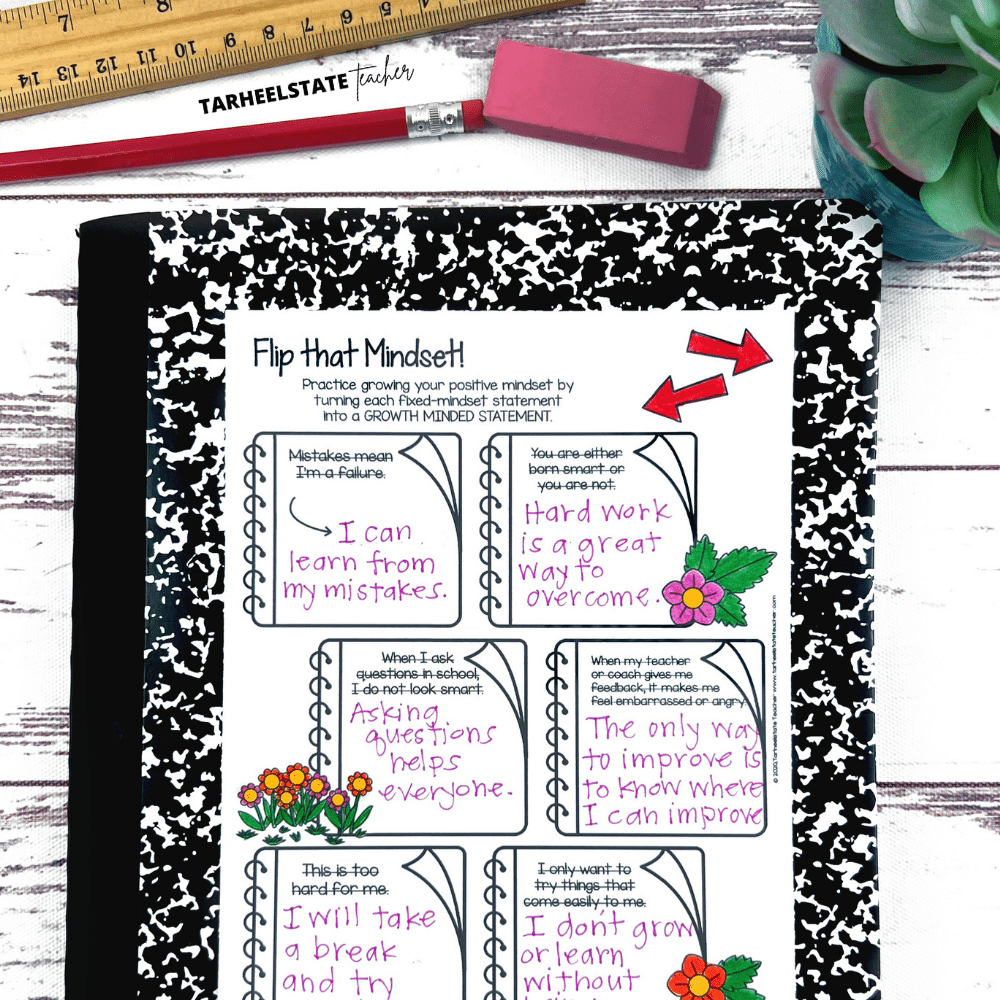
6) PRACTICE “FLIPPING” FIXED MINDSET STATEMENTS
Sorting helps students recognize different mindsets. Flipping the fixed-mindset statements to growth-minded ones allows them to rehearse the self-talk they will need in order to growth their own positive mindset.
Give students common fixed-mindset statements like “Mistakes mean I’m a failure” or “This is too hard for me” and ask them to rewrite each one with a growth mindset attitude. This is one of the most impactful growth mindset activities you can do with students because it builds the mental skill of catching unhelpful self-talk and replacing it with more productive thoughts.
7) TEACH THE POWER OF “YET”
The word “yet” is small but it changes everything. “I can’t do this” becomes “I can’t do this yet.” Have students brainstorm things they can’t do yet, then estimate how long it might take to learn each one and what strategies could help them get there. The Power of Yet phrasing reframes struggle as a stage in learning rather than evidence of failure.
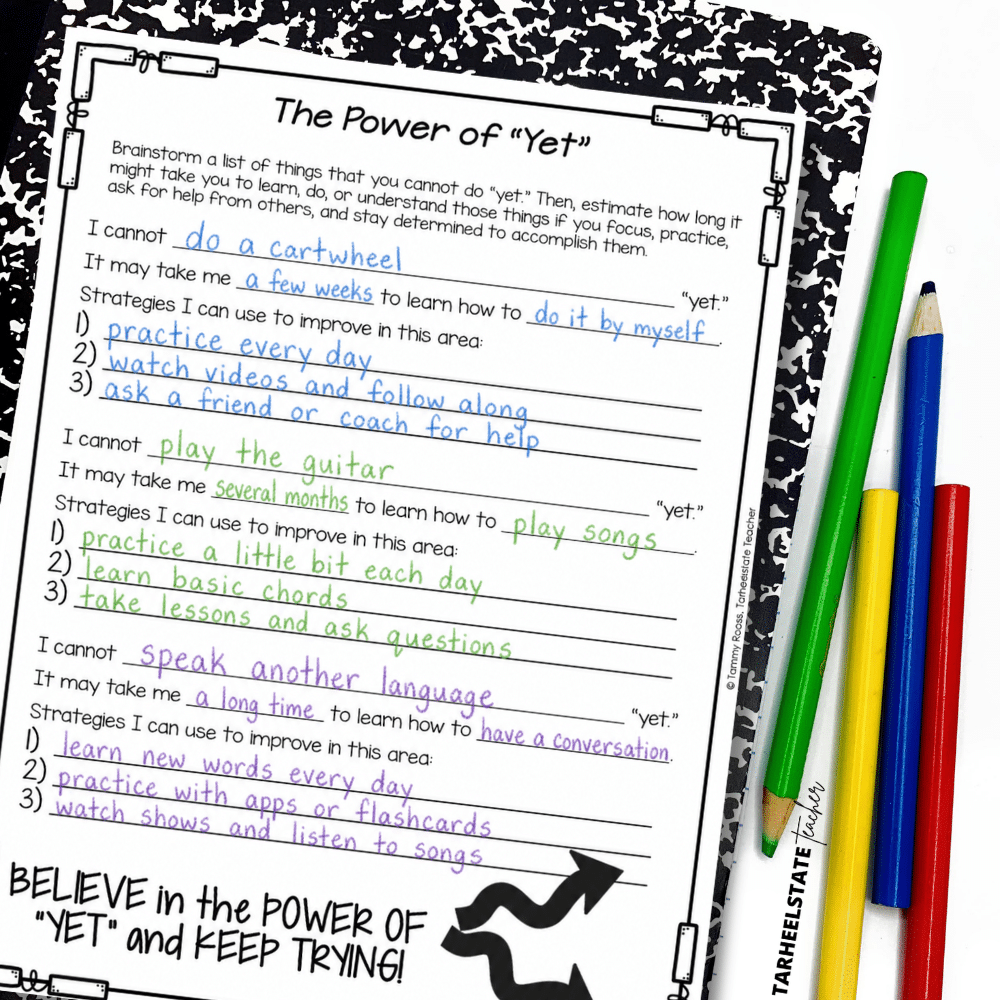
🌟 The Power of Yet student journal page in my Growth Mindset SEL Unit walks students through this exact reflection, including space to list strategies they can use to make progress.
8) USE MINDSET SCENARIOS TO SPARK DISCUSSION
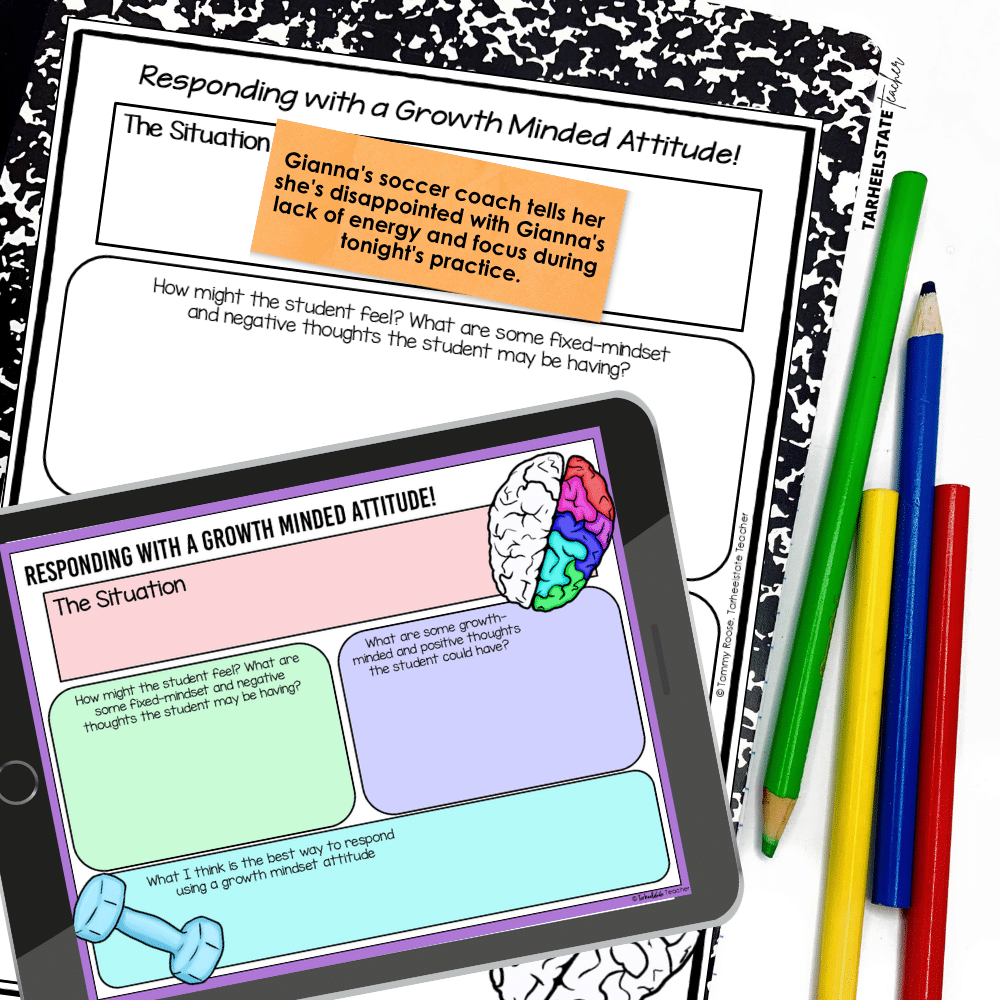
Real growth mindset learning happens when students apply the ideas to situations that feel familiar. Give them scenarios like getting a low grade on a test, missing the cut for a sports team, or struggling with a piece of music for a recital. Have them work through how the character might feel, what fixed-mindset thoughts could come up, what growth-minded thoughts could replace them, and what the best response would look like.
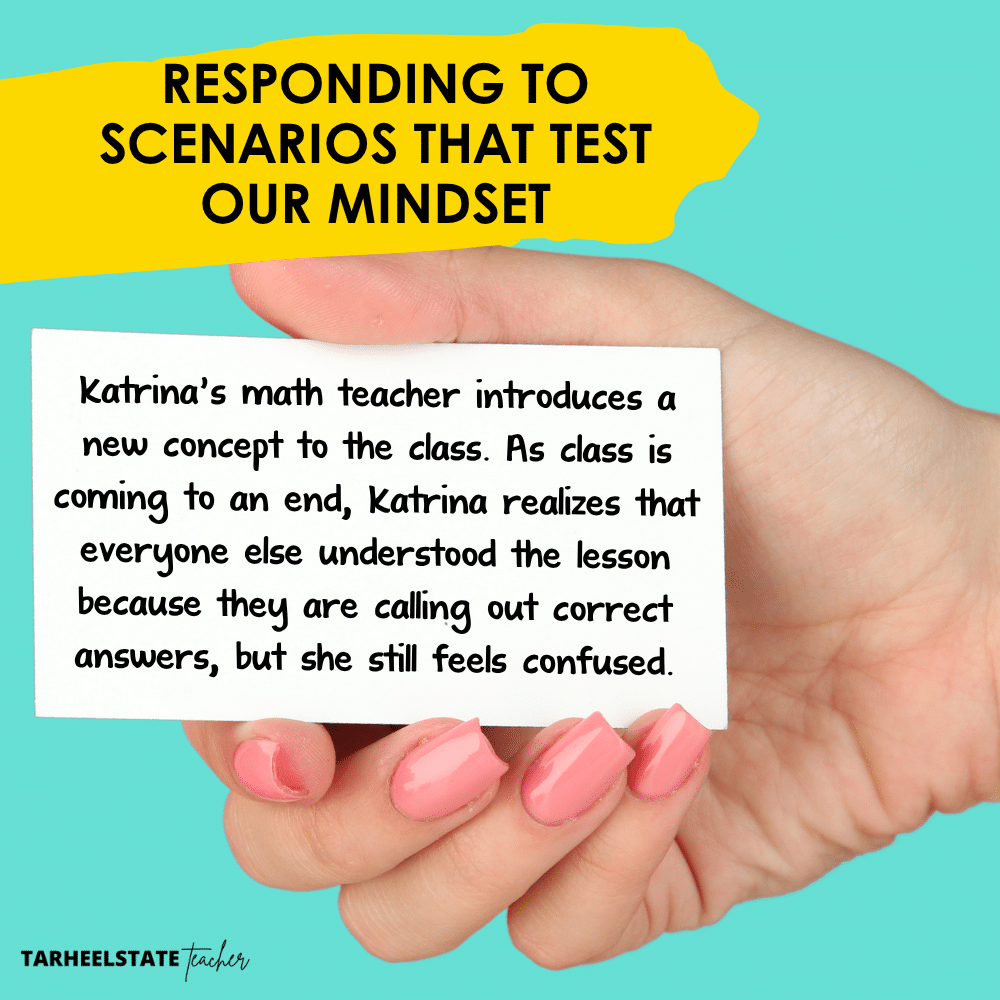
🌟 My Growth Mindset SEL Unit includes 16 Situations That Test Our Mindset scenarios and a Responding with a Growth Minded Attitude graphic organizer so students can work through one in detail.
9) REWRITE STORIES WITH A GROWTH MINDSET ENDING
Students love getting to rewrite a story. Share a short fixed-mindset scenario, like a character who gives up on a math test or shuts down during a talent show, and have students rewrite the ending with the character discovering the Power of Yet. This activity stretches both their growth mindset thinking and their narrative writing.
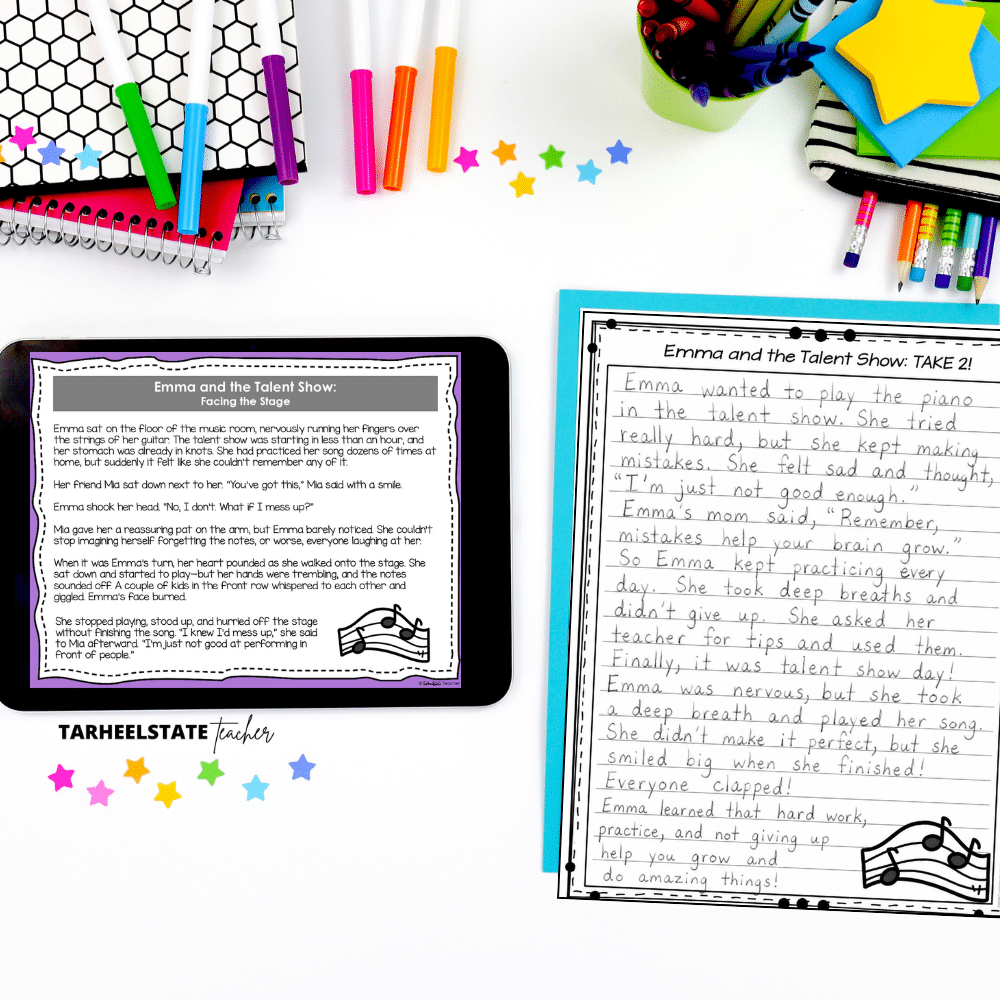
🌟 Kids really get into this one. I share a short story like Alex and the Math Test, where the main character gives up partway through, and ask students to rewrite the ending with Alex finding the Power of Yet. It hits growth mindset thinking and narrative writing at the same time, and students’ ideas are always better than the original!
10) COMPARE THE LIFE EFFECTS OF EACH MINDSET
Helping students see the long-term payoff of a growth mindset makes the work feel worth it. Work together to brainstorm the positive effects of developing a growth mindset, like more confidence in trying new things, willingness to ask for help, and the ability to handle setbacks…and all of these lead to positive progress.
Staying in a fixed mindset leads to negative outcomes like feeling extra stress, not taking chances or trying something we’d like to do, giving up too easily, and having a fear of failure. All of these hold us back from seeing our true potential.
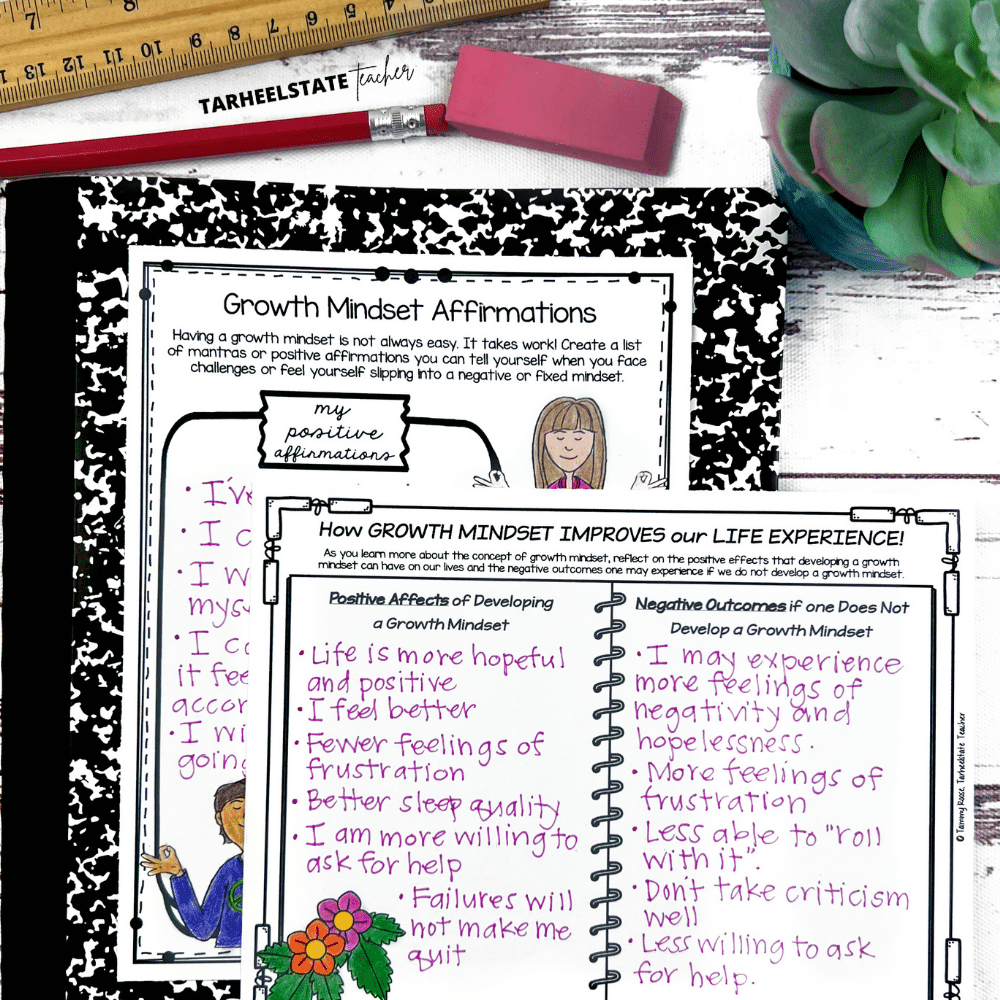
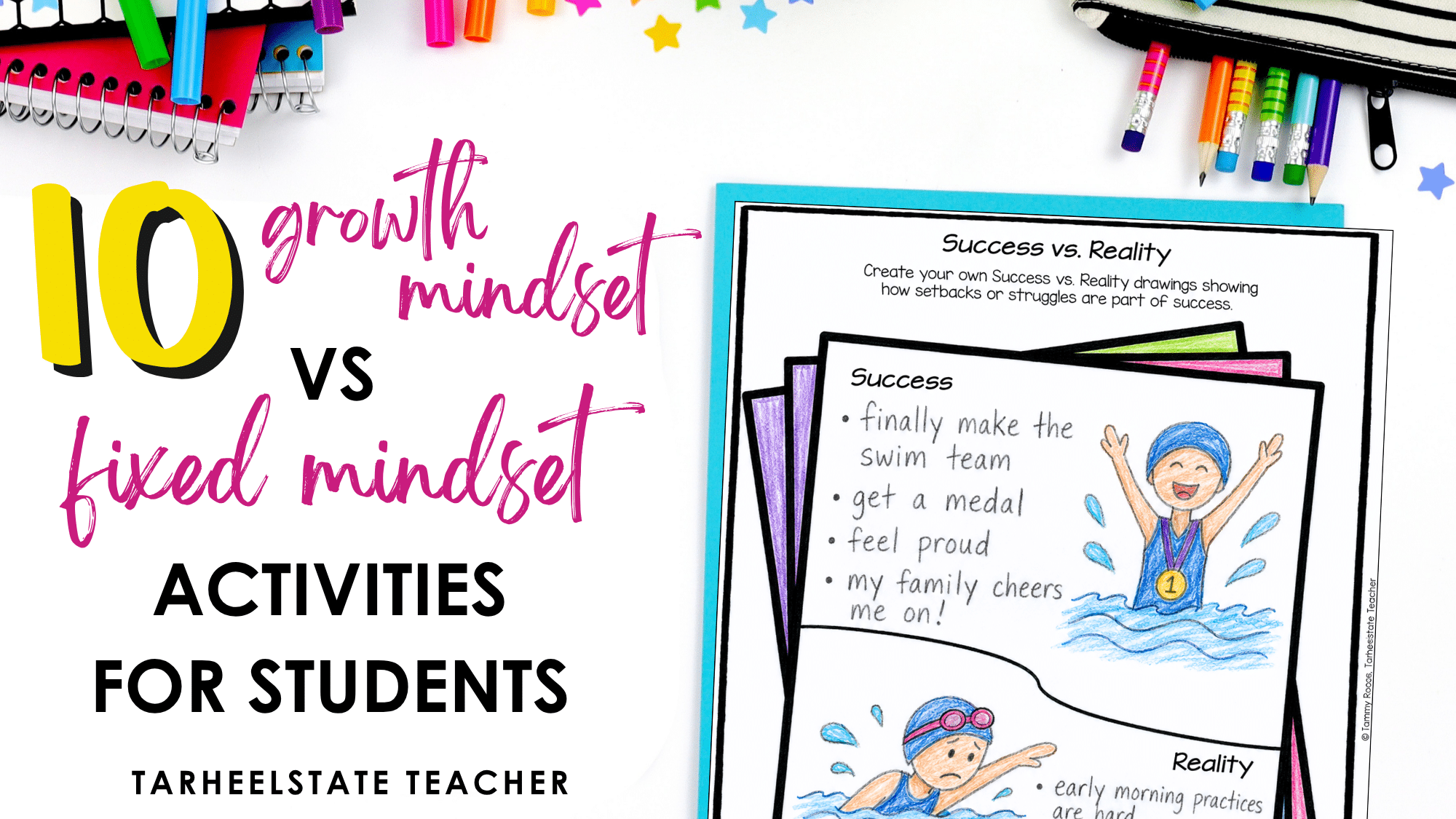
🌟 I love closing out my growth-mindset unit by having students fill out a side-by-side organizer listing the long-term effects of each mindset. Seeing the contrast on one page, with confidence and resilience on one side and stress and fear of failure on the other, is a powerful visual.
THE LONG-TERM PAYOFF
Teaching the difference between growth mindset and fixed mindset is about more than getting students to push through a hard math problem. It’s about giving them a way to think about themselves that can carry them through when life gets hard.
Kids who understand that effort changes outcomes are more willing to try new things, more honest about what they don’t yet know, and more capable of recovering from setbacks.
When students can name the difference between growth mindset and fixed mindset and start catching fixed-mindset thinking in themselves, they’re learning a skill they’ll use long after they leave your classroom.
NEED A DONE-FOR-YOU GROWTH MINDSET UNIT?
The Growth Mindset SEL Morning Meeting unit is a 20 day unit for upper elementary. It includes
 20 Days of Printable & Editable Lesson Plans — includes suggested read alouds, discussion questions, growth mindset activities, extension ideas, and linked online resources
Student Journals & Activities — growth mindset-related discussion prompts, self-reflection and goal setting exercises, and social emotional learning worksheets to deepen students’ understanding of growth mindset and the power of yet, with activities like “Flip That Mindset” for Revising Fixed Mindset Statements, Growth Mindset Story Rewrite to Incorporate the Power of Yet, Analyzing Situations That Test Our Mindset, Growth Mindset Affirmations, and more!
Growth Mindset Bulletin Board that includes important vocabulary like growth mindset, fixed mindset, neuroplasticity, effort, resilience, and perseverance and inspirational quotations for a visual reminder of your growth mindset and power of yet lessons
Google Slides — Teacher and student versions to implement this unit digitally or use as visual prompts and discussion starters on your interactive whiteboard