Children experience moments every day that call for empathy—welcoming someone new, noticing a classmate who feels left out, or choosing kindness in a difficult situation.
But empathy does not always come naturally. Many kids are still learning how to understand others’ feelings, see different perspectives, and practice empathy in real-life situations.

Empathy is a skill that grows with guidance, reflection, and practice.
That’s why I created Helping Kids Care About Others, a social-emotional learning workbook designed to help children ages 8–12 build empathy, strengthen perspective-taking skills, and respond with compassion in real-life situations.
Through meaningful activities, reflection, and discussion, kids learn that caring about others is something they can practice every day through small, thoughtful choices.
Note: Links to suggested items in this post are affiliate links. This means that I am a participant in the Amazon’s Affiliate advertising program that allows sites to earn from qualifying purchases. These links do not increase your cost. I only recommend things I’ve used and love! Read my full disclosure here.
WHY EMPATHY AND PERSPECTIVE-TAKING MATTER FOR KIDS
Building empathy in kids strengthens both emotional awareness and essential social skills, shaping how children build friendships, solve problems, and connect with the world around them.
When kids learn to understand others’ feelings and perspectives, they begin to:
- Build stronger, more positive relationships
- Communicate with empathy and respect
- Navigate social challenges with confidence
- Make thoughtful, compassionate choices
These skills support emotional intelligence, social awareness, and a sense of belonging—both in and out of the classroom.
A WORKBOOK THAT HELPS KIDS PRACTICE REAL-LIFE EMPATHY
This workbook moves beyond simply defining empathy. It gives children practical tools to understand others and respond with care in everyday situations.
Inside, kids will learn how to:
- Understand what empathy is and why it matters
- Learn the difference between empathy vs sympathy and how to respond appropriately
- Recognize emotions in themselves and others
- Practice perspective-taking in real-life social-emotional scenarios
- Respond with compassion through words and actions
- Build an “empathy toolbox” of strategies that help teach how to respond with empathy in everyday situations
- Set goals for showing kindness and care
By the end, children move beyond awareness. They begin to apply empathy in ways that feel real, meaningful, and lasting.
INSIDE THE WORKBOOK: WHAT KIDS WILL EXPLORE
This workbook is organized into five meaningful sections that guide children from understanding empathy to living it out with confidence and compassion.
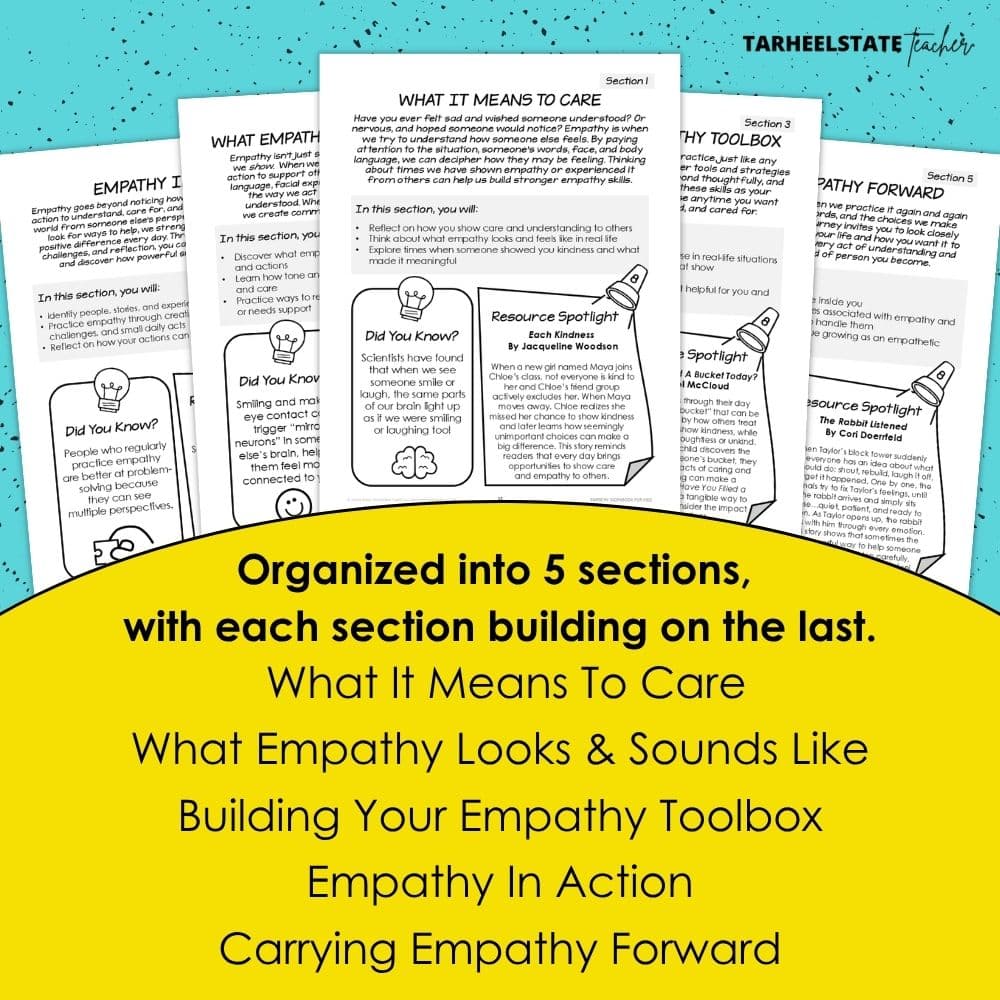
1 – WHAT IT MEANS TO CARE
Kids begin by exploring what empathy really is and how caring shows up in everyday life. Through reflection, vocabulary work, and personal connections, they build a foundation for understanding emotions.
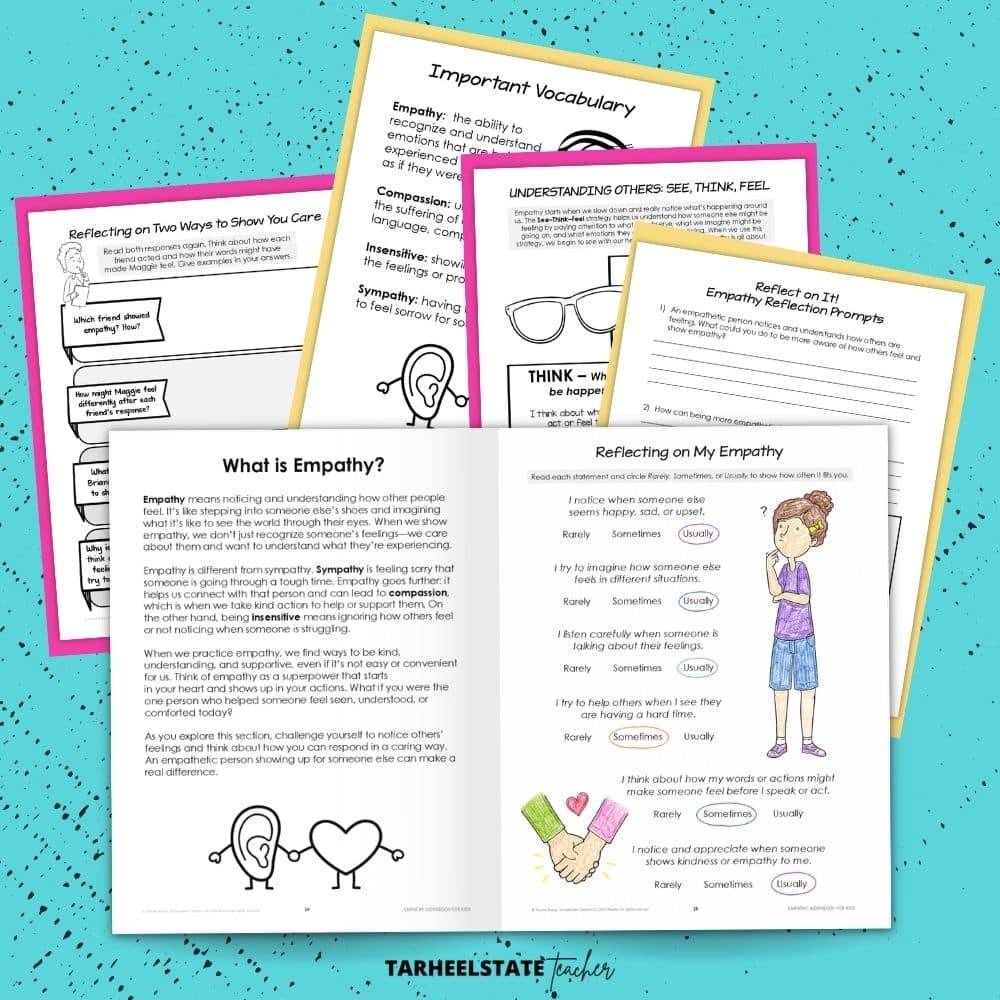
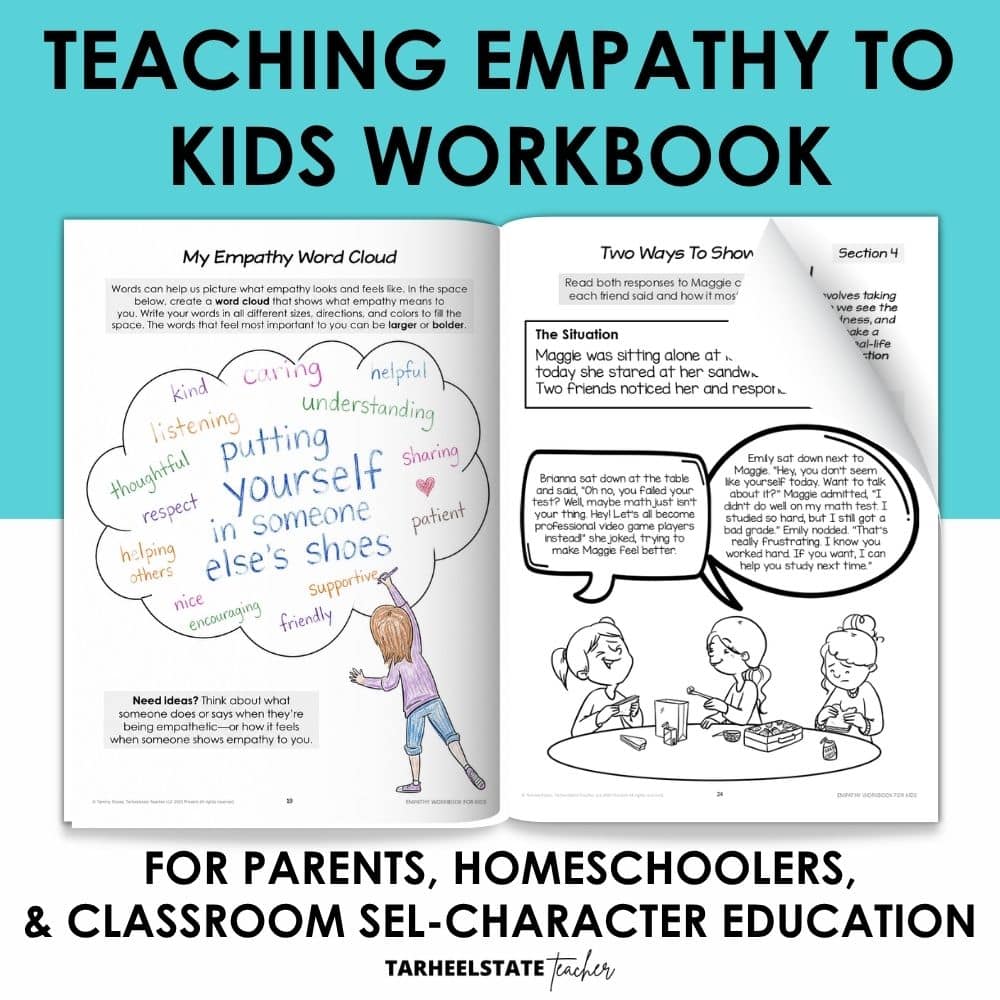
Children think about times they felt cared for, explore empathy through activities like word clouds and reflection questions, and begin to see how emotions connect people.
2 – WHAT EMPATHY LOOKS & SOUNDS LIKE
In this section, children learn how empathy appears in real interactions. They explore the difference between empathy vs sympathy and practice recognizing caring responses.
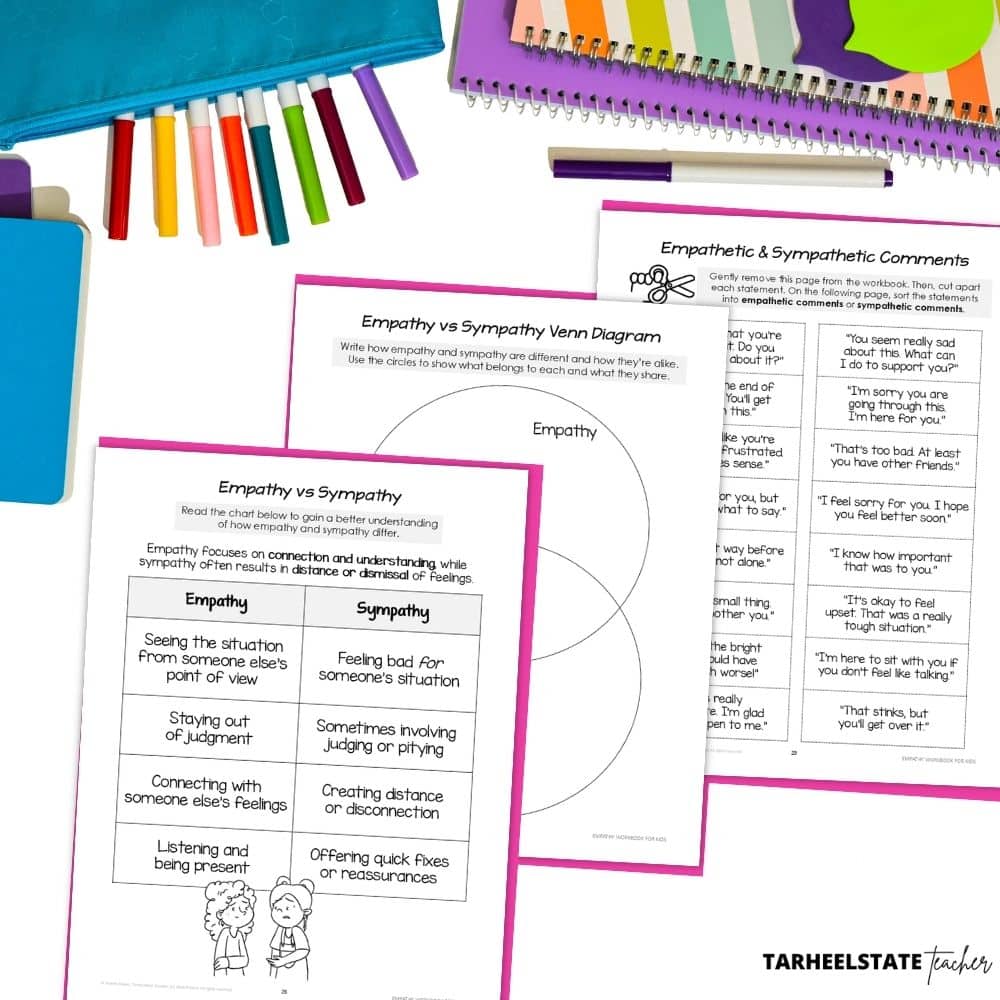
Through activities like sorting statements, analyzing scenarios, and exploring “see, think, feel,” kids begin to understand how empathy sounds in conversations and shows up in actions.
3 – BUILDING YOUR EMPATHY TOOLBOX
With a strong foundation in place, kids begin developing practical empathy tools they can use in everyday life.
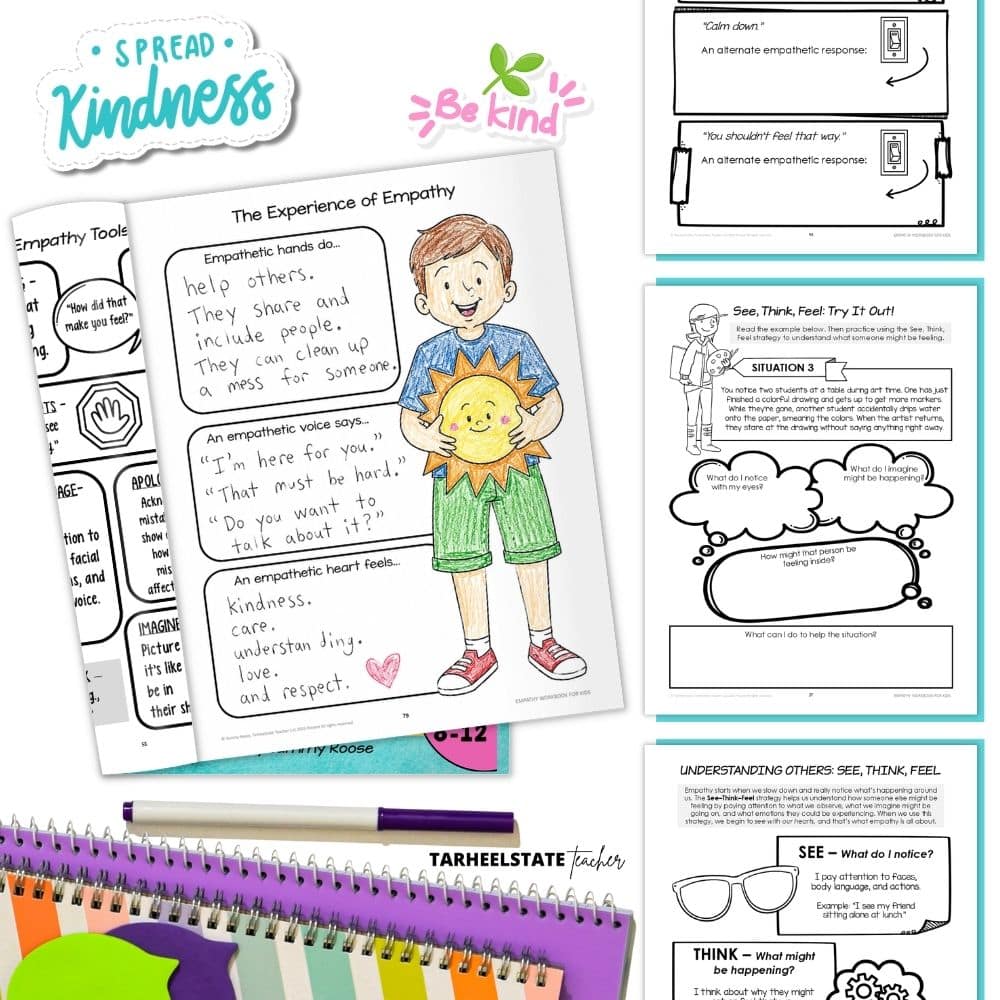
Kids work through perspective-taking activities, role-play situations, and guided empathy scenarios to practice thoughtful responses. Activities guide them through choosing caring responses, understanding complex emotions, and handling real-life situations with compassion.
4 – EMPATHY IN ACTION
This section brings empathy to life through reflection, creativity, and real-world application.
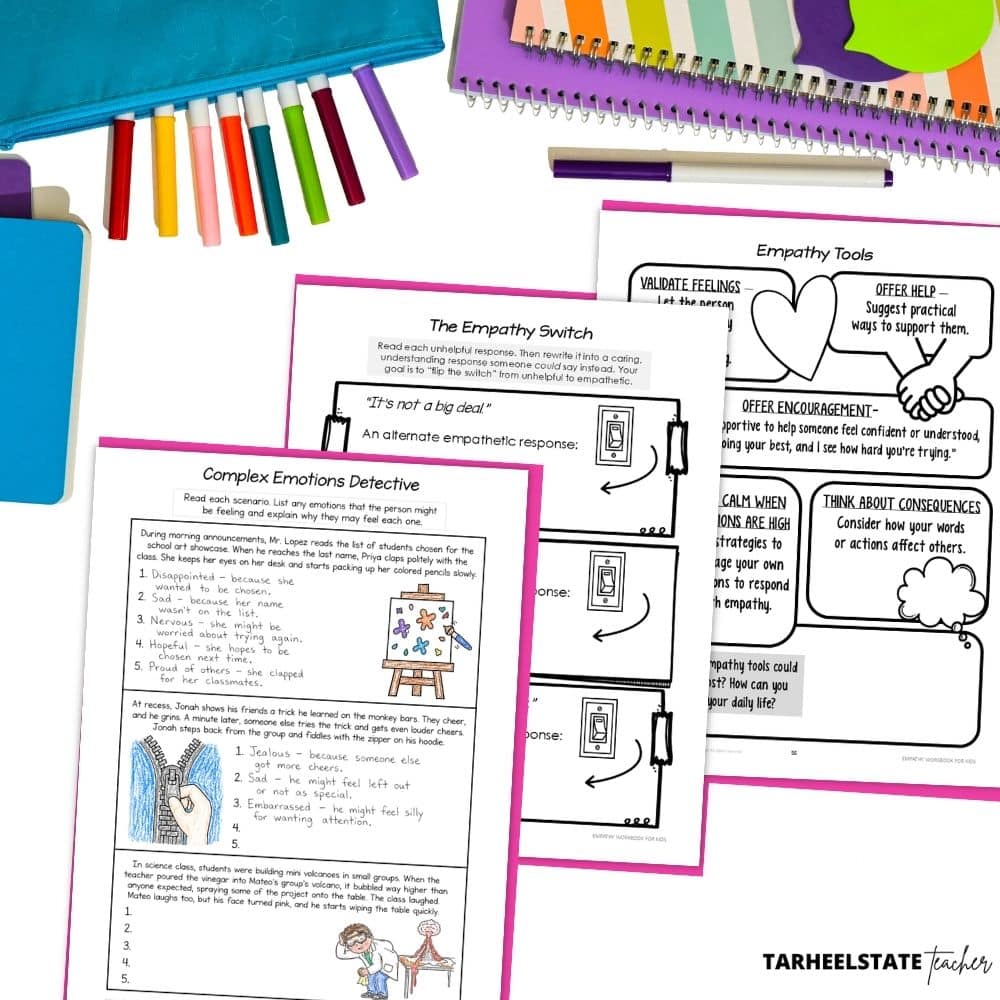
Kids explore inspiring examples, track their own empathetic actions, and complete creative projects like an Empathy Inspiration Board and advice column challenges. These experiences help children see themselves as capable of making a positive difference.
5 – CARRYING EMPATHY FORWARD
In the final section, children reflect on their growth and think about how to continue practicing empathy in daily life.
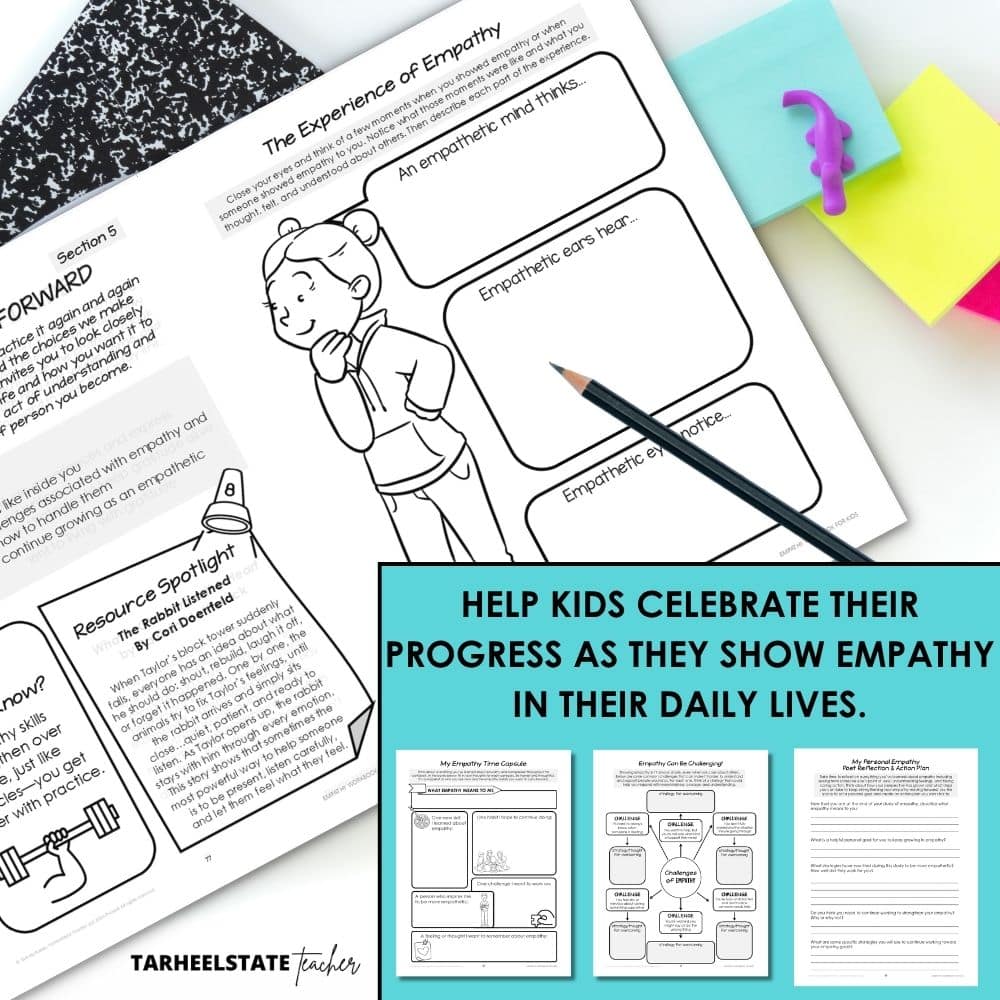
Through goal setting, reflection pages, and commitment activities, they build habits that support kindness, compassion, and perspective-taking long after the workbook is complete.
STORIES THAT HELP EMPATHY COME TO LIFE
Picture books play an important role in helping children see empathy in action. These pictures books about empathy create meaningful opportunities for discussion and deeper understanding.
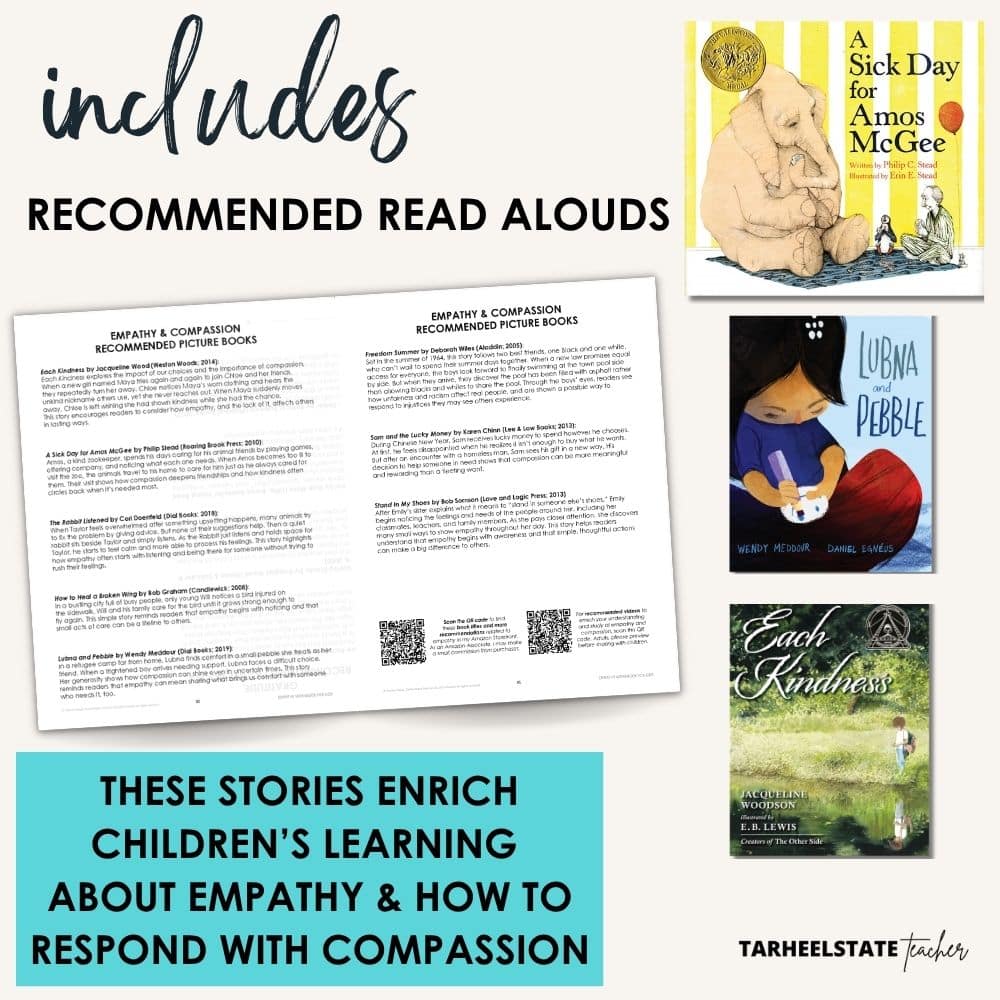
Here are three powerful favorites:
Each Kindness by Jacqueline Woodson
A thoughtful story about missed opportunities for kindness. Chloe realizes too late how her actions affected another student, showing how small choices can have a lasting impact.
Those Shoes by Maribeth Boelts
Jeremy faces a difficult decision between what he wants and what is right. This story highlights how empathy can guide choices rooted in generosity and understanding.
The Invisible Boy by Trudy Ludwig
A quiet, powerful story about noticing others and helping them feel seen. One small act of kindness transforms a child’s experience and sense of belonging.
HOW TO USE THIS WORKBOOK
Whether you’re having conversations at home, teaching in a homeschool setting, or guiding a classroom community, this workbook is flexible and easy to use. For best results, revisit activities and discussions 3–4 times each week to build consistency and deeper understanding.
FOR PARENTS AND GUARDIANS
Try weaving empathy practice into everyday moments:
- Read a short scenario together and ask, “How do you think that person feels?”
- Use reflection pages at bedtime to talk about moments of kindness or missed opportunities
- Practice “switch the perspective” using simple perspective taking examples from daily life
- Encourage your child to notice someone who might feel left out and take a small action
- Use the Empathy Action Tracker to celebrate caring choices
The goal is helping your child notice others, think more deeply, and respond with care in real-life moments.
FOR HOMESCHOOL OR CO-OP EDUCATORS
Bring empathy concepts to life through discussion and shared experiences:
- Pair sections with read-alouds that highlight empathy and compassion
- Use social-emotional scenarios for group discussion or role-play
- Turn empathy tools into weekly SEL lessons
- Use reflection pages as journaling or narration practice
- Encourage students to share real-life examples of empathy
This resource supports meaningful conversations about relationships, emotions, and community. Use these activities as part of your routine for teaching empathy in the classroom or at home.
FOR CLASSROOM TEACHERS
This workbook was designed based on my SEL Morning Meeting Unit for Empathy, making it a natural fit for classroom character education. Whether used during morning meetings, counseling groups, or SEL instruction, each activity encourages students to explore empathy, perspective-taking, and compassionate decision-making.
You’ll find meaningful opportunities for discussion, reflection, and skill-building woven throughout the pages. These experiences help students understand emotions, respond thoughtfully in social situations, and build stronger peer relationships.
NOTE: The digital download version on Shopify includes daily lesson plans, printable student journals, a bulletin board, and a Google Slides component. Consider whether the workbook curriculum or Shopify version will best meet your needs.
INTERESTED IN MULTIPLE COPIES?
Contact Tammy at tarheelstateteacher(at)gmail(.)com for a quote for multiple copies or purchase orders for your campus or district.
WHY FAMILIES VALUE EMPATHY-FOCUSED SEL
Families and educators often share that empathy work helps children:
- Build stronger friendships
- Improve communication and social skills
- Show kindness and understanding
- Navigate conflict more thoughtfully
- Feel more connected to others
Because empathy grows through awareness, practice, and meaningful experiences.
FEEDBACK FOR MY EMPATHY UNIT FROM CLASSROOM TEACHERS
⭐⭐⭐⭐⭐ Extremely helpful resource for my students to learn about compassion and saved me time!
⭐⭐⭐⭐⭐ This is fantastic! So much quality and thoughtfulness! Thank you!
⭐⭐⭐⭐⭐ This is a very thorough product! The read-alouds, journal pages, and videos all paired nicely. I loved working through it with my students and expanding their horizons about what it means to have compassion for others. It was so cool to see them apply this knowledge later in year!
START BUILDING EMPATHY TODAY
If you are looking for a meaningful way to help children understand others, practice compassion, and build strong social-emotional skills, Helping Kids Care About Others offers practical tools they can use every day.
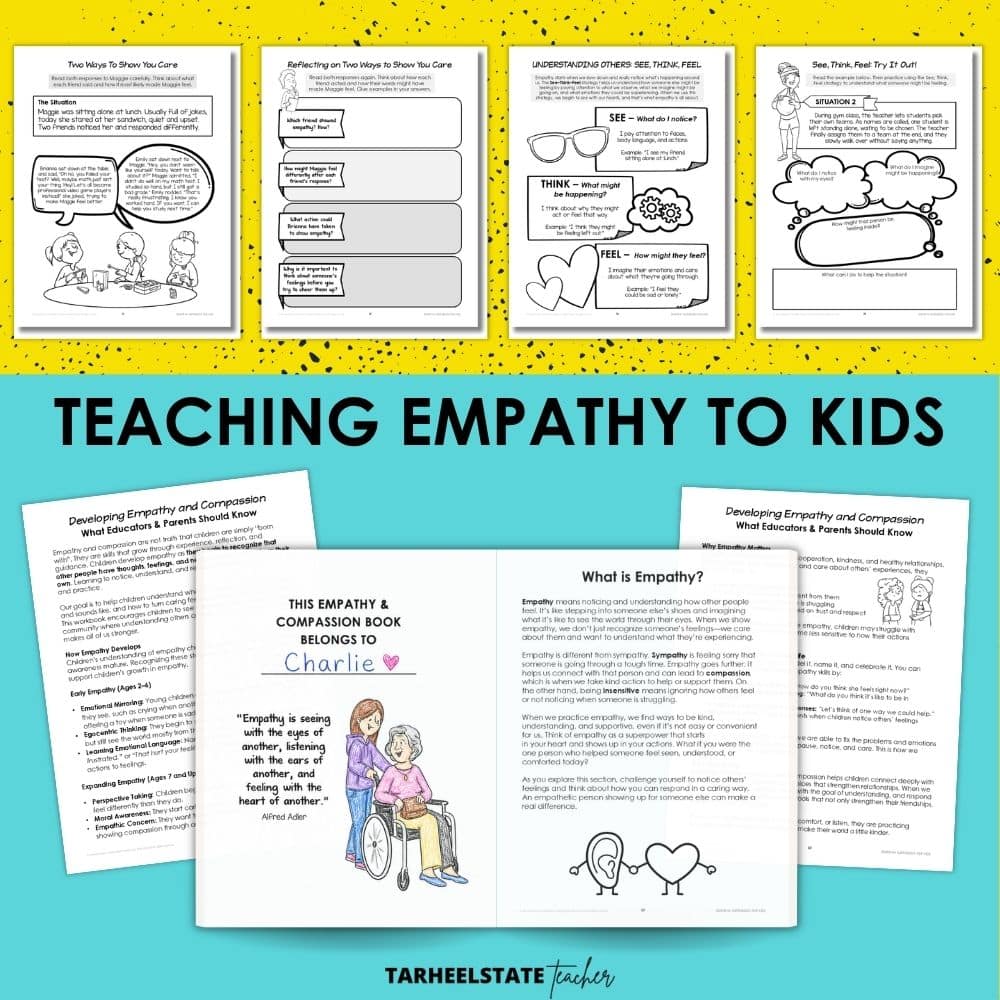
This empathy workbook helps kids move from simply noticing others to practicing empathy and showing compassion in everyday life.

SHOP THE OTHER WORKBOOKS IN THIS SERIES
- Teaching Kids About Lying and Telling the Truth for Kids: A Building Character Workbook on Integrity for Ages 8-12
- Responsibility for Kids: Teaching How to Follow Through and Make Good Choices for Kids A Building Character Accountability Workbook Ages 8-12
- Teaching Gratitude to Kids: Social and Emotional Activities for Gratitude and Positivity Kids Mindfulness Workbook Ages 8-12
- How to Help Kids Be Themselves: Self-Love Activities for Helping Kids Grow Confidence and Self-Esteem a Self Acceptance Workbook for Ages 8-12
- A Goal Setting Workbook to Help Kids Go For It: Teaching Children to Set Goals, Start New Habits, and Focus on Personal Growth for Ages 8-12
- Navigating Friendships for Kids: Friendship Activities for Kids on Making & Keeping Friends, Being a Good Friend, & Healthy Friendships Ages 8-12
- Help Kids Get More Motivated: Fostering Intrinsic Motivation & Positive Self-Talk Strategies a Self-Motivation for Kids Workbook Ages 8-12