Some children seem comfortable in their own skin. Others shrink themselves to fit in.
They stay quiet when they have something to say. They hide interests that feel different. They compare themselves to classmates and start to believe they shouldn’t be who they naturally are.
Learning to accept who you are takes practice. It takes guidance. Giving children language for understanding their strengths, feelings, and what makes them unique can help the embrace their inner self.
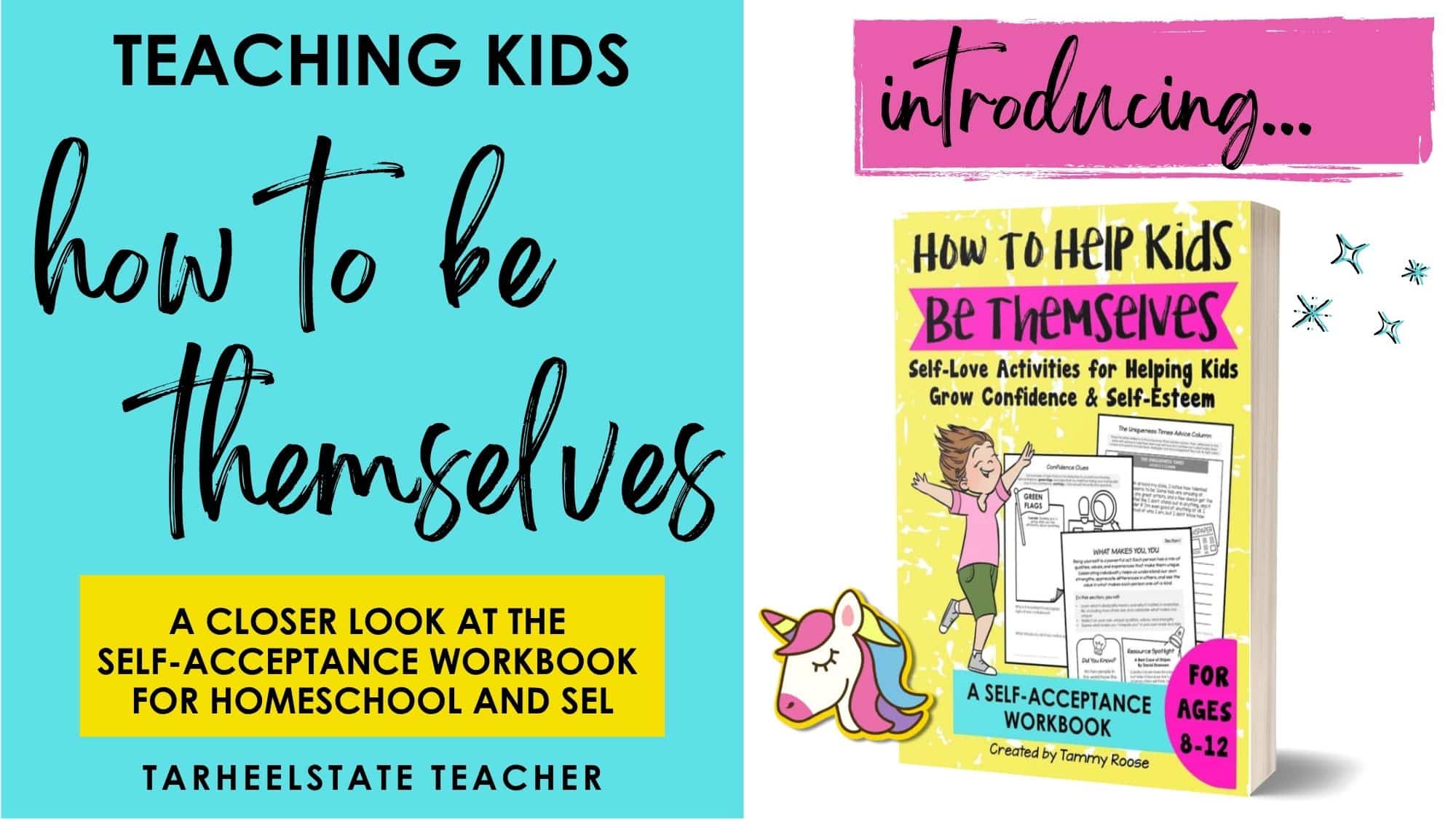
The struggle for upper elementary students and pre-teens to remain their unique selves is exactly why I created this self-acceptance and individuality workbook for ages 8–12. It gives kids practical tools to build confidence, grow self-love, and help children feel proud of who they are.
Self-acceptance shapes how children show up in friendships, learning, and challenges. When kids value who they are, they take healthy risks, speak up respectfully, and recover more quickly from setbacks.
Note: Links to suggested items in this post are affiliate links. This means that I am a participant in the Amazon’s Affiliate advertising program that allows sites to earn from qualifying purchases. These links do not increase your cost. I only recommend things I’ve used and love! Read my full disclosure here.
WHY INDIVIDUALITY AND SELF-ACCEPTANCE MATTER FOR KIDS
Upper elementary students are becoming more aware of peer opinions. They notice differences. They compare talents, personalities, and appearances. Without guidance, comparison can chip away at confidence.
When children learn to embrace individuality, they:
- Recognize their strengths and interests
- Respect differences in others
- Build healthy self-esteem
- Develop resilience when facing criticism
- Feel safer expressing ideas and emotions
Self-acceptance gives children a steady foundation. It helps them grow into confident, compassionate teens.
A WORKBOOK THAT BUILDS LASTING CONFIDENCE AND SELF-WORTH
This workbook moves beyond surface-level affirmations. It walks students step by step through understanding who they are and how to value that uniqueness.
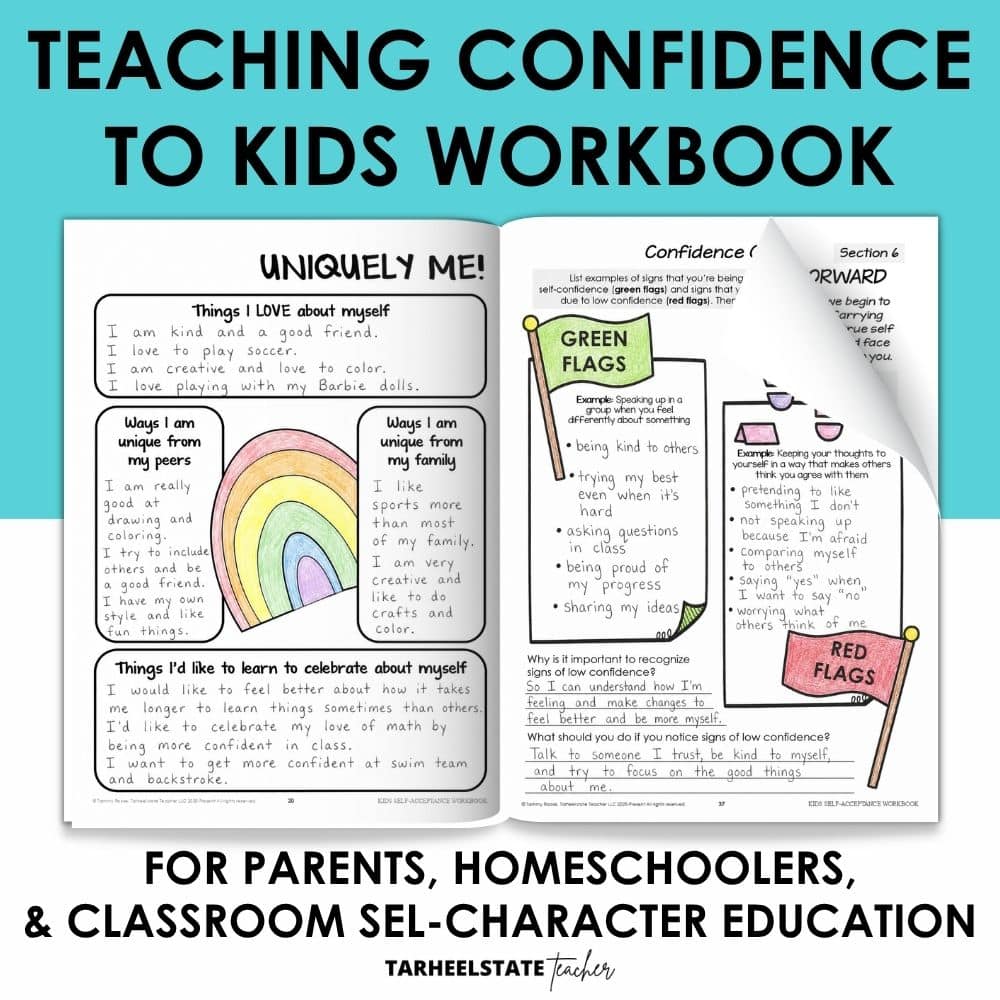
Through reflection, writing, discussion, and creative activities, students learn to:
- Identify personal strengths and interests
- Recognize self-doubt and reframe it
- Practice confident body language
- Understand the difference between fitting in and being true to themselves
- Build habits of self-love
By the end, children are building real confidence skills they can use at school, at home, and in friendships.
INSIDE THE WORKBOOK: WHAT KIDS WILL EXPLORE
The workbook is organized into five thoughtfully designed sections. Each section builds on the one before it, helping children move from awareness to action.
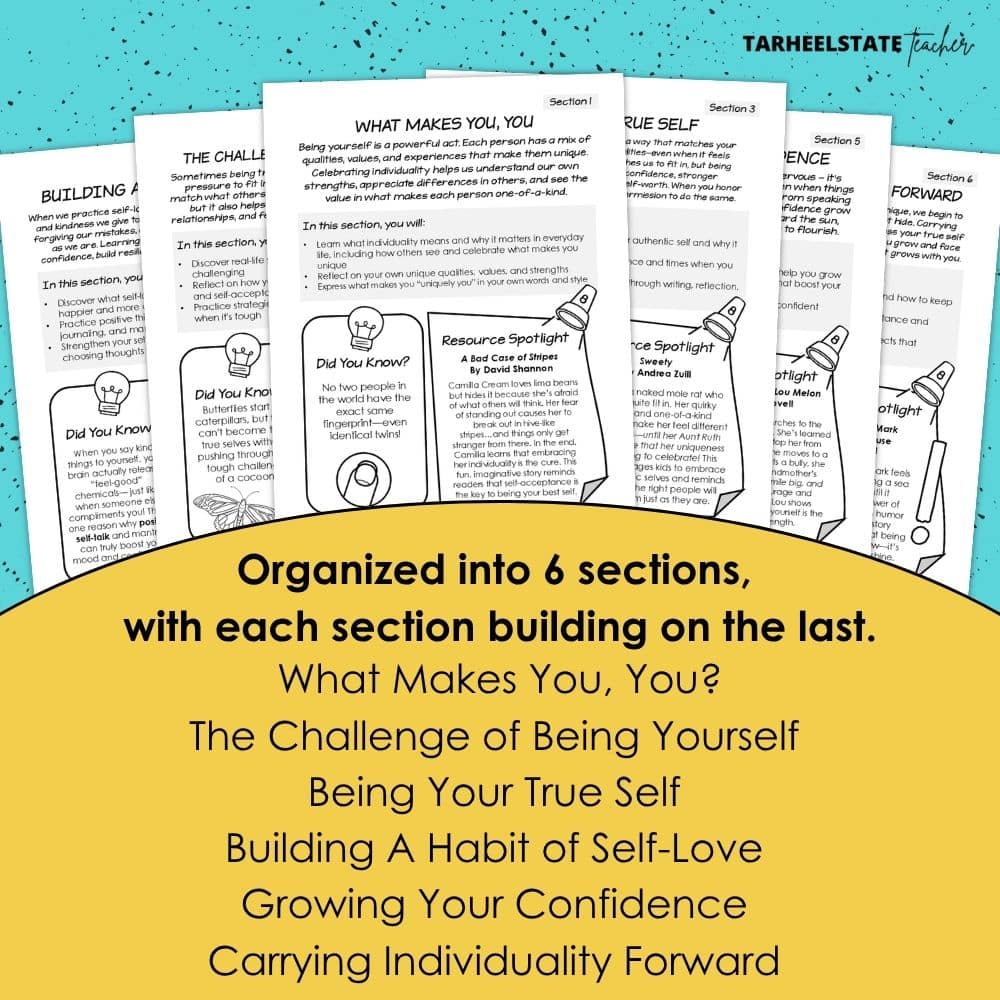
1 – WHAT MAKES YOU, YOU?
This opening section helps students understand that individuality is something to value, not something to hide. Children explore the idea that each person carries a unique combination of strengths, interests, values, and experiences. Through guided reflection and vocabulary-building activities, students begin to see how their differences contribute to who they are.
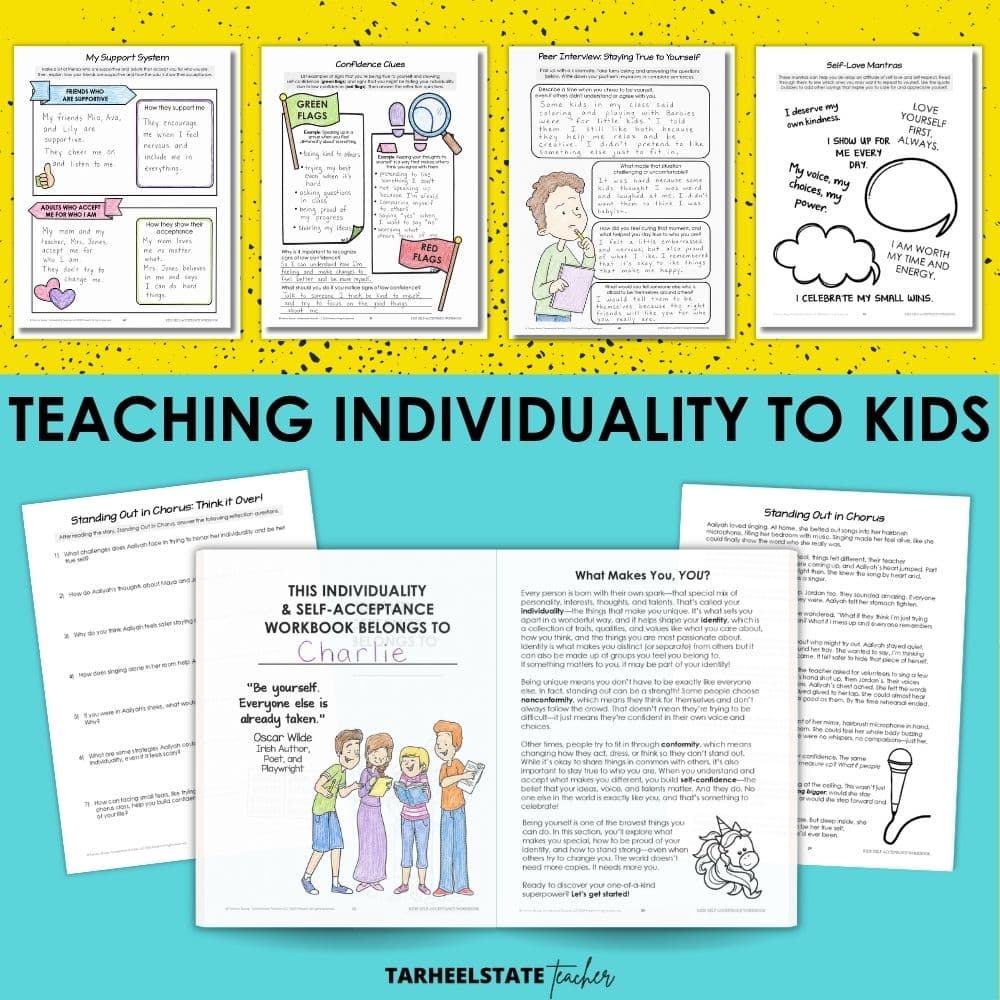
Activities such as Reflecting on My Individuality & Self-Acceptance, Unique Me! – I Am an Individual!, and How Others See My Spark invite students to name their strengths, consider how others experience them, and express what makes them uniquely themselves in thoughtful and creative ways.
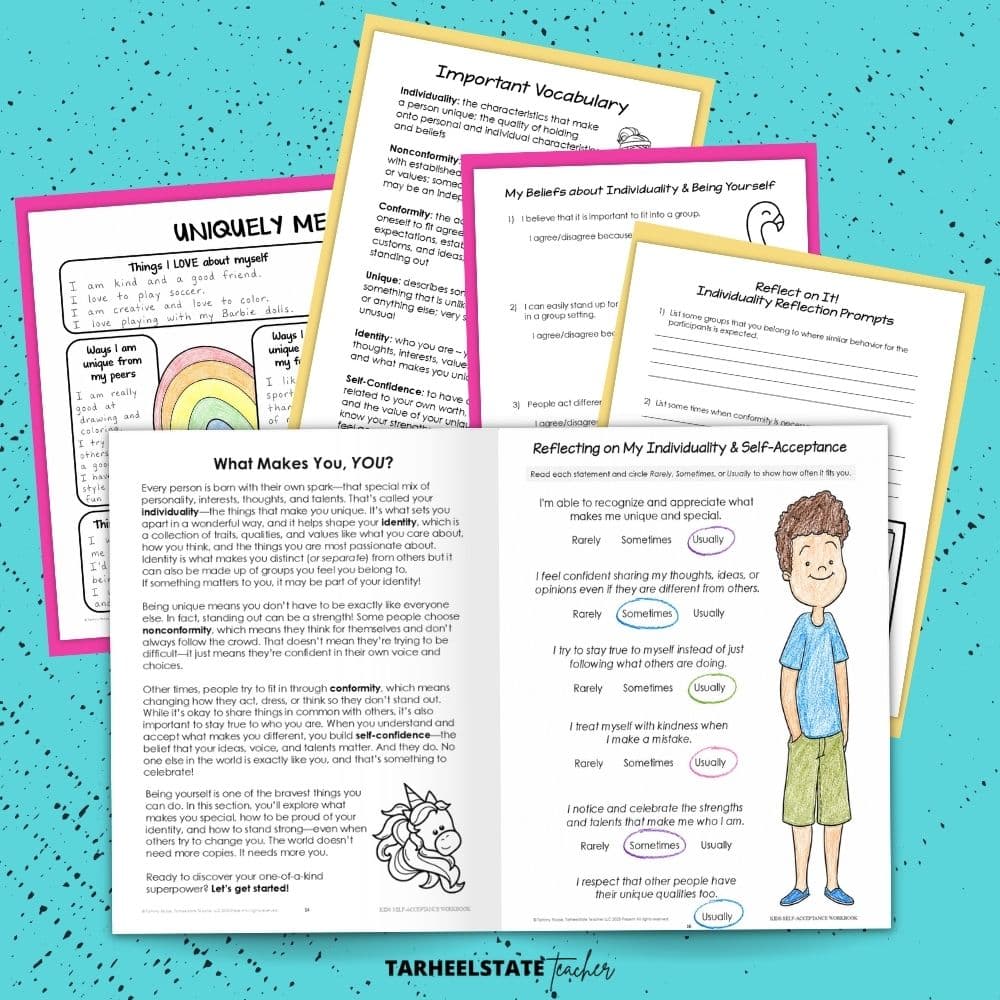
These early reflections build awareness and set a positive foundation for the rest of the workbook.
2 – THE CHALLENGE OF BEING YOURSELF
This section addresses a reality many upper elementary students face: staying true to yourself can feel difficult in social settings. Peer pressure, comparison, and the desire to fit in often shape behavior during these years. Students explore real-life situations where authenticity feels challenging and consider how they want to respond.
Through activities like Standing Out in Chorus, Situations that Challenge Individuality, and The Uniqueness Times Advice Column, children examine common social pressures and practice responding with confidence, courage, and self-acceptance.
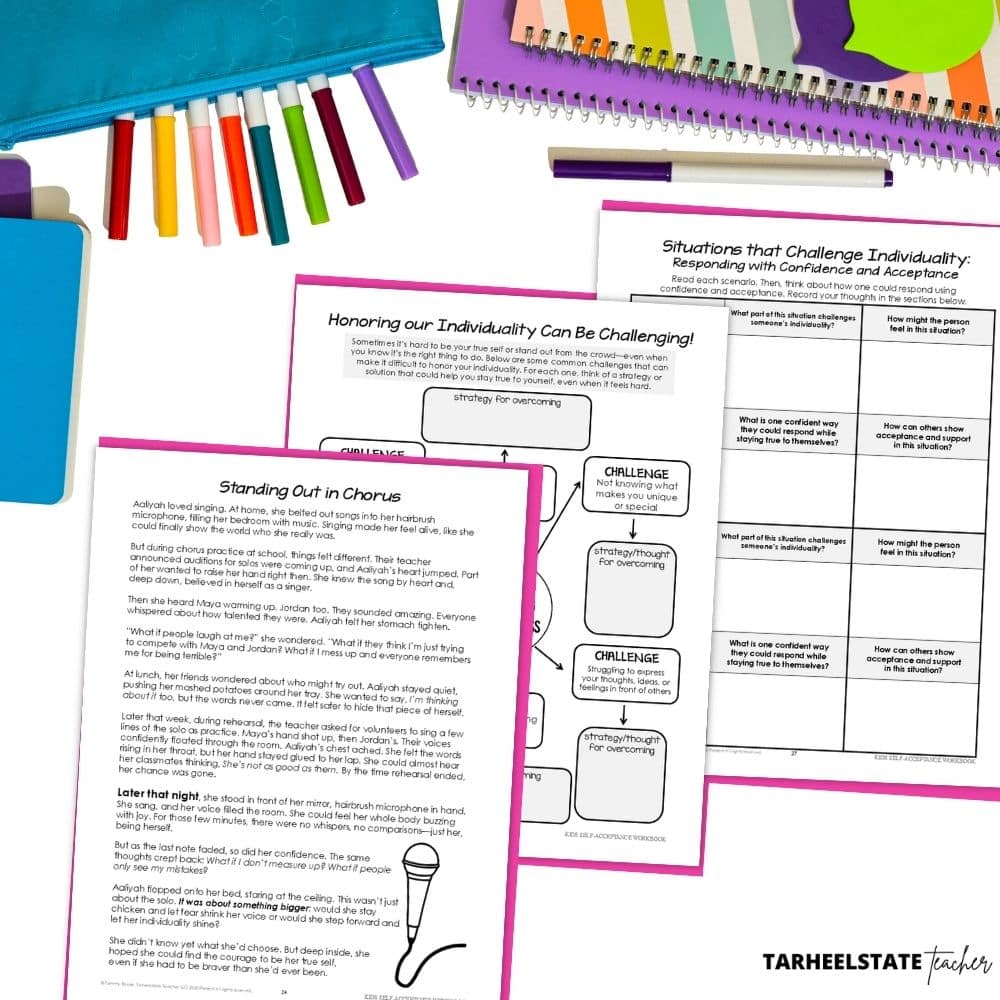
Students begin to understand that authenticity requires strength, and that strength grows with practice.
3 – BEING YOUR TRUE SELF
Once students recognize challenges, this section guides them toward action. Being your true self means living in alignment with your values, personality, and strengths, even when it feels uncomfortable. Children reflect on moments when they feel confident and moments when they shrink themselves.
Activities such as Unmasking Me, Confidence Cues, The Courage to Be Me, and My Support System help students identify signs of confidence, strengthen supportive relationships, and explore ways to express their authentic selves through writing, reflection, and creative expression.
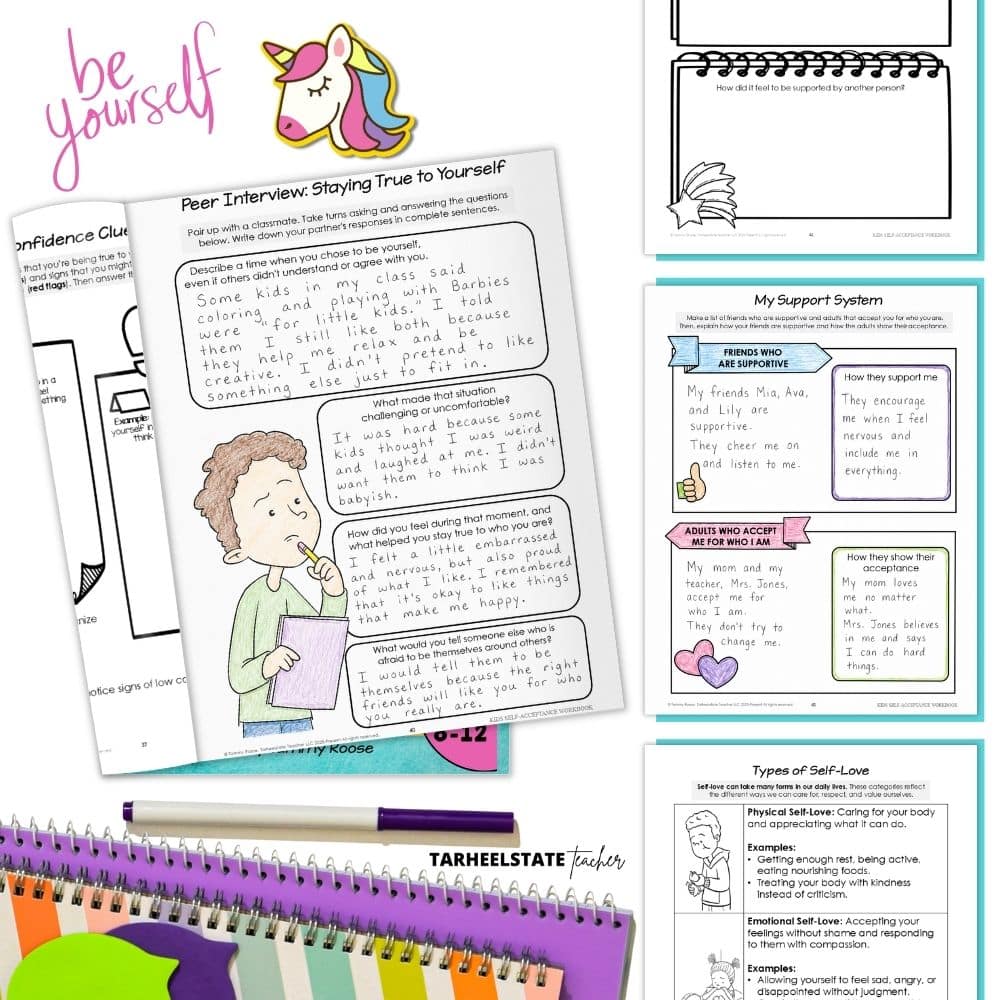
This section encourages students to move from awareness into intentional self-expression.
4 – BUILDING A HABIT OF SELF-LOVE
Confidence deepens when children practice treating themselves with kindness. In this section, students explore what self-love looks like in daily life. They learn that self-love includes recognizing strengths, forgiving mistakes, and choosing thoughts that support growth.
Through activities like Types of Self-Love, Habit Tracker for Self-Love, Self-Love Mantras, and I Can Think Self-Accepting Thoughts, students practice positive self-talk, journaling, and reflection. They begin building habits that reinforce self-worth over time.
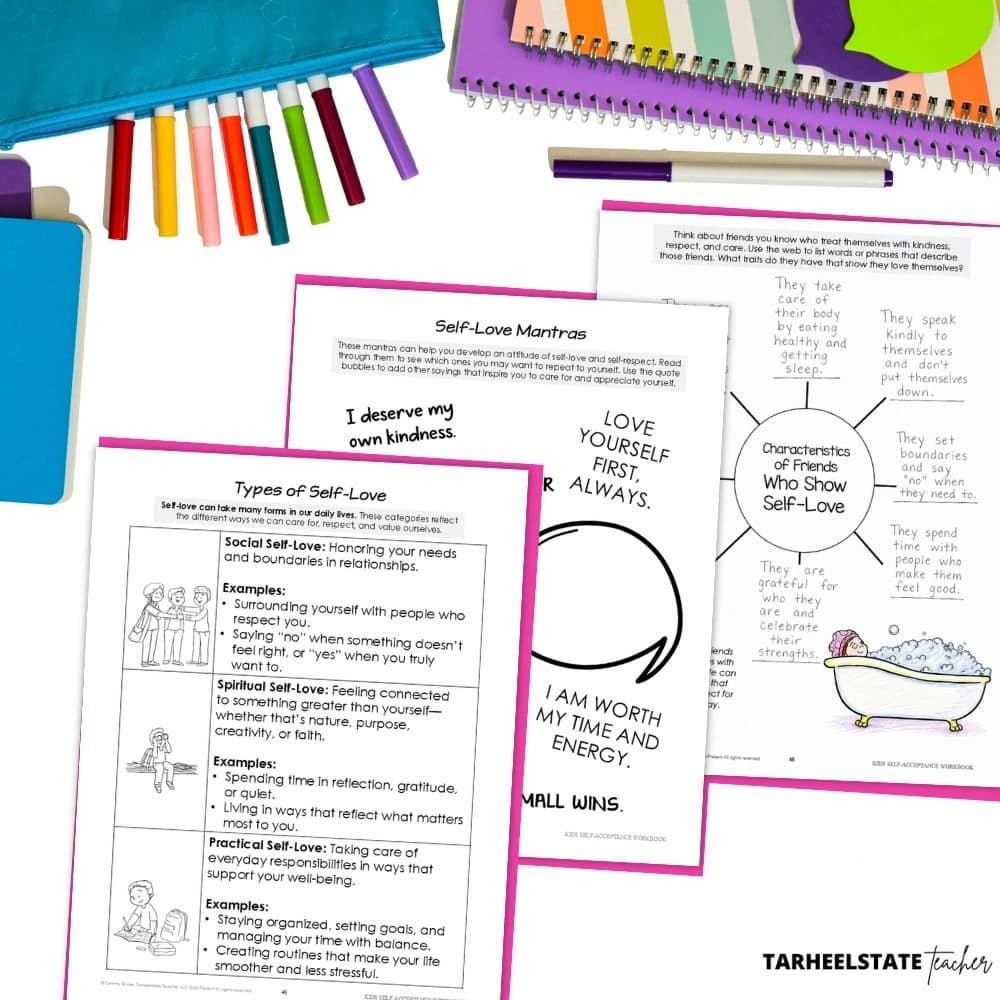
This section helps children develop a steady inner voice that supports them in both success and struggle.
5 – CARRYING INDIVIDUALITY FORWARD
The final section focuses on action and forward movement. Confidence grows through repeated, small acts of courage. Students learn that confidence includes trying again, speaking up, sharing ideas, and taking healthy risks.
Activities such as Big or Small Acts of Confidence, Confidence Boosters, My Confidence Tree, and Flip That Thought: Turning Self-Doubt into Confidence help students identify what strengthens their self-belief and practice replacing self-doubt with constructive thinking.
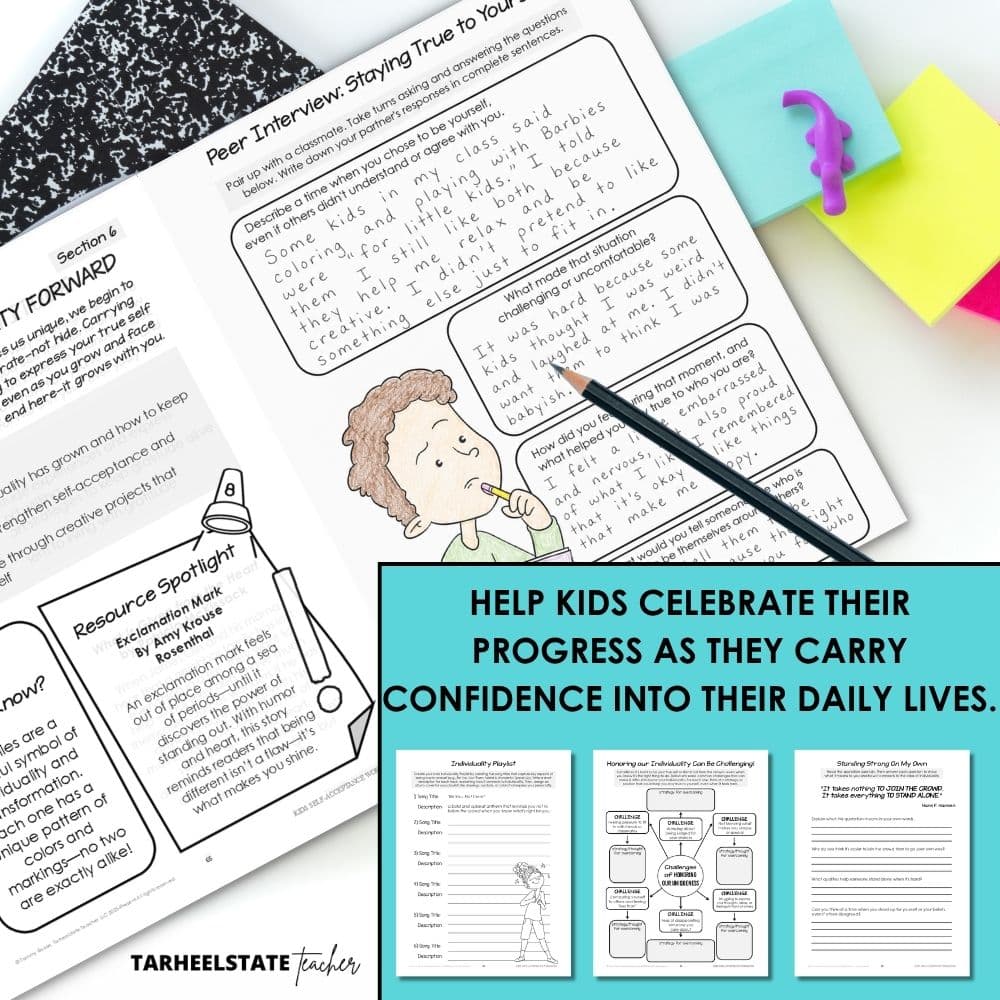
By the end of this section, students recognize that confidence develops over time and that they have the tools to keep nurturing it.
STORIES THAT BRING INDIVIDUALITY TO LIFE
Picture books offer powerful examples of self-acceptance in action. The workbook includes an extended recommended reading list in the back to continue these conversations.
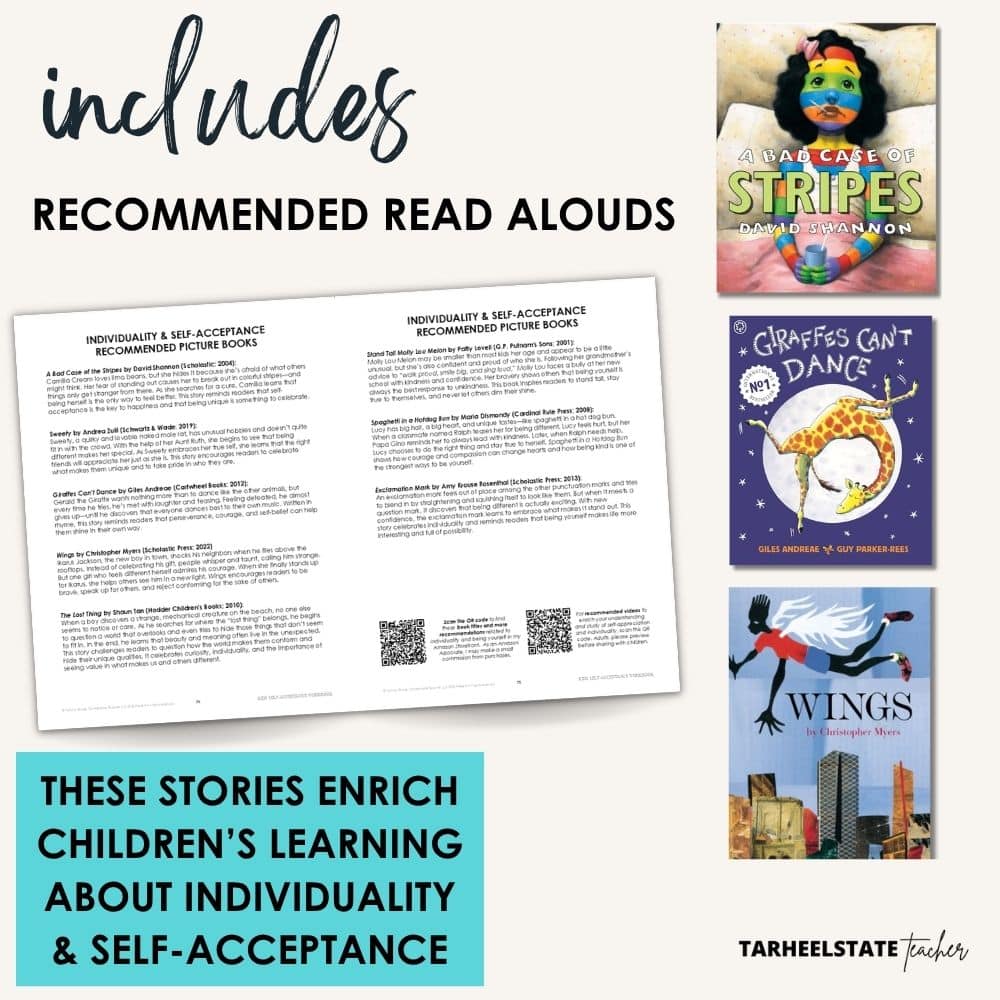
Some of my favorites are:
A Bad Case of Stripes by David Shannon
Camilla Cream loves lima beans but hides it because she worries about what others will think. Her fear of standing out leads to colorful stripes and unexpected transformations. In the end, Camilla learns that embracing her individuality is the cure. This imaginative story shows how freedom comes from being yourself.
Chrysanthemum by Kevin Henkes
Chrysanthemum adores her unique name until classmates tease her. With support from a caring teacher and her family, she discovers that her individuality is something to treasure. This story highlights the power of encouragement and self-worth.
Sweety by Andrea Zuill
Sweety is a naked mole rat with quirky hobbies and a big personality. With the help of her Aunt Ruth, she learns that her differences are strengths. This story reassures children that the right people appreciate authenticity.
HOW TO USE THIS WORKBOOK
This workbook works well when used three to four times per week. Sessions can last 20–30 minutes and include discussion, reflection, and sharing.
FOR PARENTS & GUARDIANS
- Complete What Makes You, You? together and share your own answers.
- Use Confidence Cues to practice body language before social events.
- Start a weekly check-in using I Can Think Self-Accepting Thoughts.
- Create a family individuality playlist inspired by the Individuality Playlist activity.
- Revisit the Personal Self-Acceptance Goal Reflection each month to track growth.
FOR HOMESCHOOL OR CO-OP EDUCATORS
- Pair the reading passage Standing Out in Chorus with a group discussion about peer pressure.
- Use The Uniqueness Times Advice Column for collaborative problem-solving.
- Assign My Support System as a community-building activity.
- Incorporate read-alouds like Chrysanthemum to deepen reflection.
FOR CLASSROOM TEACHERS
This workbook was designed from my SEL Morning Meeting lessons on individuality and self-acceptance, making it a natural fit for classroom character education. Whether used during morning meetings, counseling groups, or dedicated SEL instruction, each activity invites students to explore confidence, identity, self-talk, peer dynamics, and the courage to be themselves.
You’ll find meaningful opportunities for discussion, reflection, and skill-building woven throughout the pages. Activities such as Reflecting on My Individuality & Self-Acceptance, Situations that Challenge Individuality, and Self-Love Mantras help students recognize comparison habits, practice supportive thinking, and strengthen respect for differences within your classroom community.
NOTE: The digital download version on Shopify includes structured daily lesson plans, printable student journals, a bulletin board display, and a Google Slides component. Consider whether the printed workbook or the Shopify curriculum format will best meet the needs of your classroom.
INTERESTED IN MULTIPLE COPIES?
Contact Tammy at tarheelstateteacher(at)gmail(.)com for a quote for multiple copies or purchase orders for your campus or district.
WHY FAMILIES AND TEACHERS LOVE THIS SELF-ACCEPTANCE WORKBOOK
- Encourages healthy self-esteem
- Promotes respectful appreciation of differences
- Provides structured reflection and discussion
- Supports social-emotional growth in upper elementary years
- Builds confidence that carries into middle school
FEEDBACK FOR MY INDIVIDUALITY & SELF-ACCEPTANCE UNIT FROM CLASSROOM TEACHERS
 “My students really enjoyed listening to the stories and applying the lessons learned to their own lives during meaningful morning meeting discussions.”
“These morning meeting activities are perfect to start the day on a positive note! It made the kids think about SEL first thing in the morning which made for a great rest of the day!”
“Thank you! My students loved using the resources and activities!”
START BUILDING SELF-ACCEPTANCE TODAY
Confidence grows when children understand their value and practice honoring who they are. If you are ready to help the children in your life embrace individuality and build lasting self-esteem, How to Help Kids Be Themselves: A Self-Acceptance Workbook and Self-Love Activities for Helping Kids Grow Confidence and Self-Esteem offers a clear and supportive path forward.
When kids learn to accept themselves, they step into the world with strength, empathy, and courage.
SHOP THE OTHER WORKBOOKS IN THIS SERIES
- Teaching Kids About Lying and Telling the Truth for Kids: A Building Character Workbook on Integrity for Ages 8-12
- Responsibility for Kids: Teaching How to Follow Through and Make Good Choices for Kids A Building Character Accountability Workbook Ages 8-12
- Helping Kids Have Courage and Improve Courage Skills: Assertiveness and Confidence Activities for Kids Ages 8-12
- Teaching Gratitude to Kids: Social and Emotional Activities for Gratitude and Positivity Kids Mindfulness Workbook Ages 8-12
- A Goal Setting Workbook to Help Kids Go For It: Teaching Children to Set Goals, Start New Habits, and Focus on Personal Growth for Ages 8-12
- Navigating Friendships for Kids: Friendship Activities for Kids on Making & Keeping Friends, Being a Good Friend, & Healthy Friendships Ages 8-12