THE SHORT VERSION
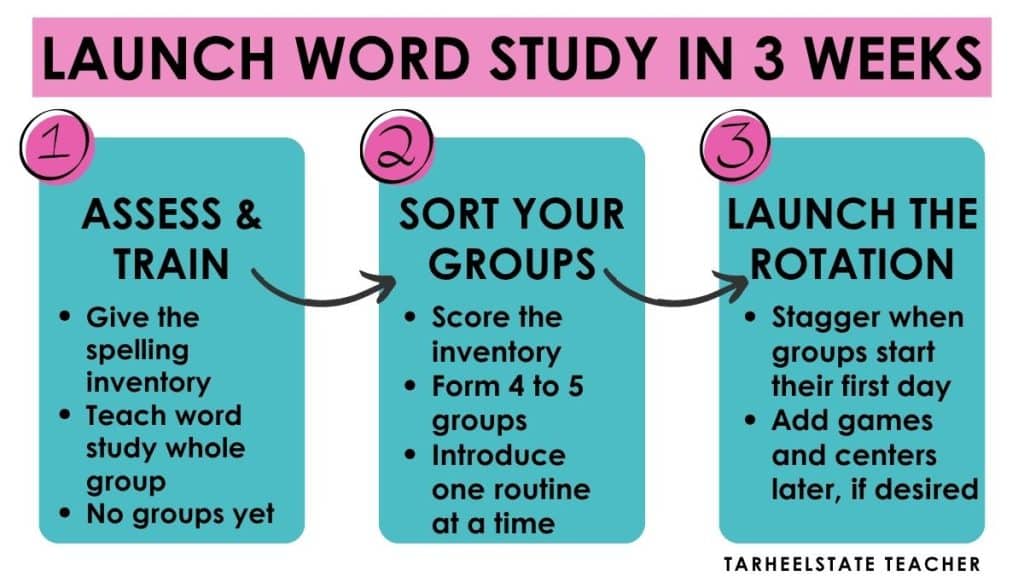
You don’t need to have word study groups figured out the first day of school! Start by giving your spelling inventory during week one. During week two, score the assessment, sort your students into groups, and use your class time to teach one routine at a time with a whole-group focused word list. Once students have the routines and procedures down, start your staggered rotation in week three or four. Spelling homework routines and game centers can be added in gradually after that, once your routine is running smoothly.
If you have ever tried to launch a five-group, staggered, differentiated word study rotation during the first week of school, you already know how that ends. (Spoiler alert: it ends with you standing in the middle of the room holding a stack of word searches while twenty-four kiddos ask you what group they’re in.)
I have written A LOT about my word study routine on this blog. I’ve shared my 7, 8, or 9 day word study cycle, my staggered schedule and the two tips that make it work, and how I organize my games and center area. What I have never written about is the part that comes BEFORE all of that: the messy, un-Instagrammable first three weeks where you have no data, no groups, and a class full of students who do not yet know where the pencils live.
So let’s fix that today. Below is the three-week plan I use to go from day one of school to a word study block that runs like a well-oiled machine.
👉 And listen, if you are reading this in October, or January, or the week after spring break, this plan still works. There is nothing magic about August. Three weeks from whenever you start is three weeks from whenever you start.
Who this is for: A 3rd, 4th, or 5th grade teacher who wants a differentiated word study block but is staring down the first week of school with no assessment data and no groups.
What you’ll need:
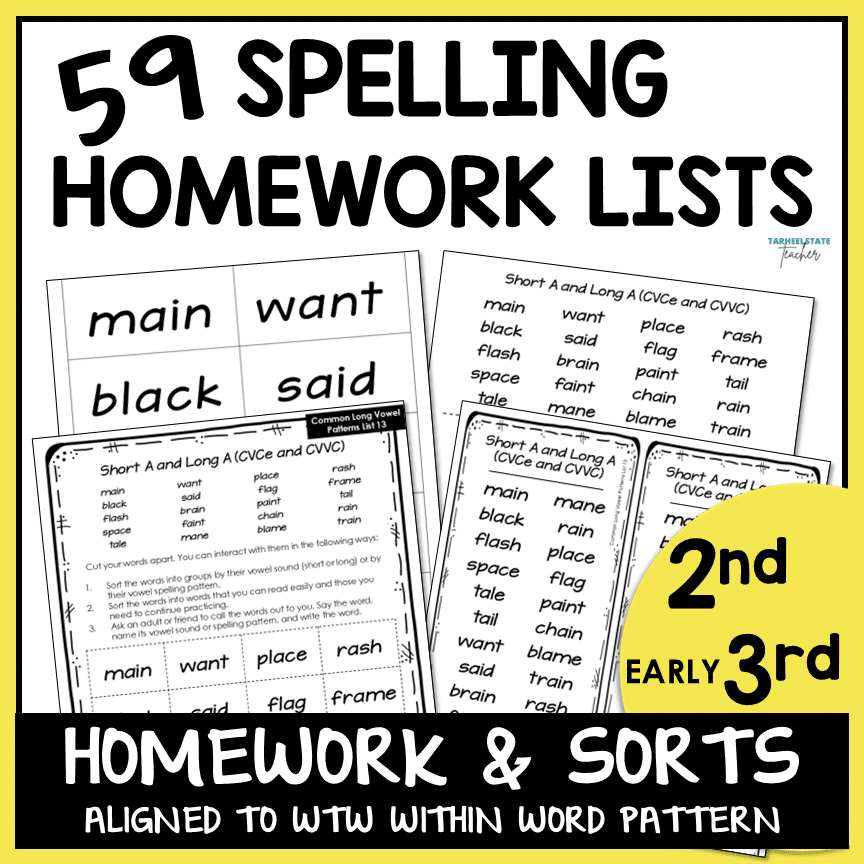
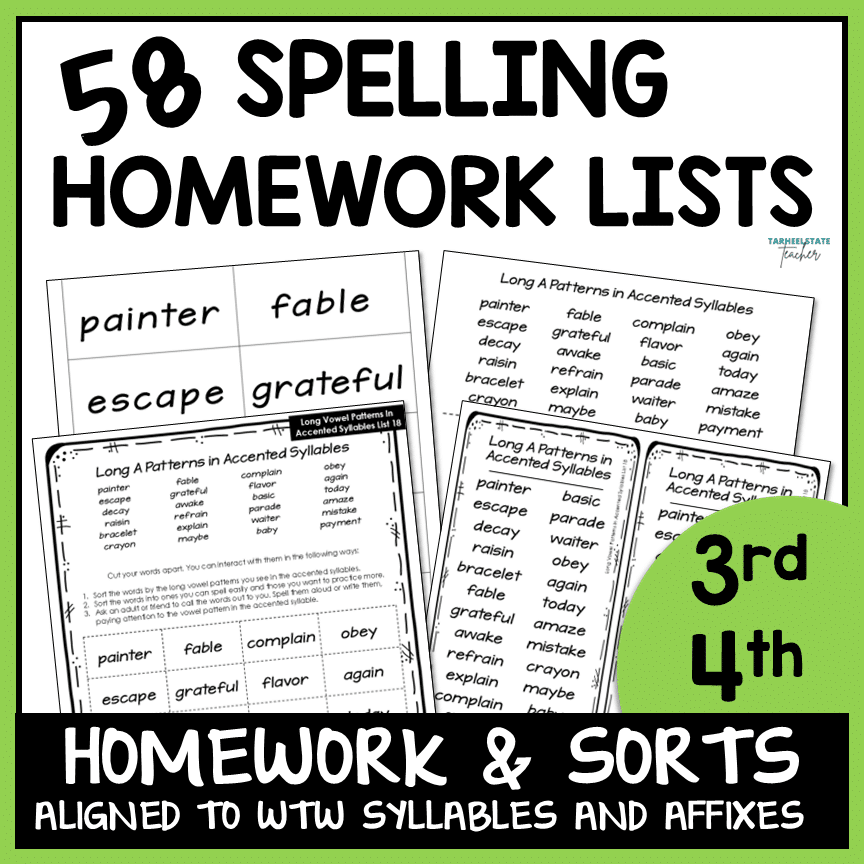
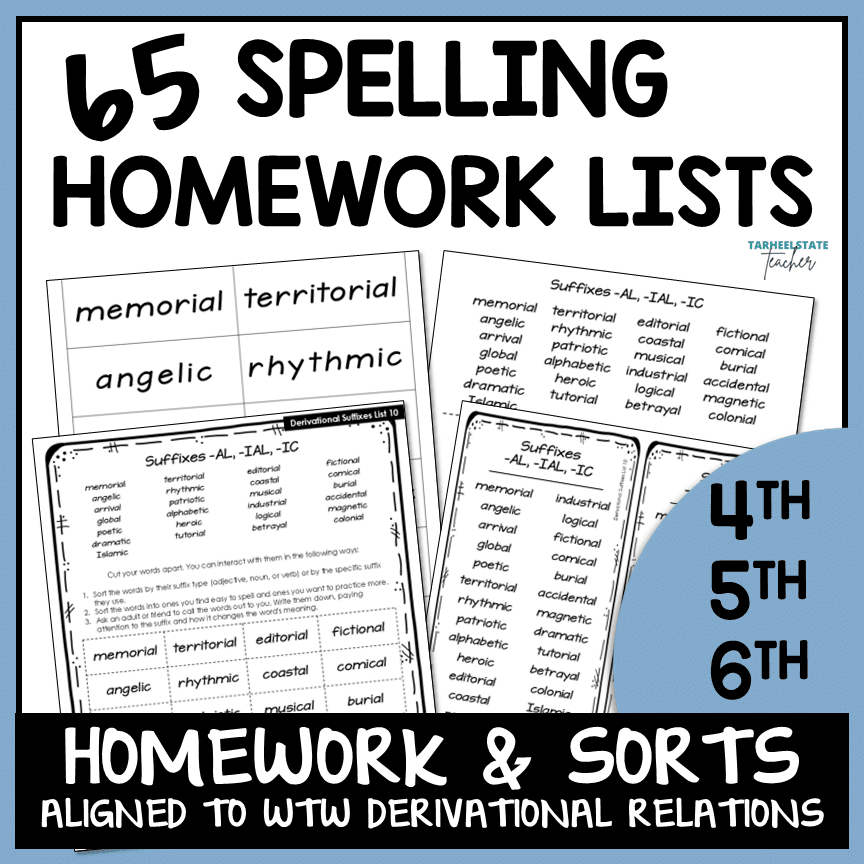
- Pattern-based word lists for the range of spellers in your room. (Don’t have them? I’ve got you covered with the word lists for all levels.)
- The Engaged Spelling Inventory, which is aligned with the Words Their Way Spelling Inventory but better than ever, and I’ll send it to you for free
- A designated shelf, cabinet, or corner where word study materials will live
- 15 to 20 minutes a day in your schedule
Time required: Three weeks, about 15 to 20 minutes a day.
WEEK 1: ASSESS AND TRAIN (NO GROUPS YET)
Week one is about two things happening at the same time: getting assessment data in hand, and teaching your students what word study is going to look and sound like in your room. Notice what’s NOT on the list this week. No groups, no rotation, no centers. Just you, one word list, and twenty-four kiddos learning your expectations.
STEP 1: GATHER YOUR MATERIALS AND SET UP YOUR WORD STUDY SPACE BEFORE STUDENTS ARRIVE
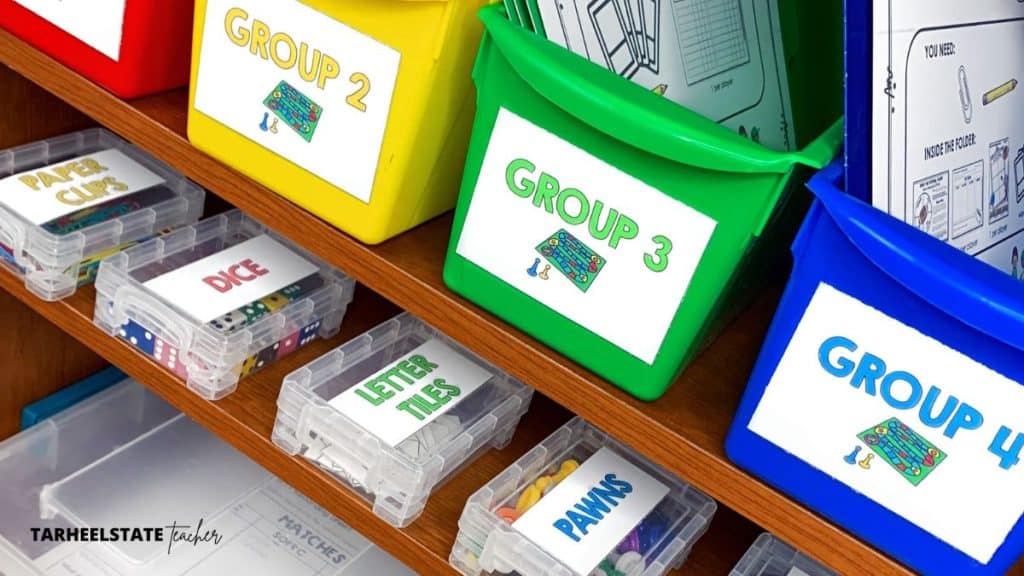
Set up the physical space where materials will live. You’ll want one basket, binder, or magazine file per group (plan for four or five, even though you don’t know who’s in them yet), a cup of same-color pencils, and a spot for manipulatives.
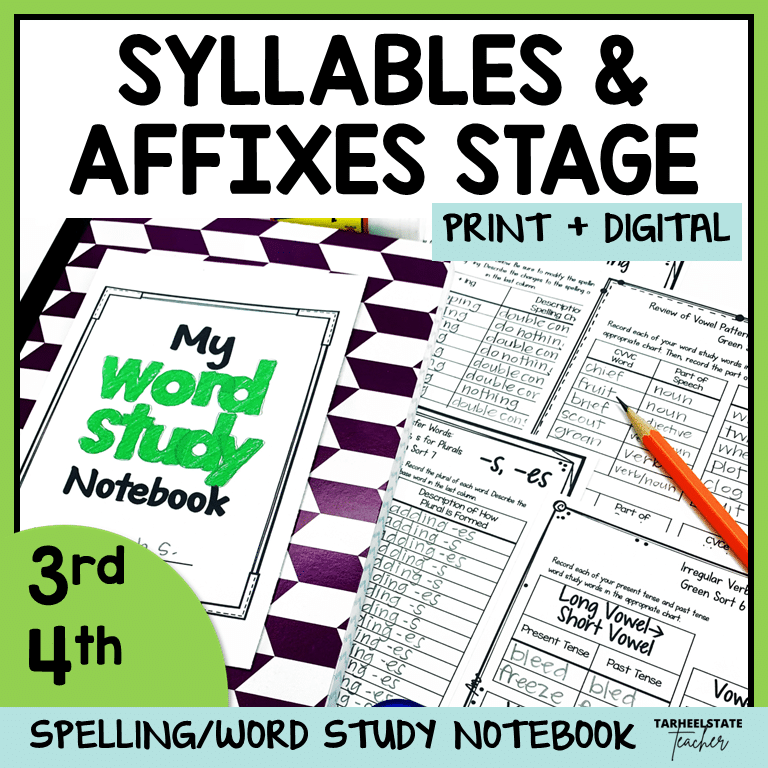
While you’re at it, get your copies made. When I launch word study, I print the word searches and word study notebook pages for one whole unit for each group. I like the half-sheet word searches, so I copy enough for each group, cut them in half, and paper clip each set with the correct sort copies into that group’s binder. One student from each group can be responsible for grabbing them when it’s time.
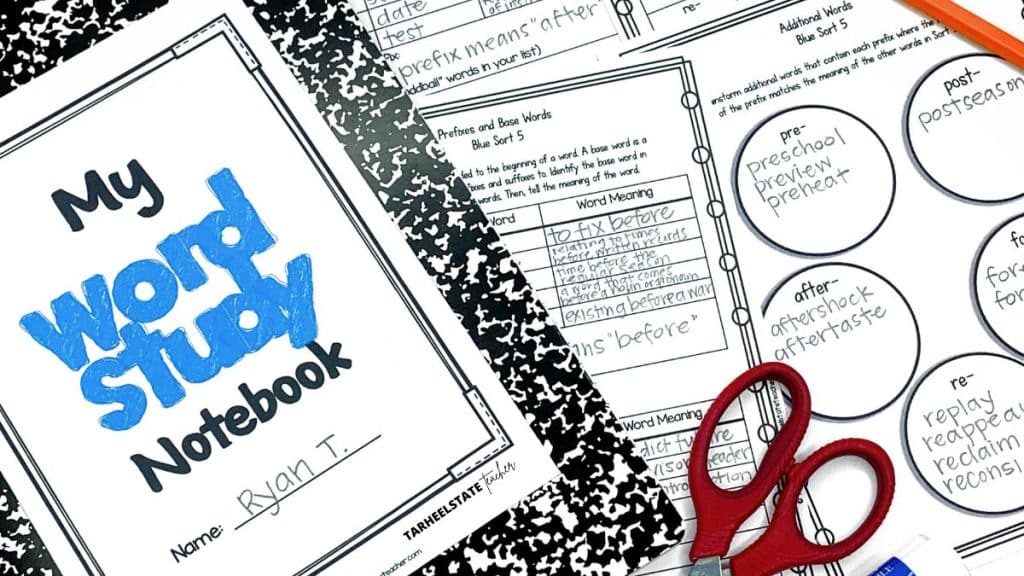
Students keep all of their word study work in marble composition notebooks. Word search glued on the left side, the right side saved for recording words as they find them, then word study notebook sheets glued in after that, with two blank pages left for small group notes and assessments before the next word search goes in.
Why this matters: You will not have the mental bandwidth to build an organizational system during week two of school. Setting up the shelf and running your copies in August means that when your groups exist, you just drop folders into place.
I walk through my exact center setup, including the two-pocket folder system, in my post on organizing word study games and centers.
STEP 2: ADMINISTER THE SPELLING INVENTORY DURING THE FIRST WEEK OF SCHOOL
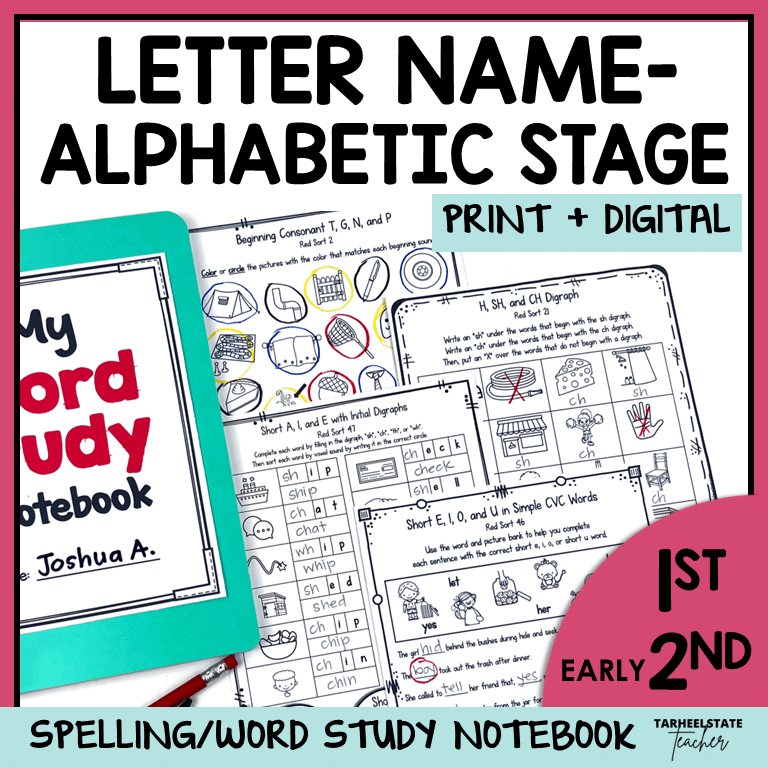
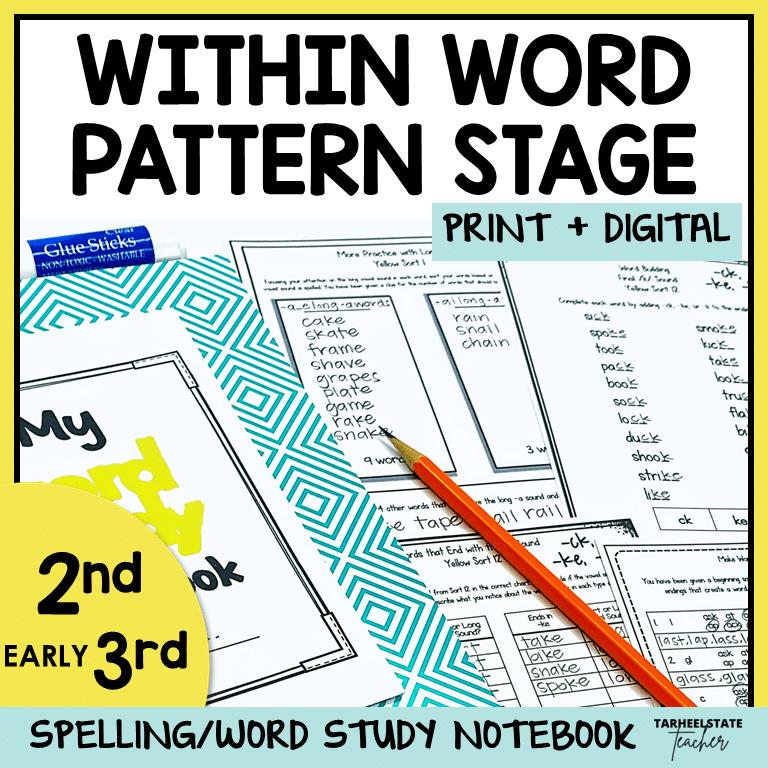
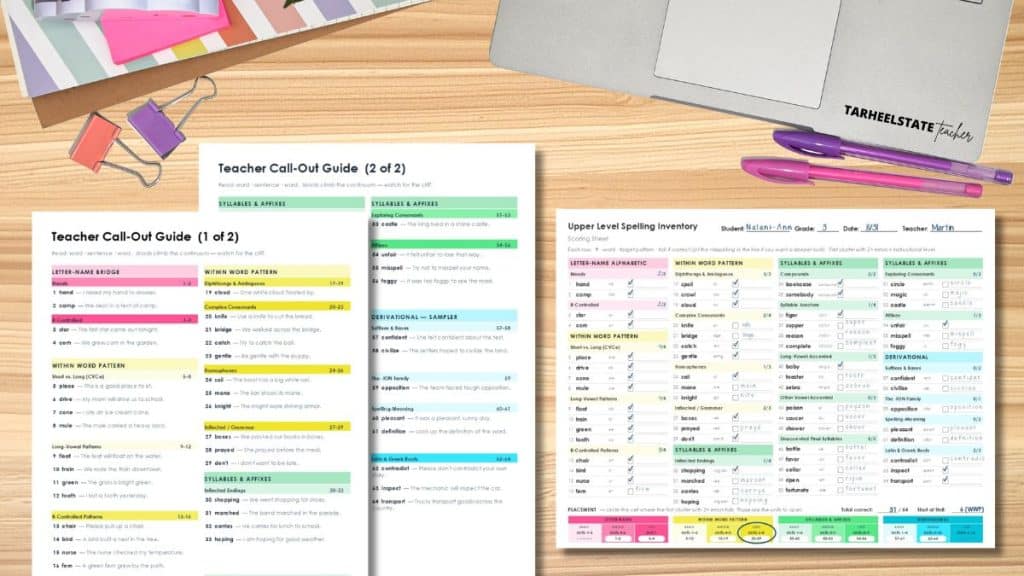
Give the Engaged Spelling Inventory during the first week. This inventory builds on the 24-word Words Their Way inventory and contains 64 words spanning the Late Letter-Name Alphabetic to the Derivational Relations Stage. It will give you specific insight into the instructional level of your students and which word study units they are ready to start. You may need 3 sessions of 15-20 minutes to complete this assessment for all students. Call out the words, have students spell them.
Why this matters: The inventory is the only thing standing between you and truly differentiated word lists. Everything in weeks two and three depends on this data, so it needs to happen early, even if scoring waits.
STEP 3: TEACH ROUTINES WITH A SHARED WORD LIST
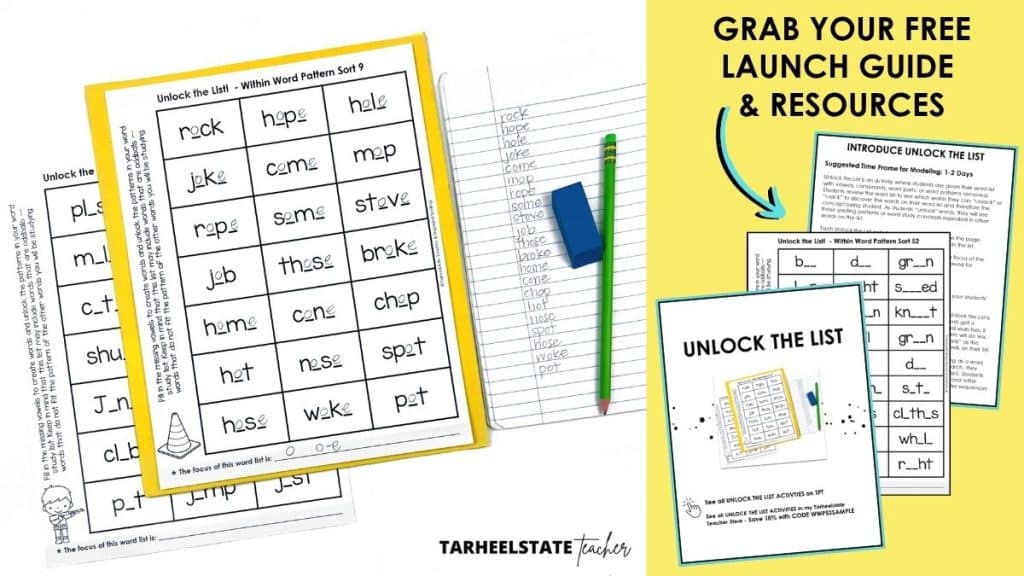
If you’re ready to get going, for the rest of week one, use a word list that is beneficial to your grade-level. I recommend something like Homophones because it’s a topic everyone can benefit from reviewing and a low-risk word list that allows you to focus on developing your routines. Be sure to download my Free Launch Guide and Resources and you’ll get a plan for your whole-group word list. During your time this week, sort words together on the carpet, talk about what students notice, and let it be simple.
Why this matters: Your word study block does not have to sit empty while you assess. Whole-group word study during week one lets you model your expectations to all twenty-four students at once, which is far more efficient than teaching the same procedure five separate times later.
Get the Free Word Study Launch Guide
Transform students’ spelling abilities with pattern-focused learning that actually sticks! Get your free word study launch guide and resources to implement a word study routine that frees you up for small-group magic ✨.
YIPPEE!! I'm so excited to share my plans with you!
I'll be sending you an email right away with your WORD STUDY LAUNCH GUIDE AND FREE ACTIVITIES 💕.
If you do not see an email from Tarheelstate Teacher in the next 10 minutes, check your spam folder, then email me at tarheelstateteacher@gmail.com!
WEEK 2: SORT YOUR GROUPS AND TEACH ONE ROUTINE AT A TIME
Now you’ve got data, so this is the week your groups become real. But resist the urge to hand everyone a different word list on Monday and call it differentiated. Week two is where you teach ONE routine at a time, score student assessments, and sort students into differentiated groups.
STEP 4: SCORE YOUR INVENTORY AND SORT STUDENTS INTO FOUR TO FIVE GROUPS
Score each student’s inventory, identify their developmental spelling stage, and cluster them into groups. Four or five groups is really the most any of us can juggle well, and most of my upper elementary classes shake out into five spanning Letter Name-Alphabetic through Derivational Relations. Do not agonize over the student who sits between two stages. Place them in the lower group and move them later if they’re bored.
🌟 Why this matters: Groups based on actual spelling data are the whole reason this routine works. Guessing at levels or grouping by reading level puts students on word patterns they’ve already mastered or can’t yet access.
STEP 5: INTRODUCE ONE ROUTINE AT A TIME, STARTING WITH DISCOVERY WORD SEARCHES OR UNLOCK THE LIST
Pick ONE entry activity and model it in whole group before you ever expect a student to do it independently. With Discovery Word Searches and Unlock the List, you’ve got two great options to choose from, and they do almost the same job.
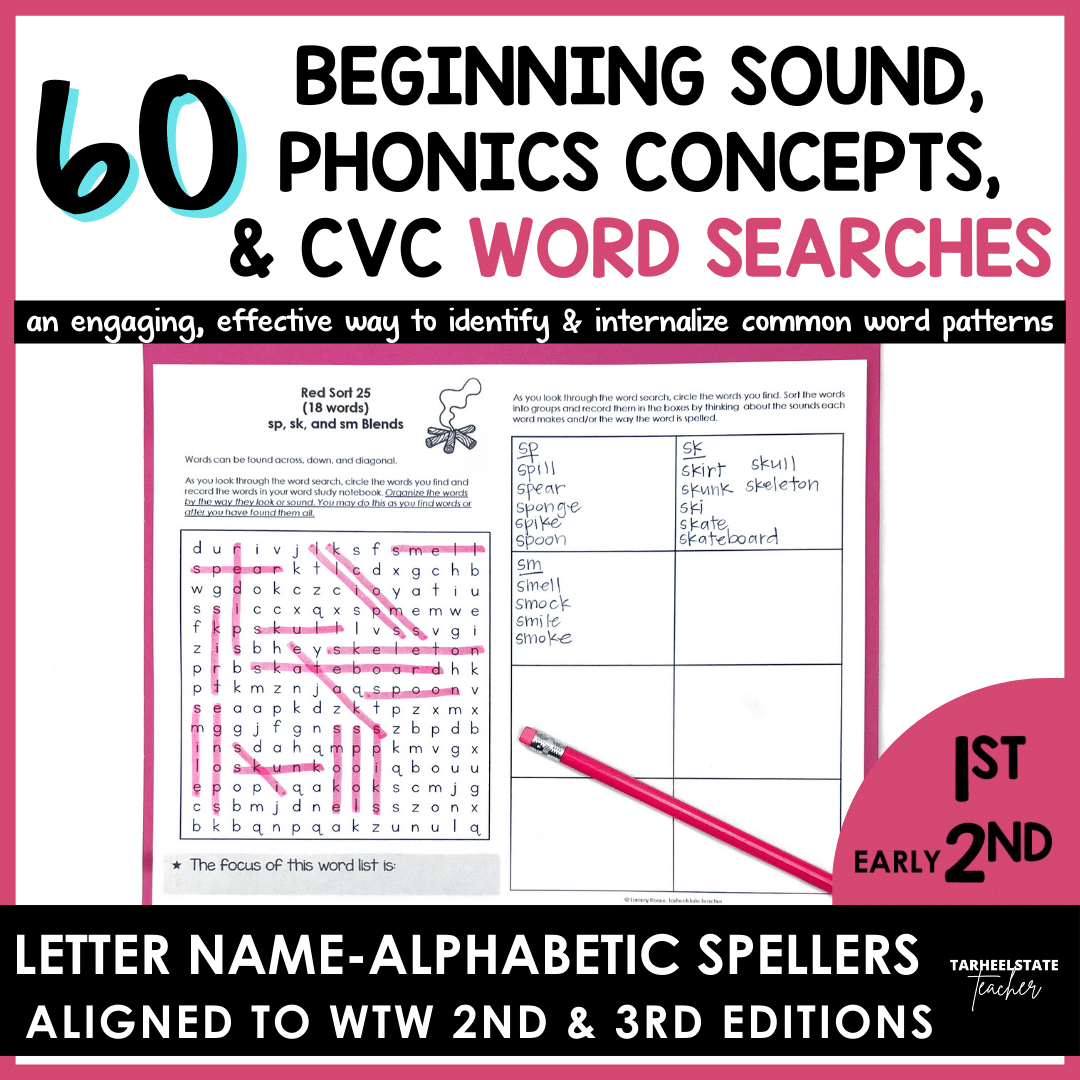
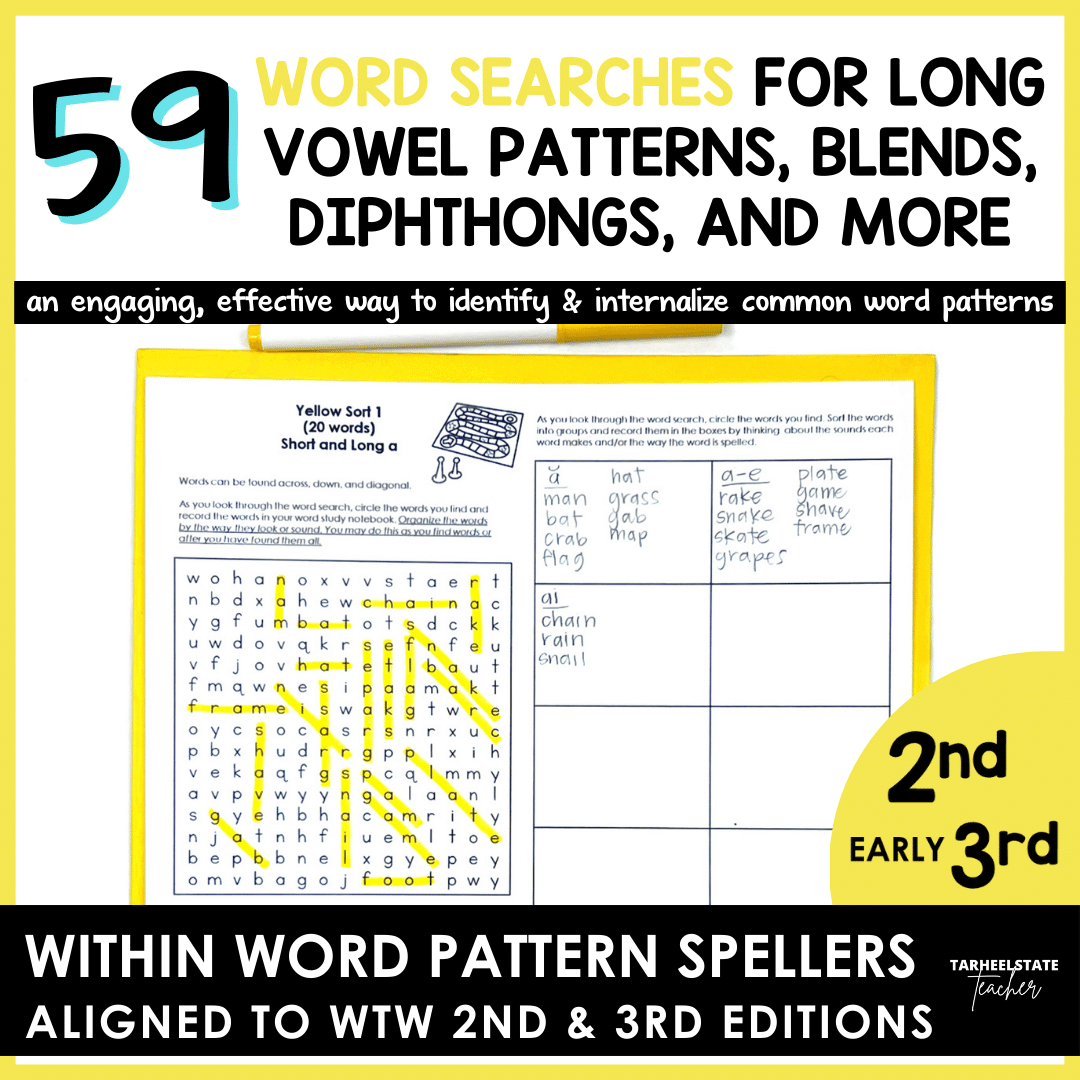
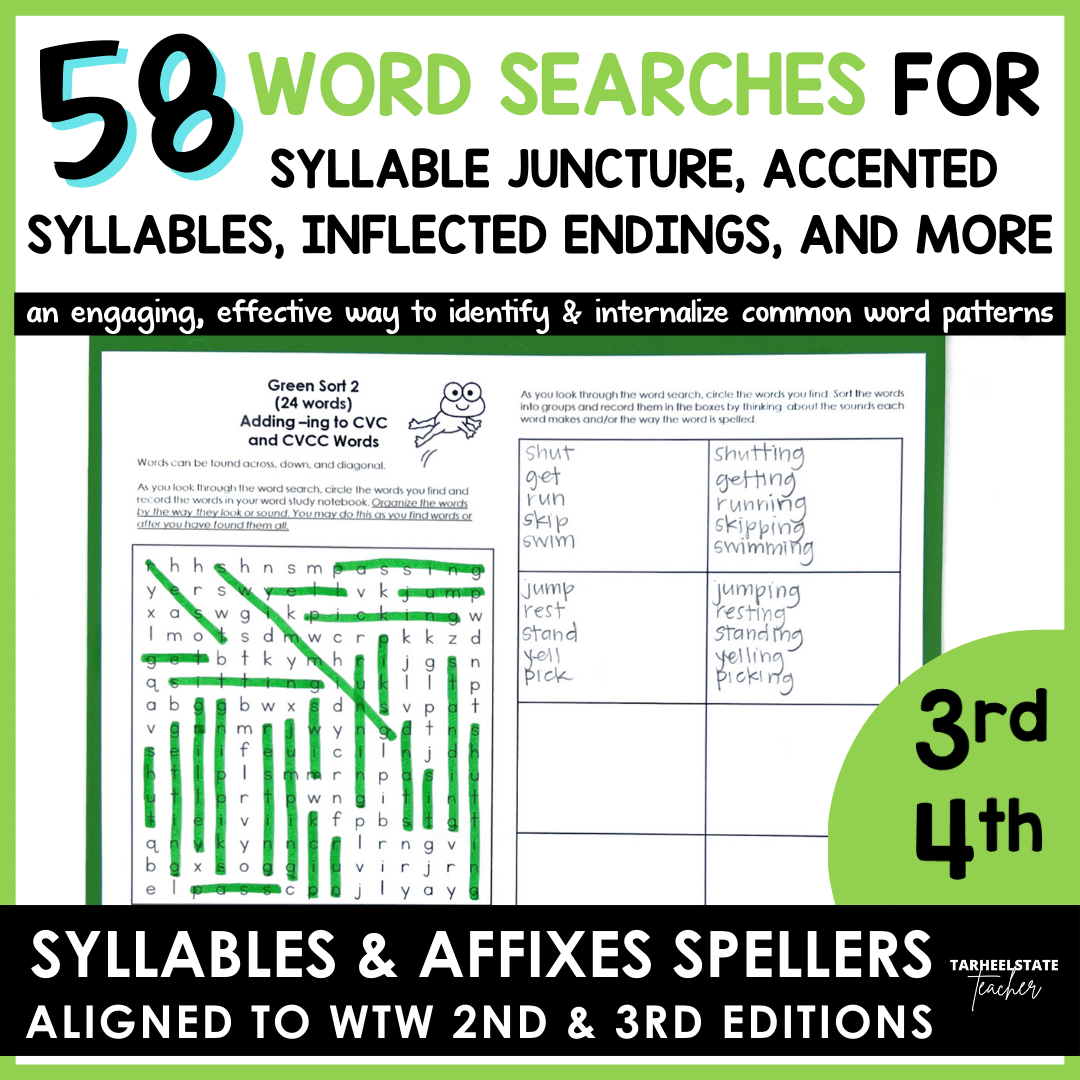
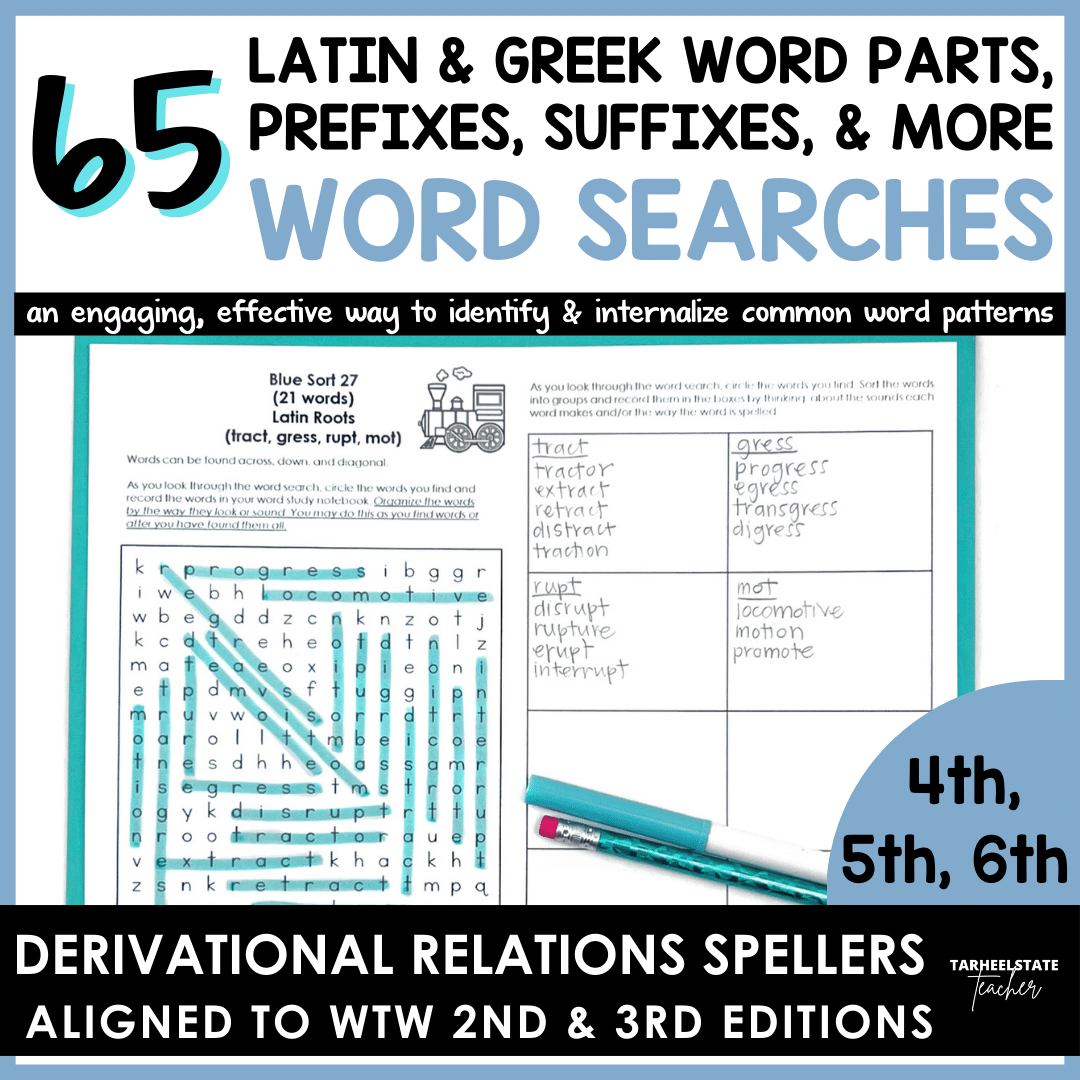
Discovery Word Searches are word searches that do not come with a word list. Students hunt for words and record what they find by sorting into categories, which means they discover their own word list and start noticing their focuse pattern. Teach them strategies for working on word searches, show them how to search without a list, and the expectation that they record the words as they find them, sorting them into categories as they go. Discovery word searches may take 2-3 15 minute word study blocks to finish at first as students get used to this activity. After the initial introduction, you can let them know that finding all of the words is not required, but that they will find many. You’ll share out the list during small groups.Â
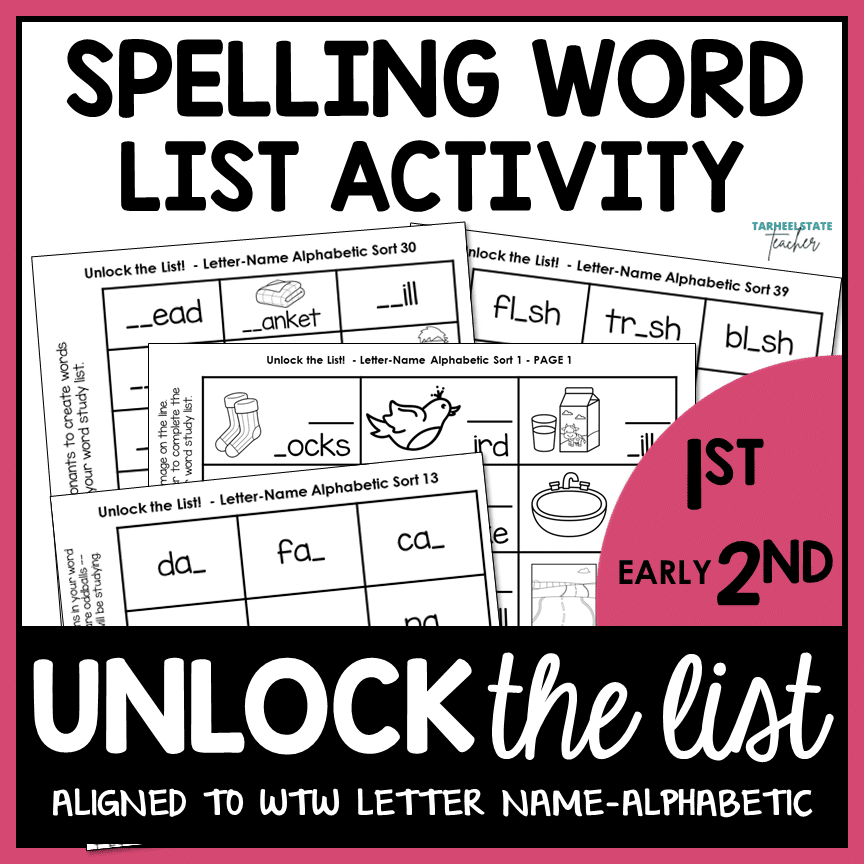
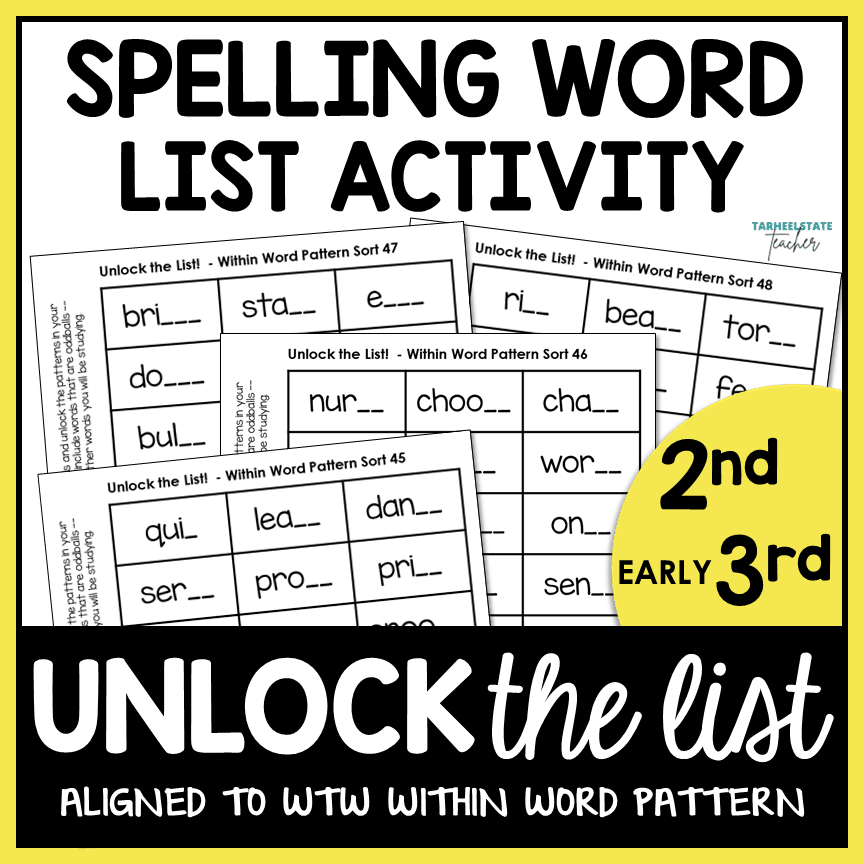
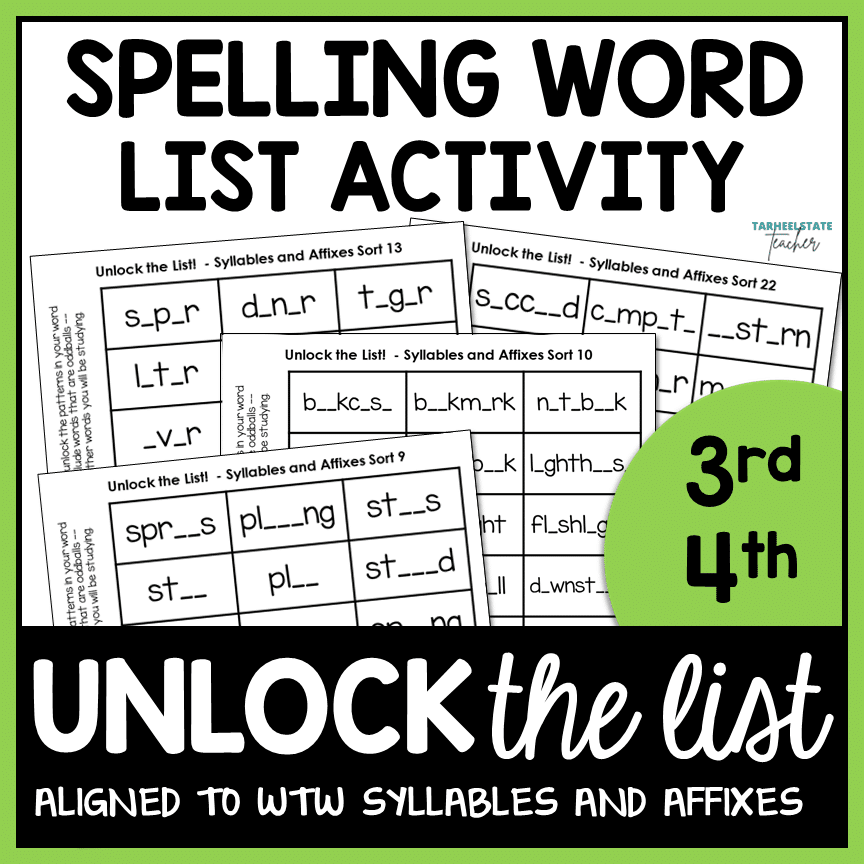
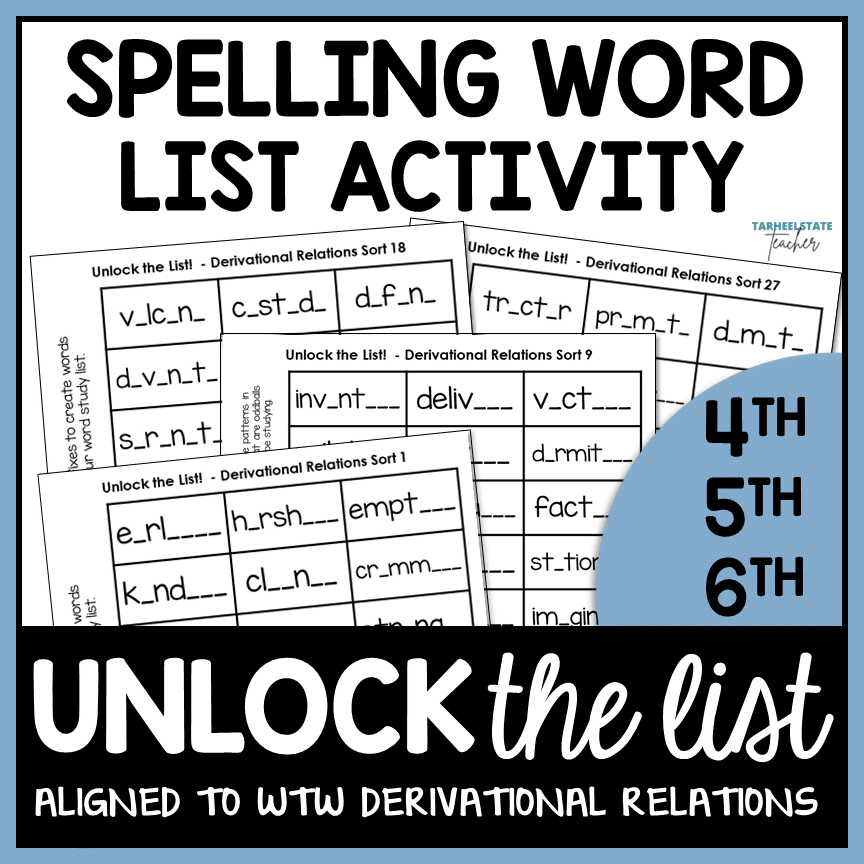
Unlock the List offers similar discovery work as the word search activity, and many teachers choose to implement both activities. Students get their word list with letters, patterns, or word parts removed and work to “unlock” the words. As they crack a few, they start seeing that same pattern repeat across the list and confidently begin to create words.
Use Discover Word Searches or Unlock the List to launch your word study rotation. You can absolutely add the second one later, or pair them, but for week two pick ONE and teach it well. My Free Launch Guide gives you all the tips and tricks for modeling these activities.
🌟 Why this matters: Both of these are easy to run independently, which makes either one the right first activity. When students can do one activity well without you, you’ve bought yourself the small-group time that everything else depends on.
DISCOVERY WORD SEARCHES
UNLOCK THE LIST
STEP 6: SET UP YOUR WORD STUDY NOTEBOOKS AND TEACH YOUR SORTING PROCEDURES
Spend one block setting up notebooks and one block on sorting logistics: where the cut-apart words live, what happens to the scraps, whether students glue or store their sorts, and where completed work gets turned in. This may not feel like time well spent, but when your students are organized up front, it is!
🌟 Why this matters: Every minute you spend on procedures in week two is a minute you get back ten times over in October. Unclear expectations about scraps and turn-in spots are what turn a 15-minute block into a 5-minute block.
WEEK 3: BUILD YOUR CYCLE AND LAUNCH THE ROTATION
Here’s where it all comes together, and where most of us make the same mistake I made for years: launching all five groups on the same day. Week three is about deciding what your rotation actually contains, then starting slow on purpose so you’re only troubleshooting one group at a time.
STEP 7: DECIDE YOUR ACTIVITIES AND HOW MANY DAYS YOUR CYCLE WILL TAKE
Before you can build a schedule, you have to know what’s going in it. And the first decision is the one that changed everything for me.
Ditch Monday through Friday. Most of us were trained to plan word study as “on Monday we do this, on Tuesday we do this.” Then reality hits. We have a two-day week for Thanksgiving, an assembly on Wednesday, a fire drill during our block, and a snow day. Monday-Friday routines set us up to fail, and worse, we lose student buy-in when we’ve trained them for a schedule that rarely happens the way we said it would.
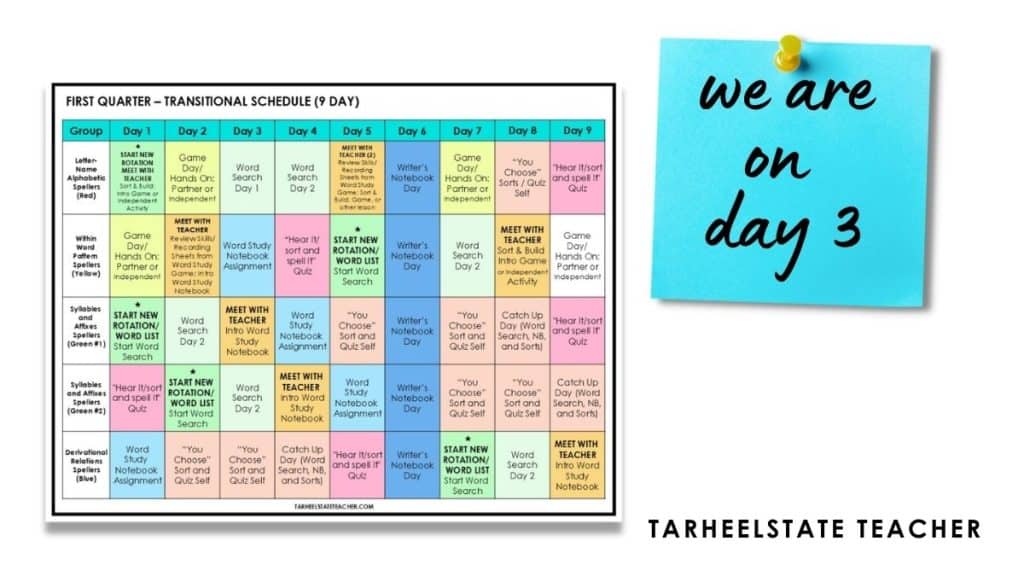
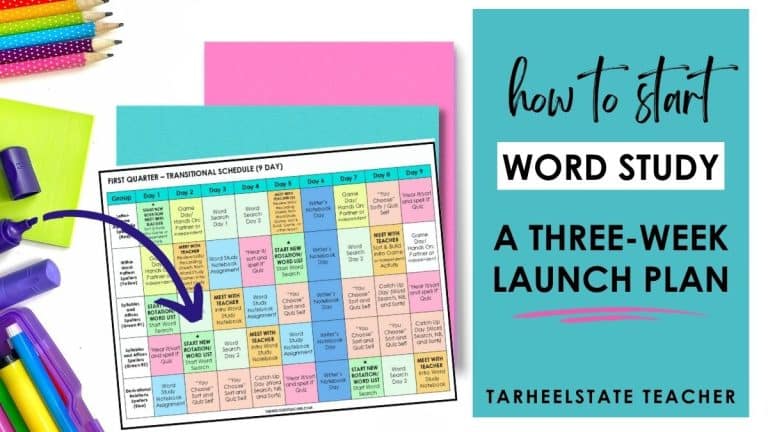
Instead, think of your word study tasks as a cycle of activities that students move through regardless of what day of the week it happens to be. My cycle runs 7, 8, or 9 days, which means one word list takes about two weeks. Longer than a traditional week, yes, and worth every bit of it, because all of the activities actually happen for every word list.
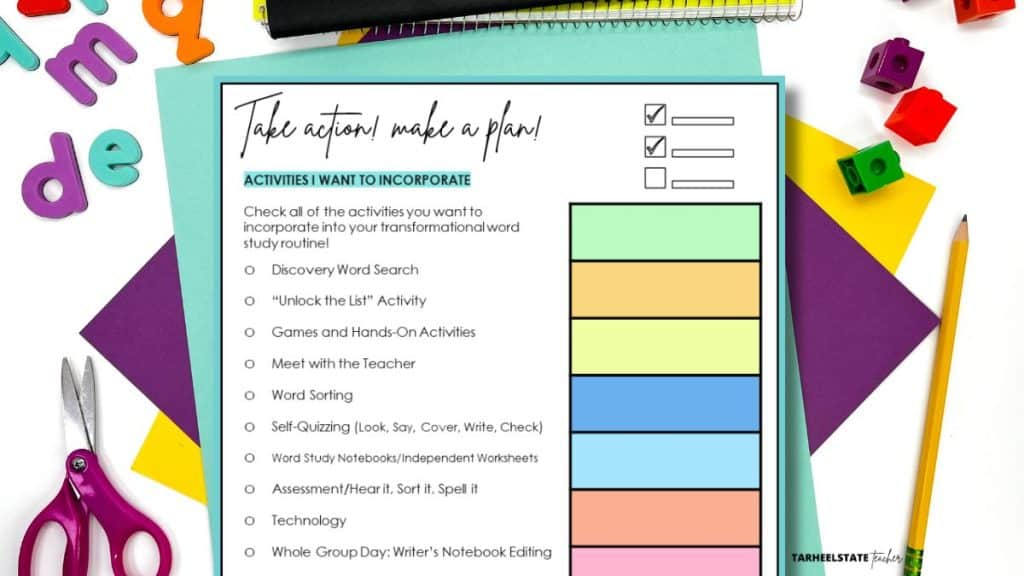
Here’s the menu I choose from:
- Discovery Word Search or Unlock the List to launch the new word list (word searches usually take two days)
- Meet with the Teacher for a differentiated small group lesson
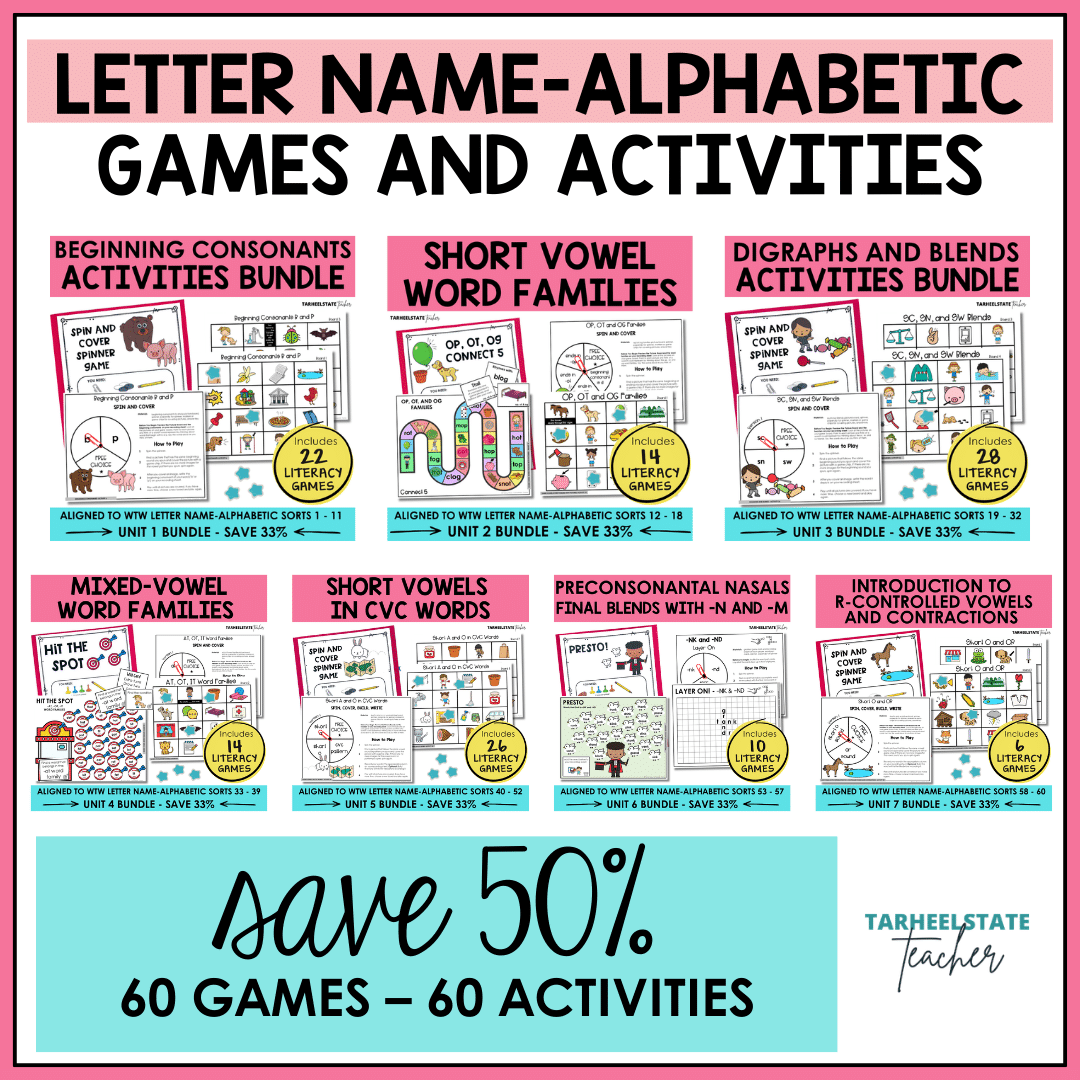
- Partner games or hands-on independent activities
- Word study notebook activities
- Word sorting, building words, self-quizzing, catch-up day
- Writer’s Notebook Day, a whole-group day where students hunt through their own writing for misspelled words. This one is CRITICAL to me because it’s where students see that word study is actually about their real spelling.
- “Hear it/Sort and Spell It” assessment at the end of the cycle
A 7-day cycle might be word search (2 days), meet with the teacher, word study notebook, word sorting and self-quiz, then assessment. A 9-day cycle adds a second games day and the Writer’s Notebook day. Fewer activities means a shorter cycle. You get to decide what activities will be most impactful and engaging for your students!
🌟 Why this matters: A cyclical schedule is flexible to the realities of school schedules that sometimes (often!) have to change. When a day gets eaten, you don’t scrap an activity, you just pick up where you left off next time.
👉 Grab my customizable word study schedule template in Google Slides. It’ll prompt you to make your own copy, and there are 7-day and 9-day versions mapped out with five groups.
STEP 8: LAUNCH YOUR STAGGERED ROTATION WITH GROUPS STARTING ON DIFFERENT DAYS
Assign students to their groups and start ONE additional group on the rotation each day. Group one begins their word search (or Unlock The List if that is the one you chose to implement first) on Monday, group two on Tuesday, and so on. Students who haven’t started their rotation yet read independently until their turn comes.
Then post your schedule where everyone can see it and put a student in charge of moving a “We are on day ___” card each day. Students know which group they’re in, they check the schedule for their activity, and they get to work without asking you.
🌟 Why this matters: Starting all five groups on the same day means five groups needing your attention simultaneously. Staggering the launch means you’re only ever troubleshooting one new group at a time, and your “meet with the teacher” days fall naturally onto different days, which is the whole point.
👉 This is the piece I get the most questions about, and I mapped out the whole thing (red arrows and all) in my post on setting up a staggered word study schedule.
STEP 9: ADD NEW ACTIVITIES GRADUALLY, AND ALWAYS THROUGH MEET WITH THE TEACHER
Your first quarter schedule should look different from your second, third, and fourth quarter schedule. Mine always does. I add activities in as students progress in their word study levels and in their ability to handle the tasks already in their routine.
Games are the perfect example. I don’t drop a new game into a center and hope for the best. I introduce it during Meet with the Teacher, watch students play a round with a partner, and answer their questions. (They think I’m teaching them a game. I’m also informally assessing and teaching the word study concept inside it.) THEN it goes into the rotation.
Same with spelling homework. Get the in-class routine humming first, then bring families into it.
🌟 Why this matters: A rotation that includes activities students haven’t been trained on will collapse, and you’ll blame the rotation instead of the training. Adding activities gradually also keeps the routine from going stale, which is a real thing by February.
👉 When you’re ready for that step, here’s why word study centers are worth it in upper elementary, and here’s the full 7, 8, or 9 day cycle that your working towards.
YOUR THREE-WEEK LAUNCH CHECKLIST
- STEP 1: Set up your word study space, make copies of the inventory resources, and prep student notebooks before day one
- STEP 2: Decide your chosen activities and how many days your word study cycle will take
- STEP 3: Give your spelling inventory during week one
- STEP 4: Run a whole-group word study list to teach routines for each of your chosen activities
- STEP 5: Score the inventory and sort students into four to five groups
- STEP 6: Model ONE entry activity, either Discovery Word Searches or Unlock the List
- STEP 7: Set up notebooks and teach sorting procedures
- STEP 8: Stagger your group start days and launch the rotation
- STEP 9: Add new activities gradually through Meet with the Teacher
A LITTLE PEP TALK BEFORE YOU GO
Most upper elementary schedules only give us a 15 to 20 minute word study block, which makes it awfully tempting to skip the training and jump straight to the good stuff. I promise you, the three weeks you spend up front are what buy you a word study block you actually look forward to for the other thirty-three.
And if week three arrives and your rotation is a hot mess? Back up. Spend two more days modeling. Nobody is grading you on how fast you got there, and I give you full permission to take four weeks instead of three. 😊
One more time, because I mean it: you can start this in October. You can start it in February. The three weeks work whenever you decide to spend them.
Your word study block is going to be one of your favorite parts of the day. Hang in there while you build it!
Get the Free Word Study Launch Guide
Transform students’ spelling abilities with pattern-focused learning that actually sticks! Get your free word study launch guide and resources to implement a word study routine that frees you up for small-group magic ✨.
YIPPEE!! I'm so excited to share my plans with you!
I'll be sending you an email right away with your WORD STUDY LAUNCH GUIDE AND FREE ACTIVITIES 💕.
If you do not see an email from Tarheelstate Teacher in the next 10 minutes, check your spam folder, then email me at tarheelstateteacher@gmail.com!
Spelling & Word Study
Everything Bundle
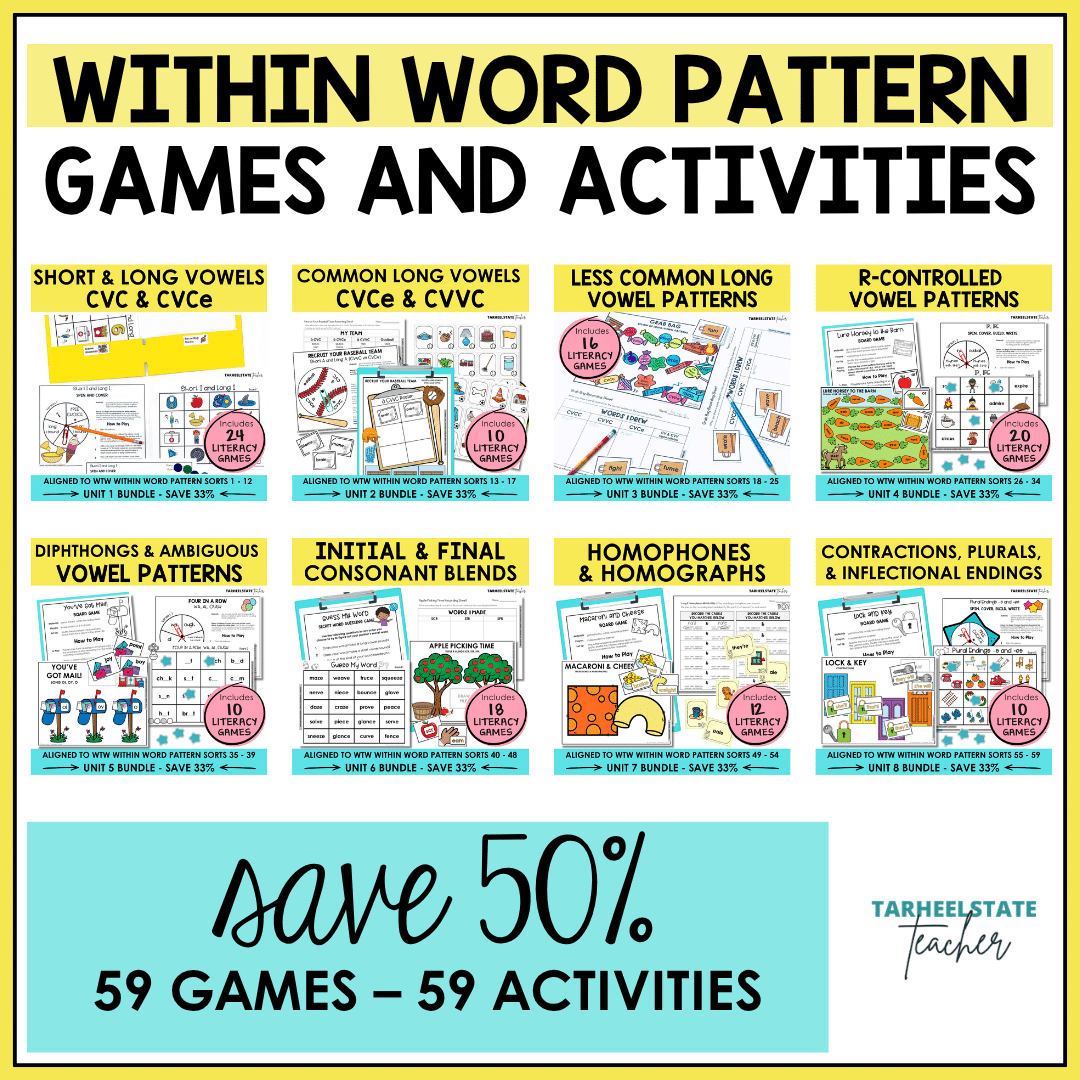
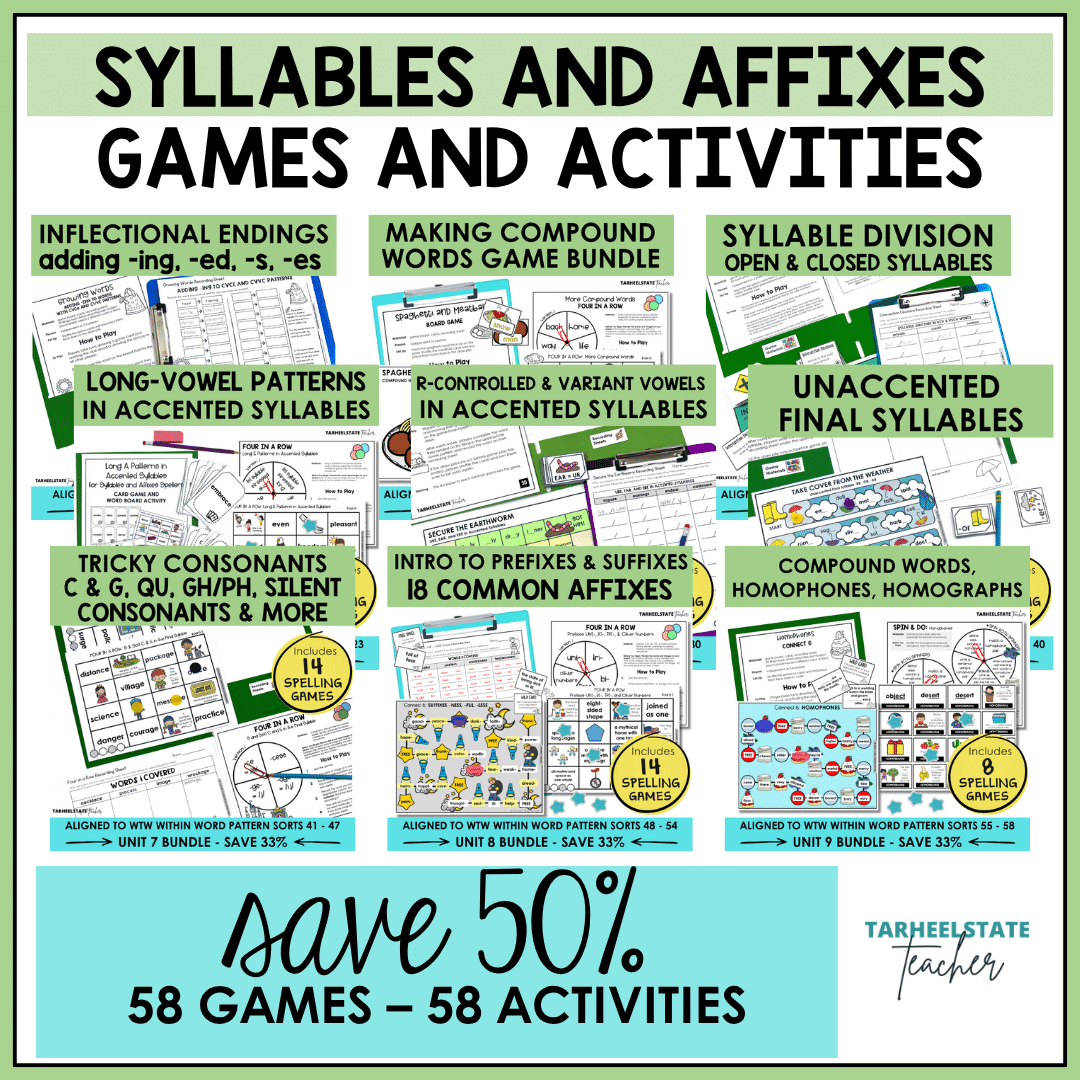
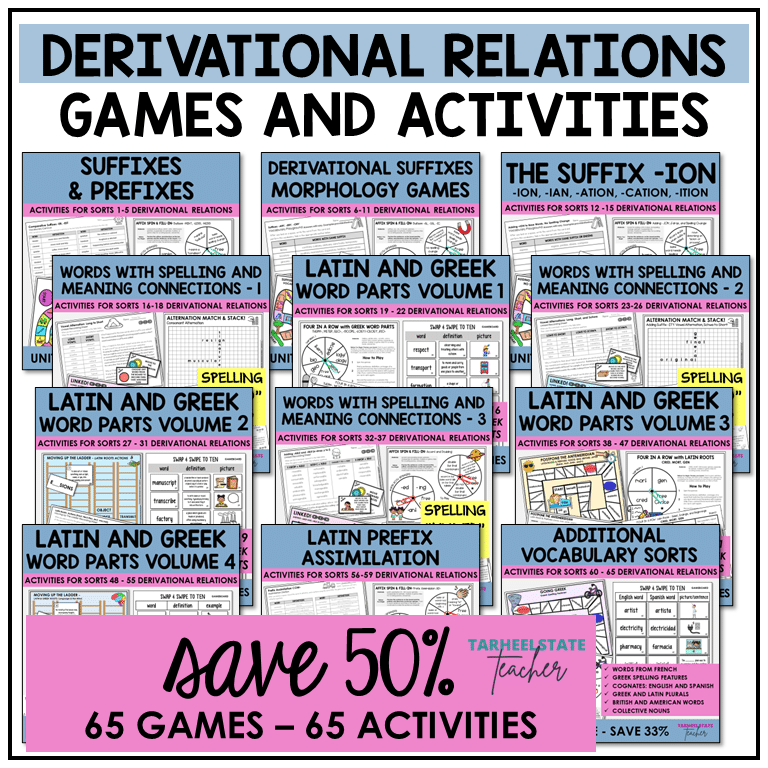
Your entire word study routine in one place. This everything bundle includes all 242 games plus Unlock the List, the homework routine, word searches, and notebooks across all four levels, so you can differentiate from grades 3 to 5 without building a thing.
DON’T MISS OTHER POSTS IN THIS WORD STUDY SERIES:
⇒ My Words Their Way Word Study Routine: Seven Day Overview
⇒ One Teacher’s Word Study Schedule
⇒ Words Their Way Free Resources for Word Study
⇒ Organizing Your Word Study Games and Center Area
⇒ 5 Reasons You Need Word Study Centers in Upper Elementary