Some kids appear unmotivated on the surface, but what’s really happening underneath is often uncertainty, discouragement, or negative self-talk. Many children want to try, succeed, and feel proud of themselves. They just don’t yet have the tools to understand what drives effort or how to keep going when things feel hard.
Learning how motivation works is a powerful life skill, especially during the late elementary and early middle school years. When children begin building inner drive and practicing positive self-talk, they develop confidence, resilience, and the belief that effort matters.
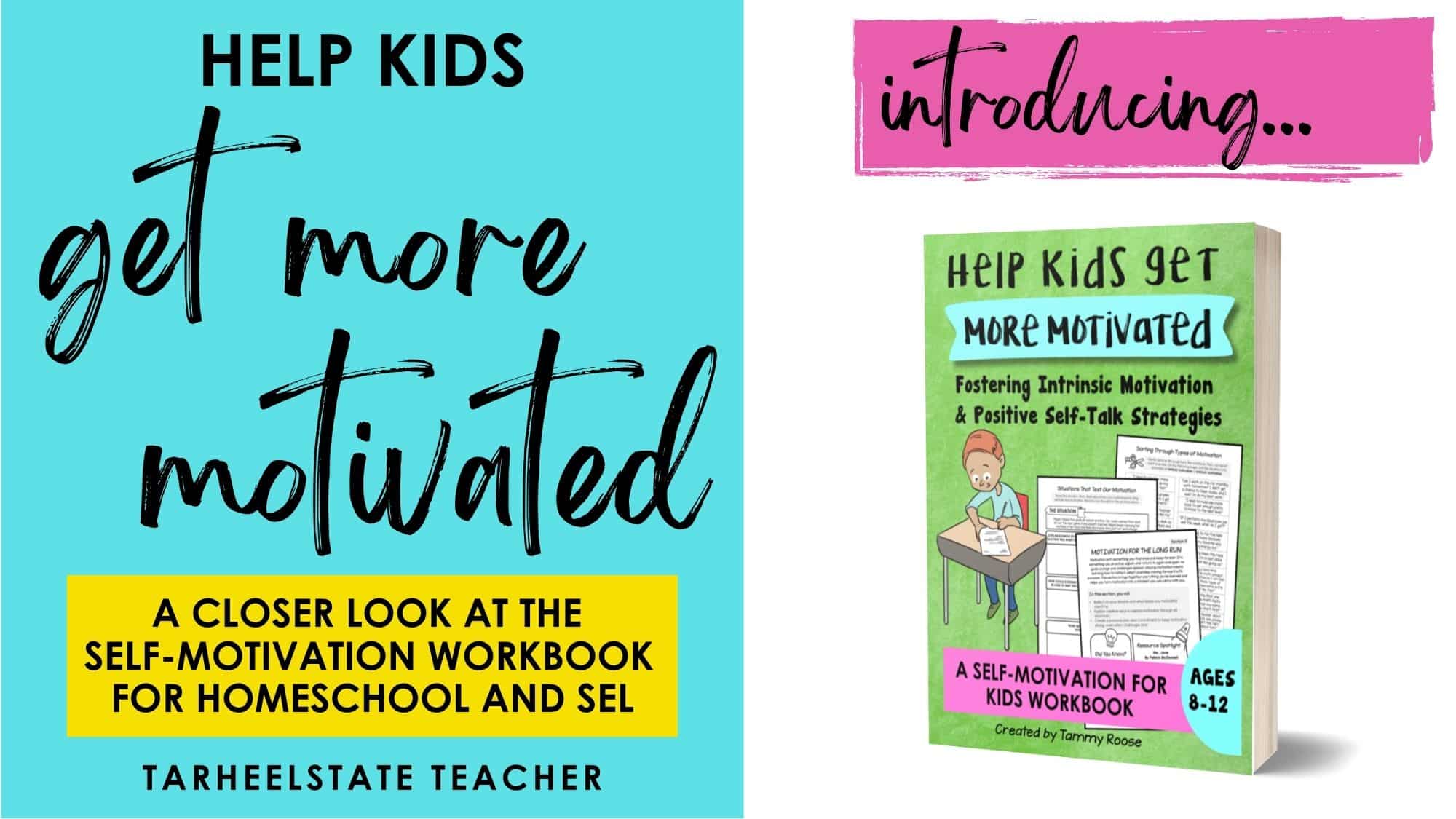
That’s why I created Help Kids Get More Motivated, a social-emotional learning workbook designed to help children ages 8–12 understand their motivation, strengthen self-belief, and develop the mindset needed to keep going.
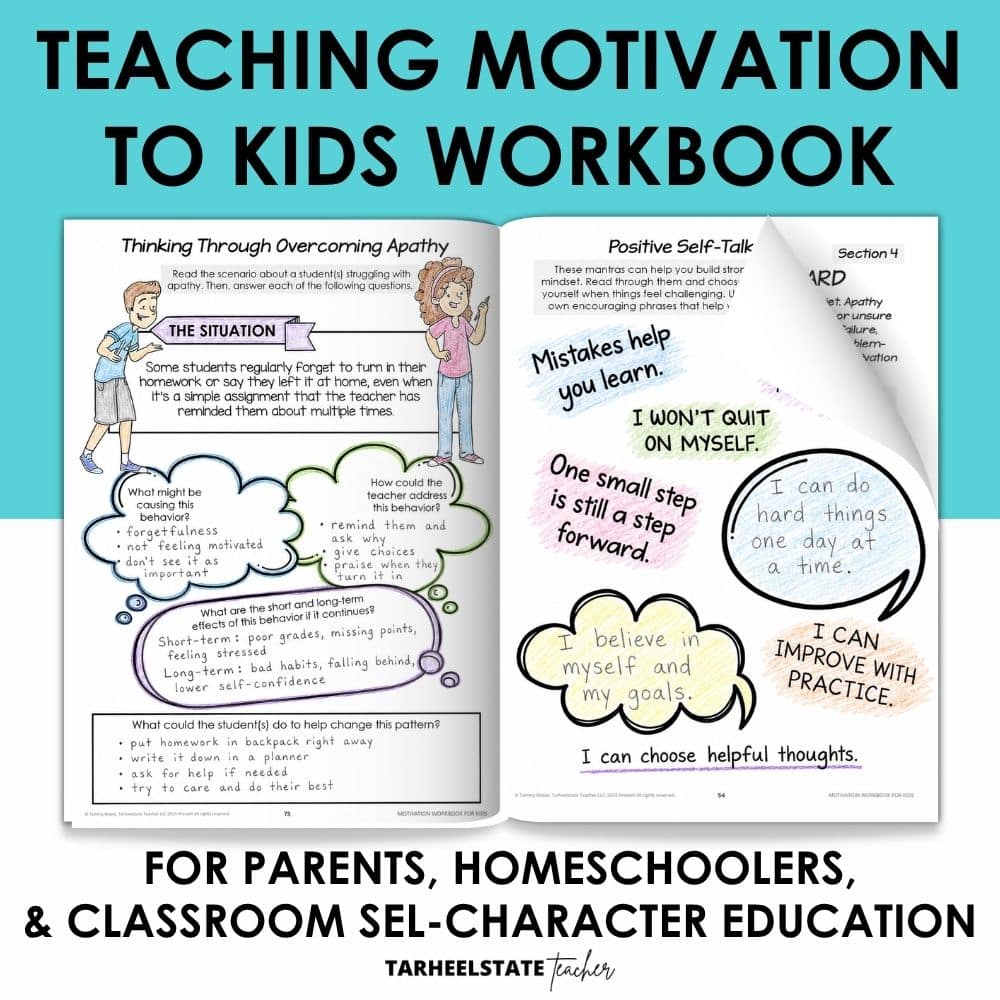
Through reflection, creative activities, and real-life scenarios, kids learn that motivation is not about perfection. It grows through awareness, encouragement, and small steps forward.
Note: Links to suggested items in this post are affiliate links. This means that I am a participant in the Amazon’s Affiliate advertising program that allows sites to earn from qualifying purchases. These links do not increase your cost. I only recommend things I’ve used and love! Read my full disclosure here.
WHY MOTIVATION SKILLS MATTER FOR KIDS
Motivation affects far more than schoolwork. It shapes persistence, confidence, willingness to try new things, and the ability to recover after setbacks.
When children understand where motivation comes from and how to manage discouraging thoughts, they begin to see themselves as capable. They learn that effort is meaningful and that progress is possible, even when success is not immediate.
A WORKBOOK THAT BUILDS LASTING INNER DRIVE
This workbook goes beyond telling kids to “try harder.” Instead, it helps them:
- Understand intrinsic and extrinsic motivation
- Recognize thoughts and habits that affect effort
- Replace negative self-talk with encouraging inner language
- Push through apathy, frustration, and doubt
- Stay motivated while working toward meaningful goals
By the end, children go beyond simply completing activities. They build confidence, self-awareness, and real motivation skills they can use every day.
INSIDE THE WORKBOOK: WHAT WILL KIDS EXPLORE
The workbook is organized into five meaningful sections that guide children from understanding what intrinsic motivation is to living it out with confidence.
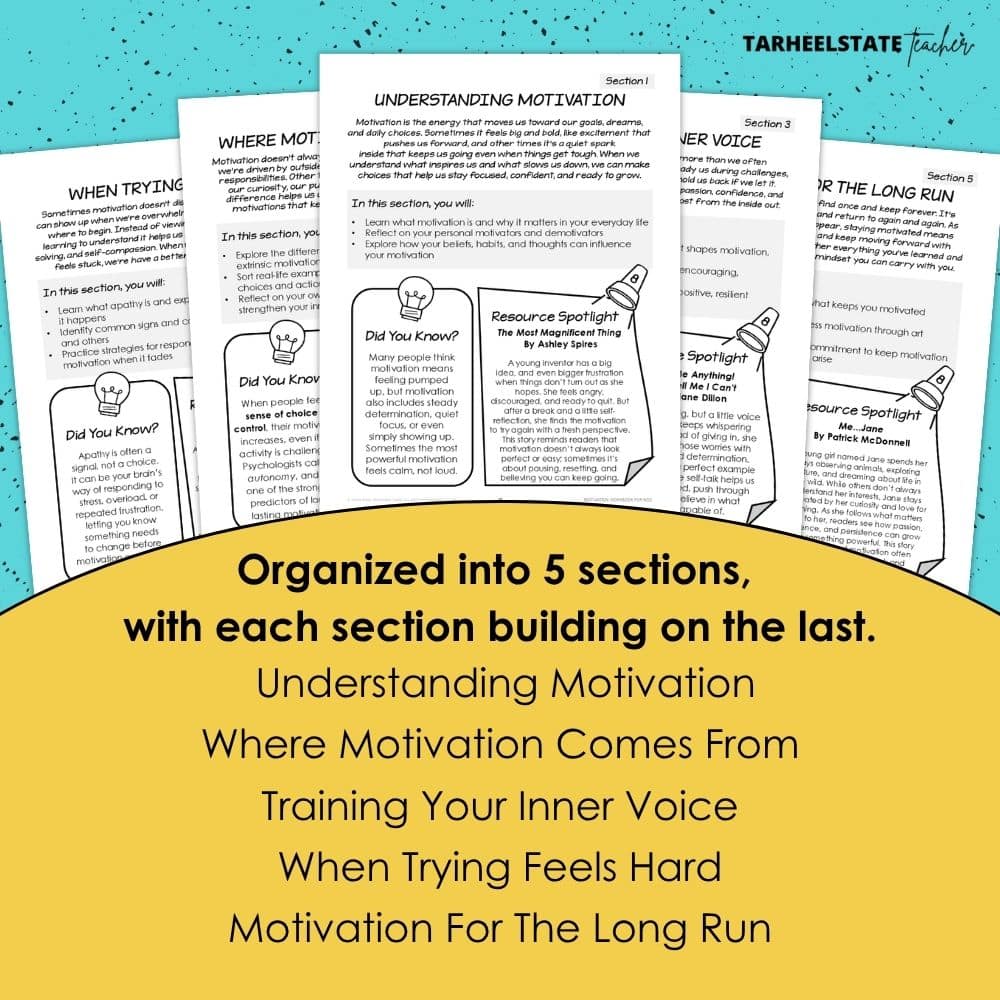
1 – UNDERSTANDING MOTIVATION
Kids begin by exploring what motivation really means and how it shows up in their thoughts, choices, and effort. Through reflection and vocabulary building, they recognize personal motivators and demotivators and begin thinking about what drives their behavior.
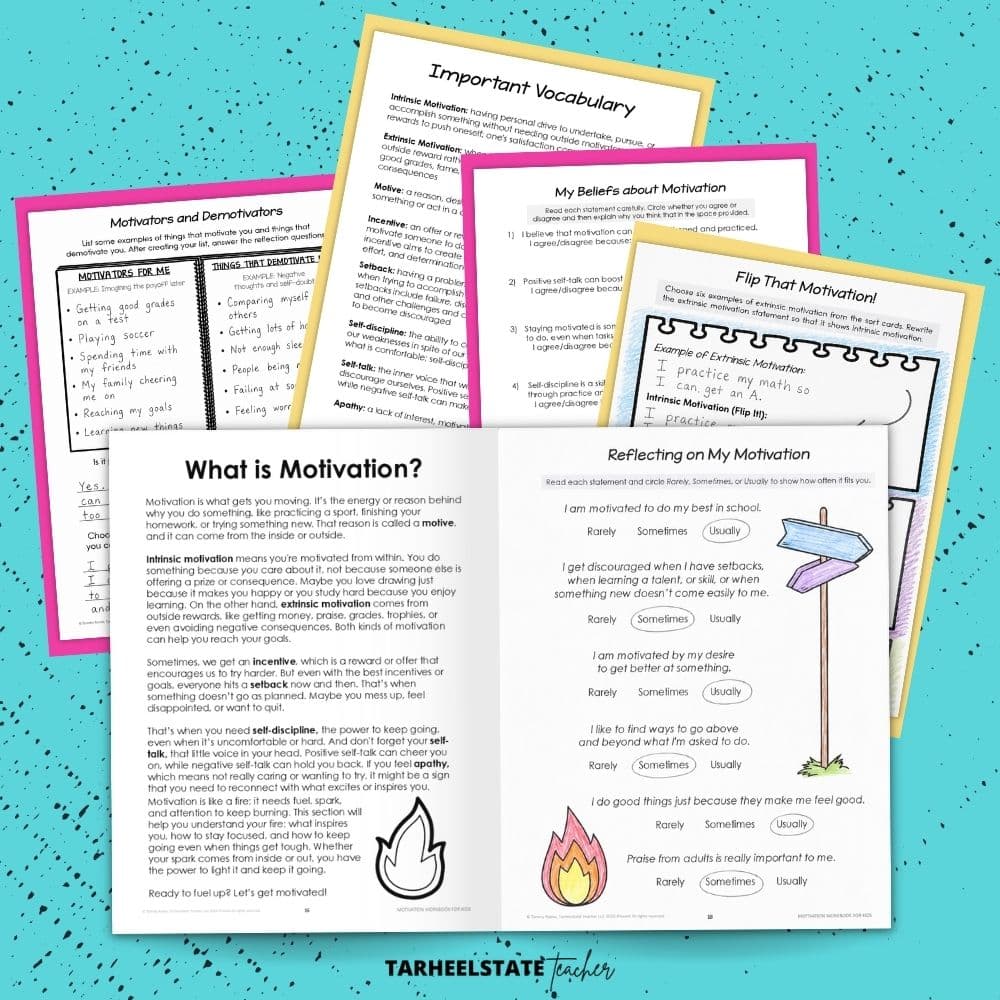
This foundation helps children see motivation as something they can grow and strengthen over time.
2 – WHERE MOTIVATION COMES FROM
Children explore intrinsic and extrinsic motivation and learn how internal drive develops. They reflect on approval, effort, pride, and personal meaning while discovering how motivation shifts from outside rewards to inner belief.
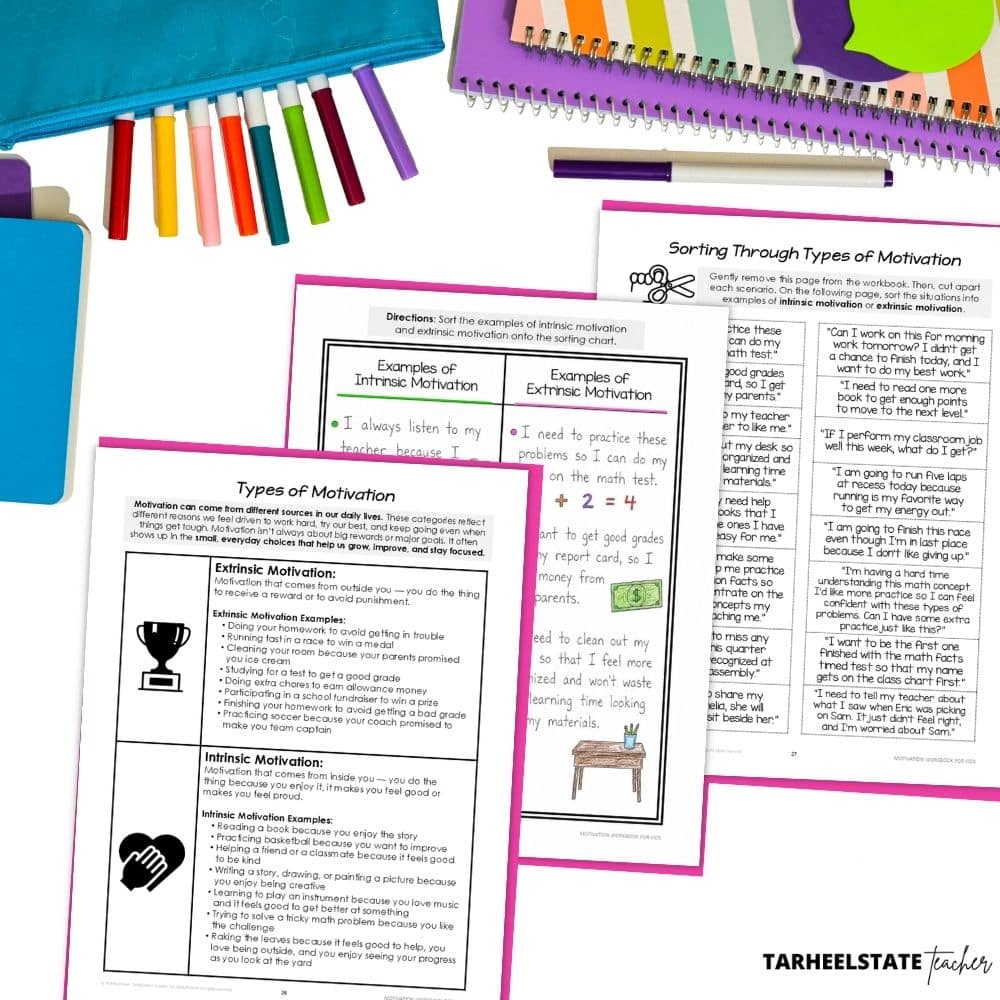
This section helps kids connect motivation to identity, confidence, and self-direction.
3 – TRAINING YOUR INNER VOICE
Thoughts matter. In this section, kids examine the power of words, practice positive self-talk, and learn how encouraging inner language supports persistence.
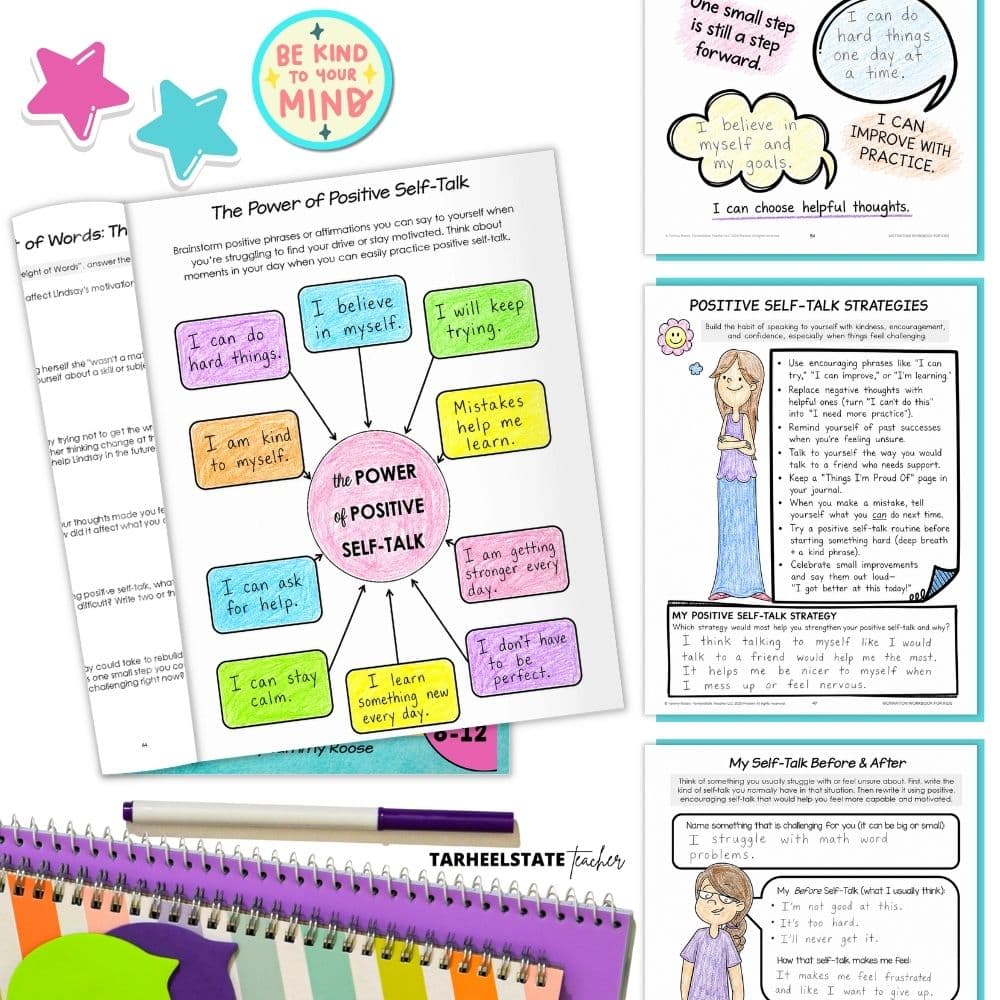
They begin replacing discouraging thoughts with supportive ones and see how mindset shapes motivation.
4 – WHEN TRYING FEELS HARD
Every child experiences discouragement, apathy, or the urge to quit. This section helps kids recognize those feelings and respond with courage, problem-solving, and renewed effort.
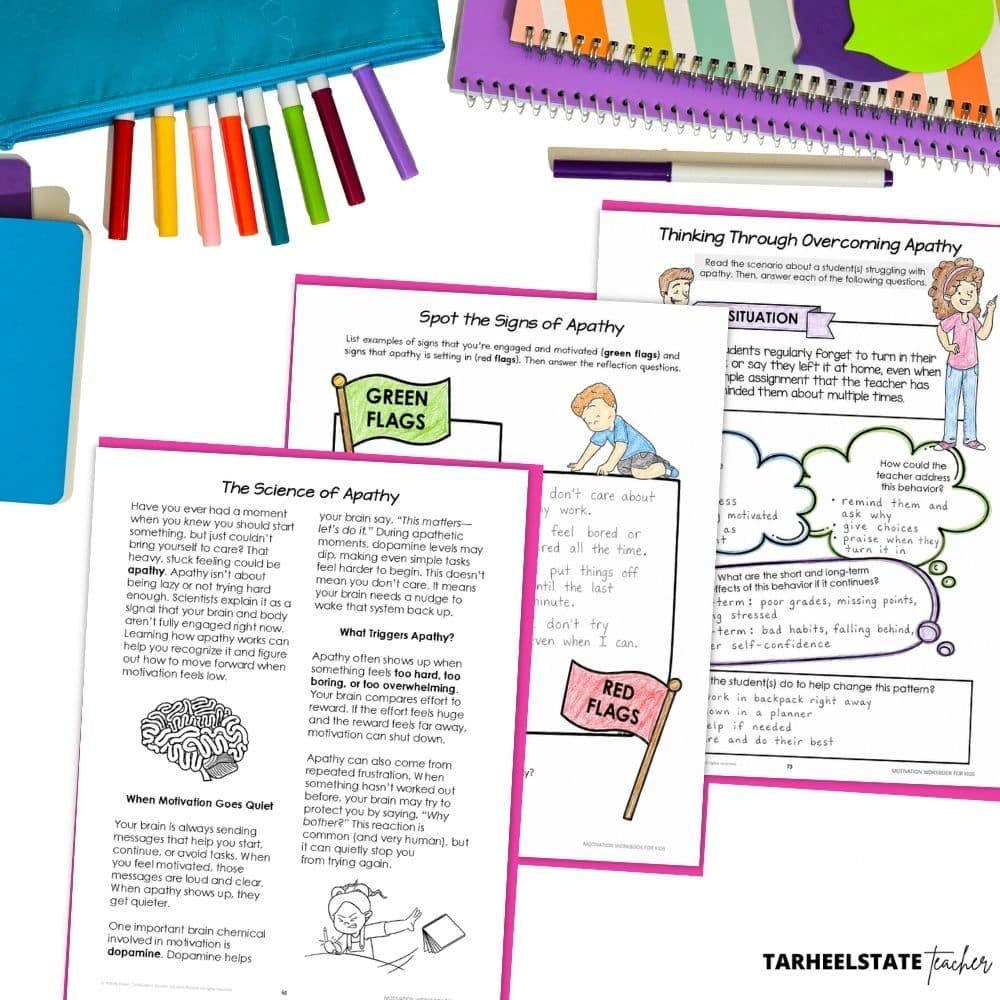
Children learn that setbacks are not failures. They are part of growth.
5 – MOTIVATION FOR THE LONG RUN
The final section helps kids carry motivation into everyday life. Through reflection, creativity, and goal-focused thinking, they celebrate progress and commit to staying motivated moving forward.
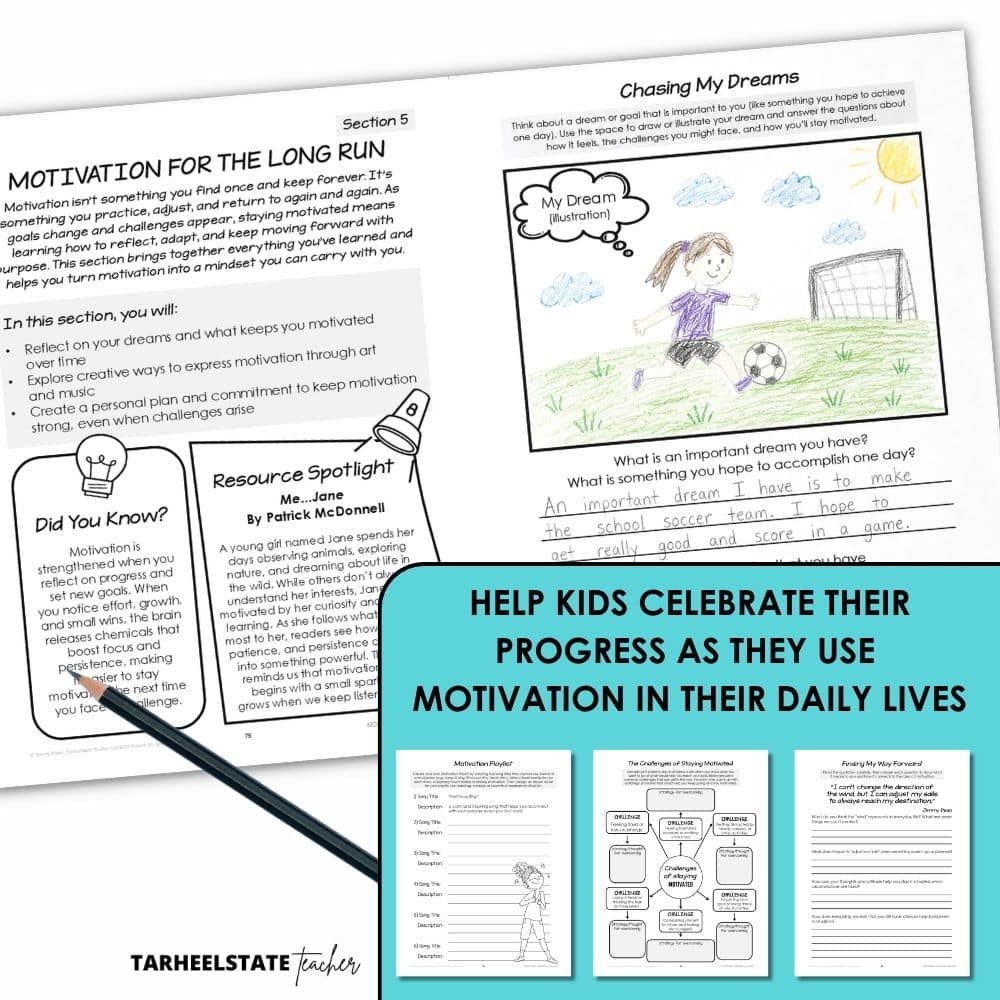
They leave with stronger confidence, clearer purpose, and tools they can use long after the workbook is finished.
STORIES THAT BRING MOTIVATION TO LIFE
Throughout the workbook, picture books help children see perseverance, courage, and self-belief in action. These stories deepen understanding and create meaningful conversations about effort and growth.
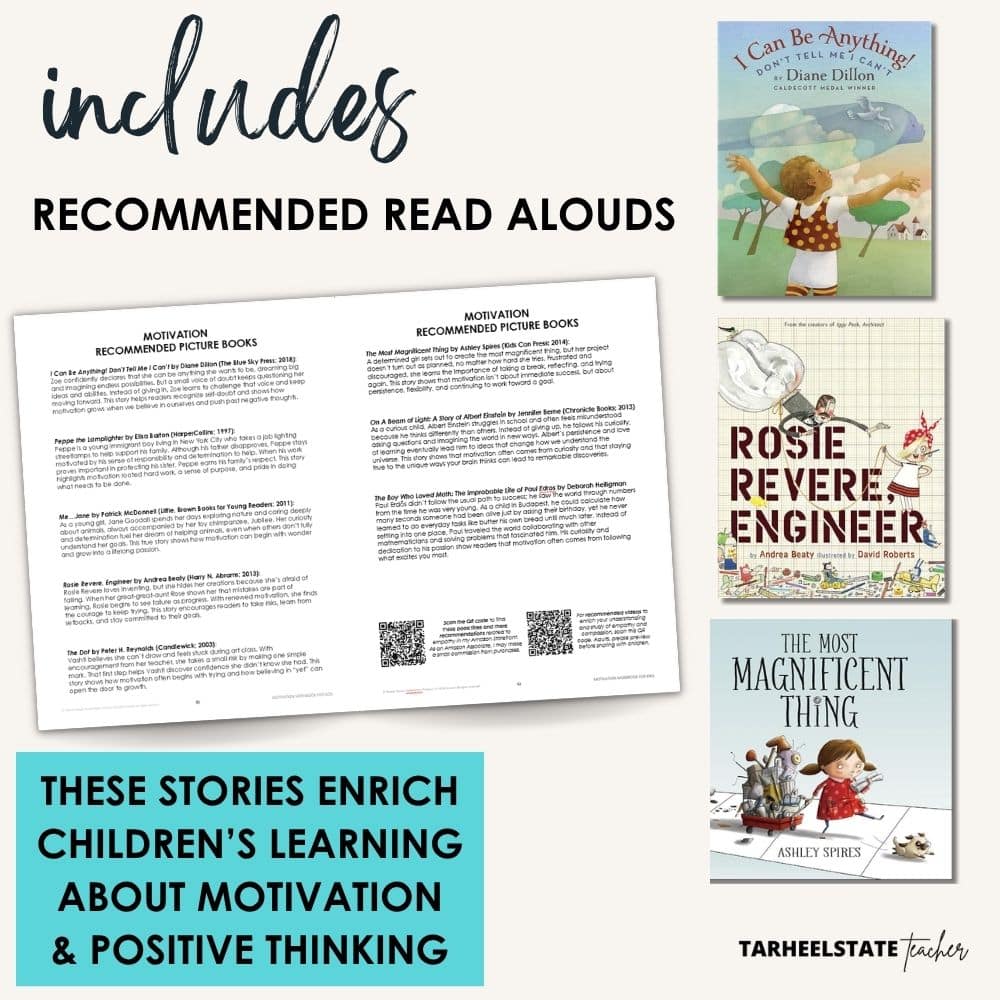
Here are three favorites:
- The Most Magnificent Thing by Ashley Spires
A young inventor faces frustration and discouragement when her creation does not turn out as planned. After stepping away and reflecting, she finds the motivation to try again. This story shows that persistence often begins with pausing, resetting, and believing you can keep going. - Rosie Revere, Engineer by Andrea Beaty
Rosie loves inventing but worries about mistakes and what others think. With encouragement, she learns that failure is part of discovery. Her journey reveals how motivation shifts from seeking approval to believing in yourself. - I Can Be Anything! Don’t Tell Me I Can’t by Diane Dillon
Zoe’s big dreams are challenged by a doubtful inner voice. Instead of giving up, she answers those thoughts with courage and determination. Her story highlights how positive self-talk helps children stay motivated and believe in their potential.
HOW TO USE THIS WORKBOOK
Whether you’re talking through big feelings at the kitchen table, encouraging perseverance during homework time, or guiding students through a full social-emotional learning routine, this workbook is designed to be flexible and easy to use. For the strongest impact, aim to revisit the activities and conversations 3–4 times each week. Consistent reflection helps children better understand what motivates them, practice positive self-talk, and build the confidence to keep going when things feel hard.
FOR PARENTS AND GUARDIANS
Try weaving motivation-building moments into everyday routines:
- Read a short reflection, quote, or scenario together in the morning and talk about one challenge your child might face that day.
- Use self-talk prompts or journaling pages at bedtime to notice effort, persistence, and small wins.
- Pause during homework frustration to revisit a motivation strategy from the workbook and practice encouraging inner dialogue.
- Celebrate progress at dinner or in the car by asking, “What helped you keep going today?”
The goal is not constant motivation. The goal is helping your child learn how to restart, refocus, and believe in themselves again and again.
FOR HOMESCHOOL OR CO-OP EDUCATORS
Bring motivation concepts to life through discussion, reflection, and shared experience:
- Pair sections with read-aloud stories that highlight perseverance, courage, and growth.
- Use reflection questions for group discussion, narration practice, or morning meeting conversations.
- Invite students to role-play motivation or apathy scenarios and brainstorm supportive self-talk together.
- Incorporate creative projects, goal reflections, or motivation trackers into weekly routines.
- Encourage peer encouragement and celebration of effort during collaborative learning.
- Whether used daily or as a focused SEL unit, this resource helps children understand how inner drive grows through awareness, practice, and support.
FOR CLASSROOM TEACHERS
This workbook was designed based on my SEL Morning Meeting Unit for Intrinsic Motivation, making it a natural fit for classroom character education. Whether used during morning meetings, counseling groups, or SEL instruction, each activity encourages students to explore perseverance, confidence, positive self-talk, and the habits that support lasting motivation.
You’ll find meaningful opportunities for discussion, reflection, and skill-building woven throughout the pages. These experiences help students recognize discouraging thoughts, replace them with supportive ones, and develop the resilience needed to stay engaged in learning and personal growth.
NOTE: The digital download version on Shopify includes daily lesson plans, printable student journals, a bulletin board, and a Google Slides component. Consider whether the workbook curriculum or Shopify version will best meet your needs.
INTERESTED IN MULTIPLE COPIES?
Contact Tammy at tarheelstateteacher(at)gmail(.)com for a quote for multiple copies or purchase orders for your campus or district.
WHY FAMILIES VALUE MOTIVATION-FOCUSED SEL
Families and teachers consistently share that motivation work helps children:
- Build confidence and self-belief
- Keep trying when learning feels difficult
- Develop persistence and resilience
- Feel proud of effort and growth
Because true motivation does not come from pressure, it grows from within.
START BUILDING INNER DRIVE TODAY
If you are looking for a meaningful way to nurture perseverance, confidence, and positive self-talk, Help Kids Get More Motivated offers practical tools children can use right away.
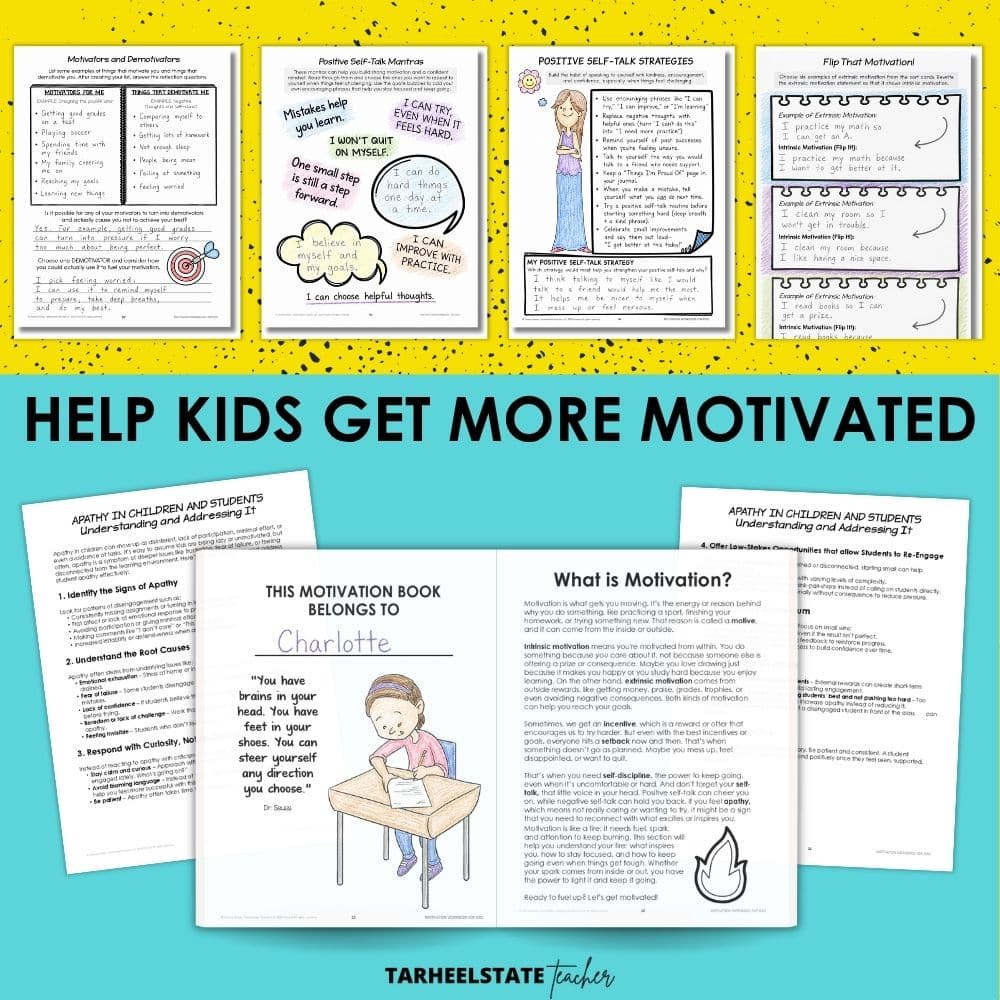
This motivation workbook helps kids move from feeling stuck to believing in themselves, one thought, one choice, and one step at a time.
FEEDBACK FOR MY INTRINSIC MOTIVATION UNIT FROM CLASSROOM TEACHERS
⭐⭐⭐⭐⭐ I recently had the pleasure of incorporating this activity into my classroom, and I must say it has exceeded my expectations in every way. As a seasoned educator, I am always on the lookout for resources that not only captivate my students but also seamlessly integrate into my teaching style. The resource not only met but surpassed these criteria, making it a true change of pace for my classroom dynamics.
⭐⭐⭐⭐⭐ Great resource for helping kids learn intrinsic motivation. Lots of activities and charts that were very helpful.
⭐⭐⭐⭐⭐ Loved these lessons to help students foster intrinsic motivation. The slides were very clear and explicit and my students really learned a lot! Love all the included activities as well!
START STRENGTHENING MOTIVATION SKILLS TODAY
Help your child build inner drive, resilience, and positive self-talk habits with Help Kids Get More Motivated: A Workbook Fostering Intrinsic Motivation, Positive Self-Talk Strategies & Self-Motivation for Kids Ages 8-12 — one of the best homeschool and classroom workbooks for building inner drive, confidence, and positive self-talk habits.