I believe that it is imperative that students master 80% or more of our content-specific vocabulary in order to truly master a content area and be successful in future grades.
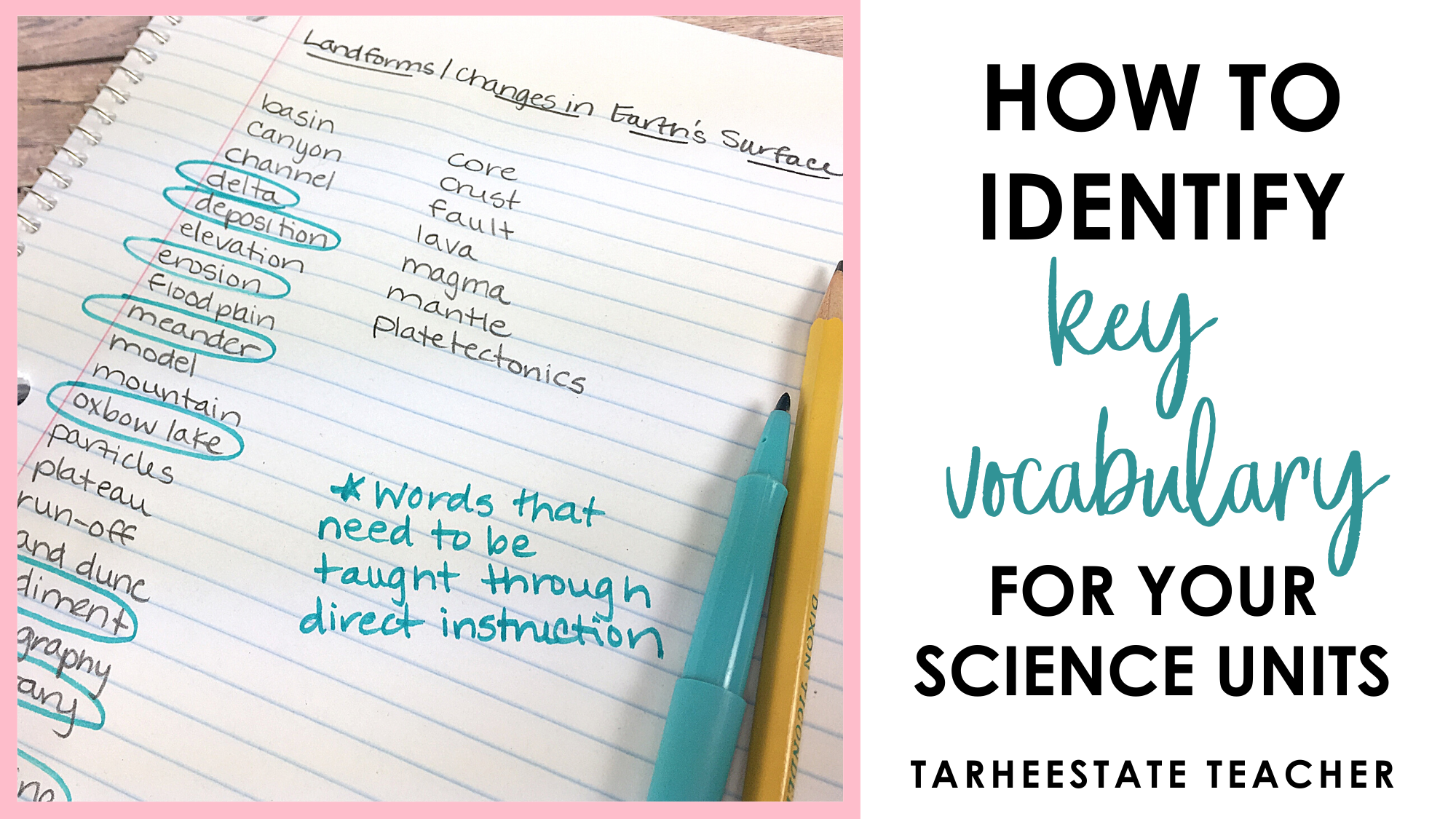
Beck and McKeown call these content area words “tier 3 words” because they are topic-specific, are seen outside of the studies of a domain less frequently than tier 1 and 2 words, and typically need to be directly taught for students to master them.
I also believe it’s our job to set aside real classroom time for direct instruction and review of this vocabulary, rather than hoping students absorb it through osmosis. Today I’ll walk you through the exact process my grade-level team used to identify the Tier 3 words for our Weathering and Erosion unit. But first, let’s be clear on why this matters.

WHY DIRECT VOCABULARY INSTRUCTION MATTERS
Wouldn’t it be nice if, when you taught ecosystems and mentioned producers (organisms that make their own food), every student already had mastery of photosynthesis from a previous grade? Too often, they don’t carry those content-specific terms forward.
For students to truly keep these words, they need more than hearing them in whole-group instruction, seeing them in their reading, and bumping into them in activities. “We talked about that last year” simply isn’t enough to ensure mastery for life.
If you’re still not convinced that isolated, direct vocabulary instruction is necessary, think about your students with learning disabilities, your English language learners, and your struggling readers. Even your strongest students may seem to follow along but forget word meanings once the unit ends and you’ve moved on. If we want students to walk away owning the important vocabulary in our curriculum, we have to teach those words directly.
WHERE DO YOU START? (ALL WORDS SEEM IMPORTANT)
That overwhelm is real, and the habit of not starting because you don’t know where to start is one worth breaking.
Even if your school or district hasn’t identified content-area words for you, you can start by listing every word you think is important for the unit. You get to decide which words are Tier 3, you don’t have to wait for someone else to hand you the “golden ticket” list. The goal of teaching any solid list of words for mastery is enough to drive real gains. Your list doesn’t have to be perfect; the effort is what matters.
HOW TO IDENTIFY YOUR TIER 3 WORDS
The process comes down to two moves: brainstorm every word that might matter, then trim that list to the words that truly need direct instruction. Here’s how my team did it.
STEP 1: BRAINSTORM POSSIBLE WORDS
To identify our Tier 3 vocabulary words, we pulled together a number of resources—our state standards, guides from the Department of Education that support teacher understanding of the standards, a few science textbooks, a science kit, released End of Grade test questions, and unit plans. After looking through these resources, we had a long list of words that were potentially crucial for our students to master in order to understand the topic of landforms and the standards they were supposed to learn within this unit.
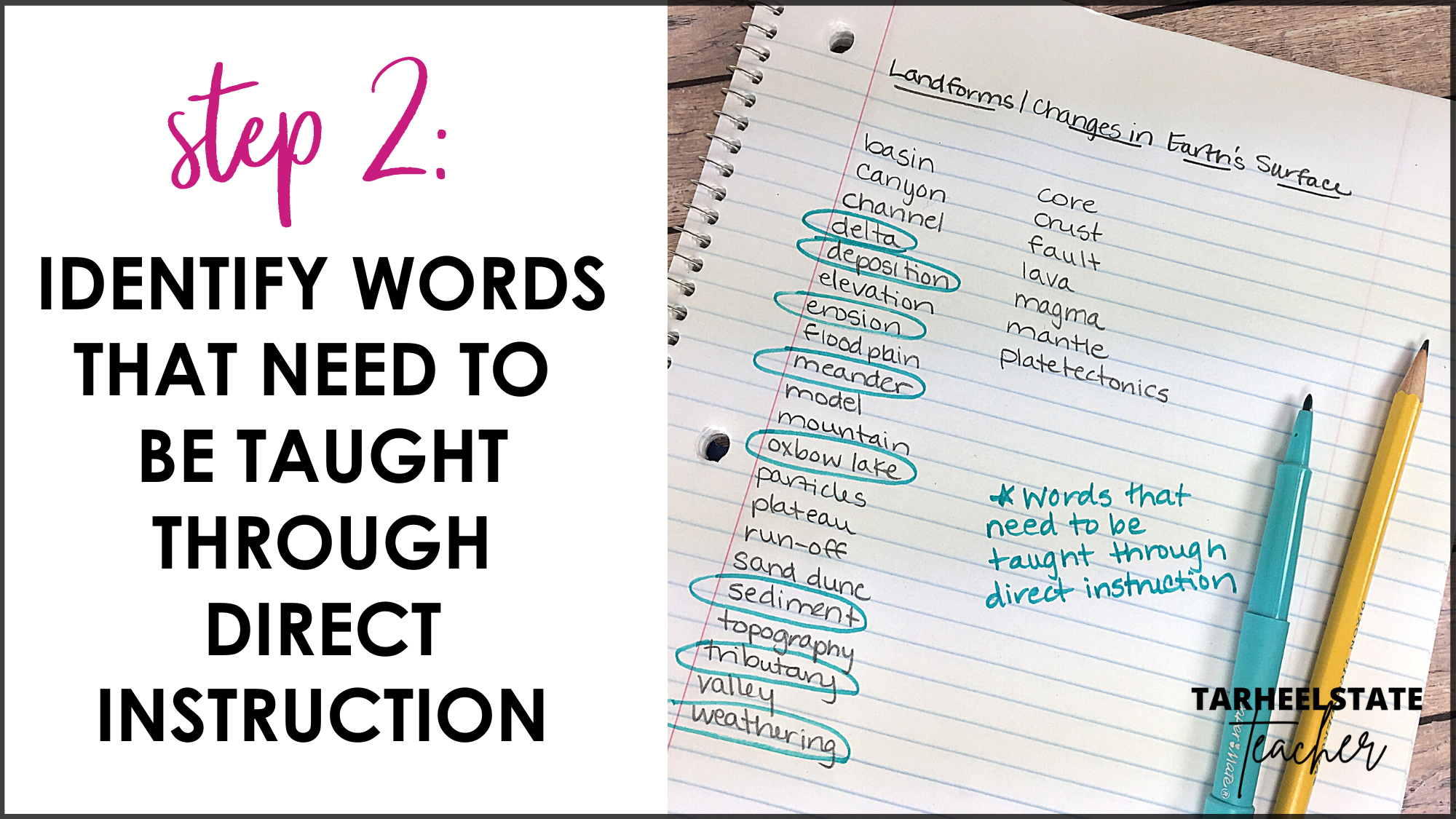
Our initial list is pictured:

Obviously, this list is too long for directly instructing students on each one, unless that’s all we planned to do with our science time. That brings us to step 2…
STEP 2: TRIM TO CRITICAL WORDS
We cut the list down by asking a few questions of each word:
- Is it extension content rather than a standard? Words like core, mantle, crust related to the topic but weren’t in our standards.
- Is it a “confidence” word? We kept a few words students likely already knew, so that in our first-day vocabulary knowledge activity, some students could say “I really know this one.” Familiar words give students confidence and a place to anchor new learning.
- Will students master it naturally through the unit’s activities? Basin was one: students work with stream tables daily and hold a basin to catch the water, so the word sticks through use. Canyon was another, every group’s stream table carves one, and we point it out constantly. These didn’t need a spot on the direct-instruction list.
After asking “Which words must we ensure students master, and which might not be mastered by every student through normal classroom experiences?”, we whittled our list from 28 words down to 8: delta, deposition, erosion, meander, oxbow lake, sediment, tributary, and weathering.
We knew students would likely encounter these on the End-of-Grade science test, and that some, like meander and oxbow lake, are hard to produce reliably in a stream table. Those needed direct instruction, multiple examples, review games, and repeated practice before testing. Once you’ve trimmed to only the words that truly need direct instruction, setting aside time to teach them for mastery suddenly feels doable.
HOW TO TEACH FOR MASTERY: MARZANO’S 6 STEPS
Robert Marzano researched and wrote extensively about a six-step process for vocabulary instruction. The steps:
- Teacher explains. Give a student-friendly definition, example, or explanation, this takes just a few minutes. Don’t burn class time having students look words up. Tell a story, point to a class experience, show an image or short video.
- Students restate. Have students put the explanation into their own words, not copy yours. They construct their own example, description, or sentence.
- Students show/represent. Students make a graphic representation (picture, symbol, a captured class experience). This non-linguistic step helps them code the word in a different mode than reading or hearing it.
- Discuss. Use discussion to deepen word knowledge: synonyms and antonyms, analogies, partner talk, word wall games, Give 1–Get 1, a partner Frayer Model.
- Refine and reflect. Students return to their vocabulary work (a vocab notebook is great) and refine their definitions, examples, and sentences. A perfect closure activity.
- Practice, play, and maintain. Give ongoing chances to practice through games, which energizes review and pushes words into long-term mastery.
Steps 1–3 (or 4) often happen the same day. Step 5 fits after students have worked with the words in class experiences, and Step 6 runs all year as you keep adding words to students’ memory banks.
WHERE DO STUDENTS RECORD ALL THIS?
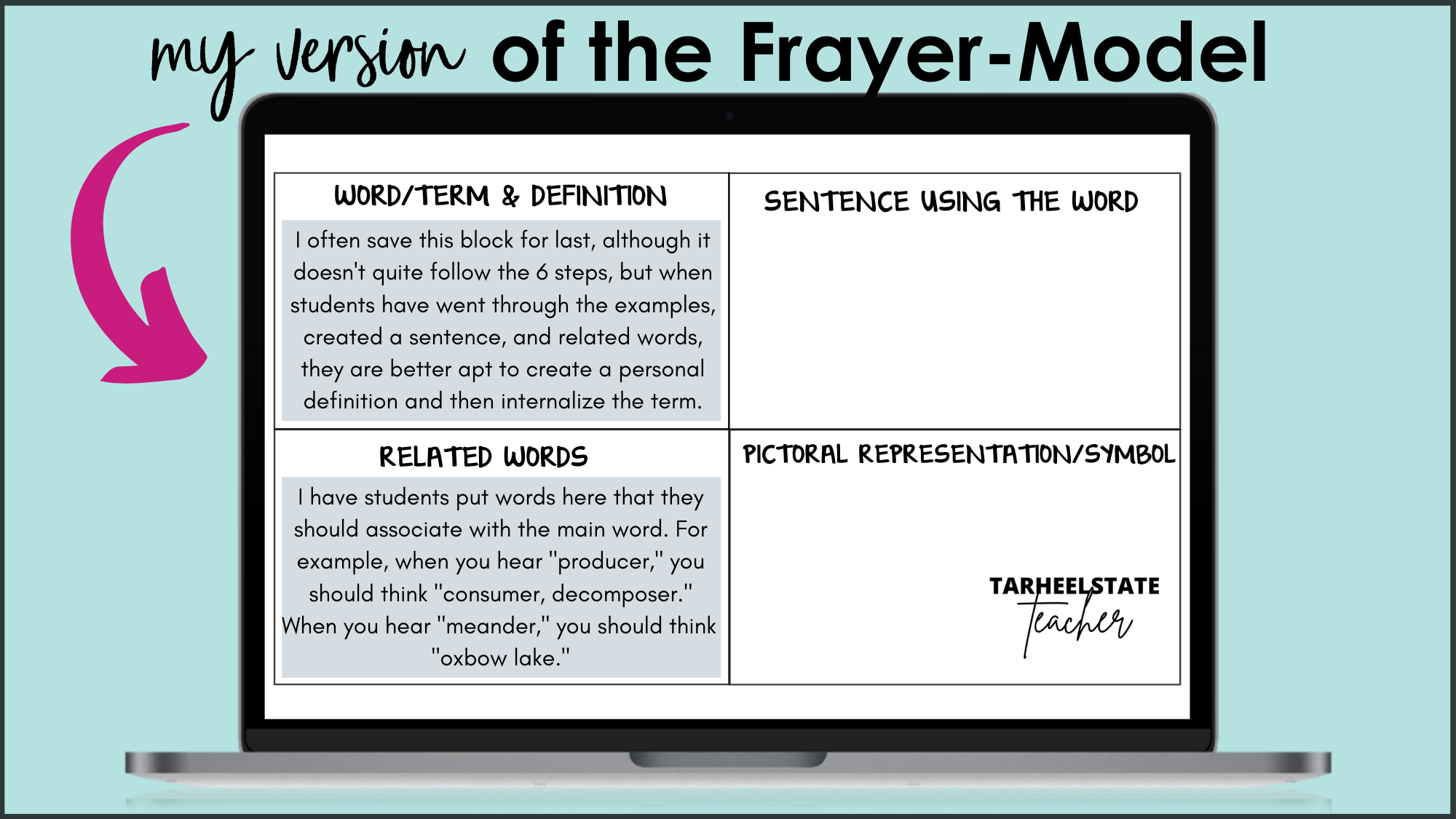
One option is a modified Frayer Model, a four-quadrant organizer I’ve adjusted countless times over the years to include examples and non-examples. Use whatever recording format helps your students hold onto the words.
Marzano suggests playing learning games weekly with vocabulary words. Perhaps you set aside 15-30 minutes a week during your content areas for word-learning/review games. This would give you time to review words from a unit in isolation but to also mix them together as you study multiple units. Vocabulary Friyay’s sound like a cool thing to me!
MORE SCIENCE VOCABULARY IDEAS
This is part of a short science vocabulary series. You may also want to read:
→ The BEST Activities for Launching Science Units
→ Vocabulary Mats: My FAVORITE Science Study Strategy
→ Interactive Ideas for your Science Word Wall
SHOP SCIENCE VOCABULARY RESOURCES
Once you’ve identified your Tier 3 words, my Vocabulary Mats and Study Slips give you a done-for-you way to teach them through Marzano’s steps. Available for these upper elementary science units:
- Force, Motion, and Simple Machines
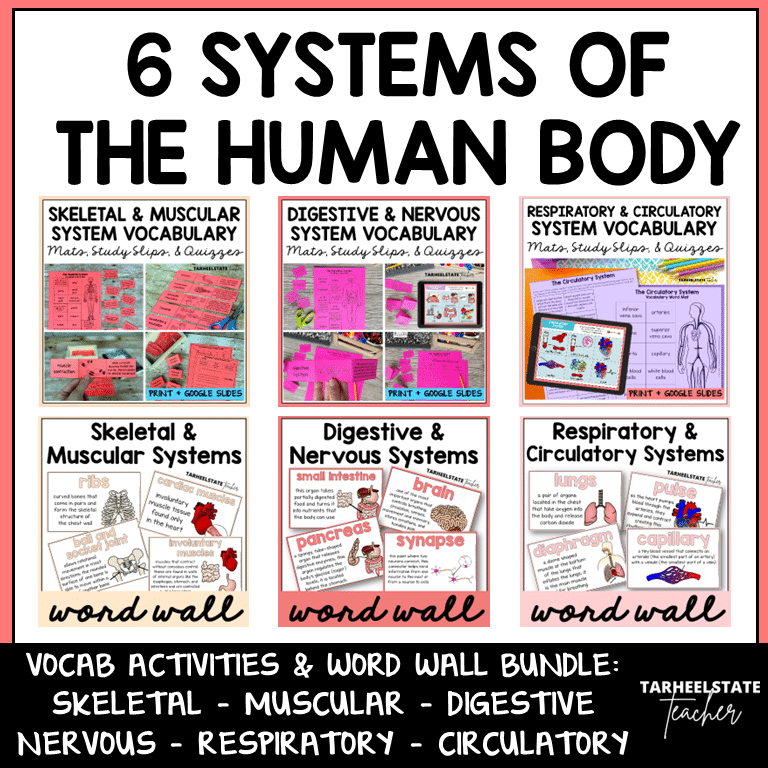
- Human Body Systems
- Ecosystems and Biomes / Types of Ecosystems
- Weather and Weather Tools
- Properties of Rocks and Minerals
- Conservation of Energy and Properties of Matter
- Weathering, Erosion, and Plate Tectonics
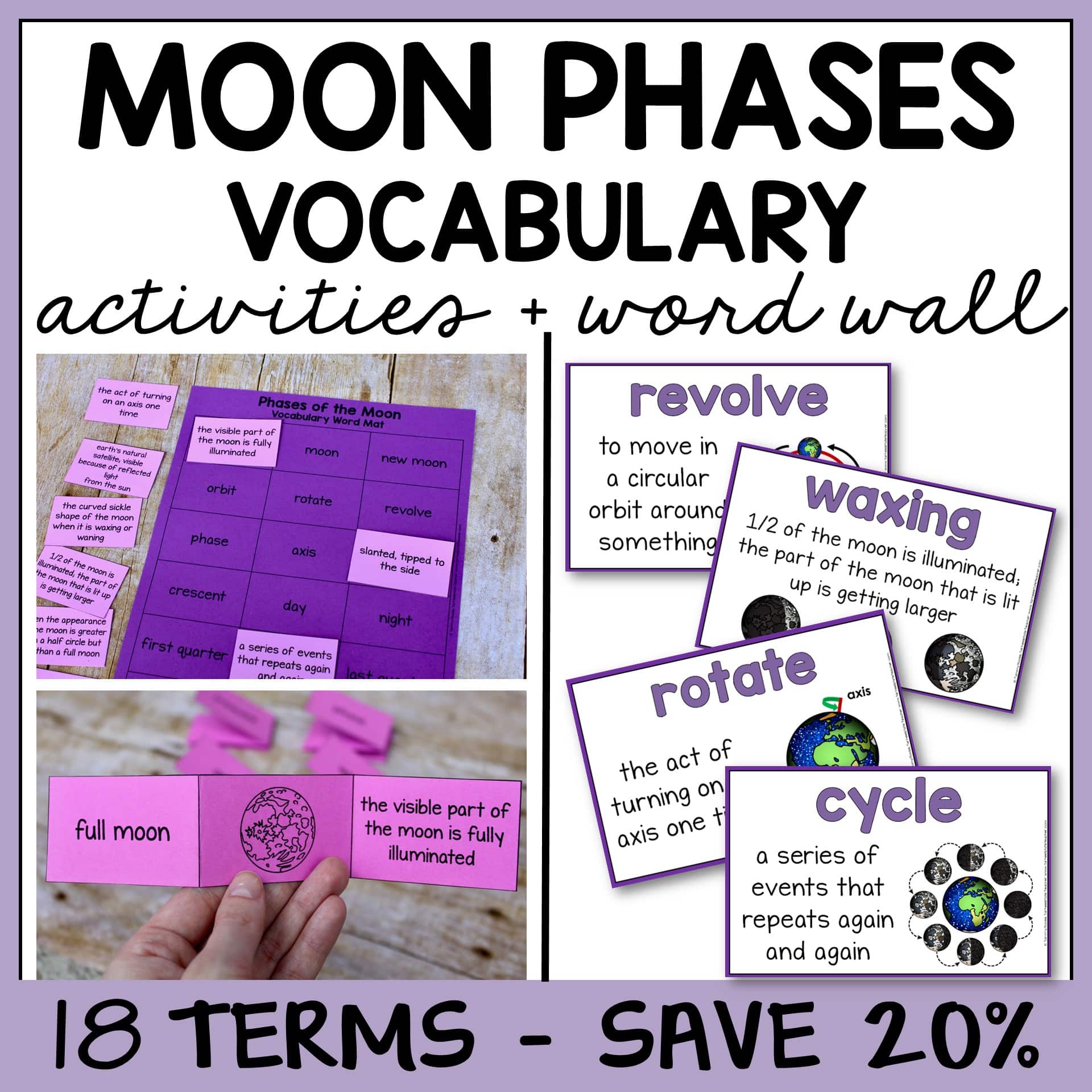
- Phases of the Moon
- Solar System, Sun, and Stars
- Plant Structures and Functions
- Genetics and Heredity
Watch the video below to see the vocabulary mats strategy in action!
(6-Steps information from Building Background Knowledge for Academic Achievement; Marzano (2004).)