Have you ever watched a student say something unkind, not out of malice but simply because they didn’t stop to think about how their words might land? Or seen a student walk right past a classmate who was struggling, unaware of the opportunity to help? In a busy upper elementary classroom, these moments are constant. Teaching empathy and compassion isn’t just a social-emotional add-on—it’s essential for building a supportive, safe learning environment.
One of the most powerful and practical ways to build these skills is through scenarios and role play. This post dives into using empathy scenarios, perspective taking, and role play in the classroom to foster compassion and understanding in upper elementary students. Whether you’re looking for discussion starters, writing prompts, or group activities, these ideas can help your students think beyond themselves and into someone else’s shoes.
WHAT ARE EMPATHY SCENARIOS?
Empathy scenarios are short, realistic situations that ask students to consider what someone else might be thinking, feeling, or experiencing. These types of scenarios are powerful because they give students a chance to step outside of their own perspective and practice recognizing and responding to the emotions of others.
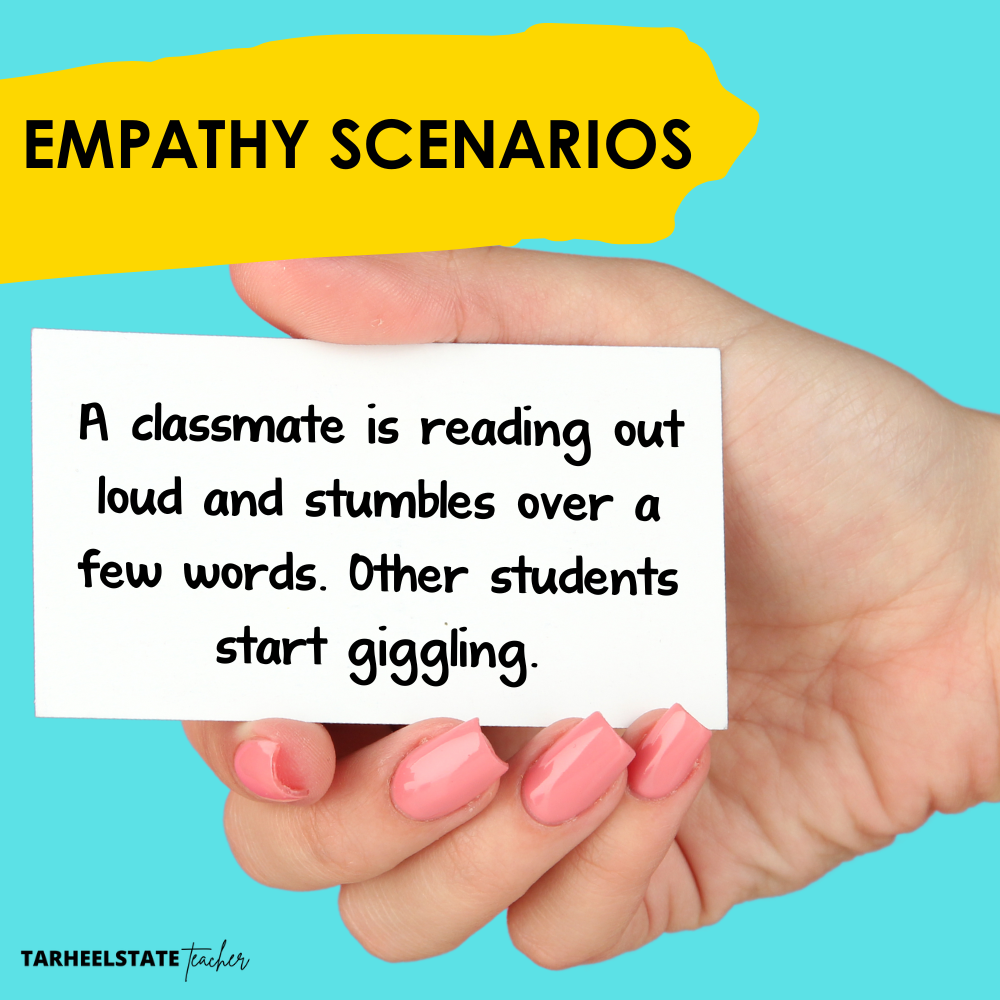
In the classroom, empathy scenarios can be used in a variety of ways:
- As discussion starters during morning meetings or class meetings
- As journal or writing prompts for personal reflection
- As group activities where students collaborate and share ideas
- As the basis for role play in the classroom, allowing students to act out compassionate responses and see how different choices affect others
Some empathy scenarios are written as completed examples of empathy or compassion in action. These are especially helpful for modeling positive behavior and showing students what empathy looks like. Others present dilemmas or social challenges where students must decide how to respond. These types of scenarios are ideal for encouraging critical thinking, collaboration, and decision-making. They make great perspective taking scenarios that spark meaningful student conversation and reflection.
 I’m kind of obsessed with using SEL scenarios for reflection and role play in the classroom! Check out my role-play scenario cards bundle for conflict resolution, honesty & integrity, managing emotions, friendship challenges, practicing assertive communication, empathy and compassion, student apathy and motivation, and kindness scenario cards.
WHY USE EMPATHY SCENARIOS IN UPPER ELEMENTARY?
Students in upper elementary are in a unique stage of social and emotional growth. Their friendships, peer interactions, and sense of fairness become more complex. They often face situations that require them to navigate misunderstandings, advocate for themselves or others, and recognize when someone is being left out or mistreated.
Empathy scenarios meet students at this developmental level:
- They offer concrete, relatable situations that feel familiar and age-appropriate.
- They allow for deeper reflection, helping students unpack the motivations, feelings, and needs of others.
- When used for role play in the classroom, they give students a safe space to try out kind, respectful responses—before they’re in the heat of the moment in real life.
- They support academic goals too, especially in reading, writing, and speaking, by strengthening students’ ability to consider different points of view. This makes them an effective tool for teaching both perspective taking and empathy.
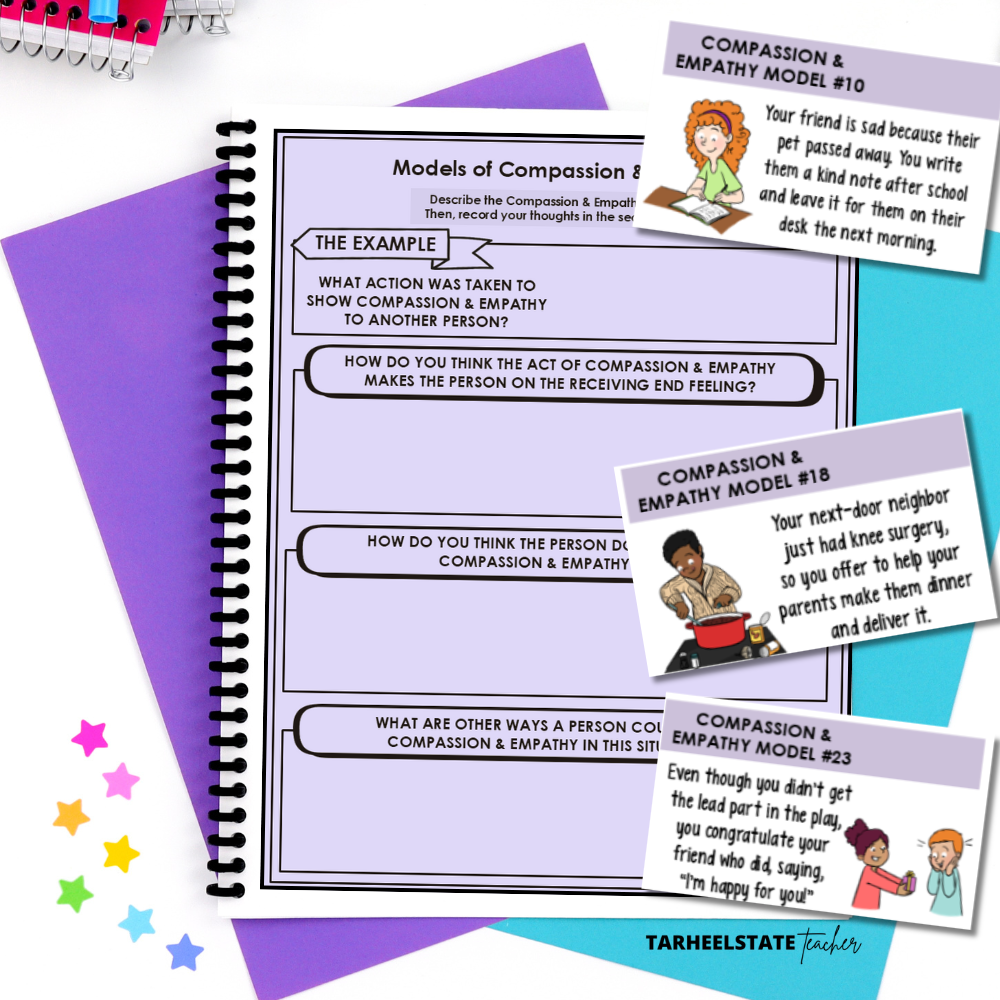
Empathy scenarios are flexible, practical tools that help students build social awareness, emotional intelligence, and compassionate habits they can carry with them beyond the classroom.
SCENARIO SETS FOR TEACHING EMPATHY AND COMPASSION
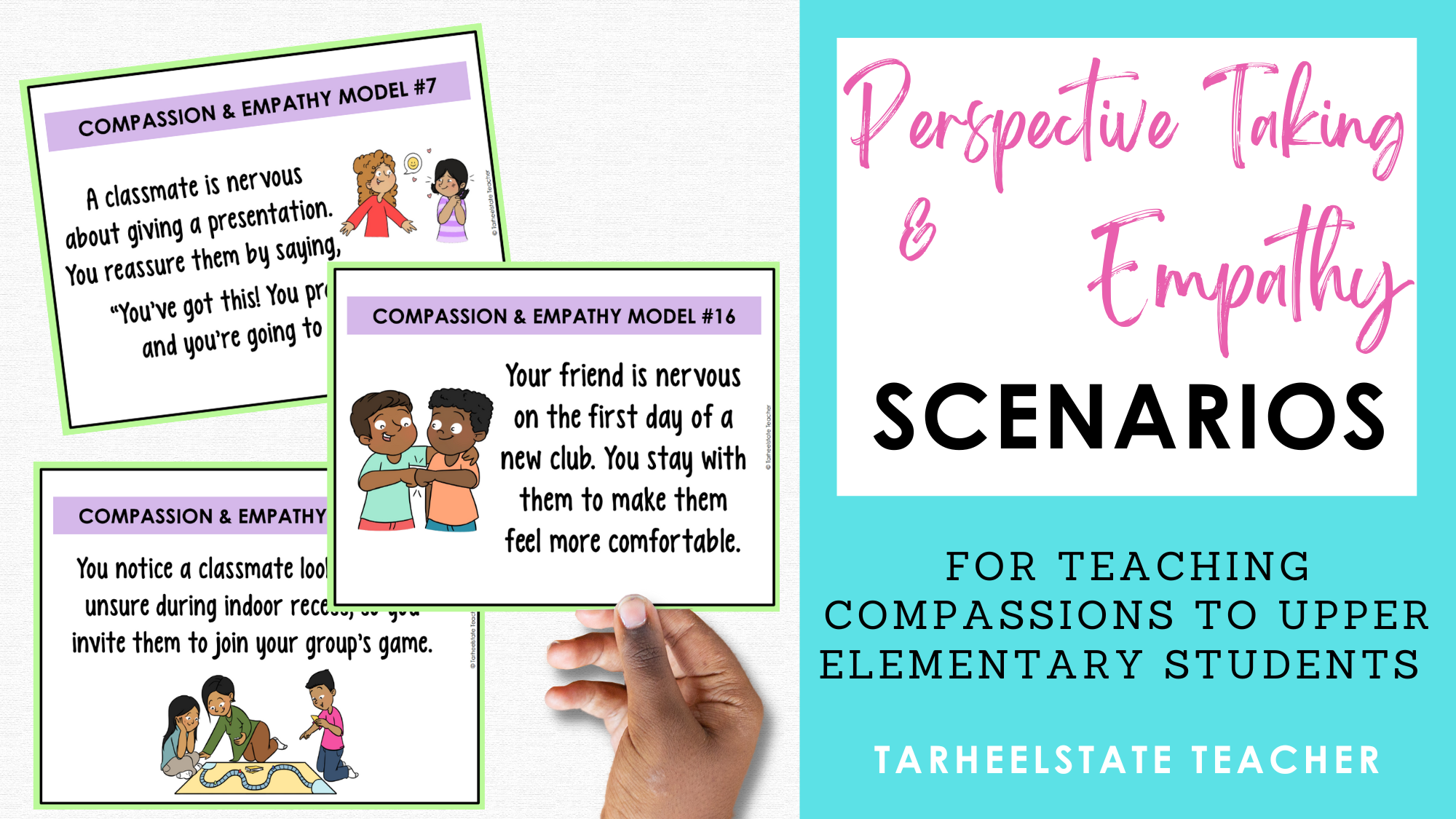
To help you use empathy scenarios effectively, I’ve created two sets of 32 scenarios each. Both are designed specifically with upper elementary students in mind and include thoughtful reflection prompts that can be used for whole group discussions, small group work, or independent work. Here’s how they differ and how you can use each:
1. SET ONE: EVERYDAY ACTS OF COMPASSION AND EMPATHY
These scenarios model small but powerful moments of compassion. They describe situations where a student takes action to help or support someone else. These are not meant for role play, but rather for sparking reflection and discussion. They can double as perspective taking activities that help students internalize social-emotional concepts.
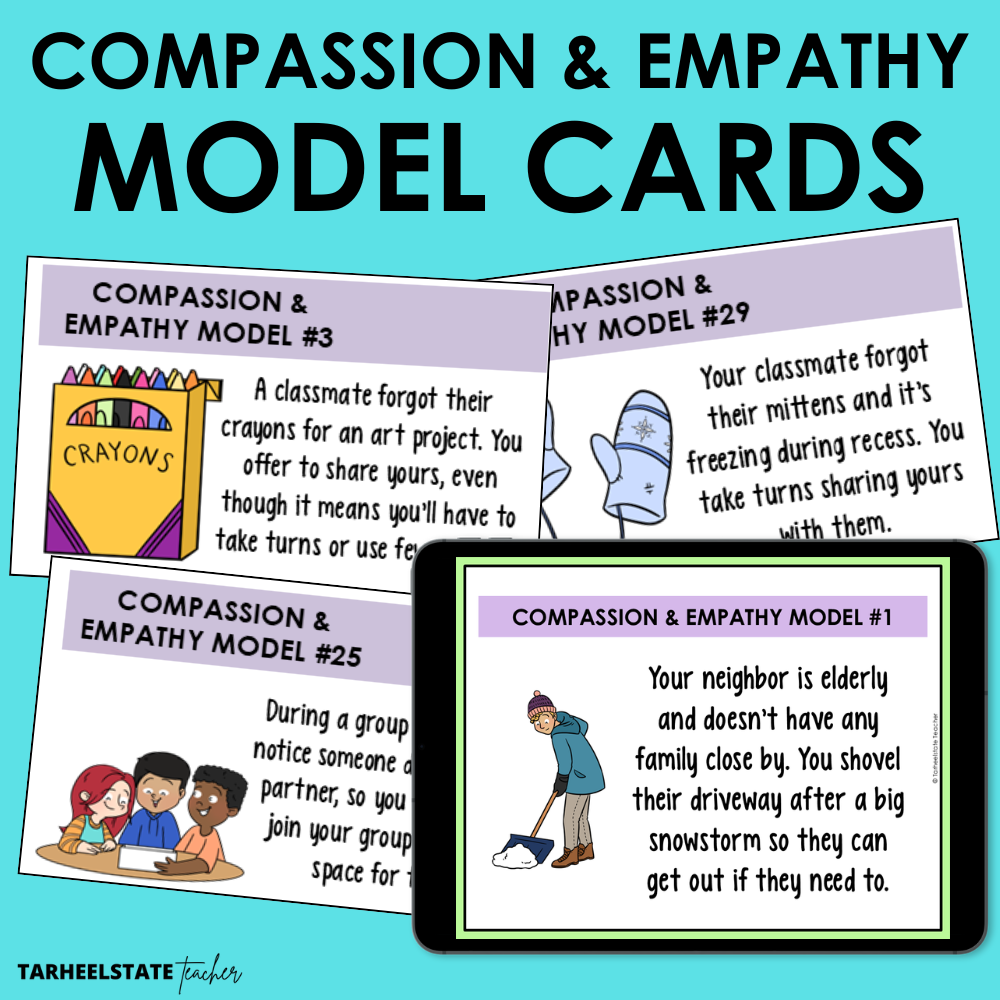
Examples:
- A student sees someone drop their books and quickly helps them pick everything up.
- A classmate looks nervous before giving a presentation, so a peer gives them a quiet thumbs-up.
- A student notices someone sitting alone at lunch and chooses to sit with them.
You can use these scenarios in lots of different ways depending on your goals and how your students work best. Sometimes, I display a scenario and the reflection questions during morning meeting or a small group discussion to spark a thoughtful conversation. Other times, I prefer to have students choose a scenario that speaks to them and respond to the reflection questions independently—either as a journal prompt, a writing warm-up, or part of an SEL center.
However you use them, the goal is the same: encouraging students to slow down and think about how acts of compassion affect both the giver and the receiver. Here are some guiding questions I like to pair with these scenarios:
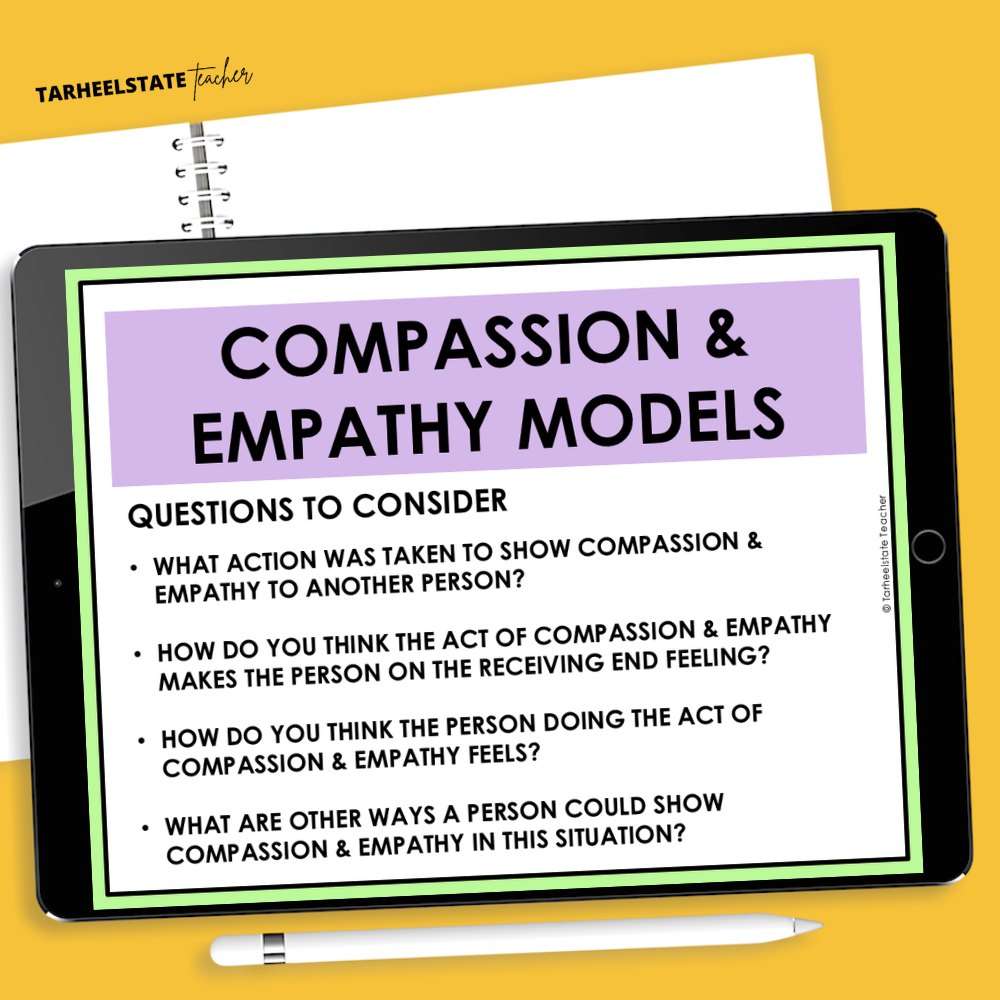
- How do you think the act of compassion and empathy makes the person on the receiving end feel?
- How do you think the person doing the act of compassion and empathy feels?
- What are other ways a person could show compassion and empathy in this situation?
These kinds of reflections help students go beyond just naming kind behaviors—they start to really understand the emotions behind them.
2. SET TWO: ROLE-PLAY SCENARIOS FOR BUILDING EMPATHY
These scenarios present relatable dilemmas where no action has yet been taken. Students must step into the situation, consider the perspectives involved, and practice responding with empathy. These are ideal perspective taking activities because students actively imagine and respond from another person’s point of view.
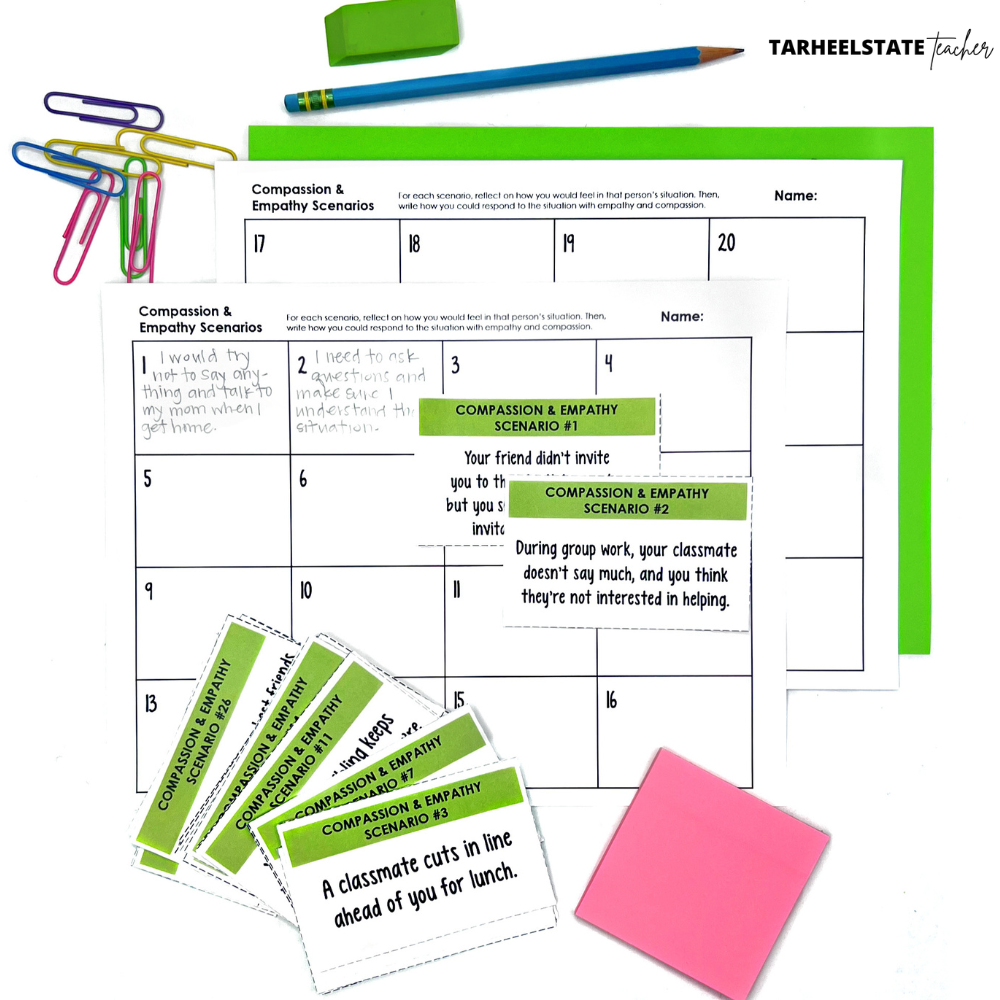
Examples:
- Your friend didn’t invite you to their birthday party, but you see them handing out invitations.
- Someone in your group project isn’t doing their part, and you’re frustrated.
- A classmate makes a joke that hurts someone else’s feelings, and you see it happen.
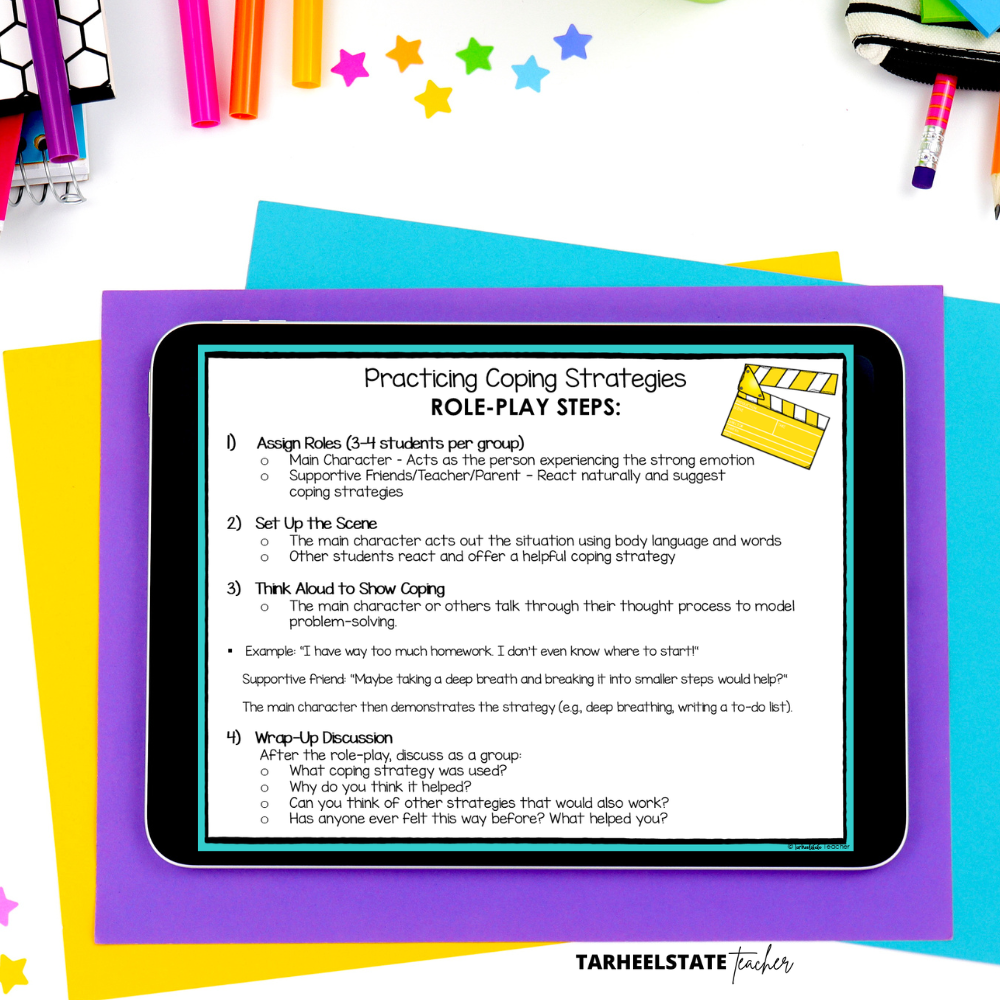
These scenarios are especially powerful when used for role play in the classroom, but they’re also great for writing and discussion. I often have students work with a partner or small group to act out a situation and explore different ways to respond with empathy. Other times, we talk through a scenario as a whole class or use it as a jumping-off point for a writing activity focused on perspective taking. These can also work well in drama or improv centers, where students enjoy stepping into someone else’s shoes.
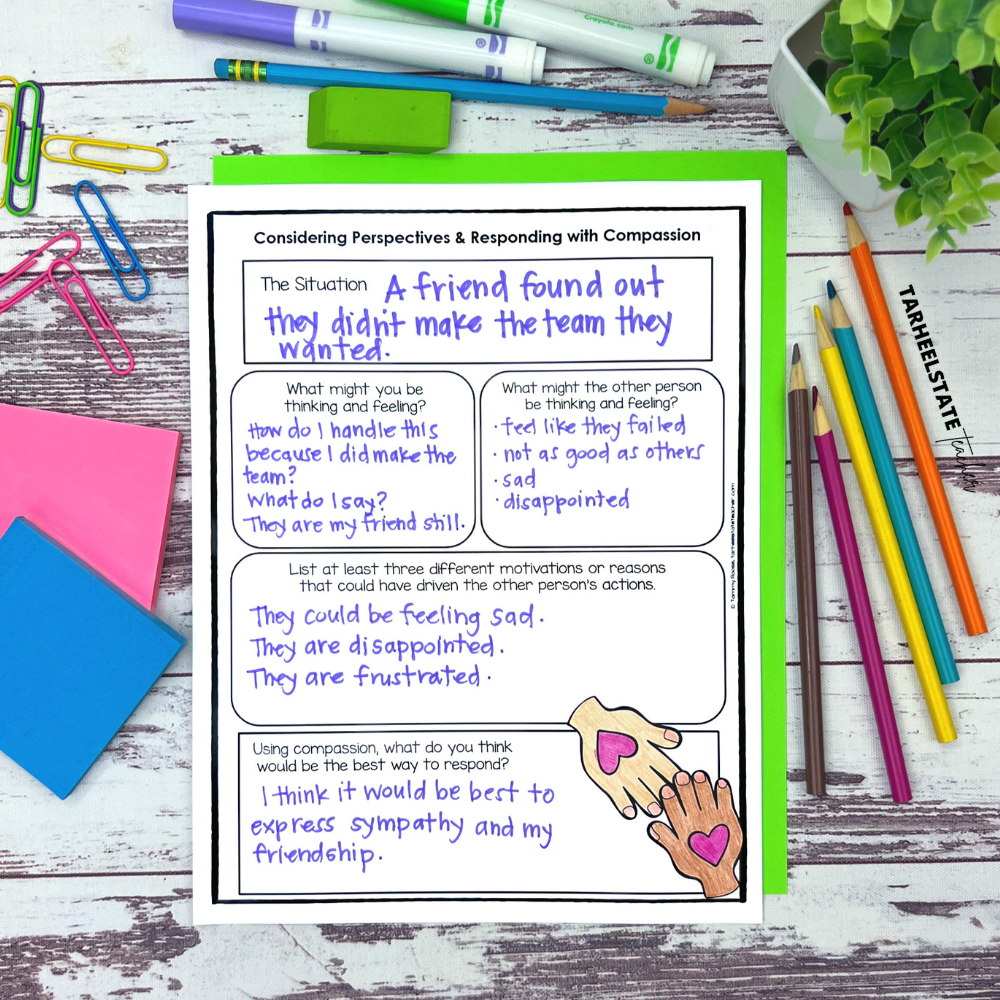
No matter how you use them, these scenarios help students slow down and think through social dilemmas with compassion. I like to pair them with these reflection questions to deepen the conversation:
- What might you be thinking and feeling?
- What might the other person be thinking and feeling?
- List at least three different motivations that could have driven the other person’s actions.
- Using compassion, what do you think would be the best way to respond?
These role play-based activities give students a chance to practice making kind, thoughtful choices in situations that feel real and familiar to them. They are an ideal way to support both perspective taking and empathy development in a hands-on, student-friendly format.
HOW TO FACILITATE EMPATHY ROLE PLAY IN THE CLASSROOM
Here are a few tips to help empathy role play run smoothly in your classroom:
- Set the tone: Establish a respectful, supportive environment. Make sure students understand the goal is to practice—not to be perfect.
- Start with a warm-up: Try an easy scenario before jumping into more emotionally complex ones.
- Use sentence starters: “I imagine you might feel…” or “What can I do to help?” can help students find their words.
- Debrief afterward: Always take time to reflect on what students learned or noticed during the role play.
- Keep it optional: Allow students to opt out of acting and participate as directors or observers who offer feedback.
HELPING EMPATHY STICK
Teaching empathy through scenarios and role play in the classroom gives students the chance to build real social-emotional skills they’ll use far beyond the classroom. By offering them relatable examples and meaningful practice, you help them develop not only compassion for others but also confidence in their own ability to respond thoughtfully.
If you’re looking for more ways to keep building empathy and compassion with your students, here are some other resources you may be interested in:
- How to Teach Empathy in the Classroom: 10 Empathy Classroom Activities That Really Work gives you ready-made activities students can work through to practice noticing and responding to others’ feelings.
- Are Empathy and Sympathy the Same? Empathy vs Sympathy Definitions, Examples, and Teaching Activities for Students breaks down the difference between these two often-confused concepts and shares activities to help students tell them apart.
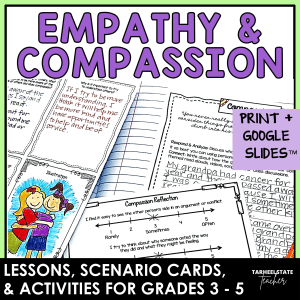
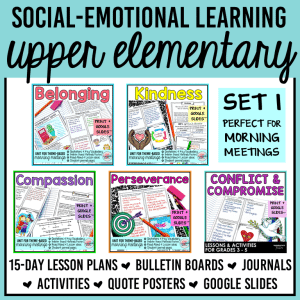
- Complete Empathy SEL Unit for upper elementary—this unit includes all of the activities you see in this post, editable lesson plans, suggested read alouds, student notebooks, and a bulletin board to help your unit make a lasting impression!
Let’s continue helping students grow into kind, compassionate humans. 
NEED A DONE-FOR-YOU COMPASSION AND EMPATHY UNIT?
The Compassion & Empathy SEL Morning Meeting unit is a 20 day unit for upper elementary. It includes
 20 Days of Printable & Editable Lesson Plans — includes suggested read alouds, discussion questions, 16 empathy and perspective taking activities, extension ideas, and linked online resources
Student Journals & Activities — empathy-related discussion prompts, self-reflection and goal setting exercises, and social emotional learning worksheets to deepen students’ understanding of empathy and compassion, with activities like Empathetic vs Sympathetic Comment Sort, Considering Perspectives & Responding with Compassion, How I Feel Seen, Compassion & Empathy Scenario Cards, and more!
Empathy & Compassion Bulletin Board that includes important vocabulary like compassion, insensitive, empathy, and sympathy and inspirational quotations for a visual reminder of your empathy and compassion lessons
Google Slides — Teacher and student versions to implement this unit digitally or use as visual prompts and discussion starters on your interactive whiteboard