In classrooms everywhere, you’ll hear it:
“Fine! I’ll just do it your way.”
“Whatever…this is so unfair.”
“Ugh, we’re never going to agree.”
Sound familiar?
Many kids grow up believing that compromise means giving in—that it’s about losing, caving, or letting someone else win. But when we take time to teach students what compromise means, we open the door to much deeper skills: flexibility, empathy, teamwork, and shared decision-making.
This post will help you clear up that misunderstanding, give your students tools they can actually use, and highlight some of my favorite compromise examples and compromise activities for upper elementary students.
WHAT COMPROMISE MEANS (AND WHAT IT DOESN’T)
So, what is compromise?
In student-friendly terms:
Compromise means working together to find a solution everyone can accept—even if it’s not your first choice.
It’s about flexibility and fairness—not about folding under pressure or letting someone else take over. When students understand that, they’re more willing to try.
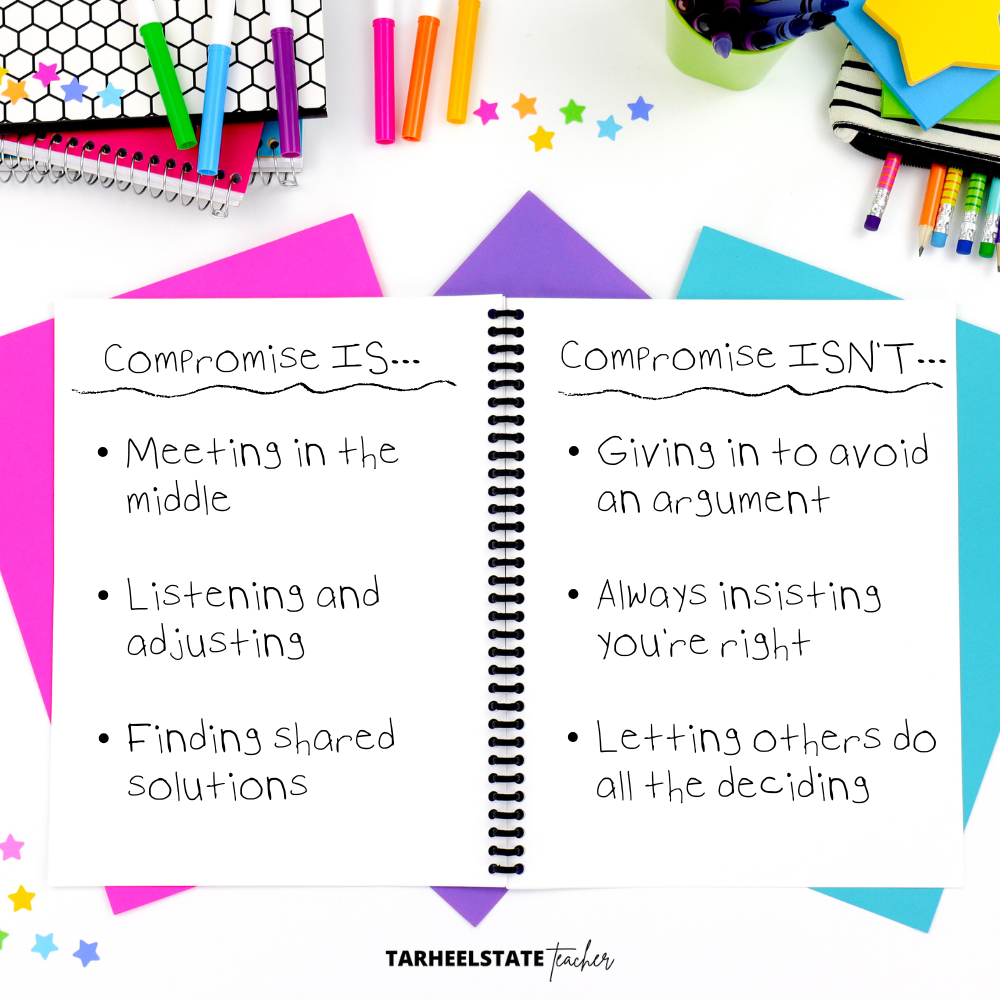
 Making these distinctions clear is a powerful first step when teaching compromise. But students need more than just a definition—they need to see it, talk through it, and try it out in real-life situations.
COMPROMISE EXAMPLES THAT SHIFT STUDENT THINKING
Real-world examples can be one of the most powerful tools for teaching what compromise really means. Many students believe compromise is just “giving in” or “losing.” But when they see concrete, relatable situations where both sides contribute to a shared solution, their thinking begins to shift.
These compromise examples help students visualize how thoughtful negotiation, listening, and mutual respect can lead to fair outcomes—without anyone having to completely give up what they want. Sharing and discussing scenarios like these is an important step in helping students understand that compromise is about cooperation, not defeat.
- Two students want different classroom jobs. They decide to switch halfway through the week so both can have a turn.
- A group project is coming up, and everyone has a different idea. They vote to blend the best parts of each into one shared plan.
- At recess, one student wants to play tag and another wants to draw. They agree to do both—half and half.
- Two students both want to sit by the window. They agree to switch spots halfway through the week so each gets a turn.
- One student wants to play music while working, but their partner prefers silence. They agree to use headphones at a low volume.
- During a partner reading activity, one student wants fiction and the other wants nonfiction. They decide to take turns choosing the book each week.
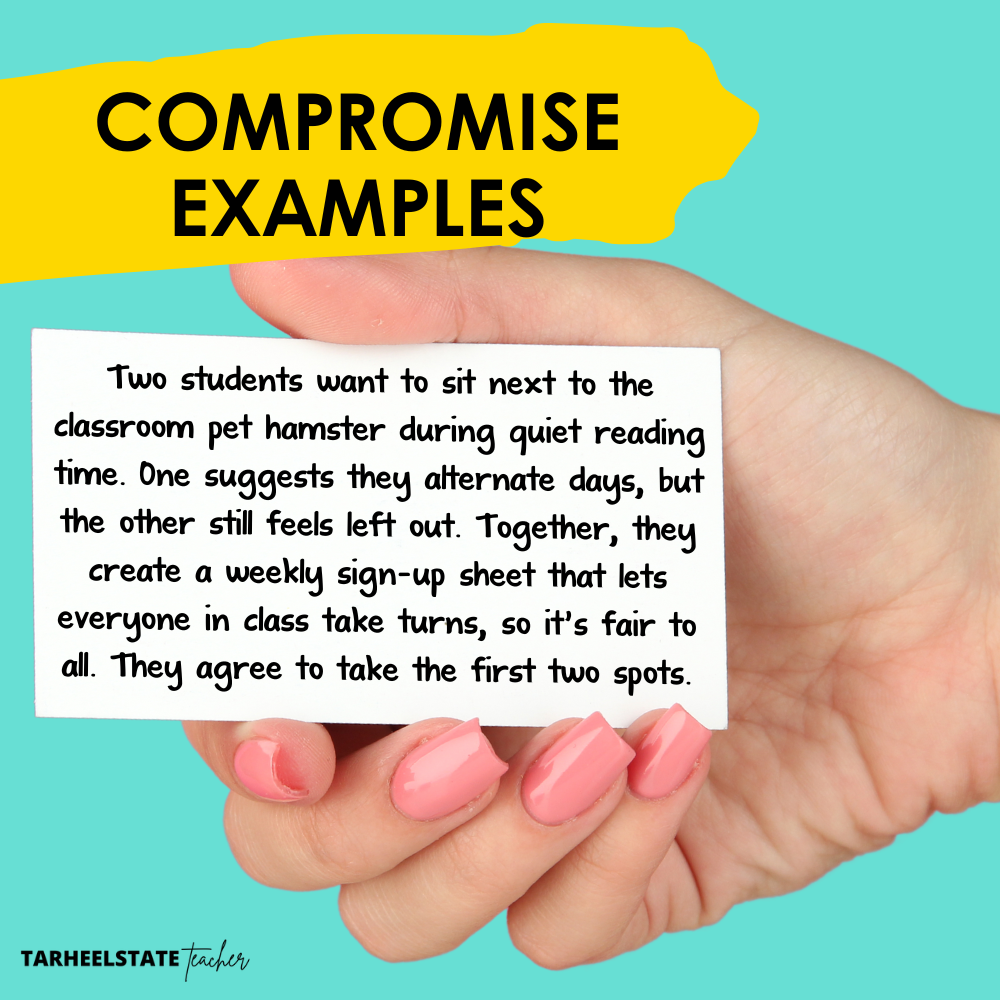
These small decisions build the understanding that compromise doesn’t mean giving up—it means giving a little to get a little.
SIMPLE, IMPACTFUL COMPROMISE ACTIVITIES FOR THE CLASSROOM
Once students have a clearer idea of what compromise means, it’s time to move beyond definitions. These hands-on compromise activities are designed to deepen understanding, build empathy, and encourage meaningful discussion.
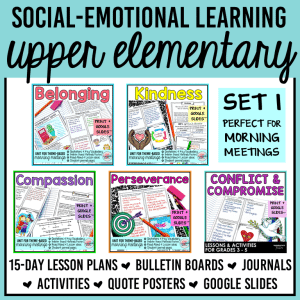
 You can do each of these suggested compromise activities for students with a reflection journal and materials you have around the classroom, but if you want some of the work done for you, you can check out my full Conflict Resolution and Compromise Unit, complete with lesson plans that make it super easy to implement and enjoy!
A RECIPE FOR COMPROMISE
Students brainstorm the “ingredients” needed for a successful compromise: listening, calm voices, empathy, patience, flexibility. Then, in groups, they write a “recipe” using those ingredients to describe how to make compromise work.
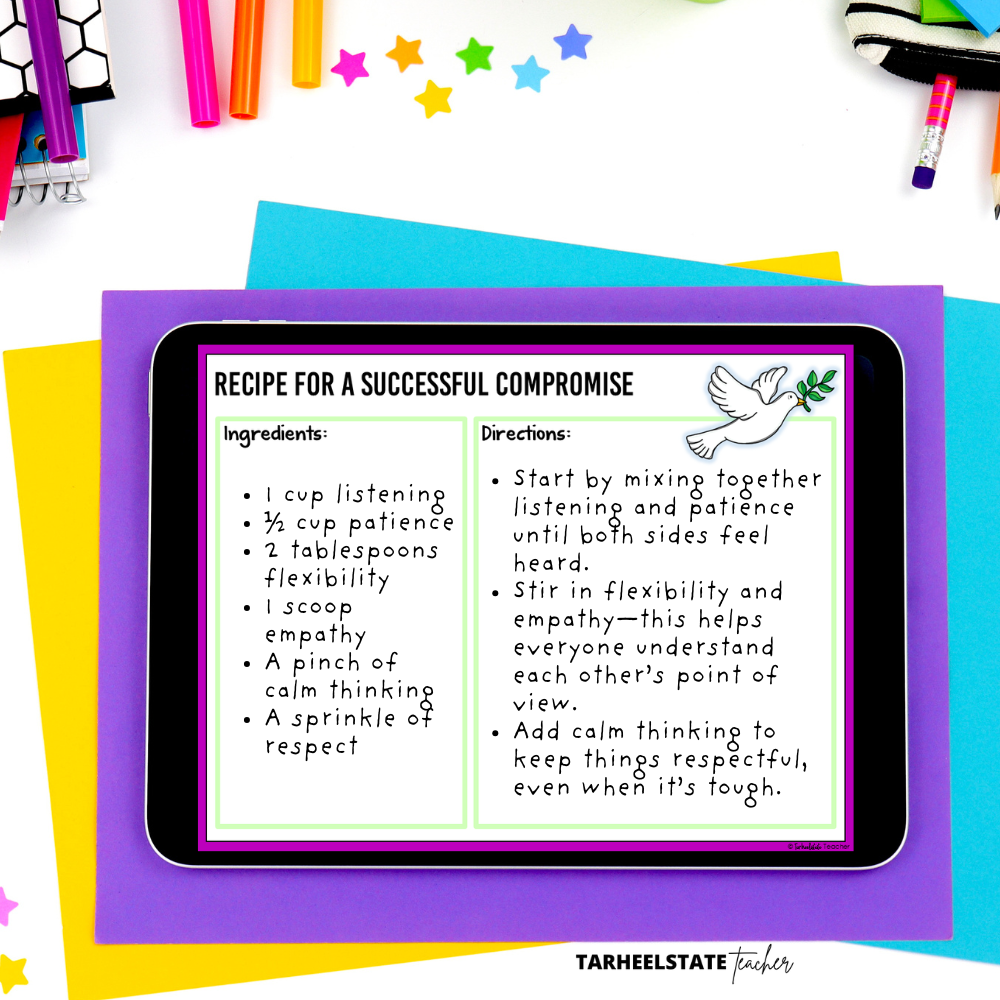
This creative activity helps students visualize what compromise feels like—and what happens when an ingredient is missing.
FROM THIS TO THIS! THE LANGUAGE OF COMPROMISE
Students explore how tone and word choice affect collaboration. Start by creating a T-chart: on one side, write phrases that block compromise (like “You’re wrong” or “That’s not fair”). On the other, have students rewrite them into respectful sentence starters like:
- “Let’s figure something out together.”
- “Can we find a way to combine our ideas?”
- “What are you flexible on?”
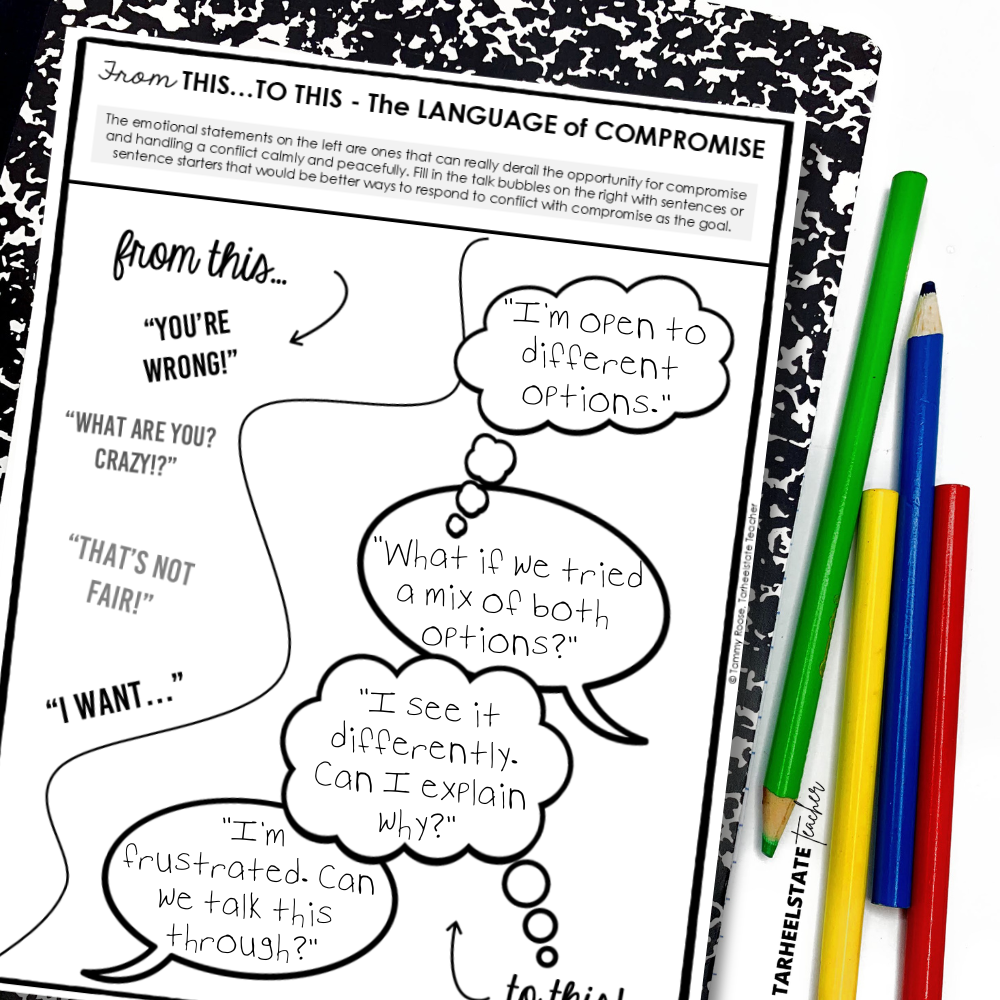
Teaching compromise language builds emotional intelligence and practical conflict resolution tools.
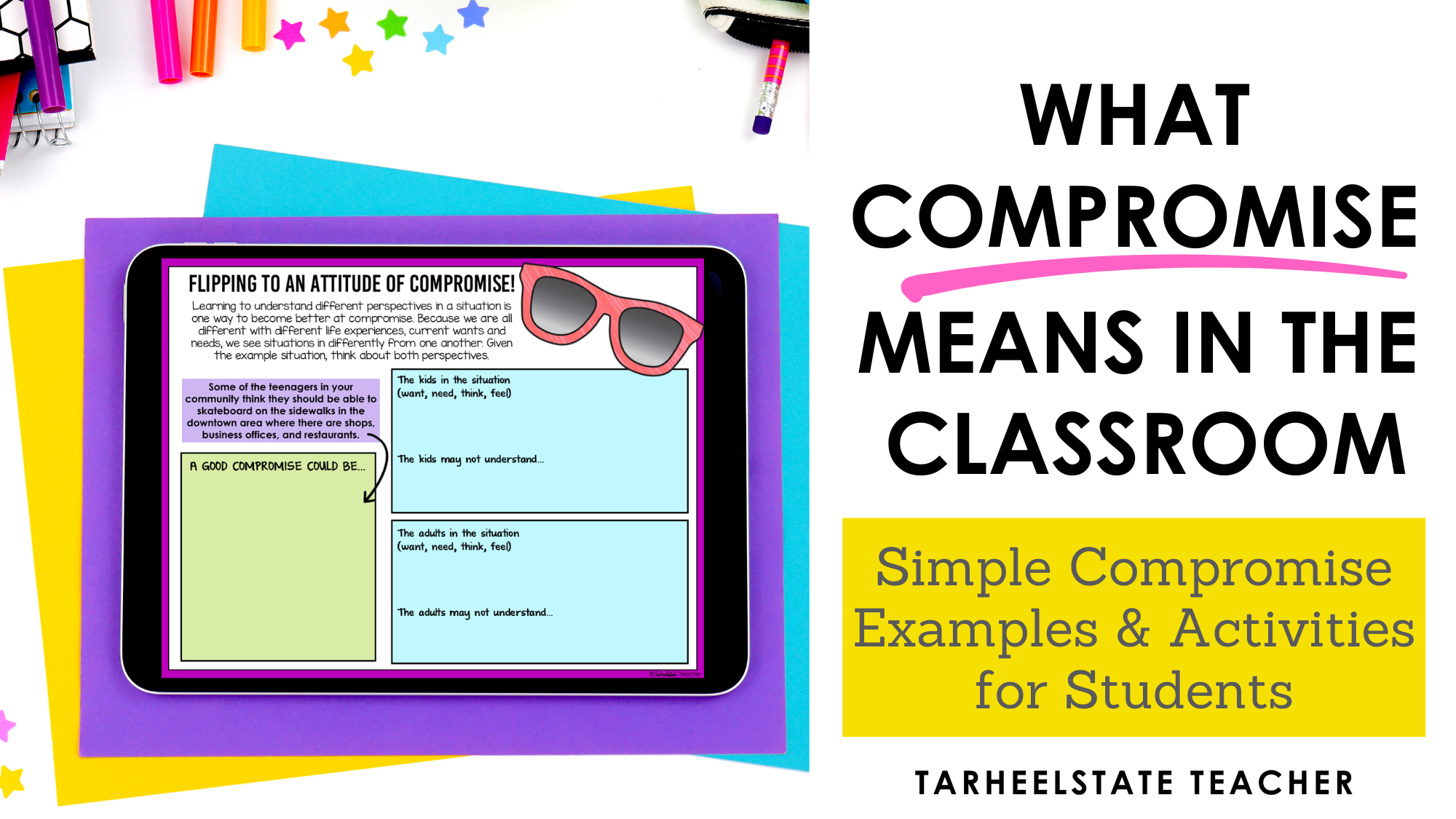
FLIPPING TO AN ATTITUDE OF COMPROMISE
Give students realistic compromise scenarios and walk through them together. These situations might involve sharing supplies, choosing group roles, or deciding how to spend free time. Ask guiding questions:
- What does each person want?
- Why do they want it?
- What would be a fair resolution?
- What happens if no one budges?
Encourage group discussion, partner collaboration, or a gallery walk of responses.
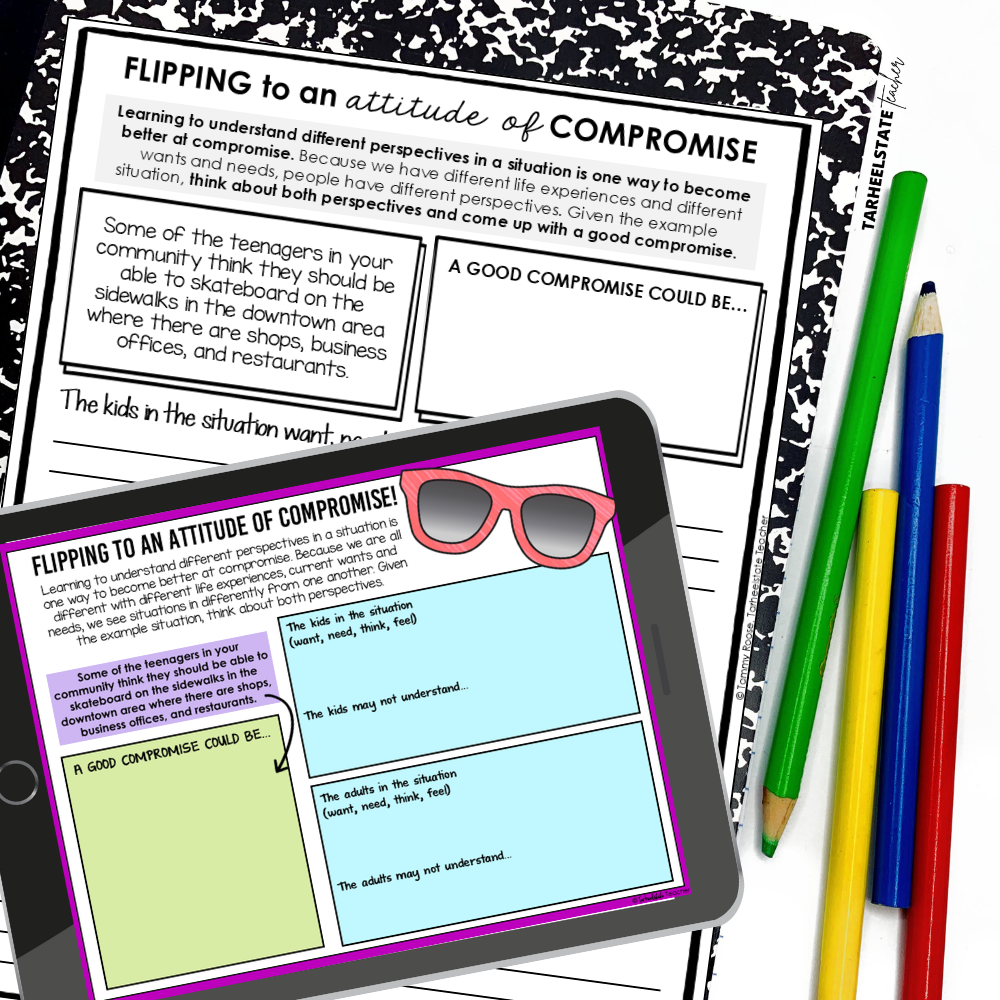
Students practice seeing from multiple perspectives and working toward shared solutions—a crucial part of compromise.
TWO TAKES ON COMPROMISE: QUOTE REFLECTION
Have students compare two quotes:
- “Never give an inch.”
- “Blessed are the hearts that can bend.”
After reading and discussing, ask:
- What message does each quote send about compromise?
- Which one encourages teamwork and empathy?
- Which one feels more aligned with how we want our classroom to work?
This works well as a journal prompt, partner discussion, or whole-class dialogue.
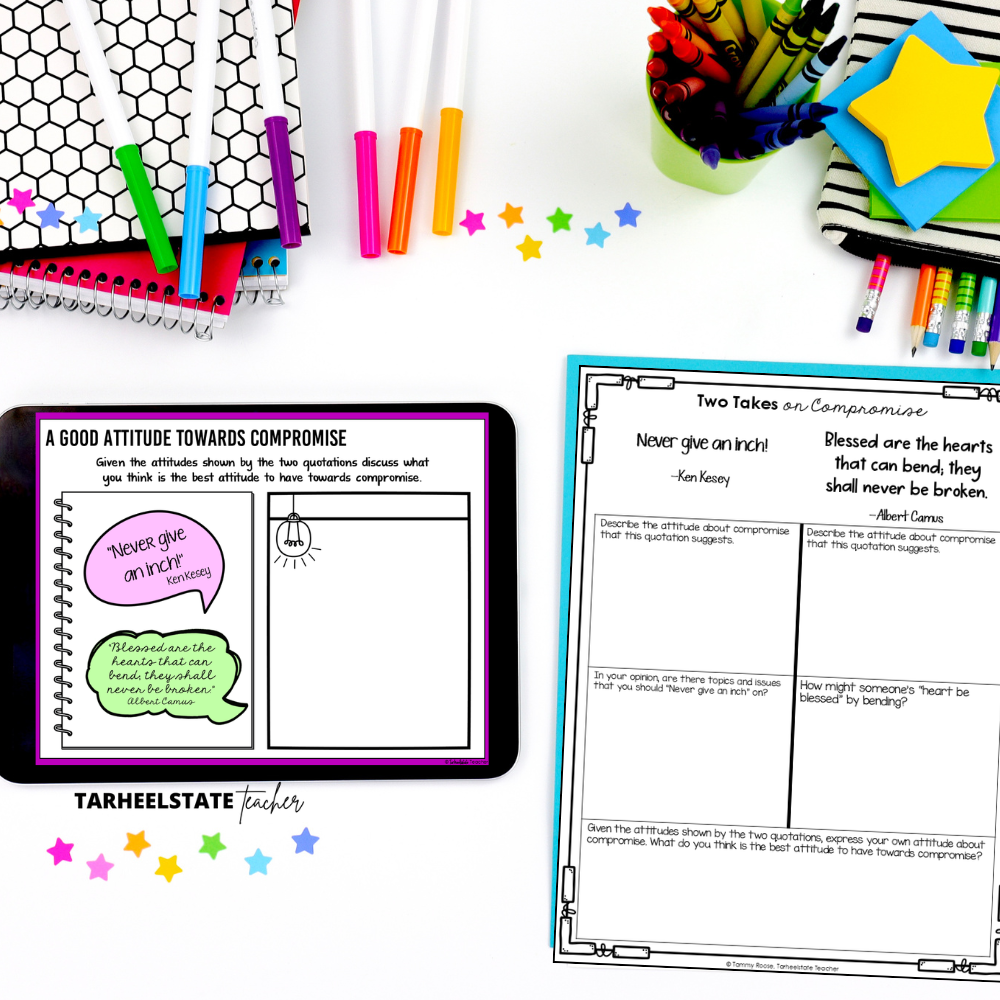
This is a great way to connect deeper thinking with real-life behavior.
COMPROMISE ISN’T THE ONLY CONFLICT RESOLUTION STRATEGY
Compromise is powerful, but it’s not the only option when it comes to resolving conflict. Sometimes students need to take a break, seek help from a trusted adult, or stand firm in their values. Knowing when to compromise—and when not to—is just as important.
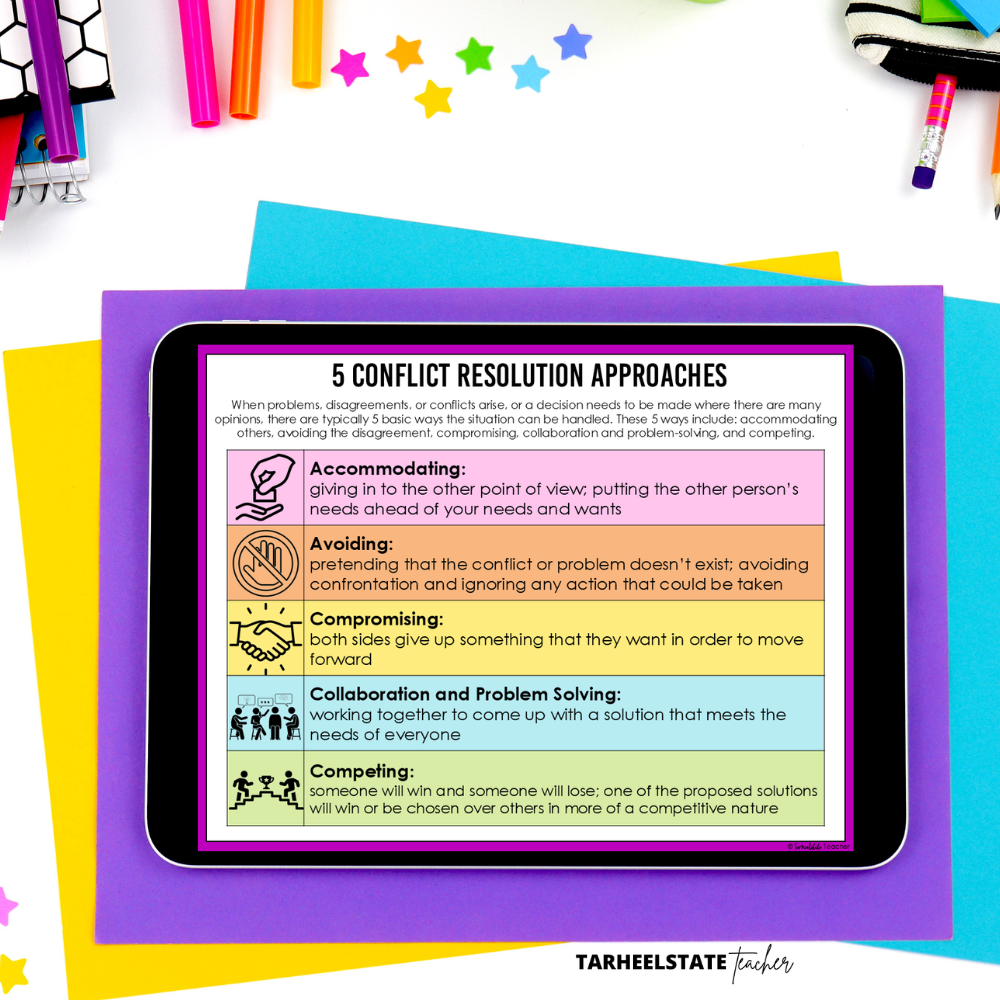
If you’re looking for more ways to keep building conflict resolution and compromise skills with your students, here are some other resources you may be interested in:
- 5 Conflict Resolution Styles: Teaching Activity breaks down each of the five styles students can use when facing conflict and gives you a framework for helping them choose the right approach.
- Steps to Conflict Resolution for Kids walks through the resolution process in a way students can actually remember and apply when real conflicts come up.
- Complete Conflict Resolution and Compromise SEL Unit for upper elementary—this unit includes all of the activities you see in this post, editable lesson plans, suggested read alouds, student notebooks, and a bulletin board to help your unit make a lasting impression!
Let’s continue helping students grow into confident, compassionate problem-solvers.
COMPROMISE BUILDS CHARACTER
When students understand what compromise means, they begin to see it not as a weakness, but as a strength. It teaches them to listen, reflect, and care about the people around them.
With the right compromise activities, language tools, and practice, students learn how to turn “I give up” into “We figured it out.” And that’s a lesson they’ll carry far beyond your classroom.
NEED A DONE-FOR-YOU CONFLICT RESOLUTION AND COMPROMISE UNIT?
The Conflict Resolution and Compromise SEL-Morning Meeting unit is a 25 day unit for upper elementary. It includes
 25 Days of Printable & Editable Lesson Plans — includes suggested read alouds, discussion questions, conflict resolution activities, extension ideas, and linked online resources
Student Journals & Activities — conflict resolution-related discussion prompts, self-reflection and goal setting exercises, and social emotional learning worksheets to deepen students’ understanding of conflict resolution and compromise, with activities like Role Playing & Reflection with Conflict Situation Cards, Analyzing the 5 Types of Conflict Resolution Styles, Flipping to an Attitude of Compromise, Creating Steps for Resolving Conflict, and more!
Conflict Resolution Bulletin Board that includes important vocabulary like conflict, forgiveness, resolution, compromise, and trade-off and inspirational quotations for a visual reminder of your conflict resolution and compromise lessons
Google Slides — Teacher and student versions to implement this unit digitally or use as visual prompts and discussion starters on your interactive whiteboard