When a student’s face falls at recess or a classmate walks into the room looking teary-eyed, the way others respond matters. One might say, “That’s too bad. I hope you feel better soon.” Another might quietly sit next to them and say, “I can tell you’re really sad. I’m here for you.”
Both responses come from a good place—but only one builds a meaningful connection.
This small moment brings us to a big question that’s worth exploring with students:
Are empathy and sympathy the same?
Let’s break it down together—looking at the definitions, real-life examples, classroom activities, and teaching tools that help students understand the difference and put empathy into action.
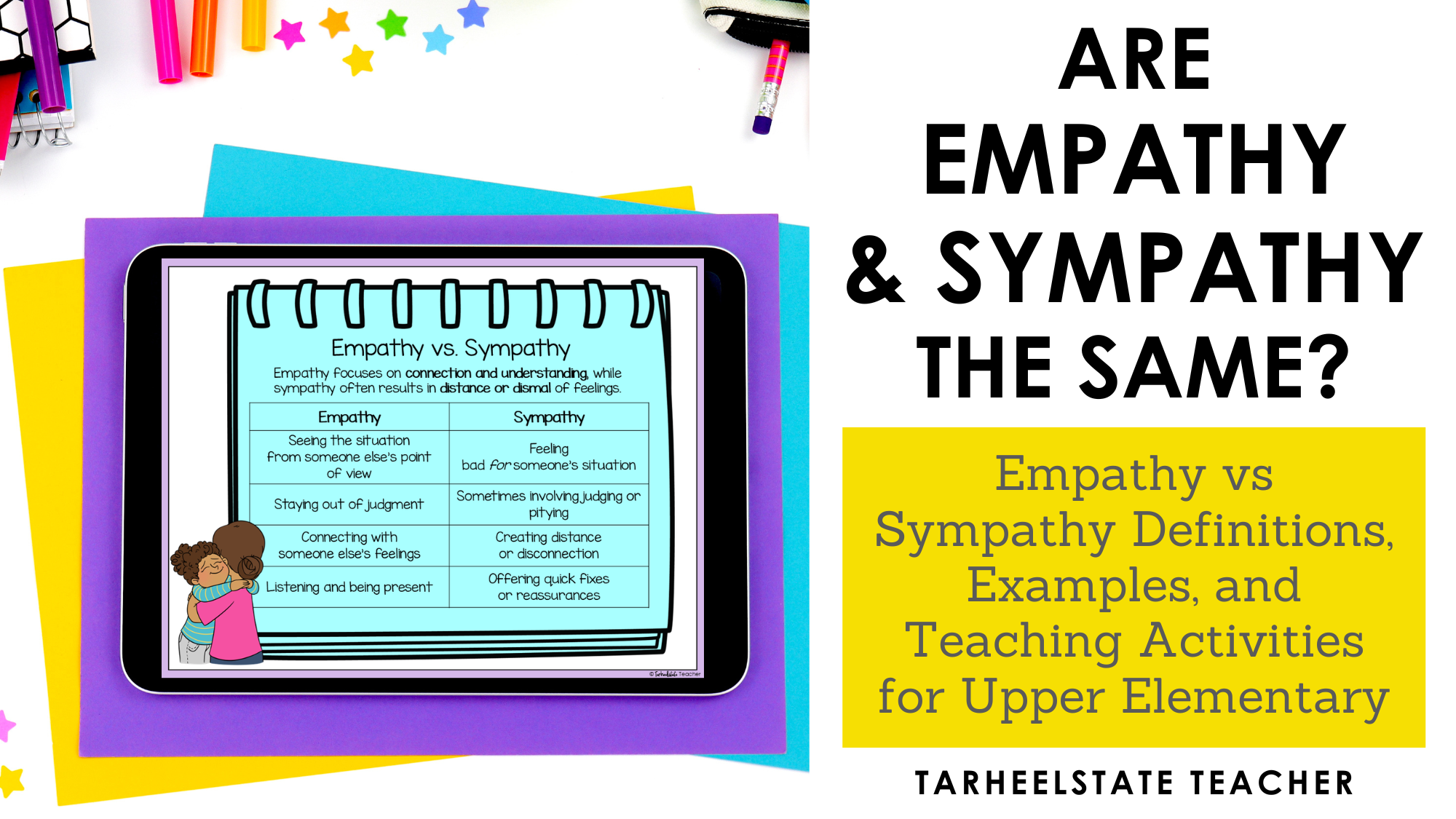
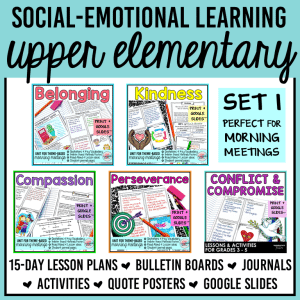
 You can do each of these suggested empathy activities for students with a reflection journal and materials you have around the classroom, but if you want some of the work done for you, you can check out my full Compassion & Empathy SEL unit, complete with lesson plans that make it super easy to implement and enjoy!
EMPATHY VS SYMPATHY: SIMPLE DEFINITIONS FOR STUDENTS
What’s the definition of empathy vs. sympathy
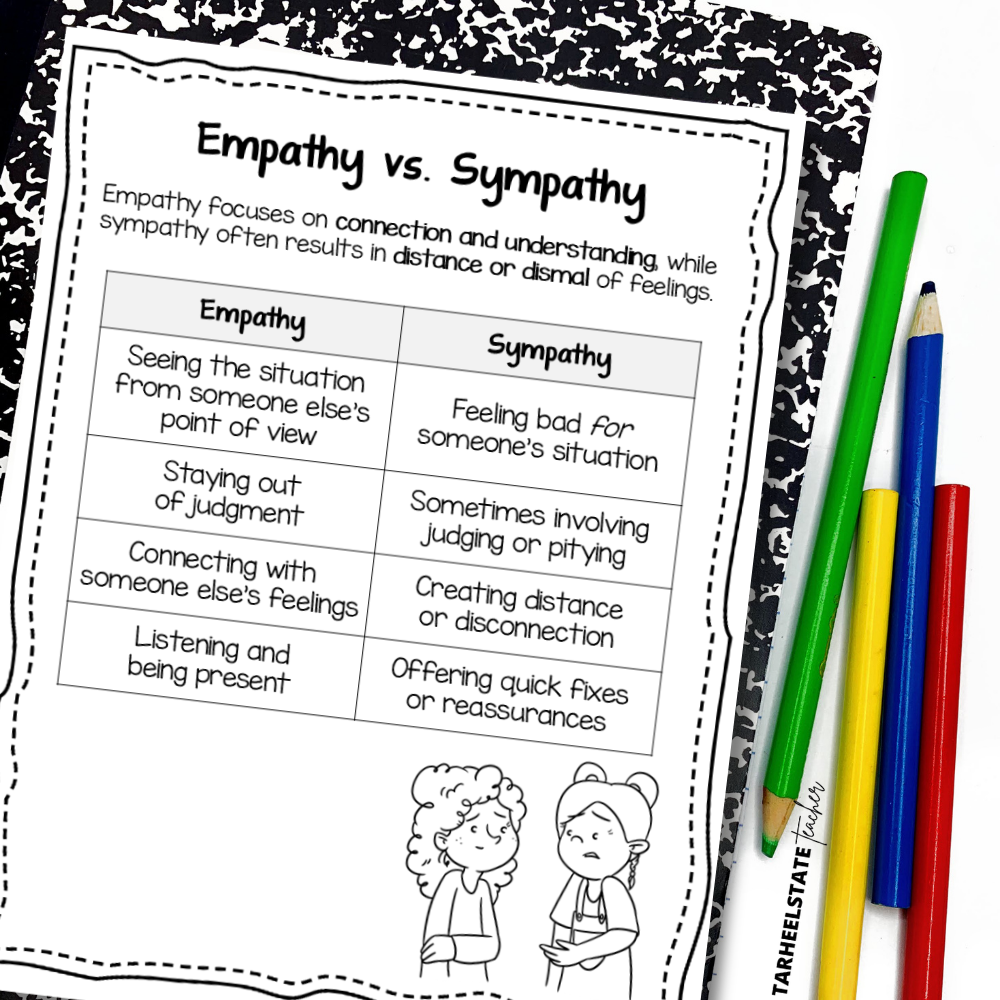
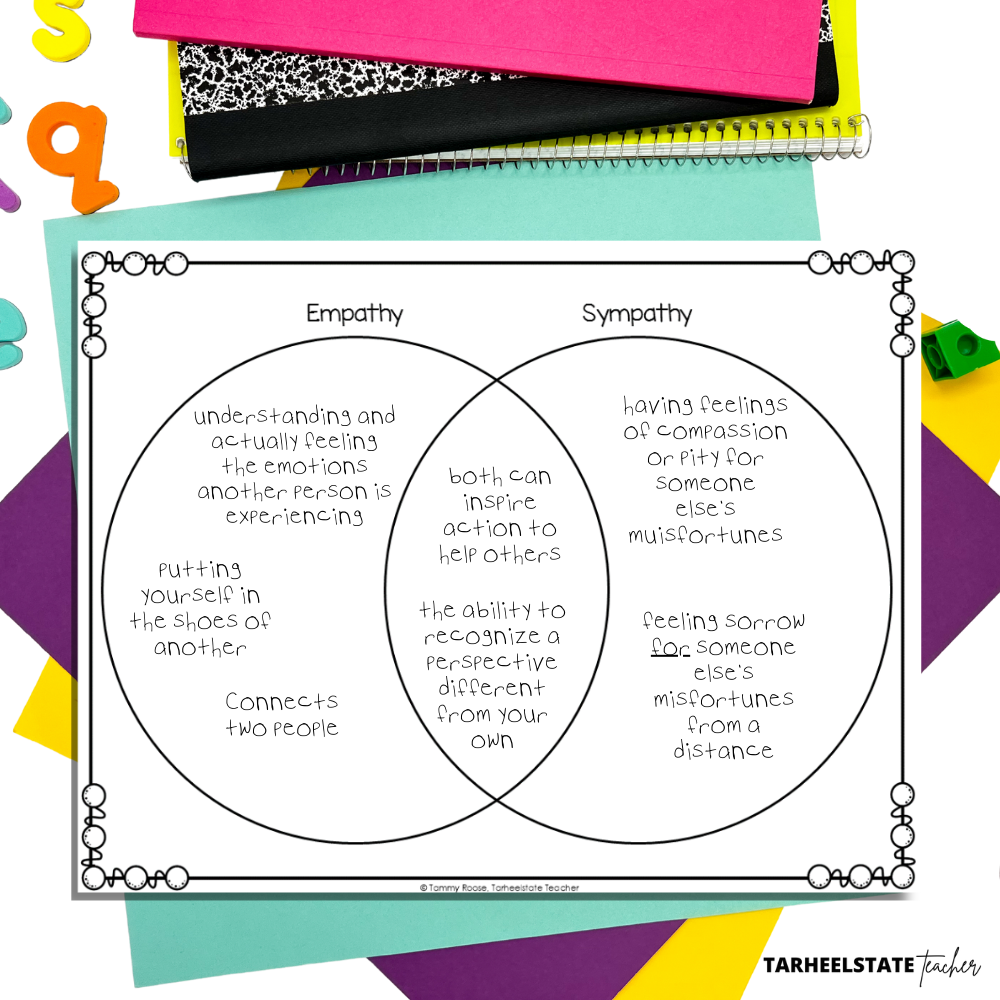
- Empathy is feeling with someone. It means putting yourself in their shoes and understanding their emotions from their point of view.
- Sympathy is feeling for someone. It’s recognizing someone’s hardship, but staying more distant—offering comfort or pity rather than true emotional connection.
Consider displaying an empathy vs sympathy chart in your classroom to help students remember the difference.
THE EMPATHY VS SYMPATHY BRENE BROWN VIDEO (A CLASSROOM FAVORITE)
One of the most engaging ways to teach the difference between empathy and sympathy is with the empathy vs sympathy video by Brené Brown. This short animated clip has become a favorite for educators because it breaks down complex emotional concepts in a simple, memorable way.
In the video, Brené explains that:
“Empathy fuels connection. Sympathy drives disconnection.”
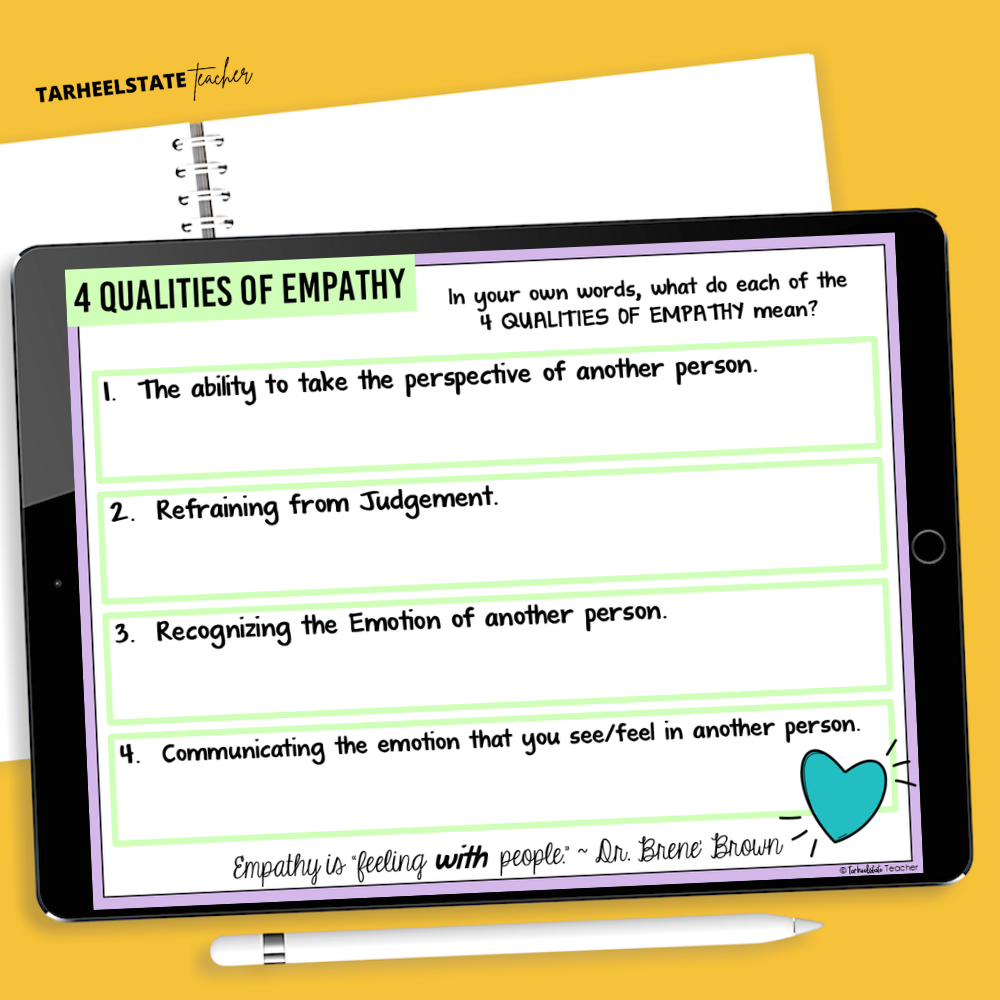
She walks viewers through four qualities of empathy:
- Perspective taking
- Staying out of judgment
- Recognizing emotion in others
- Communicating that recognition
Watch it as a class, then pause to reflect or journal:
- What’s the difference between feeling with someone (empathy) and feeling for someone (sympathy)?
- Which of the four empathy skills do you think is the hardest? Why?
- Can you think of a time someone showed you empathy—or when you wish they had?
This video is a simple, high-impact way to help students internalize the meaning of empathy vs sympathy and recognize how these emotional responses affect their relationships. You can even have them research empathy vs sympathy definitions online and create Venn diagrams, posters, or mini-presentations explaining the difference in their own words.
WHEN SYMPATHY IS HELPFUL (AND WHEN IT’S NOT)
Sympathy isn’t a bad thing—it often comes from a genuine place of wanting to comfort someone. It can be helpful in certain situations, especially when you’re not sure what the other person is feeling or when you’re not ready to connect on a deeper level.
So when is sympathy helpful?
- When you’re showing basic kindness to someone you don’t know well.
- When a person isn’t ready to talk deeply about their feelings.
- When acknowledging pain, even briefly, is better than saying nothing at all.
- When you’re not sure how they feel but still want to be supportive in a small way.
For example:
- If a student you don’t know well lost their pet and you say, “I’m really sorry to hear that,” that’s a sympathetic response—but still a kind and appropriate one.
- If someone is crying in the hallway and you gently say, “I hope things get better soon,” that might not be deep connection—but it still shows care.
But when is empathy more helpful?
- When you want to build or deepen a relationship.
- When someone is clearly struggling and needs to feel understood.
- When a situation calls for more than just words—it calls for presence.
WHAT EMPATHY LOOKS LIKE: MINI STUDENT SCENARIOS
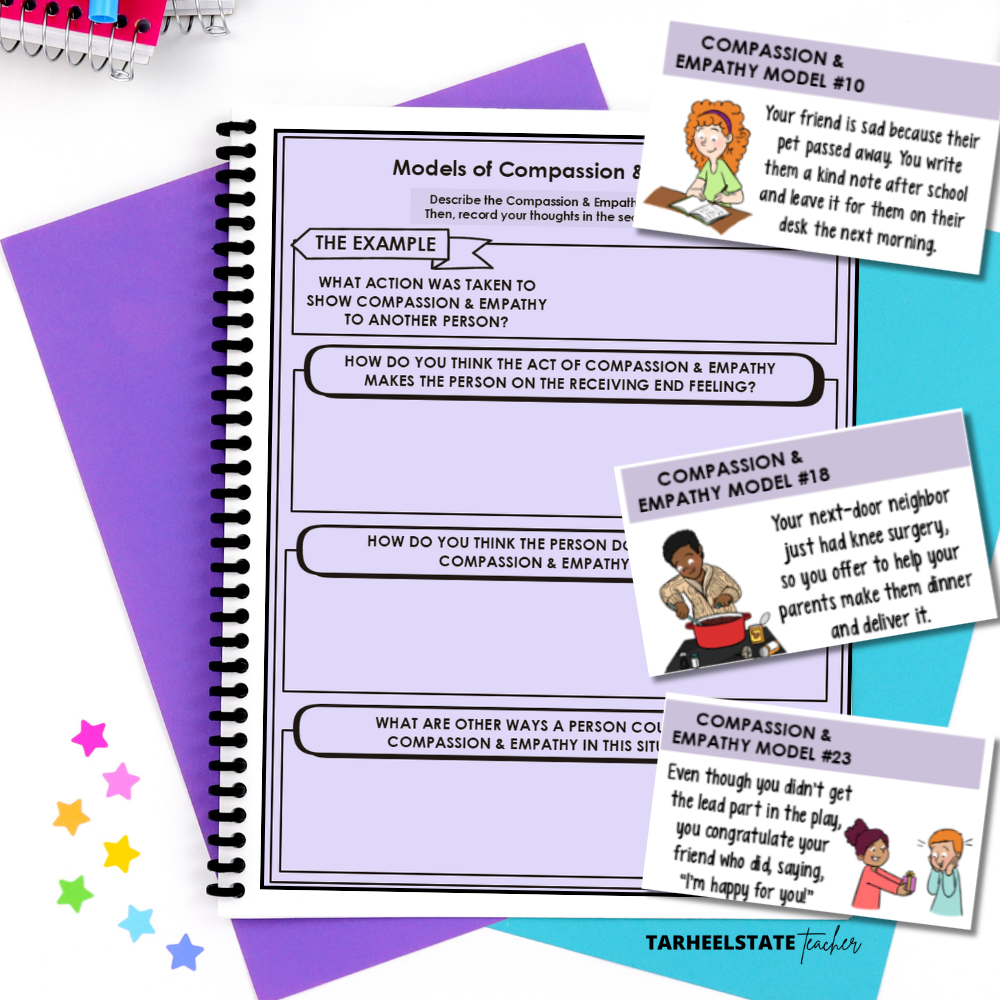
Before students can practice empathy, they need to recognize it in action. Try sharing short real-life situations like these to think through and discuss as a group:
Your friend is sad because their pet passed away. You write them a kind note after school and leave it for them on their desk the next morning.
- How do you think the act of compassion and empathy makes the person on the receiving end feel?
- How do you think the person doing the act of compassion and empathy feels?
- What are other ways a person could show compassion and empathy in this situation?
These compassion and empathy scenarios help students see how empathetic responses build connection—and why that matters.
WHAT EMPATHY SOUNDS LIKE: EMPATHETIC VS SYMPATHETIC RESPONSES
Try this hands-on empathy activity to get your students talking and thinking deeply:
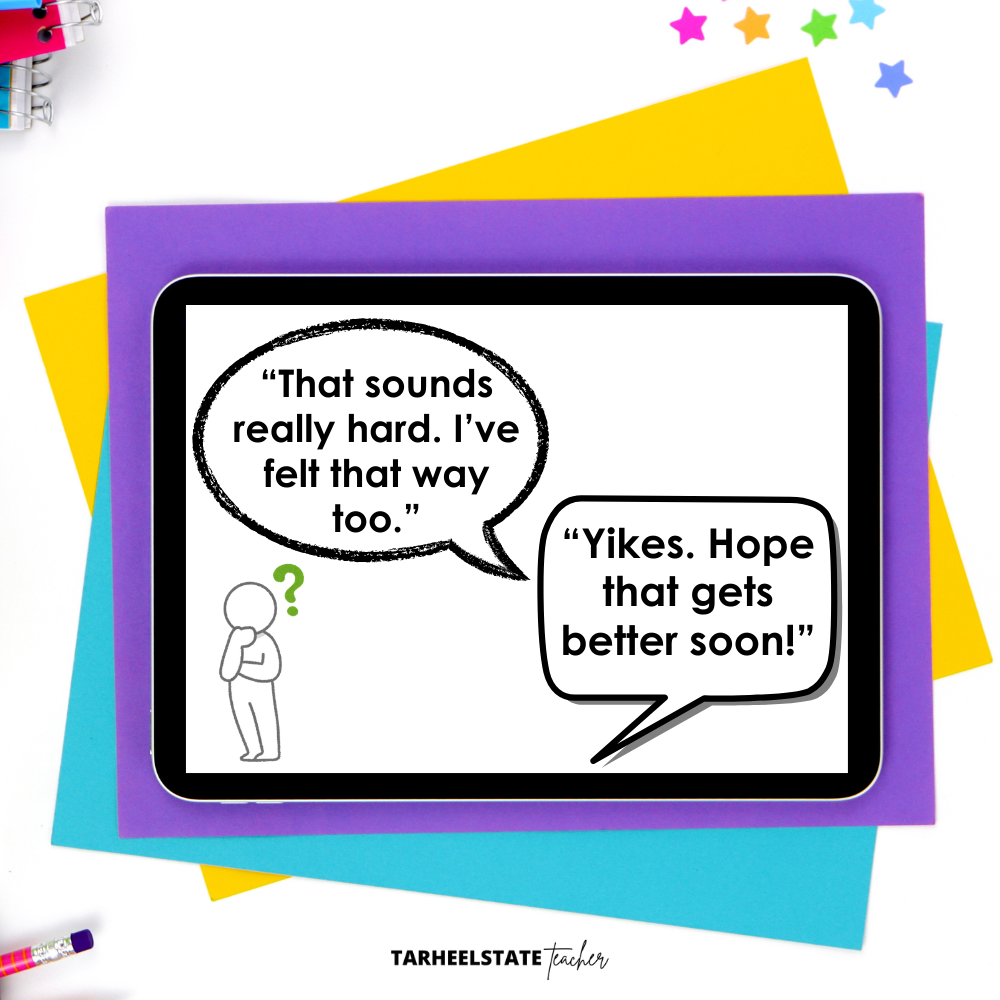
Display two comments, one that is empathetic and one that is sympathetic.
2. Ask students to discuss:
- Which comment feels more empathetic? Why?
- How would you feel if someone said each to you?
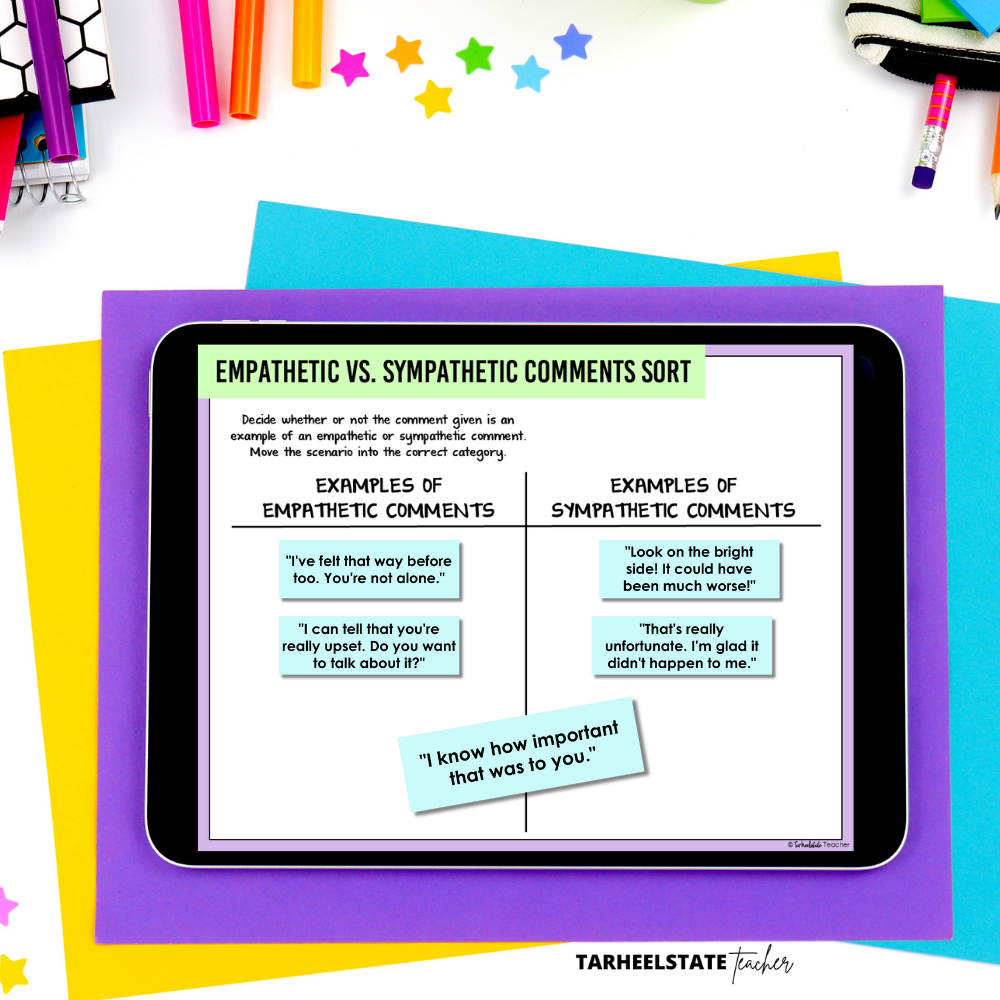
3. Divide students up into partners or small groups and give them various empathy vs sympathy statements. Have them sort the statements them into “Empathetic Responses” and “Sympathetic Responses” piles and then discuss how they made their choices.
EVERY DAY WAYS TO PRACTICE EMPATHY IN THE CLASSROOM
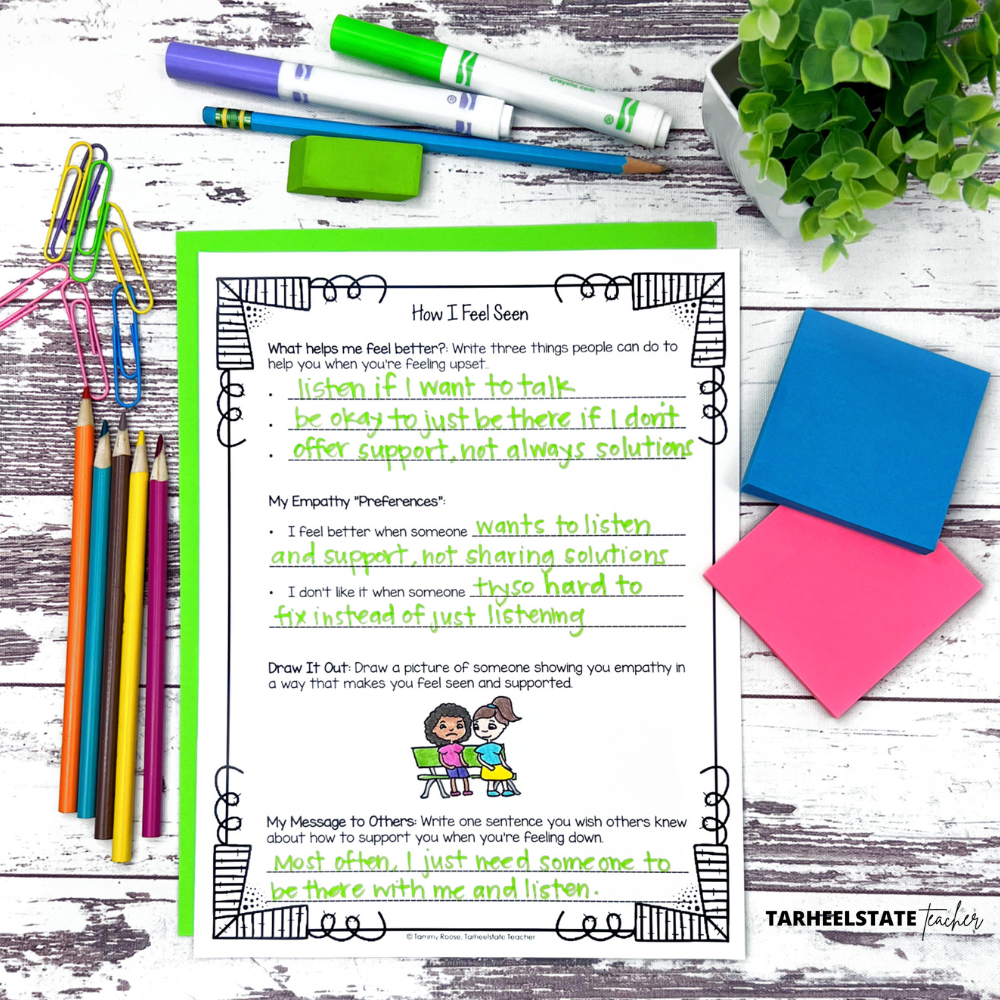
Morning Meeting Check-Ins: Ask “What’s something that made you feel seen or unseen this week?” not just “How are you?”
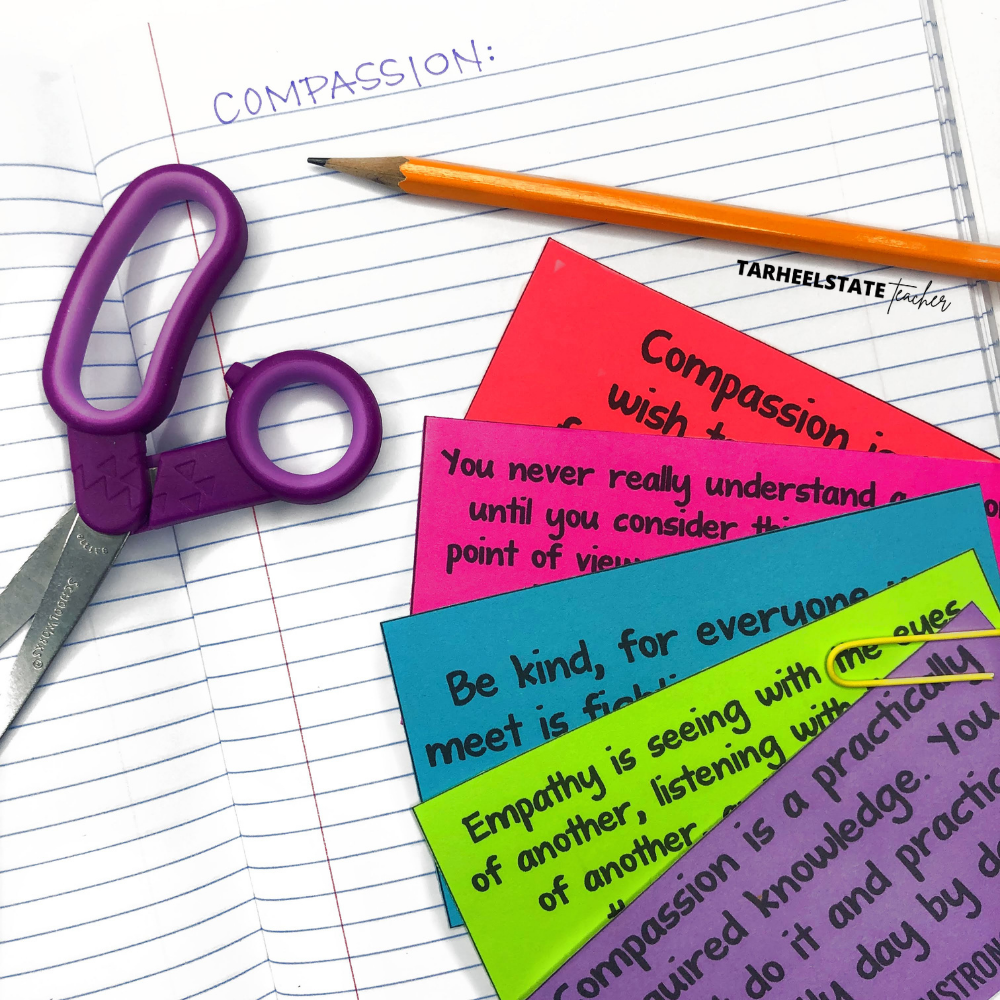
Reflect on Empathy Quotes: Use quotes on empathy and compassion as writing prompts or discussion starters.
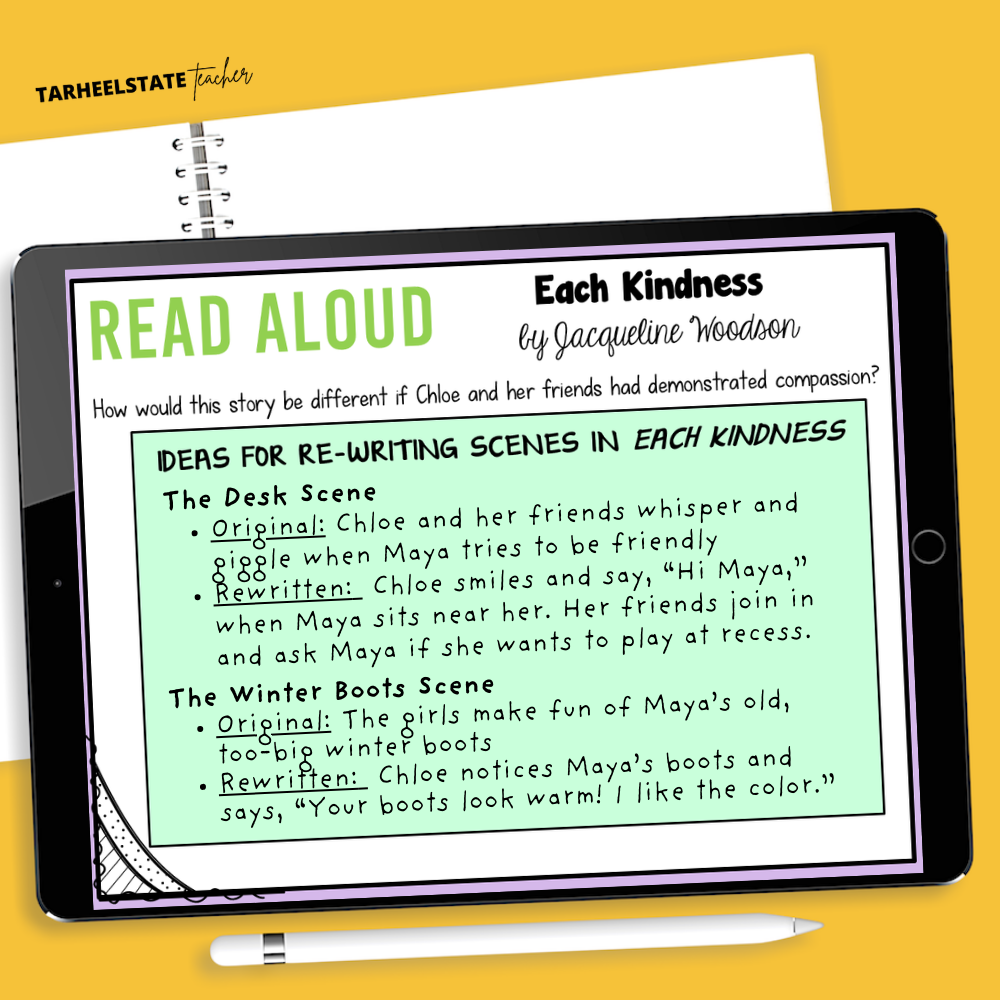
Read Alouds: Choose picture books about empathy that showcase understanding and connection. I’ve included a list of my top favorites in my Compassion and Empathy SEL Unit.
- Modeling: Narrate your own thinking when you notice a student struggling: “I saw that you looked frustrated, and I wanted to check in. I know that feeling.”
- Practice Role-Playing: Use short perspective taking and empathy scenarios where students act out how to respond to a friend who feels left out, embarrassed, or hurt. Then reflect:
“What did the empathetic response sound like? What made it effective?”
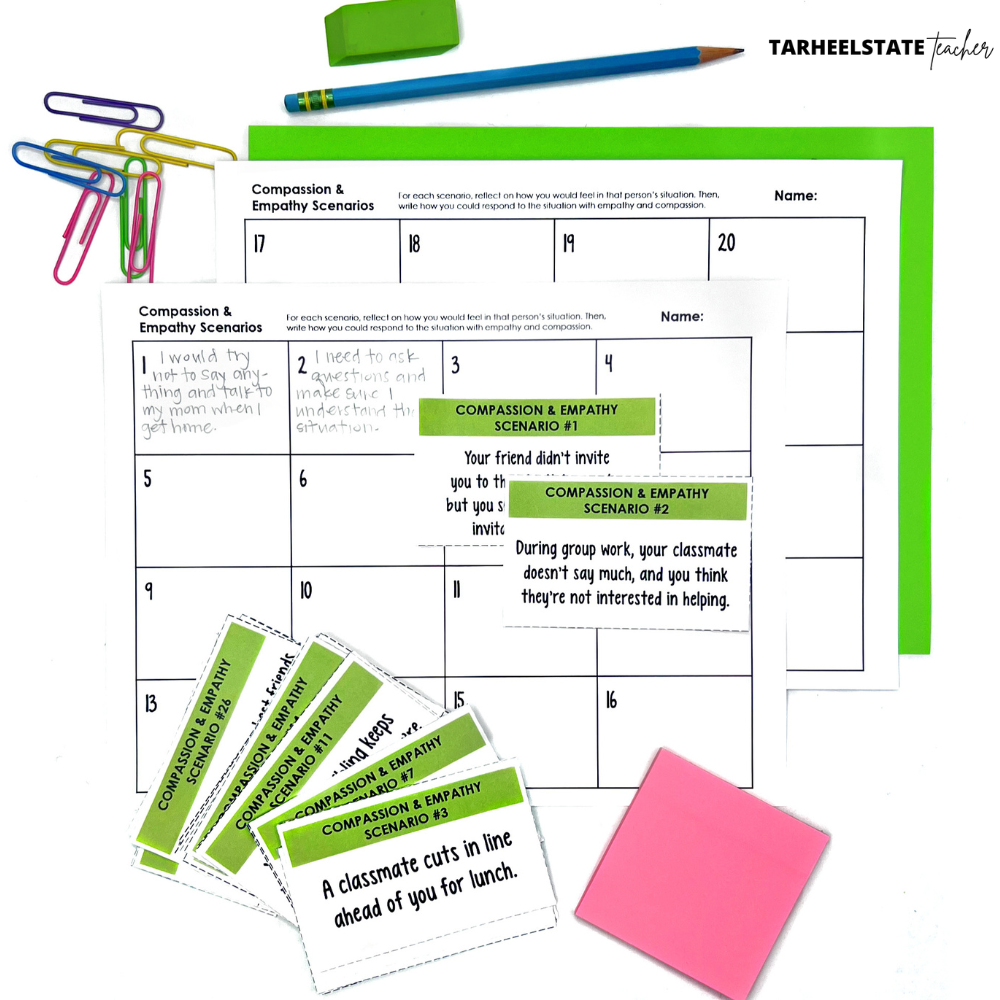
Student-Led “How Would You Feel?” Circle: Let students take turns leading a short scenario discussion where they ask: “How would you feel if…” followed by a situation, like forgetting your lunch or being excluded from a game.
If you’re looking for more ways to keep building empathy and compassion with your students, here are some other resources you may be interested in:
- How to Teach Empathy in the Classroom: 10 Empathy Classroom Activities That Really Work gives you ready-made activities students can work through to practice noticing and responding to others’ feelings.
- Perspective Taking and Empathy Scenarios for Teaching About Compassion to Upper Elementary Students shares meaningful scenarios and perspective-taking activities that help students move from understanding empathy to actually practicing compassion.
- Complete Empathy SEL Unit for upper elementary—this unit includes all of the activities you see in this post, editable lesson plans, suggested read alouds, student notebooks, and a bulletin board to help your unit make a lasting impression!
Let’s continue helping students grow into kind, compassionate humans.
NEED A DONE-FOR-YOU COMPASSION AND EMPATHY UNIT?
The Compassion & Empathy SEL Morning Meeting unit is a 20 day unit for upper elementary. It includes
 20 Days of Printable & Editable Lesson Plans — includes suggested read alouds, discussion questions, 16 empathy and perspective taking activities, extension ideas, and linked online resources
Student Journals & Activities — empathy-related discussion prompts, self-reflection and goal setting exercises, and social emotional learning worksheets to deepen students’ understanding of empathy and compassion, with activities like Empathetic vs Sympathetic Comment Sort, Considering Perspectives & Responding with Compassion, How I Feel Seen, Compassion & Empathy Scenario Cards, and more!
Empathy & Compassion Bulletin Board that includes important vocabulary like compassion, insensitive, empathy, and sympathy and inspirational quotations for a visual reminder of your empathy and compassion lessons
Google Slides — Teacher and student versions to implement this unit digitally or use as visual prompts and discussion starters on your interactive whiteboard