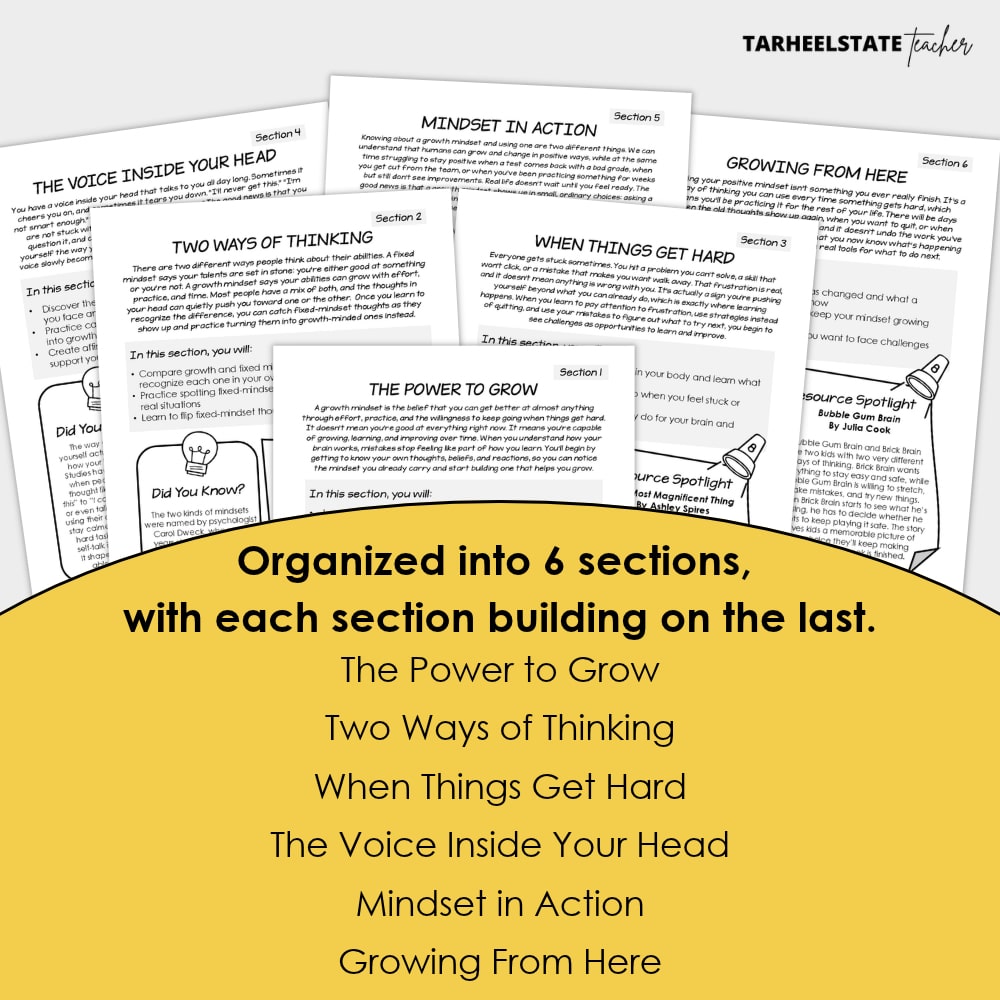
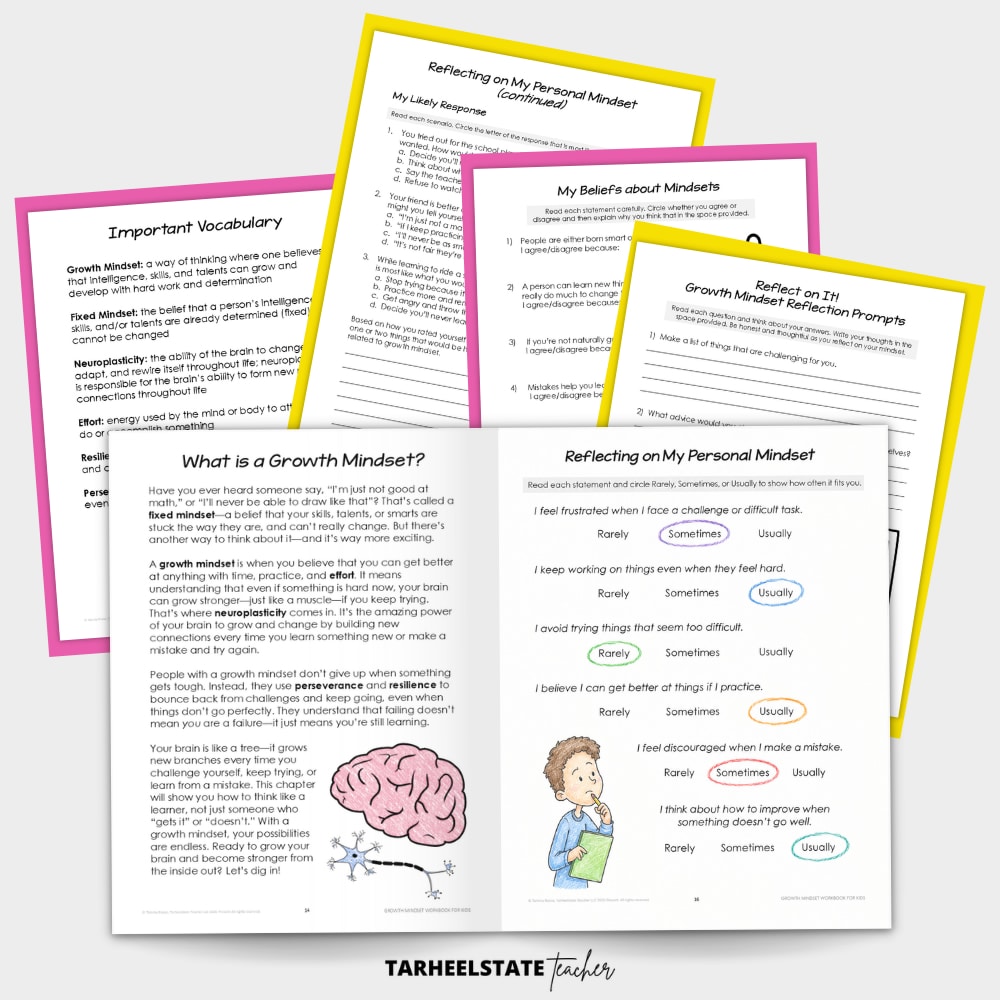
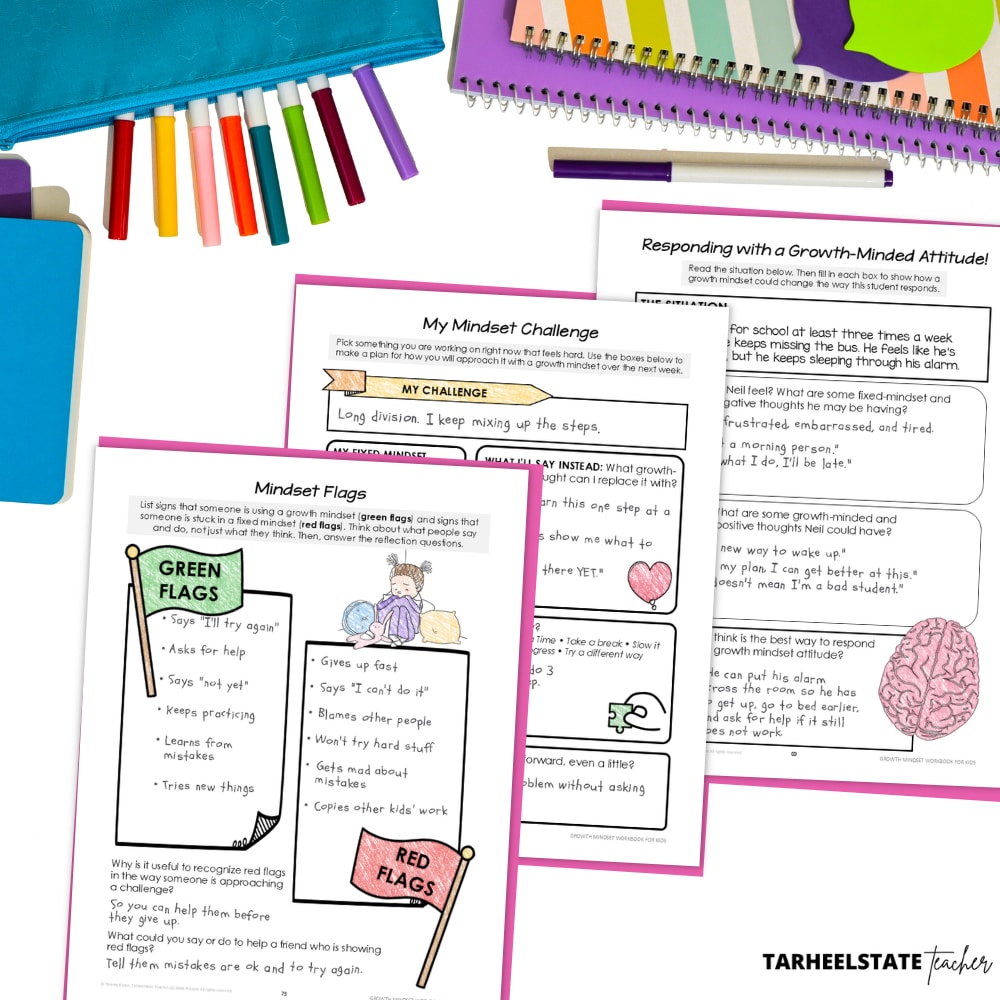
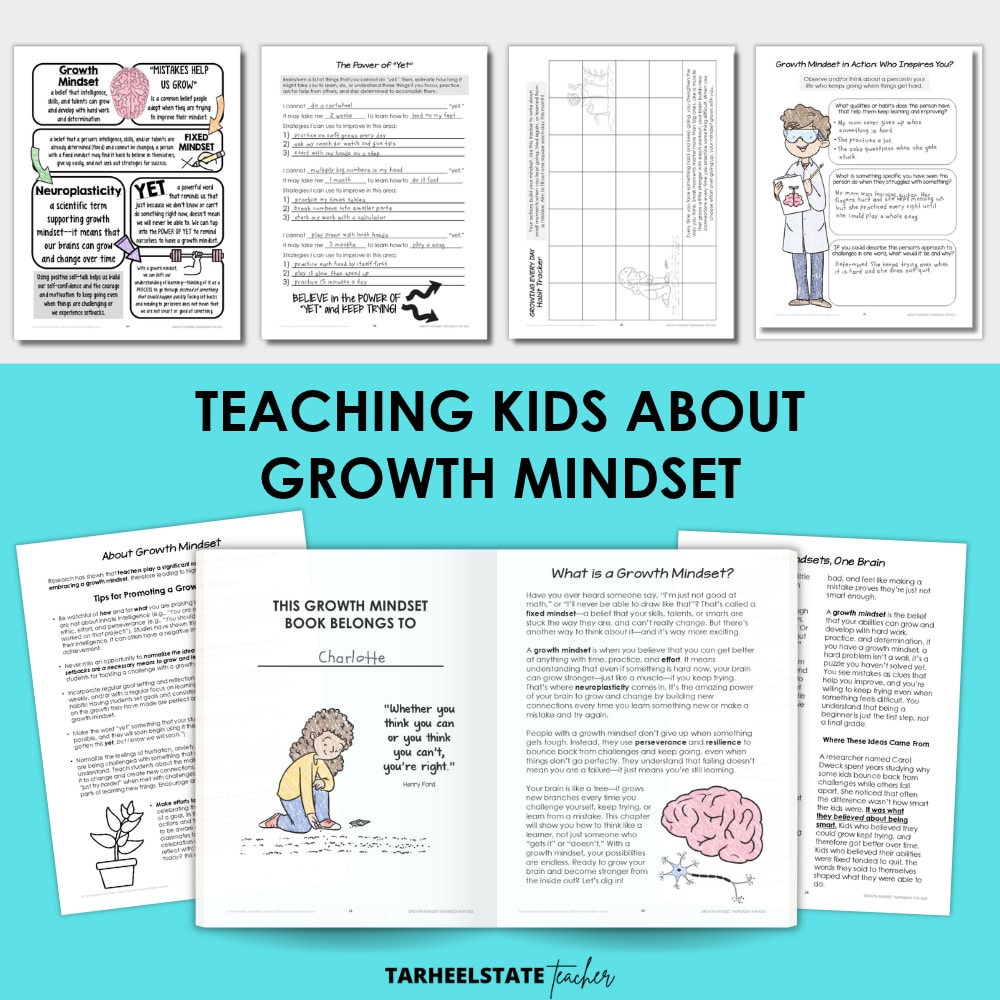
Kids begin by exploring what a growth mindset really means and how their brains can change through learning, effort, and practice. They reflect on their own beliefs about ability and think about how they and the people around them typically respond when something feels difficult.
4 – THE VOICE INSIDE YOUR HEAD
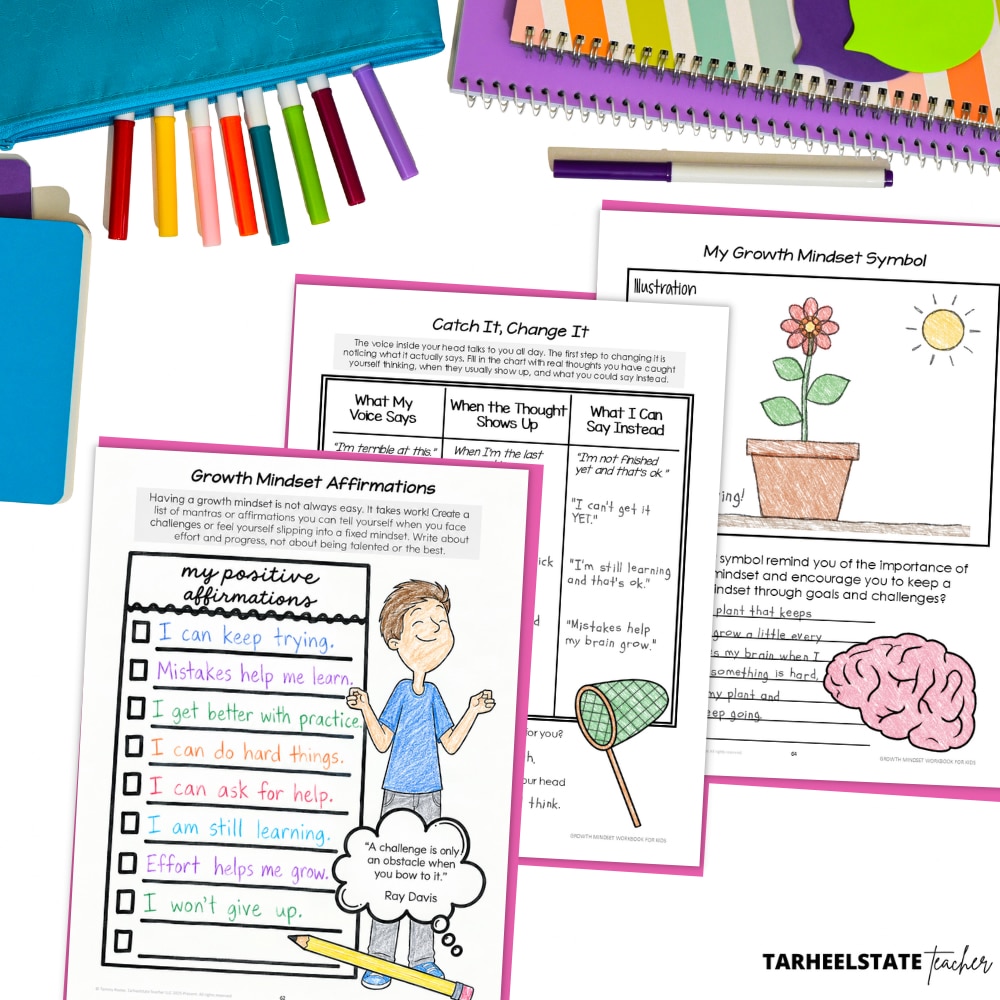
The things we say to ourselves influence what we decide to do next. In this section, kids practice paying attention to what they say to themselves when something feels difficult. They also learn how changing a discouraging thought can help them approach a challenge differently and create the motivation to keep going.
5 – MINDSET IN ACTION
Now kids put what they have learned to work. They explore real-life situations that test their mindset and consider how a growth-minded response could change what happens next.
6 – GROWING FROM HERE
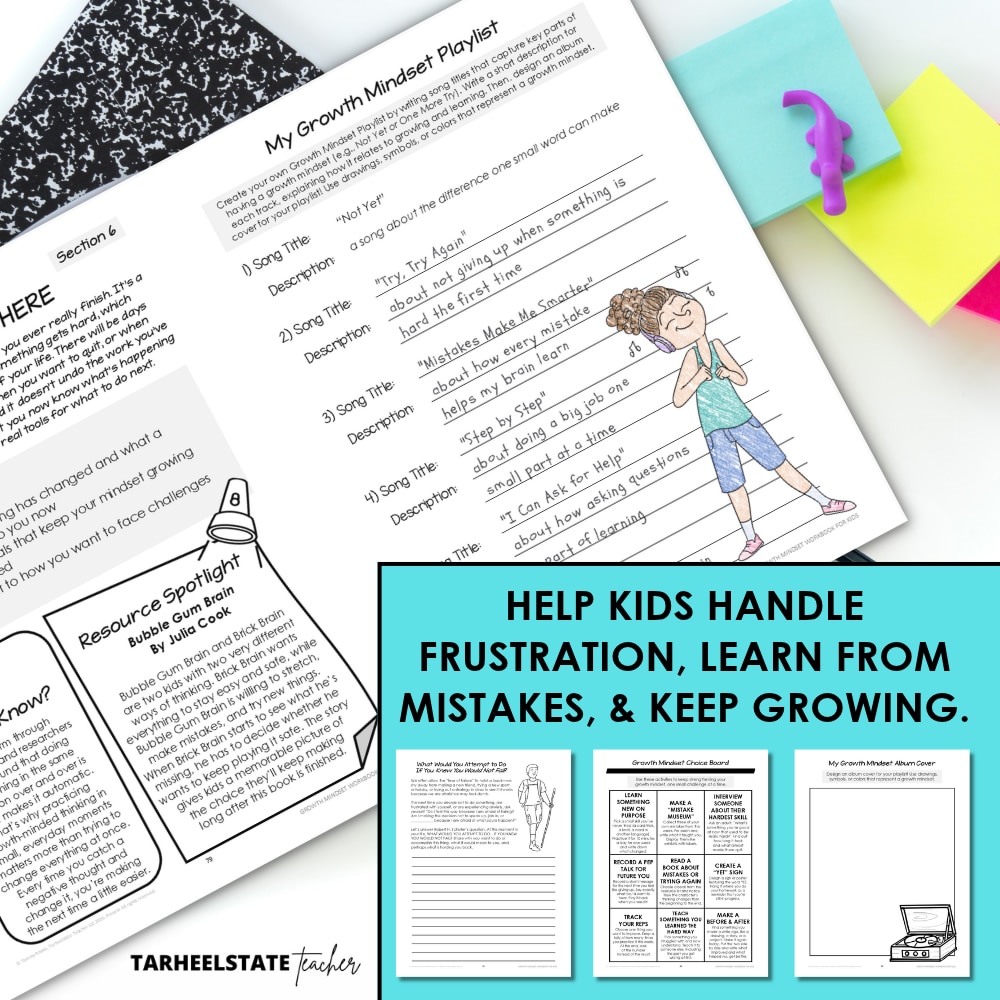
In the last section, kids reflect on how their thinking has changed and which strategies they want to take into their future actions. They reflect the things they now understand about themselves and what they want to remember the next time they feel frustrated or stuck.
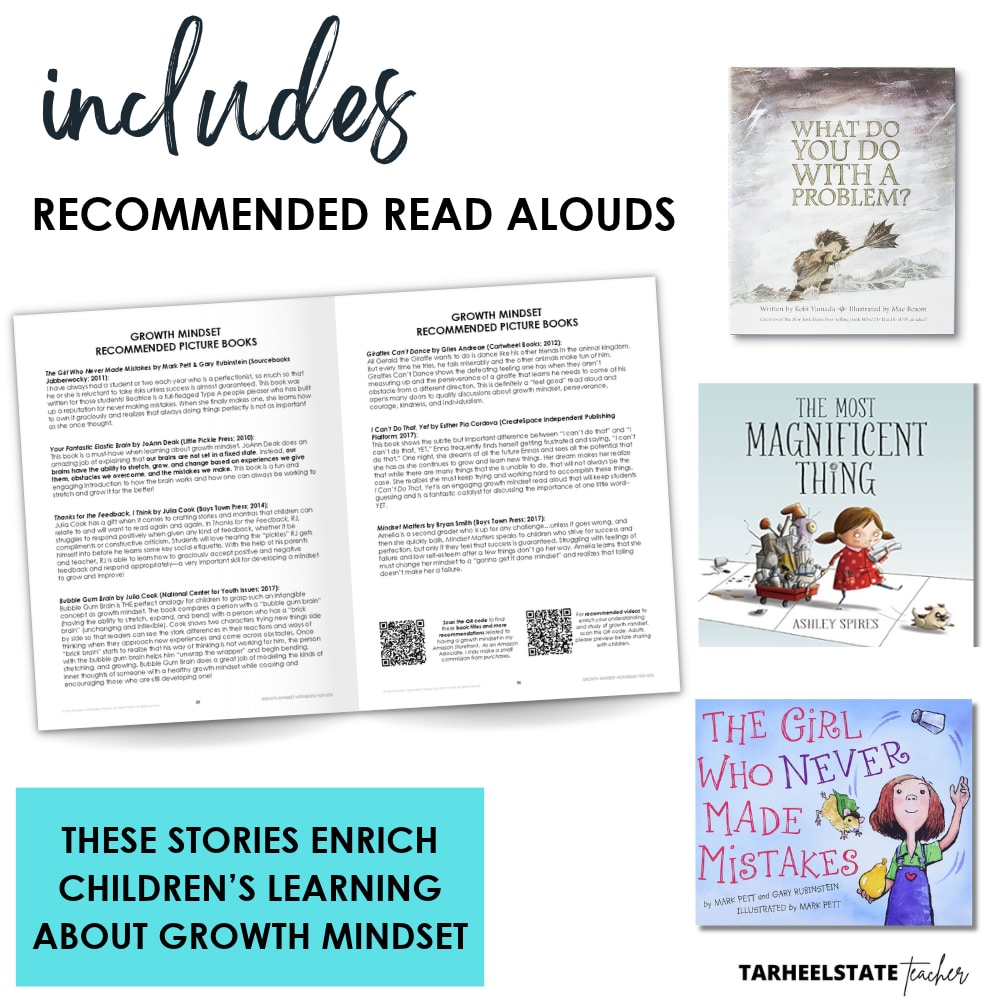
The Girl Who Never Made Mistakes by Mark Pett & Gary Rubinstein
Beatrice Bottomwell is famous for never making a mistake, and she feels tremendous pressure to keep it that way. When she finally makes a very public mistake, she discovers that mistakes are far less frightening than she imagined. This story opens up a great conversation about perfectionism, fear of failure, and how a fixed mindset can keep us from enjoying new experiences.
The Most Magnificent Thing by Ashley Spires
A girl has a wonderful idea and sets out to build it, only to become increasingly frustrated when nothing she creates seems quite right. After her frustration boils over, taking a break helps her return with a fresh perspective. Her experience shows kids that mistakes can provide valuable information and that sometimes moving forward means pausing, looking again, and trying a new approach.
What Do You Do With a Problem? by Kobi Yamada
A child tries to avoid a problem that seems to grow bigger the more he worries about it. Eventually, he finds the courage to face it and discovers that the problem contains an opportunity. This story helps children think about how changing the way they approach a challenge can change what they see and what they do next.
HOW TO USE THIS WORKBOOK
Whether you’re helping your child through homework frustration at the kitchen table, building perseverance into your homeschool routine, or supporting students through SEL instruction, this workbook is designed to be flexible and practical. For the best results, I recommend using the workbook and talking about its ideas 3–4 times each week. Revisiting these concepts regularly gives kids opportunities to recognize their thinking and practice new responses when real challenges arise.
FOR PARENTS AND GUARDIANS
Try bringing growth mindset practice into moments that are already happening throughout your child’s day:
- Use What to Do When You’re Stuck when homework frustration starts building and help your child choose a strategy before giving up.
- Talk through What Mistakes Are Telling You after a mistake and ask what information they can use the next time they try.
- Practice adding “yet” when you hear statements such as “I don’t understand this” or “I’m not good at this.”
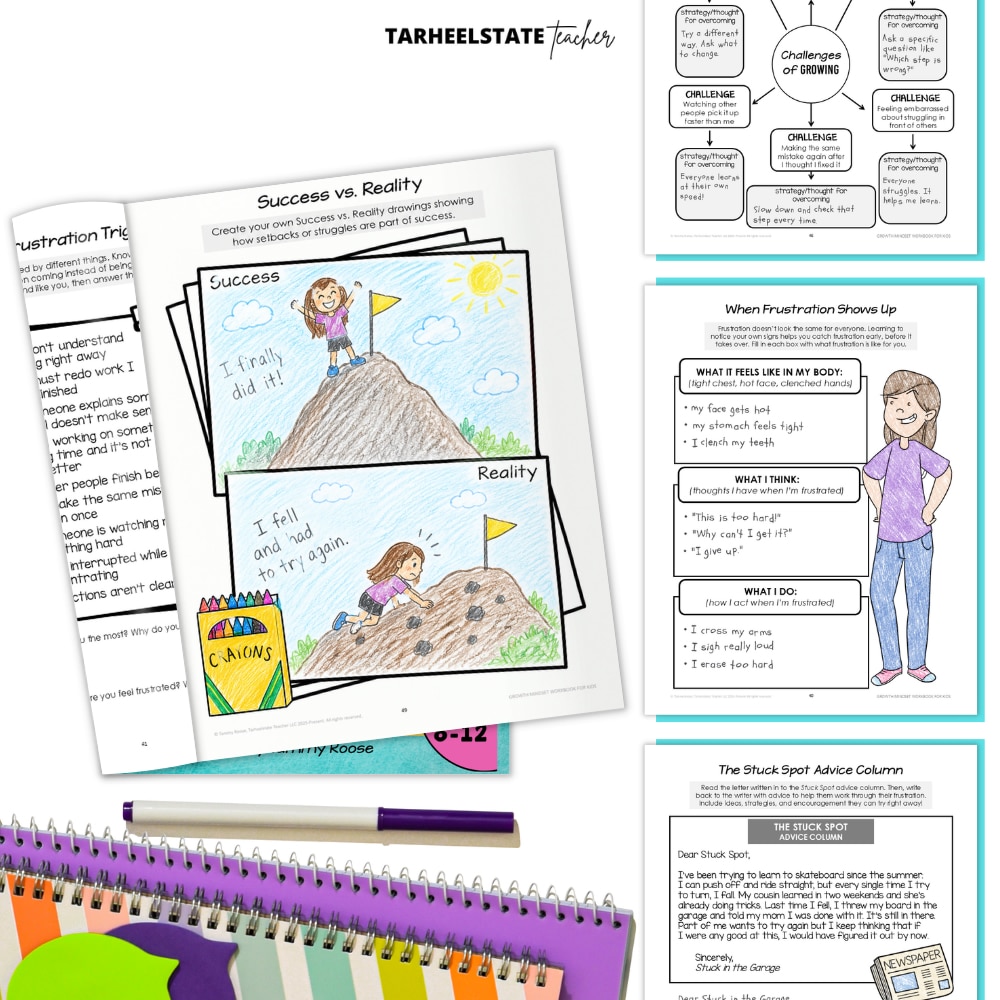
- Use the Frustration Challenges & Strategies activities to help your child identify what tends to trigger frustration and what helps them recover.
- Check in with the Growing Every Day Habit Tracker to notice small examples of persistence, flexible thinking, and trying again.
The goal is to help kids develop a healthier response to struggle. Over time, they begin recognizing frustration sooner and learn that they have choices about what to do next.
FOR HOMESCHOOL OR CO-OP EDUCATORS
Growth mindset fits naturally into both academic learning and character education:
-
- Pair each section with its suggested read aloud to explore growth mindset through stories.
-
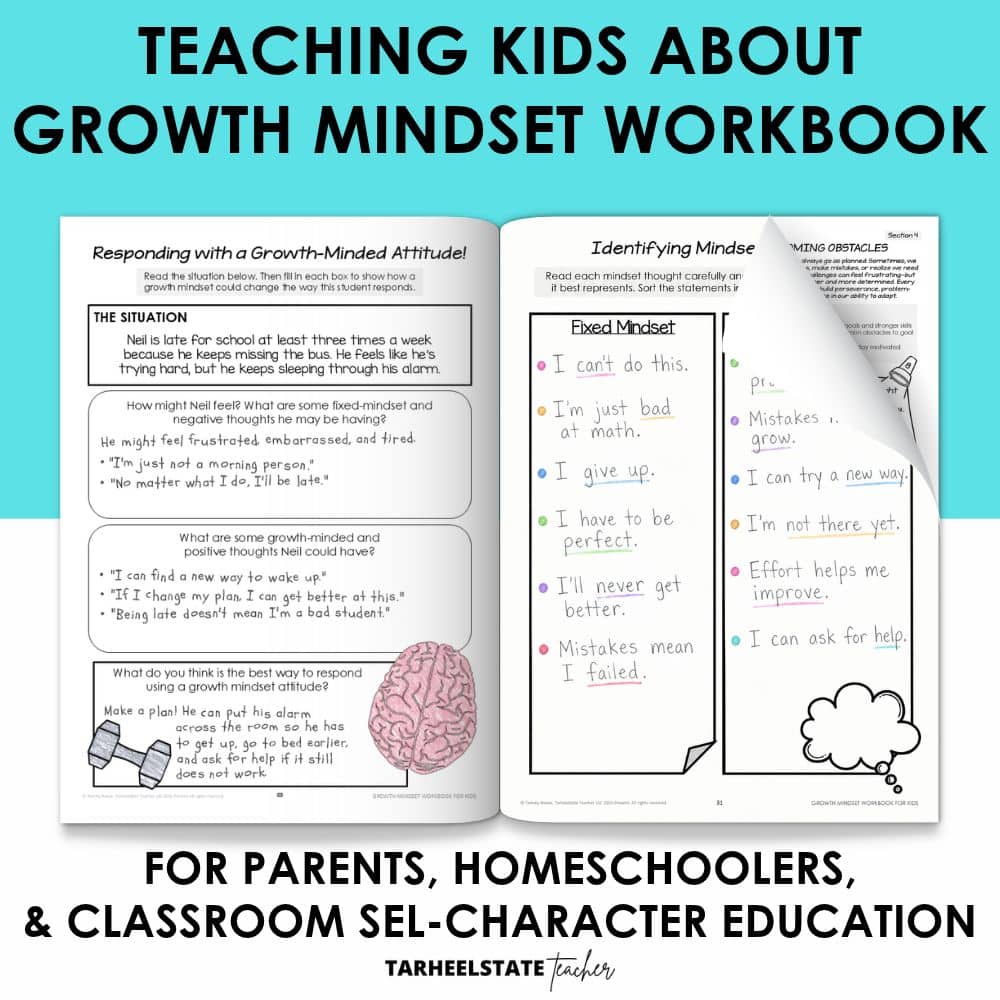
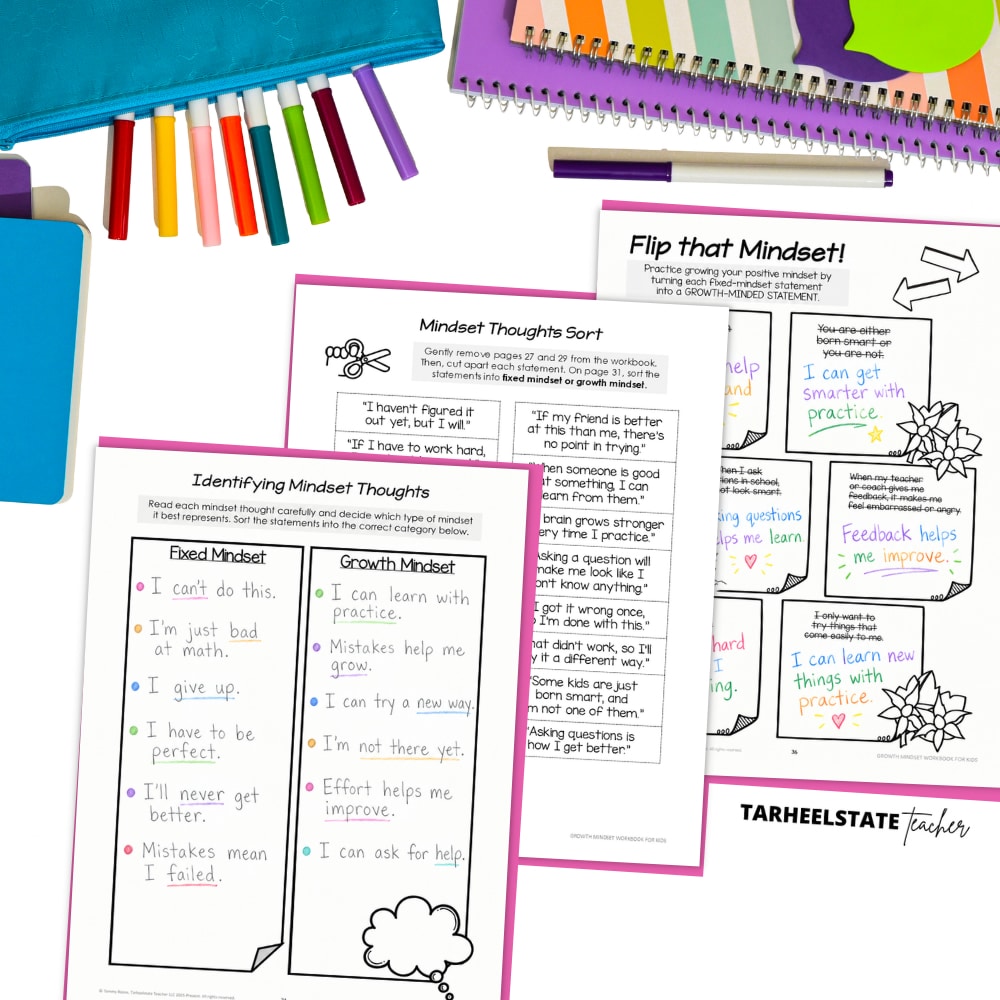
- Use Mindset Thoughts Sort to compare fixed and growth mindset language and discuss how each type of thinking affects learning.
-
- Connect Famous Flops to history, biography, or research by exploring people whose mistakes and setbacks became part of their eventual success.
-
- Use frustration reflections after a challenging math, writing, or project-based learning experience.
-
- Let students work through the real-life mindset scenarios together and compare different ways they could respond.
-
- Use the Personal Growth Mindset Weekly Goal Reflection to help children choose one mindset habit to practice intentionally.
Because these concepts connect directly to the process of learning, growth mindset practice can become part of your regular homeschool or co-op routine rather than feeling like a separate subject.
FOR CLASSROOM TEACHERS
This workbook was designed based on my SEL Morning Meeting Unit for Growth Mindset, making it a natural fit for classroom character education. Whether used during morning meetings, counseling groups, or SEL instruction, each activity encourages students to explore perseverance, frustration, mistakes, self-talk, and the beliefs they hold about their ability to learn and grow.
Activities such as Mindset Thoughts Sort, What to Do When You’re Stuck, and the real-life mindset scenarios give students specific ways to talk about frustration, mistakes, and fixed-mindset thinking.
NOTE: The printable download version in the Tarheelstate Teacher store includes daily lesson plans, student journals, a bulletin board, and a Google Slides component. Consider whether the workbook curriculum or printable version will best meet your needs.
INTERESTED IN MULTIPLE COPIES?
Contact Tammy at tarheelstateteacher(at)gmail(.)com for a quote for multiple copies or purchase orders for your campus or district.
WHY FAMILIES AND TEACHERS VALUE THIS APPROACH
Growth mindset becomes much more useful when kids understand not only what it is, but how to have one themselves. This workbook gives children language for talking about frustration, strategies for getting unstuck, and opportunities to practice learning from mistakes before they encounter the next difficult moment.
Kids learn that perseverance does not mean repeating the same thing endlessly. Sometimes growth means asking for help, changing a strategy, taking a break, looking closely at a mistake, or trying something in a different way.
Most importantly, they begin to see that a difficult moment does not define what they are capable of learning.
FEEDBACK FROM CLASSROOM TEACHERS
 “Absolutely loved this resource and it was a wonderful addition to my growth mindset unit!! The slides were great and engaging for students and the plans were easy to follow, the slides were easy to edit, and the suggestions were really helpful.”
“I used this just after the beginning of the year to establish a foundation of growth mindset in my classroom. This resource is easy to use and can be incorporated in morning meeting.”
“This resource was a big help for morning meeting. The kids enjoyed the activities and I felt like it had a lot of good information and ideas. I loved the journal pages, as they allowed me to get to know my students better while also allowing them to practice writing and journaling skills.”
START GROWING HEALTHY MINDSET HABITS TODAY
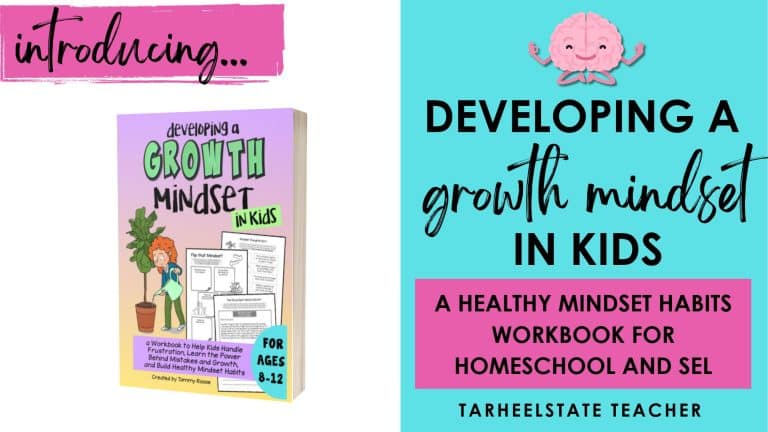
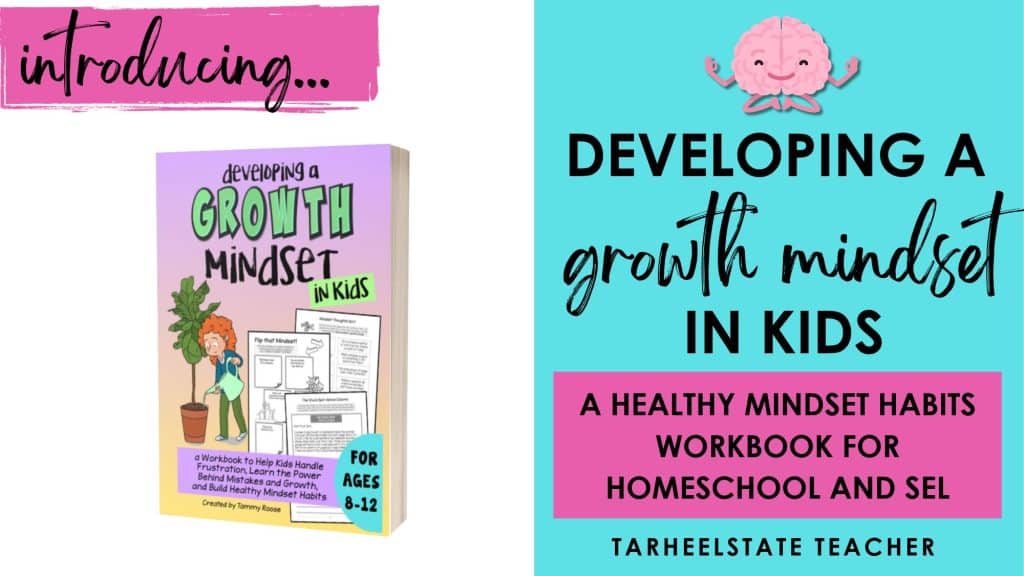
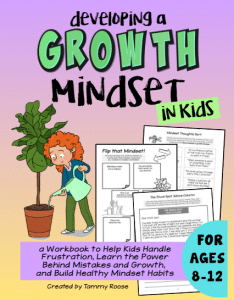
Help your child learn how to handle frustration, use mistakes as information, and believe in their ability to grow with Developing a Growth Mindset in Kids: A Workbook to Help Kids Handle Frustration, Learn the Power Behind Mistakes and Growth, and Build Healthy Mindset Habits.
SHOP THE OTHER WORKBOOKS IN THIS SERIES
- Teaching Kids About Lying and Telling the Truth for Kids: A Building Character Workbook on Integrity for Ages 8-12
- Responsibility for Kids: Teaching How to Follow Through and Make Good Choices for Kids A Building Character Accountability Workbook Ages 8-12
- Teaching Gratitude to Kids: Social and Emotional Activities for Gratitude and Positivity Kids Mindfulness Workbook Ages 8-12
- How to Help Kids Be Themselves: Self-Love Activities for Helping Kids Grow Confidence and Self-Esteem a Self Acceptance Workbook for Ages 8-12
- A Goal Setting Workbook to Help Kids Go For It: Teaching Children to Set Goals, Start New Habits, and Focus on Personal Growth for Ages 8-12
- Navigating Friendships for Kids: Friendship Activities for Kids on Making & Keeping Friends, Being a Good Friend, & Healthy Friendships Ages 8-12
- Help Kids Get More Motivated: Fostering Intrinsic Motivation & Positive Self-Talk Strategies a Self-Motivation for Kids Workbook Ages 8-12
- Helping Kids Care About Others: A Perspective Taking Workbook Teaching Kids About Empathy & How To Respond With Compassion for Ages 8-12