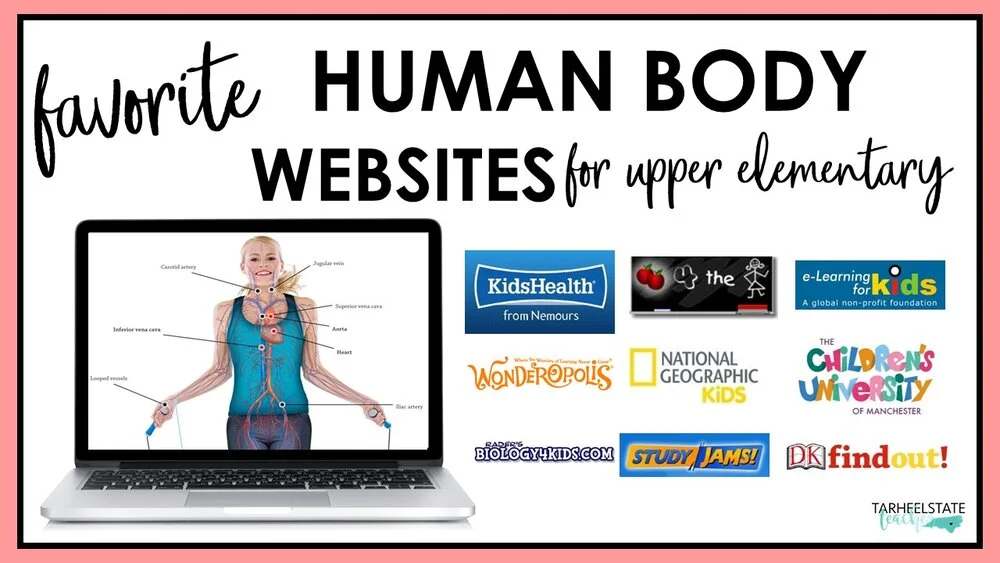
I love incorporating research and web-based learning into my Human Body unit. While I plan a hands-on activity or demonstration for almost every day of our human body systems unit, my students also complete web-based research for each body system that our curriculum requires.
They learn about the structures and functions of body systems, research diseases and ailments that can affect each system, and learn how to keep the system healthy. Because of these amazing websites, my students can engage with videos, interactives, zoom in to learn more about specific body parts, see engaging photographs, and learn through articles written on their level. Today, I’m sharing eight of my favorite upper elementary websites for teaching human body systems!
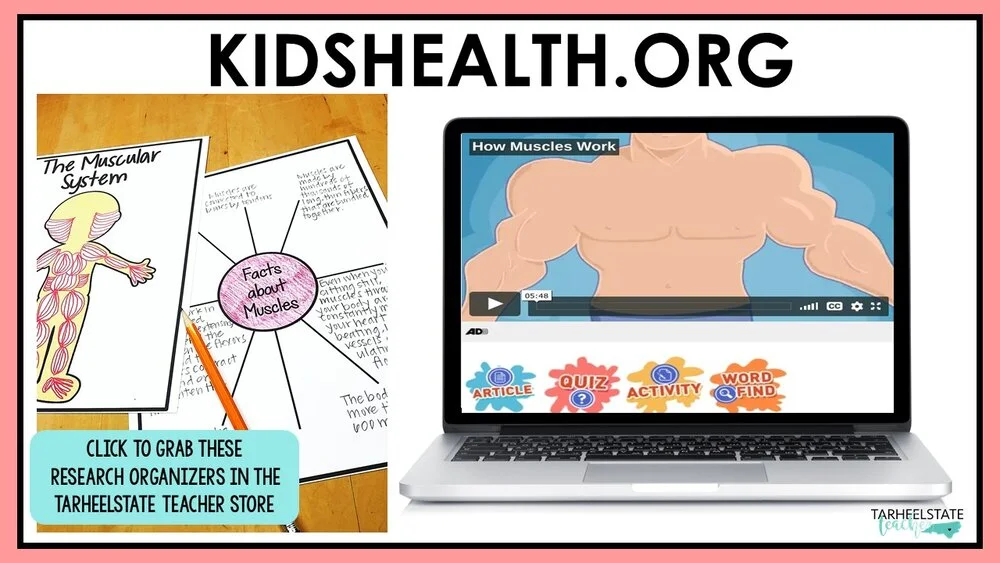
KidsHealth.org is an amazing resource for students and teachers alike! The site contains student-centered articles like “Bones & Skeletal System,” “Brain & Nervous System,” and the Digestive System and videos like How Bones Work, How Muscles Work, and How the Skin Works. Diagrams, slide shows, and short video clips are weaved into articles to help students develop a better understanding of the system and it’s function. If you want to dig in, KidsHealth also provides teacher guides, helpful handouts, quizzes (with answer keys!), and activities to use with students. Really a win-win with this one!
2) Scholastic Study Jams
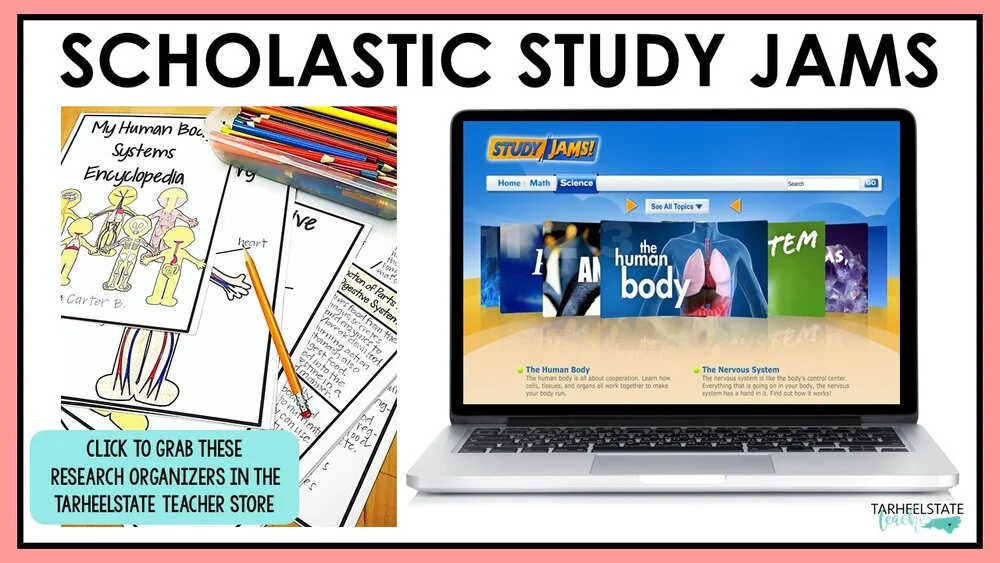
Scholastic Study Jams are a wonderful resource for science topics like the human body. Students can view engaging, animated videos or informative slideshows and even quiz themselves afterward! Some of the Study Jams that I point my students to during our human body systems unit include: Heredity, The Human Body, Skeletal System, Muscular System, Circulatory System, Respiratory System, Nervous System, and Digestive System. The videos and slideshows are also perfect for using in your lessons and showing on your interactive whiteboard.
3) Ducksters – Human Body
Ducksters is a fantastic, student-friendly website that breaks down every major body system into clear, easy-to-read articles written just for kids! Students can navigate to individual pages for the skeletal system, muscular system, cardiovascular system, digestive system, nervous system, respiratory system, skin, immune system, and more.
Each page explains the structures and functions of the system in plain language, making it a great go-to for independent research. What I especially love about Ducksters is that every topic also includes a short quiz so students can check their understanding right away! It’s clean, simple, and easy to navigate — perfect for sending students off to research a specific body system on their own.
The Human Body Game, created by Siemens Education, is an incredibly engaging, free interactive resource perfect for students ages 7–11! Students explore the body’s major systems through hands-on simulations where they label parts, identify bones on a skeleton, and learn the functions of different organs.
Instead of just reading about how the body works, students actually interact with diagrams, drag and drop parts into place, and test their knowledge through built-in quizzes. The game covers key systems including the skeletal, muscular, digestive, and circulatory systems — hitting all the major body systems your curriculum requires! It’s one of those resources where students don’t even realize how much they’re learning because they’re so busy having fun. This one is seriously hard to stop playing!
5) Interactive Anatomy Learning Tools Grade 3-5
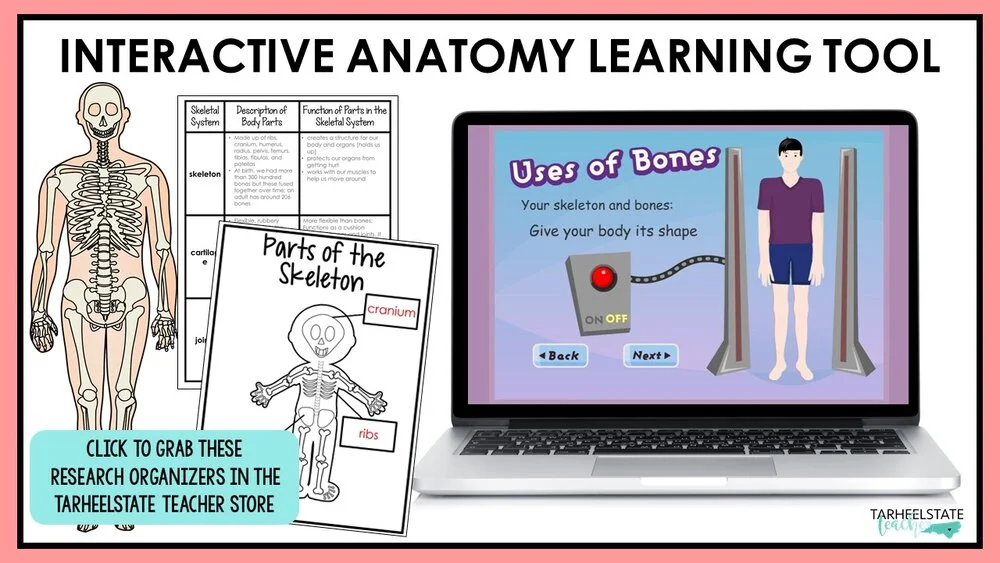
The Children’s University of Manchester has built an AMAZING Interactive Anatomy Learning Tool that is an awesome resource for your students! This website has several interactive learning tools for kids to learn about the brain, teeth, skeleton, and digestive system. Students can click to watch bones and muscles move as partners, click to learn more about the role of different parts of the brain, follow food through the digestive system, and more!
This interactive website is perfect for student research because the slideshows are made up of short passages, bright diagrams and illustrations, and interactive components that are so engaging! Like, I can’t stop playing around on this website myself! The three learning sections that deal with the human body curriculum are Brain and Senses, Body and Medicines, and Teeth and Eating.
Within each section students are guided through 8- 10 mini-interactive slideshows, which not only include great information on each topic, but fun games and quizzes as well! You’re going to want to set aside some serious time during your human body unit for your students to engage with this website!
6) Innerbody Human Anatomy Explorer
Innerbody.com is a fantastic free resource for upper elementary students who are ready to dig into the details of human body systems! The website features an interactive Anatomy Explorer with all 12 major body systems, including the skeletal, muscular, circulatory, respiratory, digestive, nervous, endocrine, integumentary, immune/lymphatic, and urinary systems — basically every system your curriculum will cover.
Students can click into each system to read clearly written articles that explain the structures and functions of each part of the body. The diagrams and anatomical illustrations are detailed and beautiful, making this a step up visually from many other kid-friendly sites.
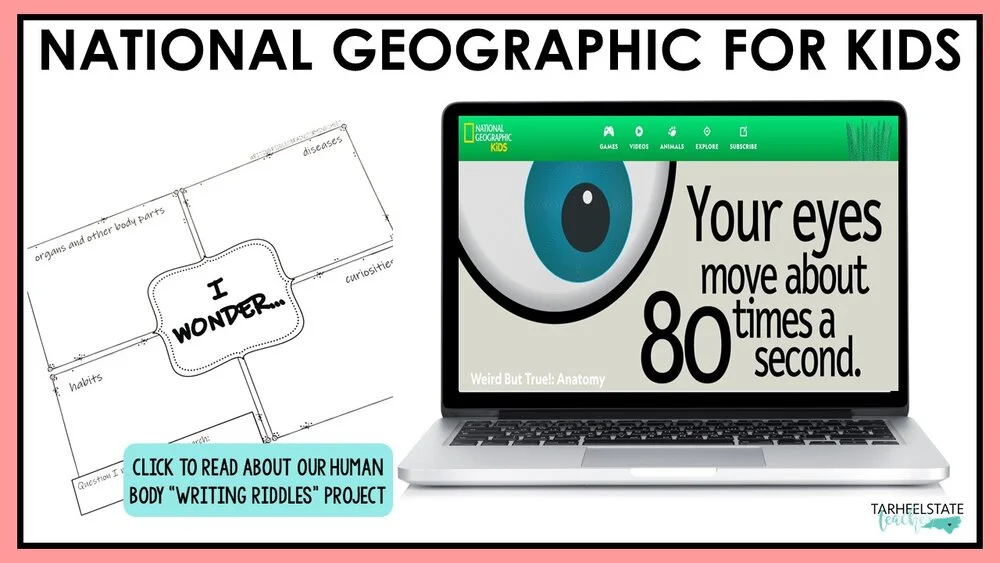
National Geographic for Kids is not just for learning about animals and cultures! Students can read articles like “15 Facts About the Human Body,” “The Digestive System,” “Our Amazing Brain,” “Follow Your Food,” “Your Amazing Brain,” and “Your Amazing Eyes”. The articles are written for elementary aged students and include fantastic graphics and illustrations.
Navigating to topics and articles of interest is the only downside to this website—they don’t seem to be organized by science field or specific topics. You’ll want to identify the articles you want students to read from National Geo Kids and send them directly to those—or, grab my PDF where I send you a google doc that has all of these websites and webpages already linked to make it easier for you to share with your students!
8) Science Kids
Science Kids is a wonderful destination for curious students who want to explore the human body through games, experiments, videos, quizzes, and fascinating facts! Students can dive into topics like the circulatory system, the brain, bones, and health — all in a fun, kid-friendly format. What makes Science Kids so special is that it answers the kinds of questions students are naturally wondering about, like how the heart works, what blood is made of, and why we need sleep.
Each topic includes multiple ways to engage: read interesting facts, watch a related video, take a quiz to test your knowledge, or try a hands-on experiment at home. The website also includes lesson plans and printable worksheets for teachers, making it a great all-in-one bookmark for your human body unit! Head over to Science Kids to explore.
GET A PERSONAL COPY OF WEBSITES AND LINKS FOR YOUR HUMAN BODY SYSTEMS UNIT
Now, what are your next steps to get these websites into the hands of your students and get their human body systems research underway?
Before I send my students loose to research on the internet, I like to prepare a list of websites and page-specific links to help them more easily find information.
In hopes of saving you some valuable planning time (and help your students navigate their research with more ease), I’ve actually compiled all of these human body systems websites into a PDF download for you. I’ve even included research organizers for the circulatory system. These are the research sheets that my students complete during our study of each body system.

There you have it! 8 websites to engage and excite your students during their study of human body systems! I don’t know about you, but I am now SOOOOO excited to teach this topic. I can just predict that my students will be asking if we are going to use computers during science! Why, yes, yes we are!!!
The Human Body Systems Science Research Project is a complete, low-prep printable and digital resource for upper elementary. It includes:
 Research Booklets for Every System — students create their own encyclopedia of information for the Nervous, Circulatory, Respiratory, Digestive, Skeletal, and Muscular systems, covering structures, functions, and more
Printable AND Digital Google Slides™ Versions — use the print version for interactive or science notebooks, or go fully digital; both versions include color and ink-saving black-and-white options
Answer Keys Included — so you can spend less time searching for answers and more time teaching!
Linked Resource List — a PDF and Google Drive website list is included to help your students find information as they research each body system, so you can send them off to research with confidence!