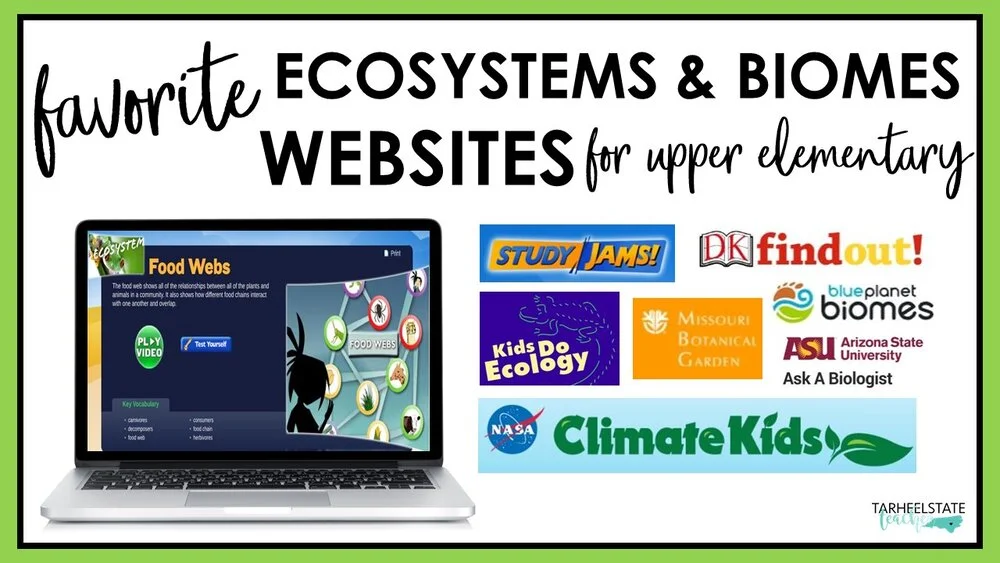
Prepping for your Ecosystems and Biomes unit? These websites are some of my favorite websites to use when teaching my 4th grade or 5th grade students about Ecosystems and Biomes. Whether your curriculum requires you to teach the biomes of the world, aspects of ecosystems like food webs, the roles of different organisms, or the impact of humans on ecosystems and the interdependence of plants and animals, you’ll find some great websites to incorporate into your ecosystems unit.
These websites allow students to engage with videos and interactive activities, see photographs, take 3D tours, and read info written on their level. As my students learn about biomes and ecosystems, these websites support our study and make our unit even more engaging! Get ready to travel the environmental world as you check out some of my favorites!
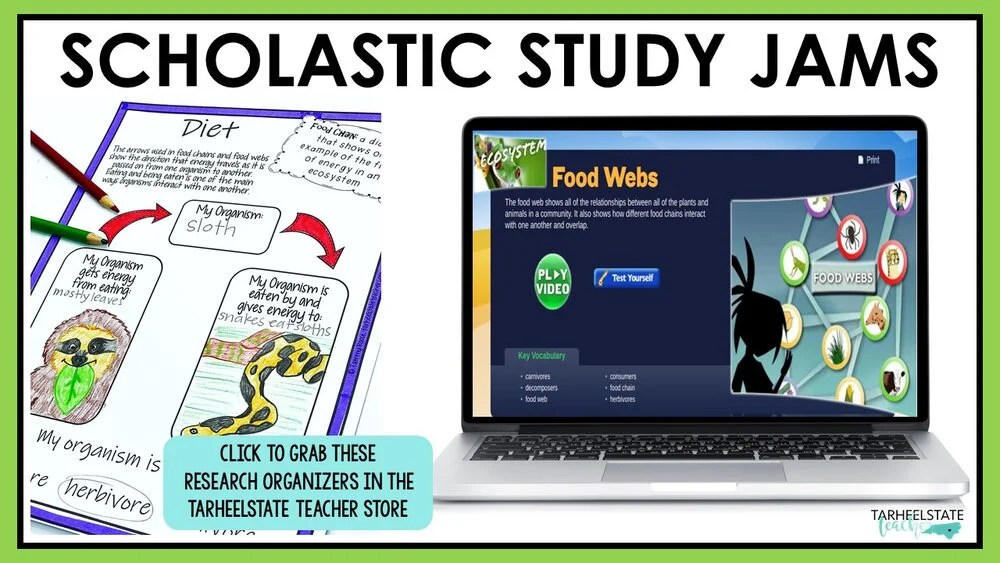
Scholastic Study Jams are a wonderful resource for science topics like ecosystems. Students can view engaging, animated videos or informative slideshows and even quiz themselves afterward! Some of the Study Jams that complement an ecosystems unit include: Ecosystems, The Kingdoms of Life, Photosynthesis, Aquatic Ecosystems, Changes in Ecosystems, Biomes, Food Chains, Food Webs, and Population Growth . The videos and slideshows are also perfect for using in your lessons and showing on your interactive whiteboard!
2) THE MISSOURI BOTANCIAL GARDEN
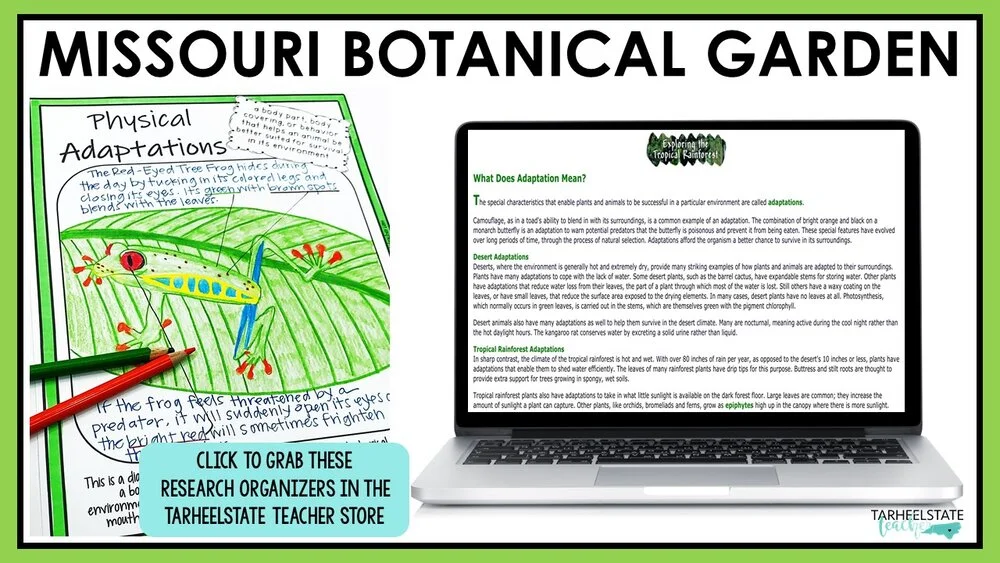
The Missouri Botanical Garden makes it to the top of my favorites list with their “What’s It Like Where You Live” informational website for children. I HAVE LITERALLY USED THIS WEBSITE IN MY ECOSYSTEMS UNIT SINCE I WAS A STUDENT TEACHER! It’s an all encompassing resource to use with students.
The homepage highlights Biomes of the world (including Rainforest, Tundra, Taiga, Desert, Temperate, and Grasslands), Freshwater Ecosystems (including Rivers and Streams, Ponds and Lakes, and Wetlands), and Marine Ecosystems (including Shorelines, Temperate Oceans, and Tropical Oceans). Each link takes students to a wealth of easy-to-read text about each topic, complete with numerous maps and graphics to fully illustrate the environmental area for students. This site is an especially perfect resource for students who are doing research on a certain biome or ecosystem!
3) NATIONAL GEOGRAPHIC KIDS – HABITATS
If you are looking for a website that pairs gorgeous photography with engaging, student-friendly reading, look no further than National Geographic Kids’ Habitats section! Students can explore eight major habitats — grassland, polar, desert, mountain, temperate forest, freshwater, ocean, and rainforest — each with its own dedicated article page packed with stunning National Geographic photography and clearly written content.
Once inside a habitat, students read about what makes that environment unique, the plants and animals that have adapted to live there, and fascinating facts that bring the habitat to life. Each habitat page also includes a short video to deepen student understanding — perfect for visual learners or for kicking off a class discussion! The articles are written specifically for kids, so the vocabulary and sentence structure are just right for upper elementary researchers.
What I love most about this resource is how it makes students feel like they are right there in the habitat — the photographs are just that good. Whether a student is researching the Sahara Desert, a tropical rainforest, or a freshwater ecosystem, they will find quality information alongside visuals that truly capture what makes each place so unique and worth protecting.
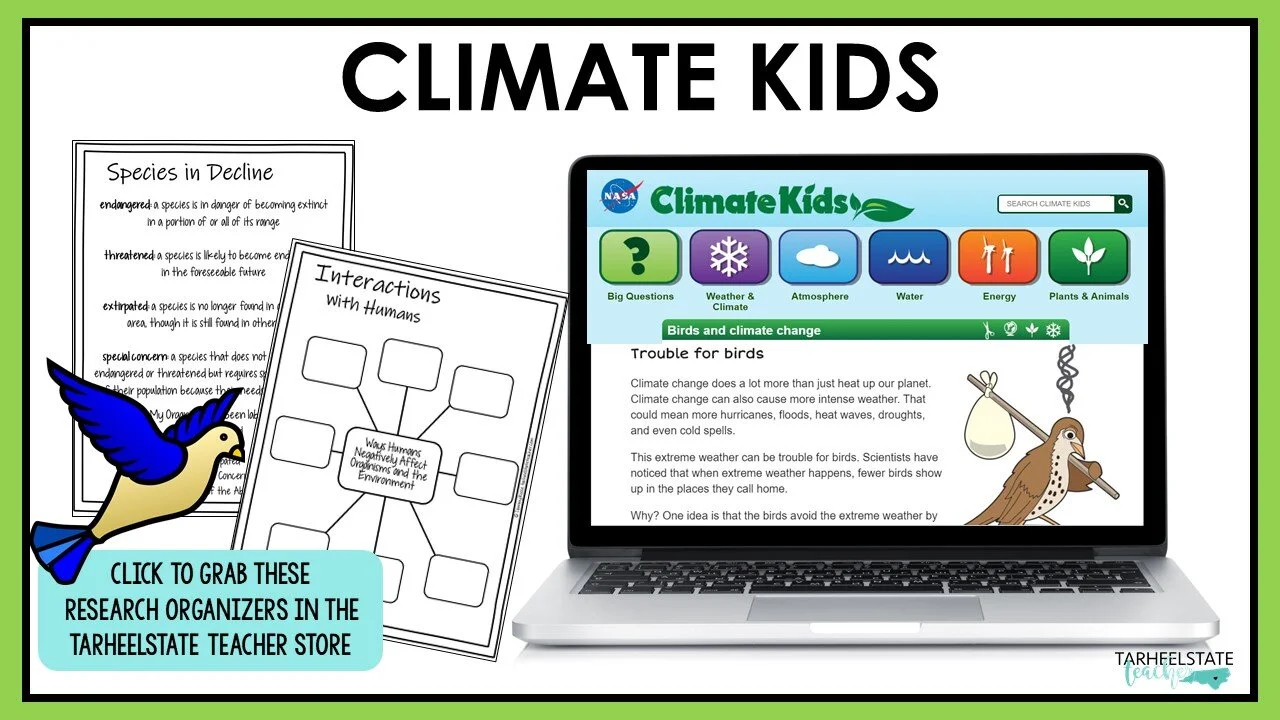
I stumbled across NASA’s website for students called Climate Kids when I was researching websites for our weather and climate unit — and it has since been reimagined as NASA Kids Science, with an even more impressive home. It is still an amazing resource to use with students when they are studying ecosystems!
The standout feature for an ecosystems unit is the Mission: Biomes section, which is truly not to be missed. Students investigate seven biomes — rainforest, grassland, coniferous forest, temperate deciduous forest, desert, tundra, and shrubland — and can explore the unique climate, plants, and animals of each. Then they can put their knowledge to the test with interactive missions: in “The Great Graph Match,” students match temperature and precipitation graphs to the correct biomes, and in “To Plant, or Not to Plant,” they help place plants into their correct biome environments. It’s genuinely fun and so effective for building biome knowledge!
Beyond biomes, the broader NASA Kids Science Earth page has a wealth of resources including engaging articles and videos on topics like the water cycle, ocean and climate connections, carbon cycles, and more. NASA has seriously outdone themselves with this one — bookmark it now!
5) KIDS DO ECOLOGY
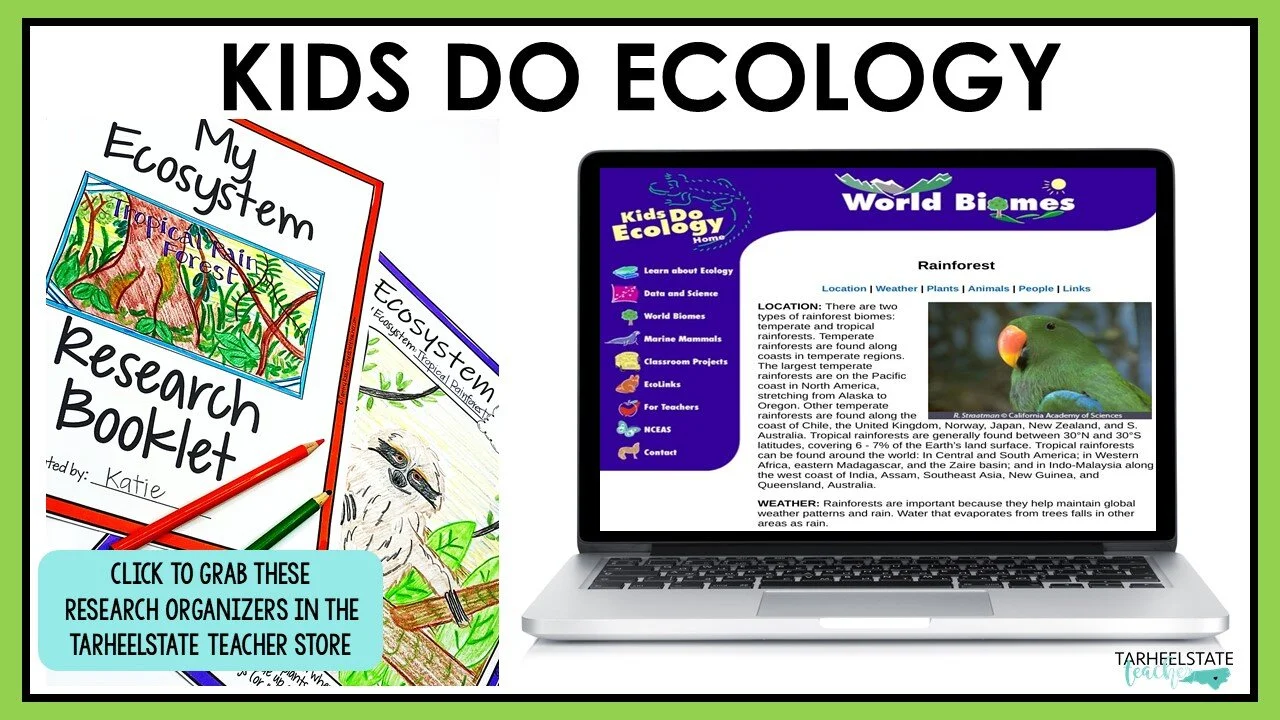
Another solid resource for students to use when reading and researching about the various biomes is the Kids Do Ecology website. The World Biomes page highlights links under both Aquatic Biomes (Freshwater, Freshwater wetlands, Marine, Coral reef, and Estuaries) and Terrestrial Biomes (Tundra, Rainforest, Savanna, Taiga, Temperate forest, Temperate grassland, Alpine, Chaparral, and Desert) that students can click on to read and learn more about the location, the weather, the plants and animals that live in each biome, and how people live and interact with their environment. There are also several riddles, World Biome word searches, and crossword puzzles that can printed off to use with students.
6) ASK A BIOLOGIST
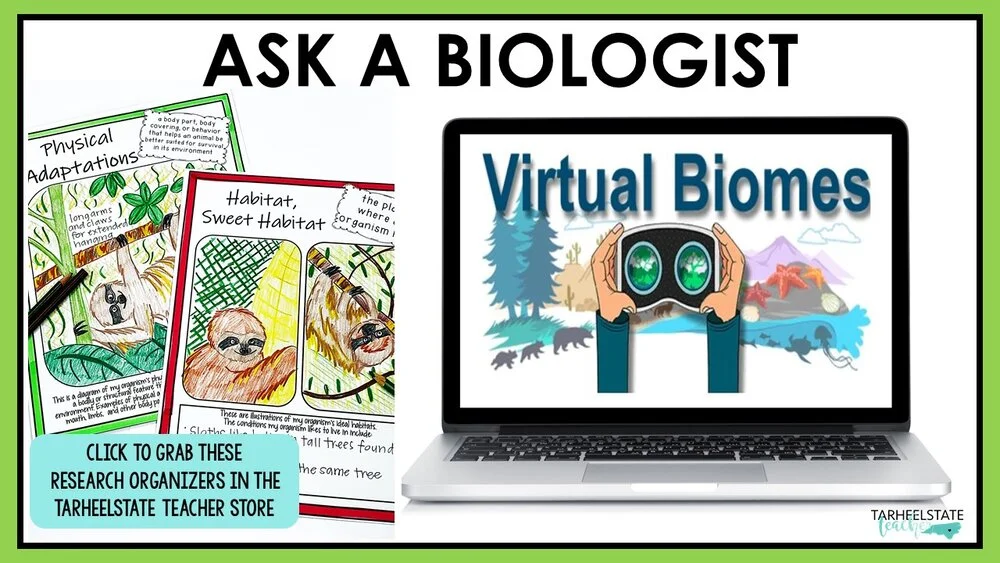
Arizona State University has a website called Ask a Biologist that is also a great place to send students who are researching and wanting to learn about the differences between various biomes. Students can choose to read engaging articles that explain the anatomy, plants, and animals of the chosen biome. The biomes that are highlighted include Tropical Rainforest, Temperate Forest, Desert, Tundra, Taiga, Grassland, Savanna, Freshwater, and Marine.
One of the unique features about this site is that students can explore some of the biomes in Virtual Reality. Students can literally see (360 degrees!) and hear the sounds of the biome to really give them a true feeling of what it is like. They can also click on certain points of interest within the biome to get more information about it. The VR is a very cool layer to add to their research!
To top it off, there is a Listen & Watch link that leads students to a biology podcast show where they can listen to different biologists being interviewed about the new things they are discovering. A few of the podcast episodes that would correspond with the ecosystems curriculum include Ocean Winds and Climate, Keeping Your Cool – Thermoregulation, and Mystery of the Dying Coral Reefs. There are currently over 90 episodes to choose from and each show includes a full written transcript for students to reference if needed.
7) BLUE PLANET BIOMES
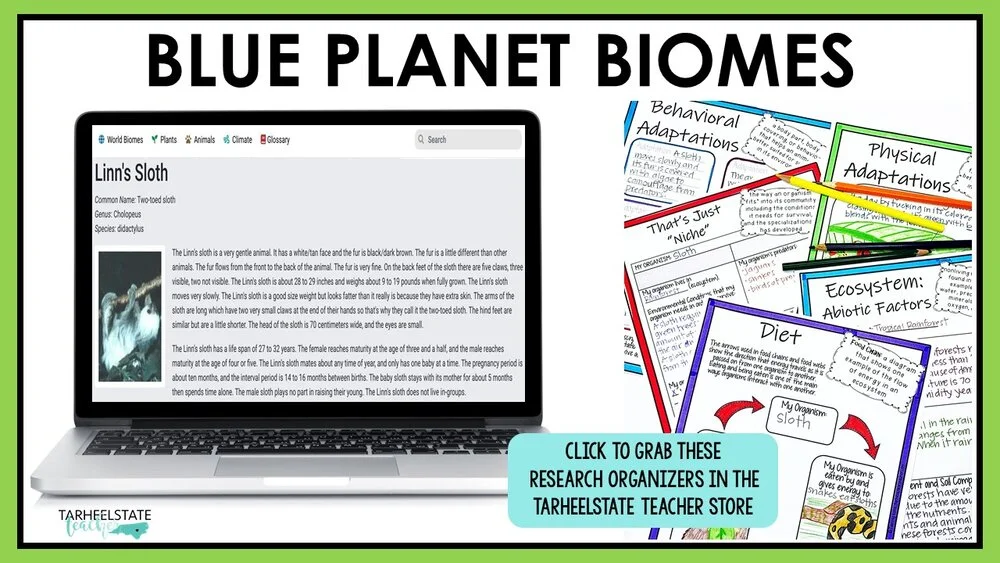
Blue Planet Biomes also makes my list of favorites for ecosystems because it has interesting and quality information on the plants, animals, and climate found in each biome (Tundra, Taiga, Grasslands, Deciduous Forest, Savanna, Chaparral, Rainforest, Desert, and Alpine). There are also multiple interactive maps illustrating where the biomes are around the world as well as a built in glossary that students can use as they are reading.
The site does a great job at connecting for students the role and importance plants, animals, and climate play within the biomes they are found. The only con to Blue Planet Biomes is that there are ads interspersed among the articles students are reading, which can be a bit annoying.
GET A PERSONAL COPY OF WEBSITES AND LINKS FOR YOUR ECOSYSTEMS AND BIOMES UNIT
If you are like me, you often spend way too much time looking for “the best” websites to help your students meet your learning objectives…maybe that’s how you ended up here! (Haha!) This list of websites for ecosystems and biomes includes some super helpful, engaging sites. Before I send my students loose on the internet for researching, I like to create the list of websites and page-specific links that I expect my students to visit.
In hopes of saving you some valuable planning time, I’ve actually created a PDF of my favorite Ecosystems and Biomes links for you. This link list is more detailed than what I’ve included in the blog post. I’ve even included a recording sheet to help students gather and organize information about an organisms habitat and diet.

There you have it! 7 awesome websites for your ecosystems and biomes unit!
NEED A DONE-FOR-YOU ECOSYSTEMS RESOURCE?
The Biomes and Ecosystems Animal Research Project is a complete, low-prep printable and digital resource for upper elementary. It includes:
 Animal Research Project Booklet — students develop an in-depth understanding of a specific organism by researching its niche, physical and behavioral adaptations, food chains and food webs, and interactions with other organisms (parasitism, commensalism, and mutualism)
Ecosystems & Biomes Notebook Pages — 23+ pages covering habitats, ecosystems, biomes, abiotic and biotic factors, human impact, and more, with key vocabulary definitions built right in to support student mastery
Extension Pages & Comparison Activities — students compare and contrast two organisms, examine human impact, and explore how changes affect an organism’s habitat over time
Full Project-Based Learning Component — includes a launch letter from the “museum” (editable!), driving questions, student requirements, a resource list, a written reflection, and a grading rubric — everything you need to run it as a full PBL unit is right here!
Google Slides™ Version Included — use it digitally in Google Classroom or as a printable in interactive notebooks