Report card conference season can feel overwhelming—especially in upper elementary when conversations become more detailed and time-consuming. A few years ago, I decided to try student-led conferences with my 5th graders, and the experience completely changed the way I approached parent conferences.
WHY I DECIDED TO TRY STUDENT-LED CONFERENCES
Have you ever implemented Student Led Conferences? I have often had conferences where I ask that students are present where we set 1-2 personal goals. When it comes to working with upper elementary students, I’m a big fan of making sure that all involved parties (student, parent, and teacher) are on the same page, having the same conversations when appropriate, but this year I had a totally crazy idea!
What if students and parents led their own conferences? I’ll admit, part of the appeal was practicality. Conferences take up a ridiculous amount of time {weeks!}, including many late evenings. At first, I thought this approach might allow multiple conferences to happen at the same time and help me finish conferences in fewer days with fewer long afternoons.
But the idea quickly evolved into something much more meaningful: How could I facilitate better conversations between students and their families about academic progress and goals? I had already seen the benefits of including students in goal-setting conversations, so I decided to fully hand them ownership of the conference experience.
FYI, the first time I did this, I was teaching 5th graders, but I also successfully used this same student-led conference format with 4th graders.
HOW I ORGANIZED STUDENT-LED REPORT CARD CONFERENCES
I chose 4 evenings that I would block off (over the course of 3 weeks) from 3 pm-6 pm for parents/students to sign up. (I ended up doing this in only 3 evenings because I was sick one of the days and had to cancel all of those conferences.) I then sent an email to parents explaining how I wanted to do conferences this year.
PREPARING STUDENTS FOR CONFERENCES
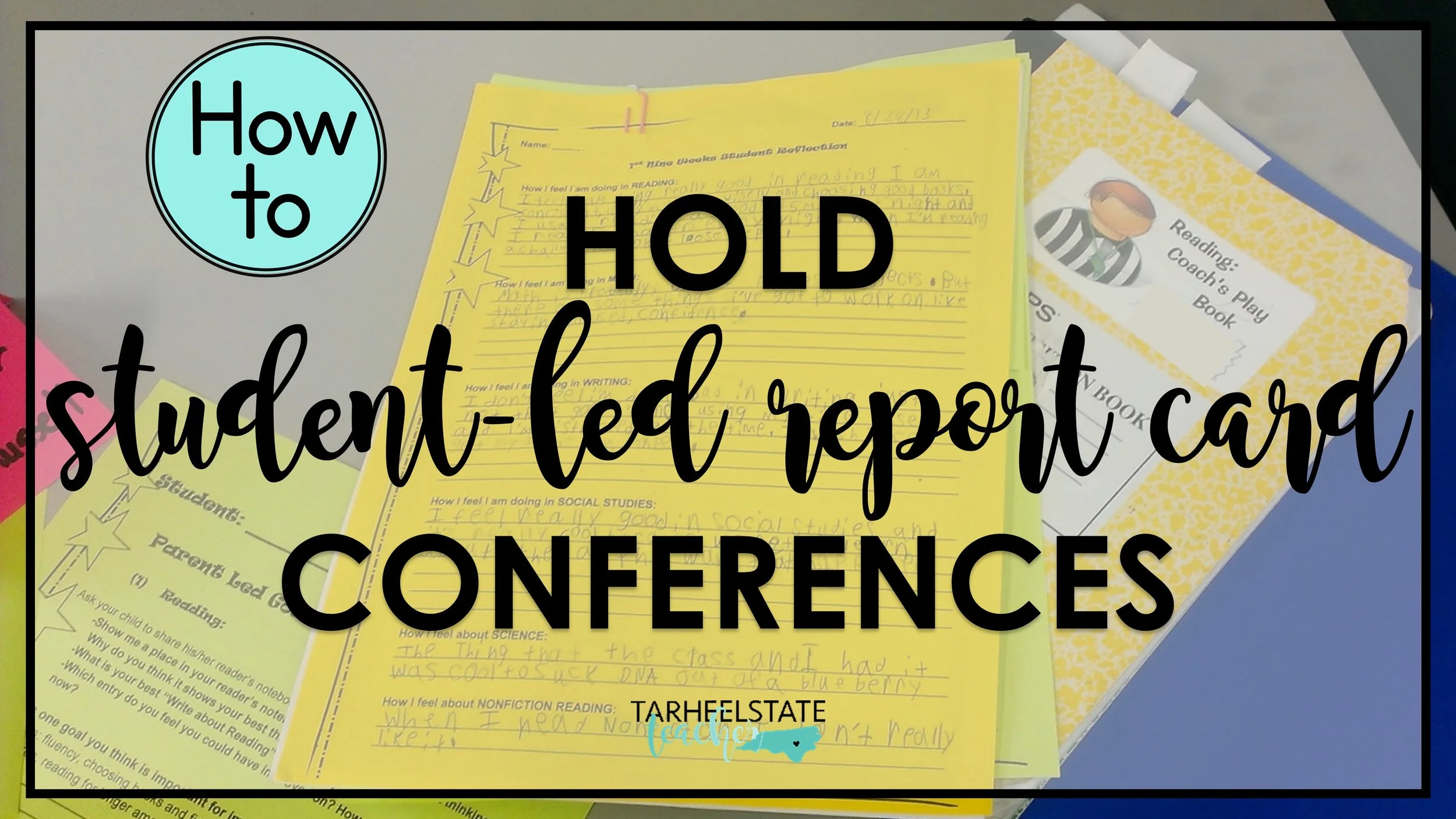
1) Students completed a reflection on all subject areas during class prior to the start of conferences. I read over their work and encouraged them to elaborate when necessary. I tried not to put words into their mouths, but led them through analyzing their work samples to come up with ideas of things they were proud of and specific aspects that they wanted to make improvements in.
2) I prepared a list of guiding questions for parents that matched the same order as the student reflection.
3) I decided what materials students would need in order to successfully discuss their learning. These items included:
- Reader’s Workshop Notebook
- Math Workshop/Stations Folder and Math Journal
- Writing Draft Folder
- Social Studies Assignments, including a nonfiction reading assignment
On the day of each round of conferences, I pulled the scheduled students together and asked them to sticky-note two places in their reading journal that showed their best thinking. (One had to be a “write about reading” entry, but the other could be from a minilesson or read aloud). Then students pulled all of the materials they would need and placed them in a basket.
BENEFITS OF STUDENT-LED CONFERENCES
STUDENTS TAKE OWNERSHIP OF THEIR LEARNING
Students were in charge of the conversation and responsible for sharing what they had learned, including classroom routines, procedures, and academic growth throughout the year.
REAL-WORLD LEADERSHIP AND COMMUNICATION SKILLS
Student-led conferences gave students an opportunity to practice real-world leadership and communication skills. Just like adults participate in annual reviews or goal-setting meetings at work, students were asked to reflect on their progress, explain what they were learning, celebrate accomplishments, and identify areas where they still needed support.
These conversations also created opportunities for students to communicate their needs to both parents and teachers in a meaningful way. In many ways, student-led conferences helped students take greater ownership of their learning while building confidence in discussing their academic growth.
PARENTS GAIN A BETTER UNDERSTANDING OF CLASSROOM LEARNING
I felt that parents received MORE information about what goes on in our classroom. Rather than presenting a report card and explaining 2’s, 3’s, and 4’s in each area, they really could get a sense of what their child was accomplishing during their time at school.
At first, I didn’t realize how rewarding student-led report card conferences would truly be. Reading students’ reflections and seeing—in their own words—how much they were enjoying 5th grade, recognizing their own growth, and identifying ways they wanted to improve was incredibly powerful.
It was also amazing to hear students explain our classroom learning to their parents. I could not believe how clearly they remembered and communicated lessons, routines, and expectations from class. Apparently, they really were listening all year!
WHAT I WOULD CHANGE NEXT TIME
1) No more than 3 sets of parents/students in the room at the same time is probably ideal. At one point, I had 4 in the room and I was concerned that parents might not have felt they were getting enough attention from me (although I don’t think they felt this way, I was a little anxious for criticism of this new way of doing things).
2) Having a set of parents/student scheduled for a time slot ALONE was also not ideal. It changed the feel of the conference. Since they were the only ones in the room, I was all too available for them and probably did too much leading of their conversation. These conferences also tended to go on for an hour because there was no pressure to finish or understanding that other groups of parents/students were moving along faster.
3) Some students were able to “blow smoke” when talking to their parents. I allowed the child to explain things from his/her perspective, but I was hoping the parents would probe more. When they didn’t, I may have asked a probing question or let it go. In the end, the report card demonstrates a more accurate picture. I also made sure parents understood that if they had questions after report cards were received, they could contact me for more information or to schedule a more personal meeting. (This rarely happened as my report card comments address low scores AND parents had reviewed their child’s work.)
TIPS FOR FUTURE STUDENT-LED CONFERENCES
All in all, my experiences with student-led parent conferences lead me to encourage you to give them a try! I always felt they were a great success. After first quarter, you can plan to have students complete the same type of reflection and invite parents in to do a check-in on what their child has accomplished with his/her goals that they set during 1st quarter conferences. Since parents and students have experienced it once, they understand what they are supposed to do and can most likely move through more quickly without needing much guidance from you.
I think parents really enjoy and appreciate the opportunity to take a closer look at what their child has been working on and learning. As parents, we don’t always sit down and have academic conversations with our children about their work. YOU AS THE TEACHER facilitate this opportunity that allows your students to reflect and set goals for the future. It’s a WIN-WIN for you as the teacher, for the child, and for parental involvement.
If parents are unable to make time to meet with their child 2nd or 3rd quarter, you can still have students complete the reflection sheet, send it home with report cards, encourage students to go through the reflection with their parents, AND ask that parents sign and return the reflection. An email letting them know that the form is coming home also encourages parents to take a few minutes to have a discussion with their child.
STUDENT-LED CONFERENCE REFLECTION FORMS
Student-led conferences ended up being one of the most rewarding things I implemented in upper elementary. Watching students reflect on their growth, explain their learning, and set goals alongside their families created conversations that felt far more meaningful than a traditional report card conference. While they do require preparation, the ownership and engagement students develop make the process completely worth it.
I’ve uploaded an editable version of the student reflection and conference questions to TPT. Of course, you will want to modify the questions and directions to fit your needs. If you use these materials or ideas, I would love to hear how it goes!