What activities and strategies can you use during your small group lessons for the Within Word Pattern stage of word study? In this 4-part series, I’m digging into some suggested word study activities for each stage of Words Their Way! Get ready to grab some ideas to spice up your word study small group lessons for the Within Word Patterns Spellers stage!

A successful word study block incorporates both direct instruction, delivered in small, differentiated groups based on developmental assessments and opportunities for students to independently practice and apply what they have learned. After making decisions about the activities you want your students to complete during their word study block, assessing them, and creating word study groups, many of us wonder what we are actually supposed to do with our students during their small group, meet with the teacher time?!?!. Let’s take a look at what makes the Within Word Pattern stage special first!
A SNAPSHOT OF THE WITHIN WORD PATTERN STAGE
Elementary students who fall into the Within Word Pattern Spellers stage of word study can typically spell most single-syllable, short-vowel words, beginning consonant digraphs, and two-letter consonant blends correctly. They are beginning to explore using long-vowel patterns, but are inconsistent with their accuracy.
The Within Word Pattern stage acts as the bridge between the beginning stage, when students are struggling to read and write, and the intermediate stage when students are able to read most texts they are encountering. Within this developmental stage, students are quickly increasing their sight word vocabulary and their ability to decode new words. Students in your Within Word Pattern group should be studying:
- long vowels (CVCe)
- other common long vowel patterns
- r-influenced vowel patterns
- diphthongs and vowel digraphs
- complex consonant clusters
- homophones and homonyms
SMALL GROUP ACTIVITIES FOR WITHIN WORD PATTERN SPELLERS
Below you’ll find activity ideas organized by topic. I’ve also included a suggested opening routine to kick off your small group time and a section on word study notebooks, which support student learning across all of the topics in this stage.
OPENING ROUTINE: SHARE WORD SEARCH FINDINGS

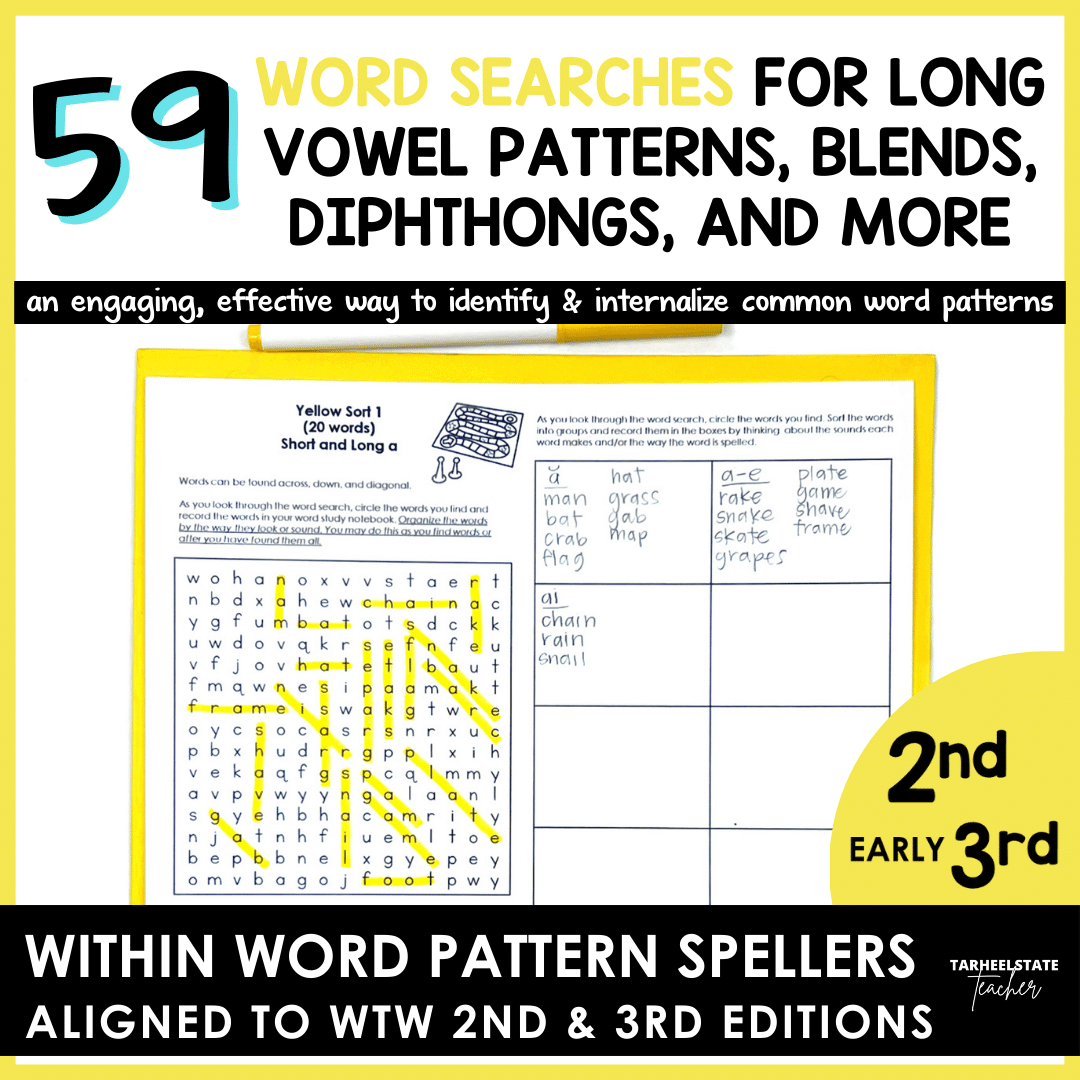
My students complete discovery word searches based on their word study lists. This means that they are NOT given a word list before trying to find their words in a word search. I may allow students to work side-by-side with a partner to modify this activity for students in the Within Word Pattern Spellers group.
Prior to meeting with me in a small group, they have spent 1-2 days searching for words in their word searches and sorting them into categories that make sense to them.
When students gather their word study notebooks and meet at our small group table, they know to turn to their word searches and continue looking for possible words. When I am ready to start the meeting, I ask for volunteers to share the words they found. As students share words, I create a word sort on chart paper asking students to help me sort each new word.
LONG VOWELS
Long vowels are one of the central concepts students explore in the Within Word Pattern stage, and students need many varied exposures to really solidify these patterns. Here are my go-to activities for teaching long vowels during small group time.
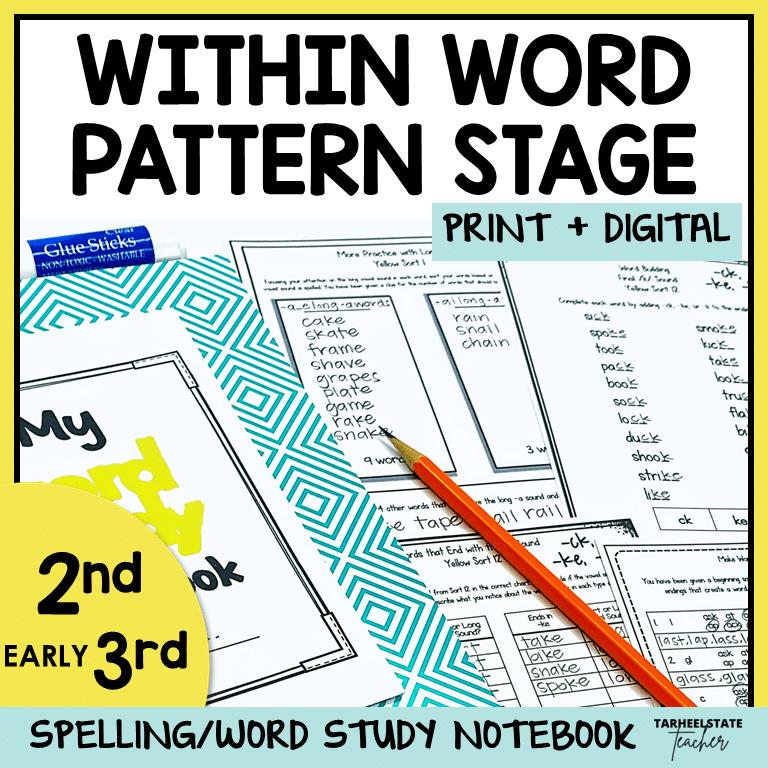
GENERATE WORDS: Students in the Within Word Pattern stage need to spend a lot of time working with common long vowel patterns and generating words in a variety of ways. Filling in missing vowels among a group of given long vowel patterns helps students make generalizations about spelling rules and builds a strong foundation of understanding about long vowels.

You can find these activities and other word generating activities in my Within Word Pattern Word Study Notebook. Download all activities for sorts found in Unit 1 for Free to check them out!
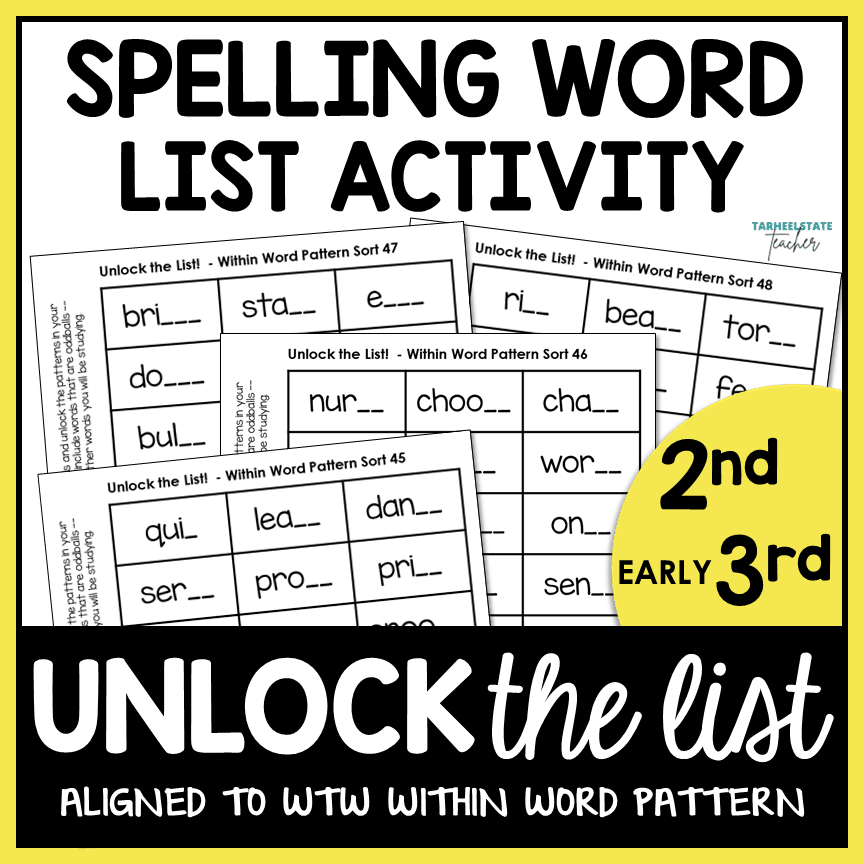
After introducing and working with several of the long vowel patterns, make word cards (you can even have students make these on index cards) with the vowel patterns students have been working with and then several consonants and consonant blends (you could also use magnetic letters for this). Have students use the cards from each category to create as many words as they can in a set amount of time. Students must record each word on a recording sheet or whiteboard. After time is up, gather the words together and as a group discusses whether each word is an actual real word, what it means, and whether the word was spelled correctly or not.


SHARED WRITING: Connecting writing and word study is a great, authentic way for students to apply what they are learning about long vowels into their writing. Have students bring their writing folder and a highlighter to the small group lesson. After introducing a long vowel pattern (introduce them one at a time), for example, CVCe, ask students to look through some of their writing pieces together and highlight words that follow the long vowel pattern or should follow the long vowel pattern but is not spelled in a way that makes the vowel say its name. Have students work in pairs to identify and correct these words and share examples that needed to be fixed with the whole group.
BLIND SORTS: I find blind sorts to be super helpful when working with long vowel patterns. A fun spin on blind sorts is Sound Bingo. Create a Bingo board that has alternate spellings represented in each box of the long vowel sound you are working on (i.e. words that have the “oe”, but are represented by a variety of spellings such as o, oa, ow, o-e, and oe). As you read the long vowel words, students have to write them in the correct box. Once someone gets a full row, column, or diagonal they get a Bingo! (Sound Bingo idea from Top Notch Teaching)

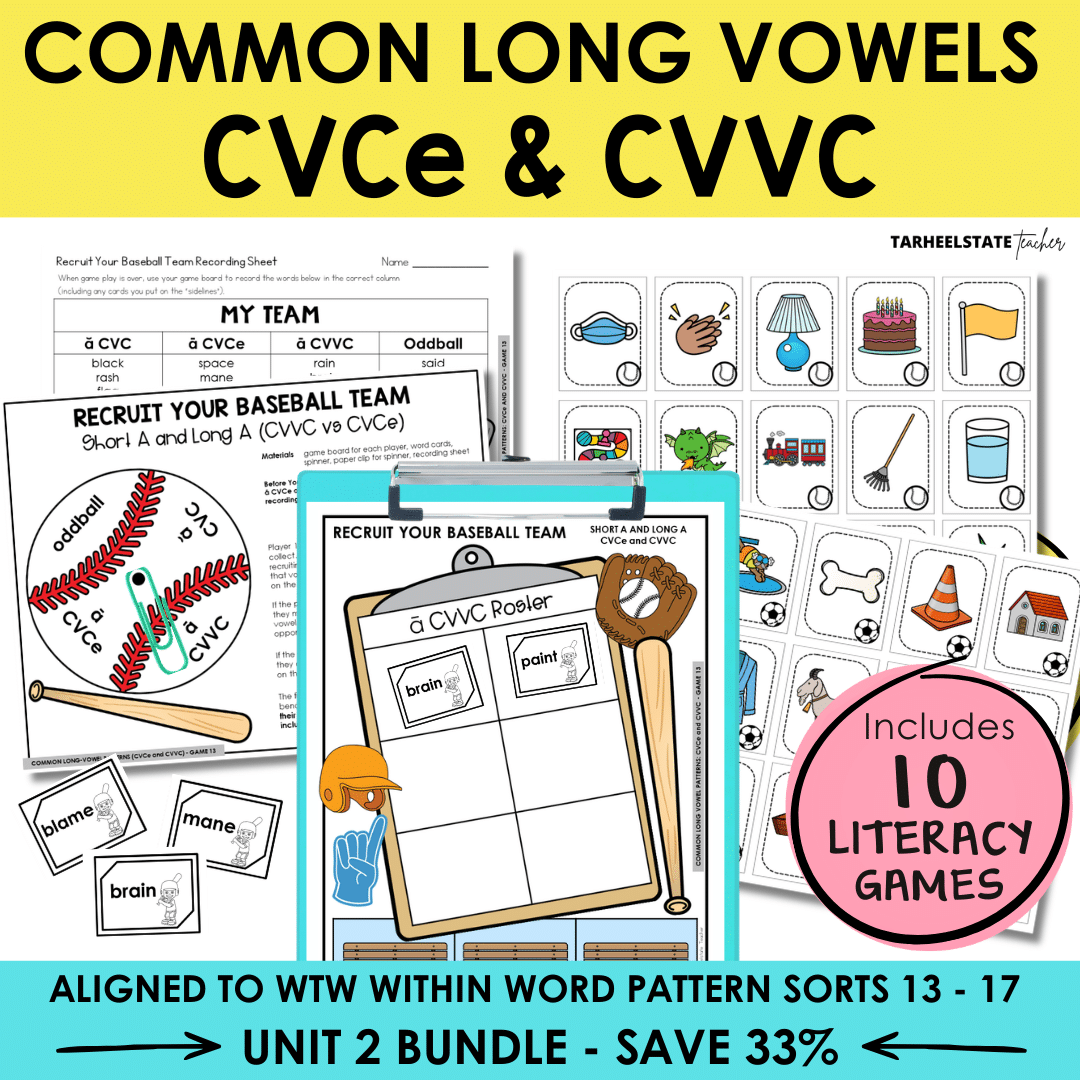
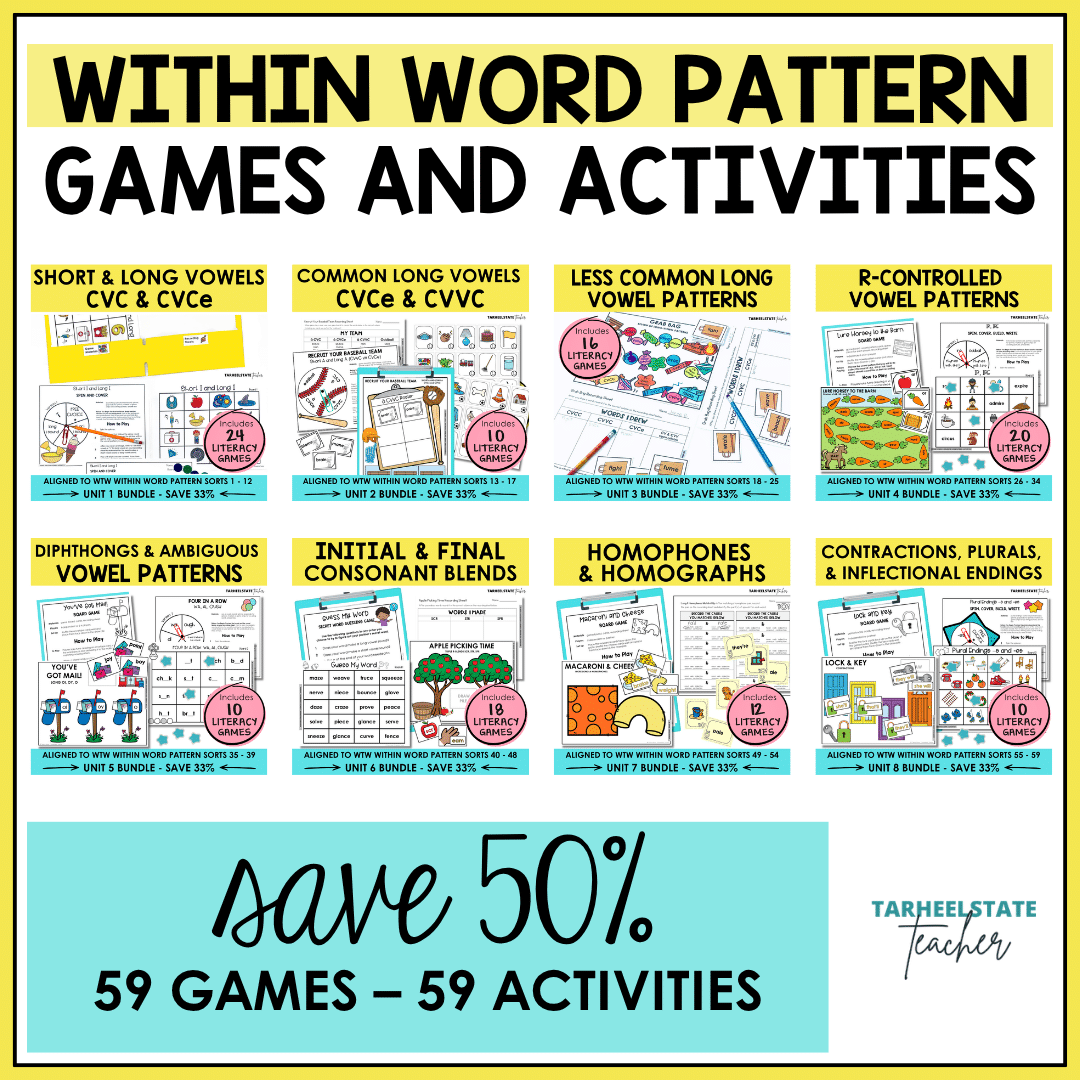
 Looking for ready-made games to reinforce long vowel patterns during small group time? I have three bundles of partner games and independent activities aligned to Words Their Way Within Word Pattern sorts — Short & Long Vowels CVC/CVCe Games Bundle covers sorts 1–12, Common Long Vowels CVCe & CVVC Games Bundle covers sorts 13–17, and Less Common Long Vowel Patterns & Vowel Teams Games Bundle covers sorts 18–25. Each bundle includes partner games and independent activities so you can plug right into whatever unit you’re currently teaching.
HOMOPHONES AND HOMONYMS
Once students have a solid grounding in long vowel patterns, homophones and homonyms are a natural next focus — and they tend to be a student favorite. Here are the activities I rely on most for this topic.
READ ALOUD: I love to introduce the concept of homophones and homonyms with a good picture book. The King Who Rained by Fred Gwynne is one of my favorites to use for homophones. To introduce homonyms, my go-to read aloud is Eight Ate: A Feast of Homonym Riddles by Marvin Terban. Once students have started to work with both homophones and homonyms, I love How Much Can A Bare Bear Bear? What are Homonyms and Homophones? by Brian Cleary because it actually teaches the difference between homonyms and homophones (which can get confusing for kiddos in this developmental stage) with a lot of illustrated examples.
SHARED WRITING: I always provide a list of homophones for students to keep in their word study or writing folders to reference when needed. I like to give students several opportunities to pull out their list and help me create a few sentences using homophone pairs in the same sentence on chart paper. I then ask students to pick a few pairs of their favorite homophones and do the same individually, sharing their sentences with the group at the end.


Cloze exercises are great ways to elicit student analysis and discussion. Do a cloze exercise together using a piece of shared writing on chart paper. Cover all of the homophones within the piece of shared writing and work together to find which word goes with which meaning. Ask students to help you create nonlinguistic representations or drawings for each homophone before trying to complete the cloze exercise. This site, K12 Reader, has some great resources focusing on homophones for upper elementary students to use during your small group lessons.
PLAY GAMES:
Playing games during small group meetings is a perfect avenue for probing students’ thinking and guiding them to make generalizations on their own. Have students create a game of Go Fish to practice homophones — divide up the homophones among the group, have each student write their words on individual index cards and draw a picture or symbol representing the meaning of each word, then shuffle and play as a group. Students must use the homophone correctly in a sentence when asking for a match.
If you’d like done-for-you homophones and homographs games ready to go, my Homophones & Homographs Long Vowel Review Games Bundle includes 12 literacy games aligned to Words Their Way sorts 49–54 so you can skip the prep and get straight to the learning.

WORD STUDY NOTEBOOKS
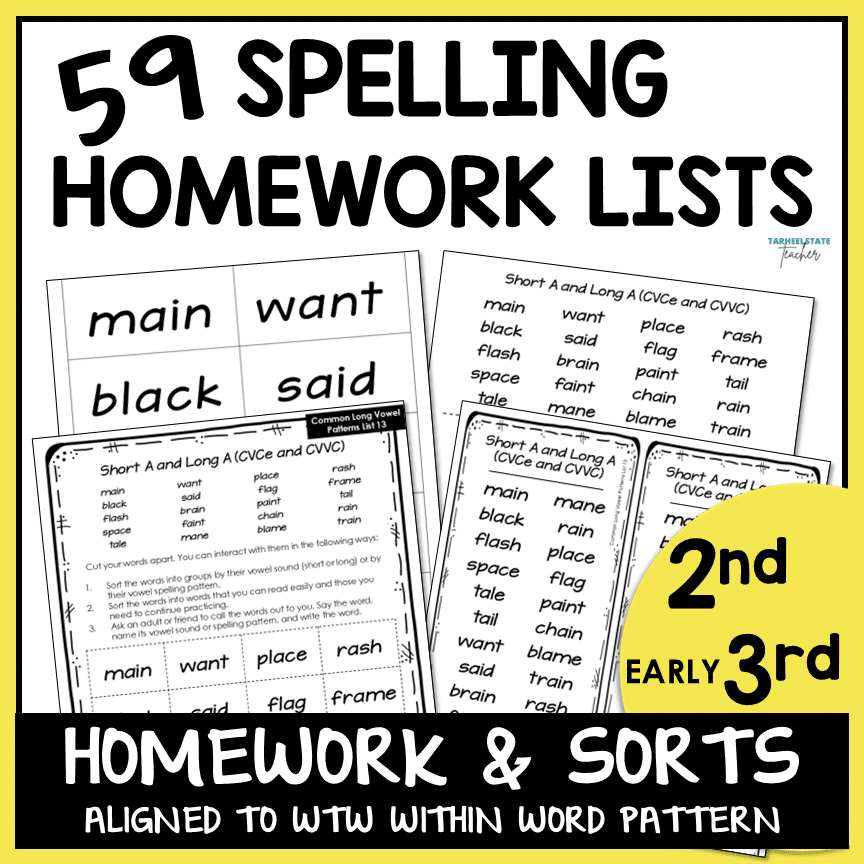
Across all of the topics in the Within Word Pattern stage, word study notebooks are one of my most-used tools, and I ask students to bring them to every small group lesson. The activities go beyond traditional spelling work and scaffold students toward a deeper analysis of word-study concepts. Students may be asked to identify short- and long-vowel sounds, create words given a beginning sound or blend plus an ending (onsets and rimes), choose the correct beginning letters, vowels, or rime to complete a word, write “silly sentences” to apply the meanings of homophones, create contractions, make words plural, and more.
I use a gradual release model with these activities — introducing the activity during small group, allowing students to work in partners while I scaffold, and then transitioning them to complete particular pages independently during their word study cycle to further apply their learning.
While this list of activities is certainly not exhaustive, I hope you’ve got some fresh, new ideas to add to your word study toolbox for your Within Word Pattern Spellers group! If you’re looking for small group activity ideas for other stages of Words Their Way, I’ve got you covered — check out my posts for the Letter Name-Alphabetic Stage, the Syllables and Affixes Stage, and the Derivational Relations Stage!