What activities and strategies should you use with your Derivational Relations Spellers during their small group word study time? In this 4-part series, I’m digging into some suggested word study activities for each stage of Words Their Way! Get ready to grab some ideas to spice up your word study small group lessons for the Derivational Relations stage!
A successful word study block incorporates both direct instruction, delivered in small, differentiated groups based on developmental assessments and opportunities for students to independently practice and apply what they have learned. After making decisions about the activities you want your students to complete during their word study block, assessing them, and creating word study groups, many of us wonder what we are actually supposed to do with our students during their small group, meet with the teacher time?!?!. Let’s take a look at what makes the Derivational Relations stage special first!
A SNAPSHOP OF THE DERIVATIONAL RELATIONS STAGE
Elementary students who fall into the Derivational Relations Spellers stage of word study are already accomplished spellers. These students can spell most words correctly. At this stage of word study, learning how to spell words that are new to them and increasing their knowledge of vocabulary go hand in hand. Students at this level examine how prefixes, suffixes, base words, and roots work together and are responsible for the meanings of words. It is thought that 60%-80% of words in the English language are from the combination of word parts. As students develop a greater understanding of the meanings of word parts, they can become more adept at deriving the meaning of unknown words that they encounter in their reading and in content area studies like science, social studies, and math.
Students in your Derivational Relations group should be studying spelling patterns that occur when adding affixes (prefixes and suffixes) to a base word, the meaning of Greek and Latin roots and affixes—including how they change or add to the meaning of a root word, and investigating word etymologies (IE-how words developed and changed over time). In later studies, students may also investigate spelling patterns and words that are derived from French and Spanish.
SMALL GROUP ACTIVITIES FOR DERIVATIONAL RELATIONS STAGE
Below you’ll find activity ideas organized by topic. I’ve also included a suggested opening routine to kick off your small group time and a section on word study notebooks, which support student learning across all of the topics in this stage.
OPENING ROUTINE: SHARE WORD SEARCH FINDINGS
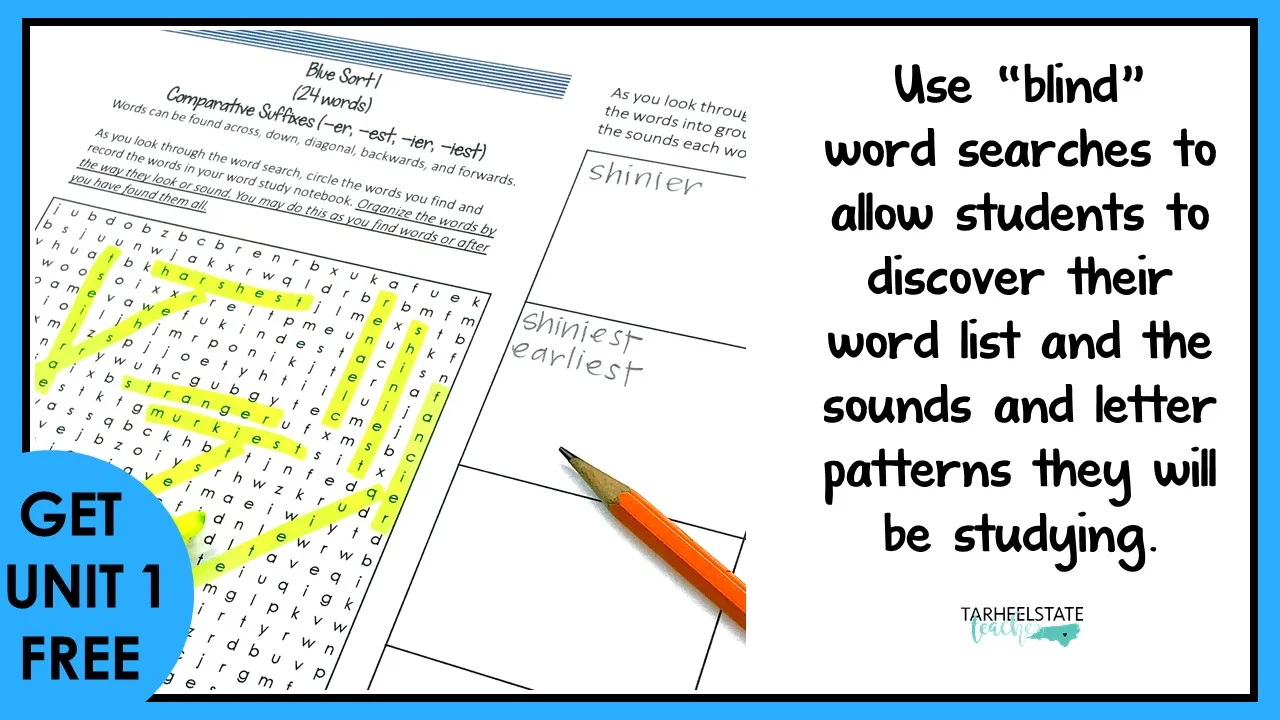
A great way to open any Derivational Relations small group lesson is to have students share what they found in their word searches. My students complete discovery word searches based on their word study lists. This means that they are NOT given a word list before trying to find their words in a word search. Prior to meeting with me in a small group, they have spent 1-2 days searching for words in their word searches and sorting them into categories that make sense to them.
When students gather their word study notebooks and meet at our small group table, they know to turn to their word searches and continue looking for possible words. When I am ready to start the meeting, I ask for volunteers to share the words they found. As students share words, I create a word sort on chart paper asking students to help me sort each new word. It’s a simple, low-prep way to ease into the lesson and activate prior knowledge before diving into new instruction.
PREFIXES AND SUFFIXES
Once students are warmed up, here are some of my favorite activities for teaching prefixes and suffixes during small group time.
CLOSED SORTS: Teach students prefixes that come in multiple forms to help them assimilate the meanings of words. For instance, the prefixes ad-, ac-, af-, as-, ag-, al-, ar-, an-, at-, and ap- all relate to to, or toward. Give students word cards that represent these examples and ask them to sort the words. Have students choose several from each prefix to create a drawing or representation of the meaning of the word to stress the commonality of the meaning “to, toward” within the group of words.
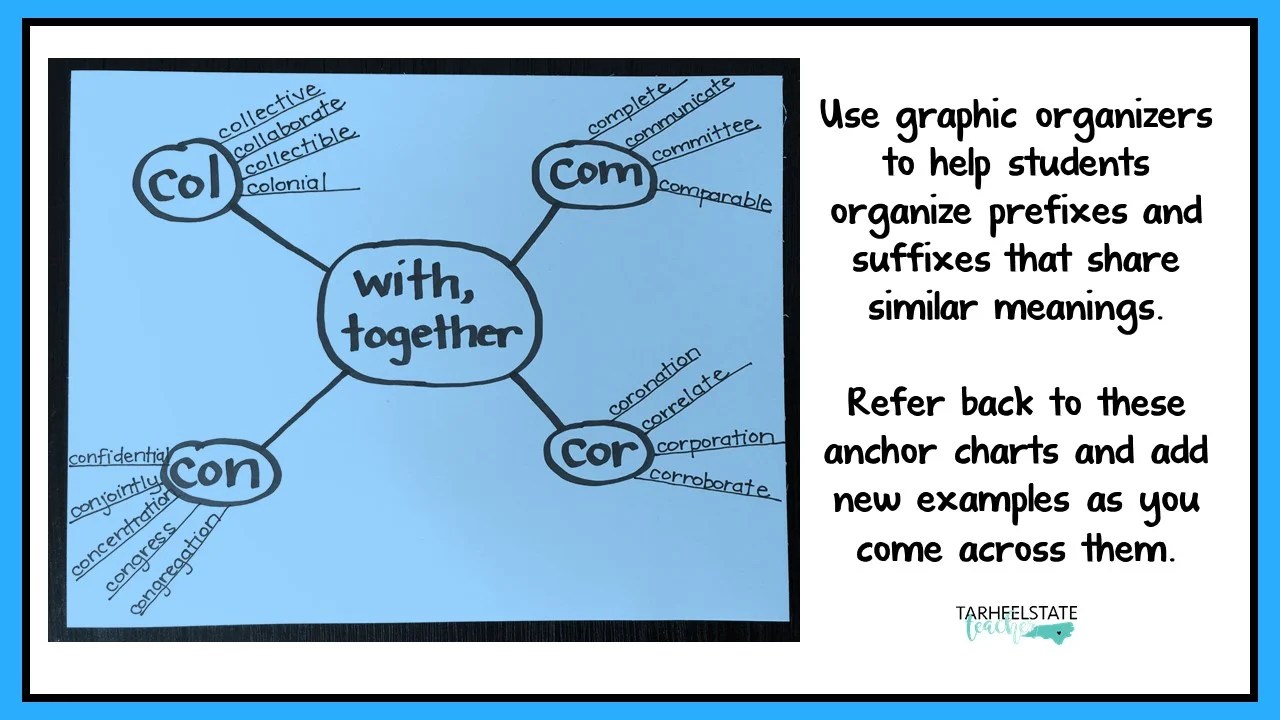
Make sure to highlight examples together as a whole group and ask students how knowing the meaning of the prefix helps them better determine the meaning of the whole word. Repeat this sort with other prefixes and their various forms, such as com- (cor-, con-, col-), meaning “with, together”, and sub- (suf-, sup-, sur-), meaning “under, lower”. Once students have worked with all of the prefixes and their meanings separately, combine all the word cards and have them do a word sort that categorizes the words based on the meaning of the prefixes.
USE GRAPHIC ORGANIZERS: I like to use various graphic organizers with my students to help them visualize prefixes and suffixes that share the same meaning. As I introduce new affixes, we add them to the graphic organizer together and I keep it posted throughout our small group time together, as we stop often to add examples we have come across. As much as possible, I like to incorporate students’ drawings or symbols they associate with the prefix or suffix meanings.
Graphic organizers, like the Frayer model, are also a great tool for analyzing prefixes.
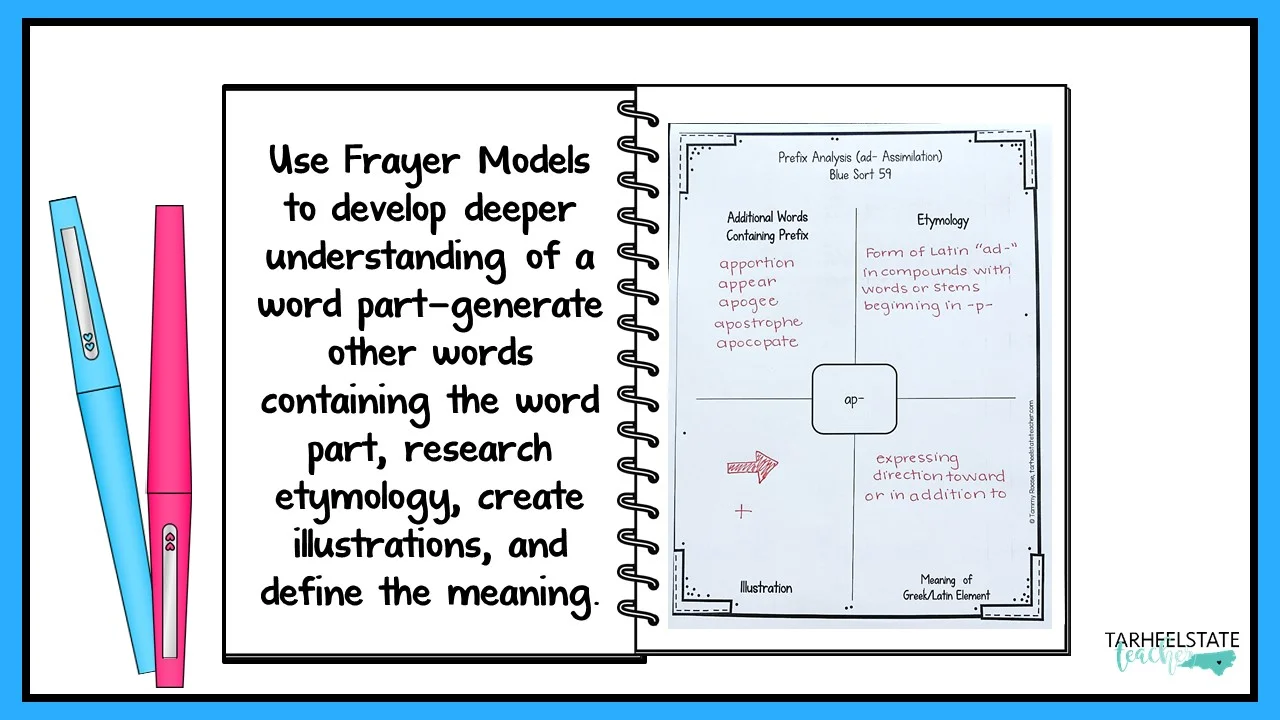
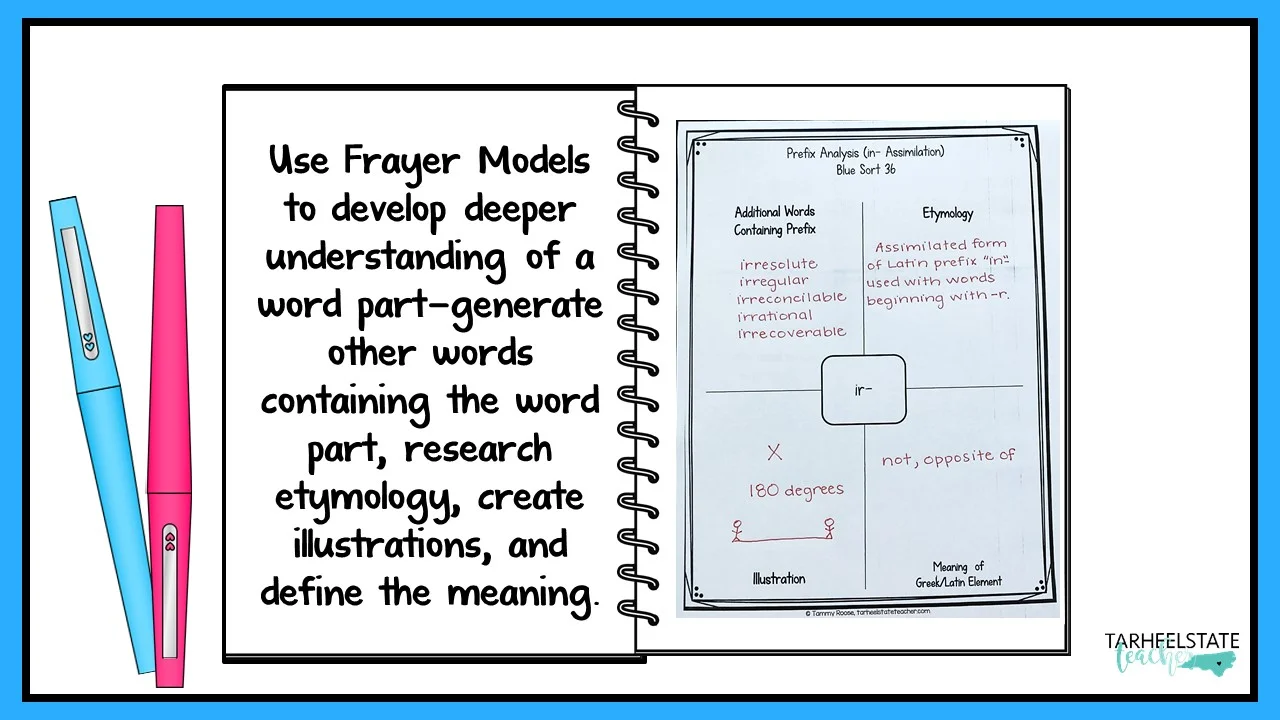
GENERATE WORDS: I like to wait and teach students the spelling rules surrounding all of the assimilated prefixes once they have had plenty of time to complete sorts focused on the various forms and meanings. For example, teaching students that the prefix “ad-“, meaning “to, toward”, can be assimilated to form “ac-,” “af-,” and “ap-” helps them understand why certain words are spelled a particular way.
Using magnetic letters or letter tiles, model that the final letter of the prefix “ad-” is assimilated, or absorbed, into the base word when the base word begins with the consonant letters c, f, and p. The new word, therefore, contains a double consonant (i.e. ad + count = account). Have students explore this with their own magnetic letters or letter tiles while you guide them.
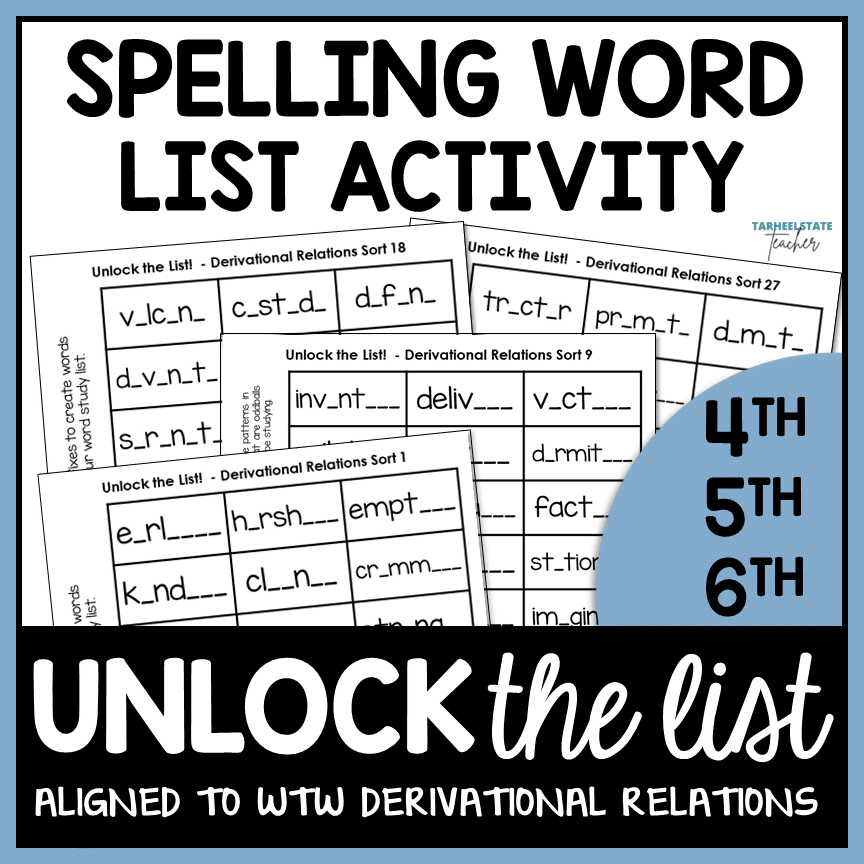
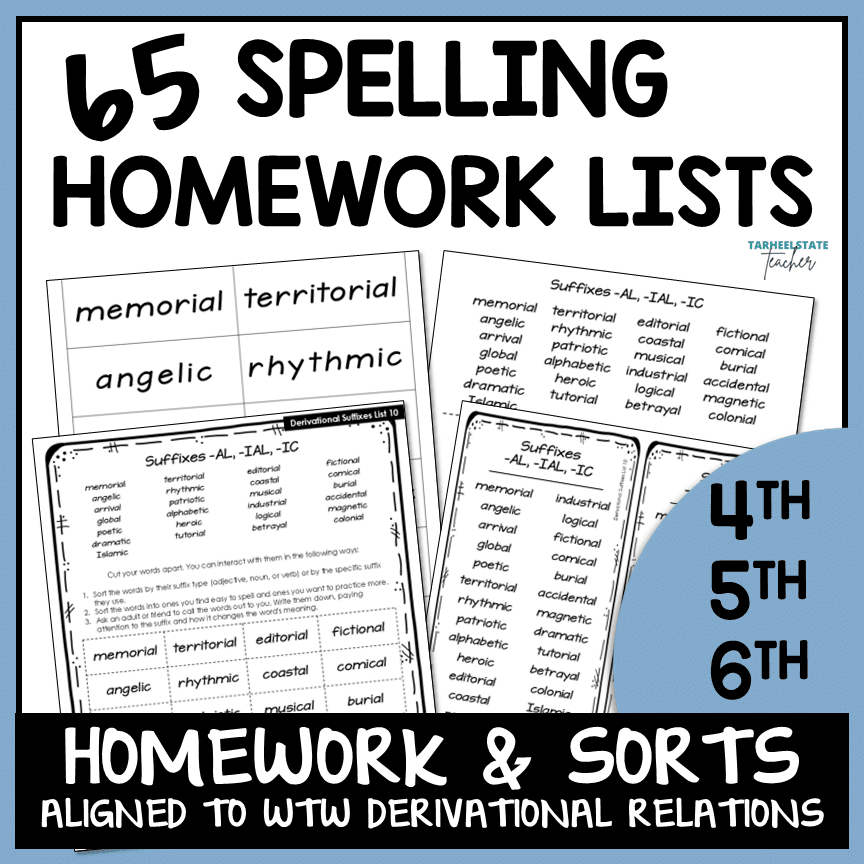
Another favorite for getting students generating and analyzing words is Unlock the List. Students receive their word list with letters missing, prefixes, suffixes, roots, word parts, and work to “unlock” each word by filling in the blanks. As they solve, they start noticing the patterns connecting the words and begin uncovering the word study focus on their own. It works as an entry point before a new list or as reinforcement after students have done their sorts.

BLIND SORTS: Have students complete blind sorts with a partner (students write words in the appropriate category as their partner calls out each word without showing it to them) to give them multiple opportunities to apply the spelling rules they’ve just learned.
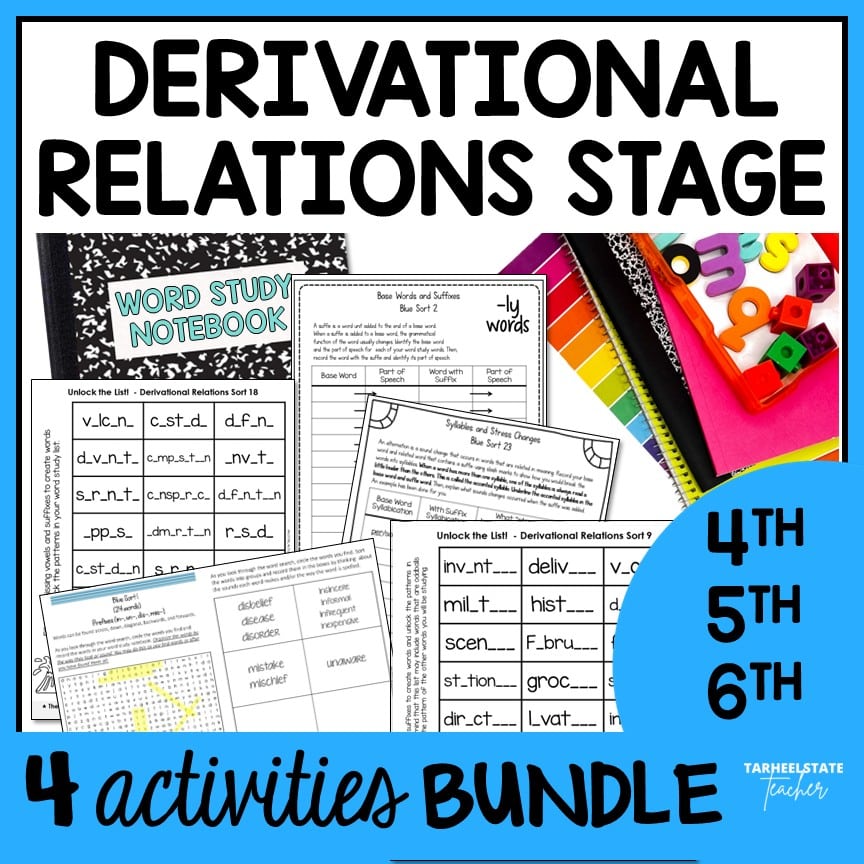
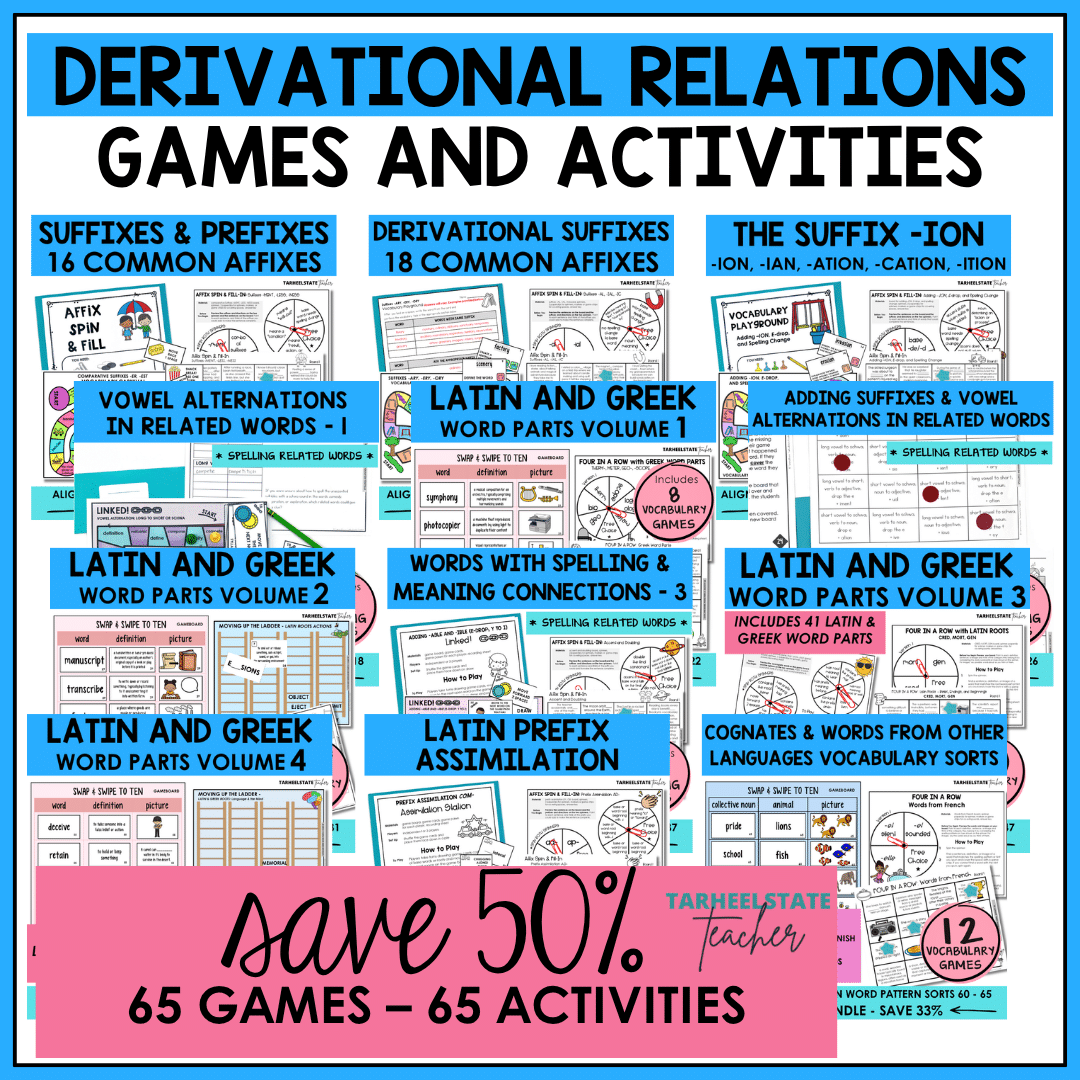
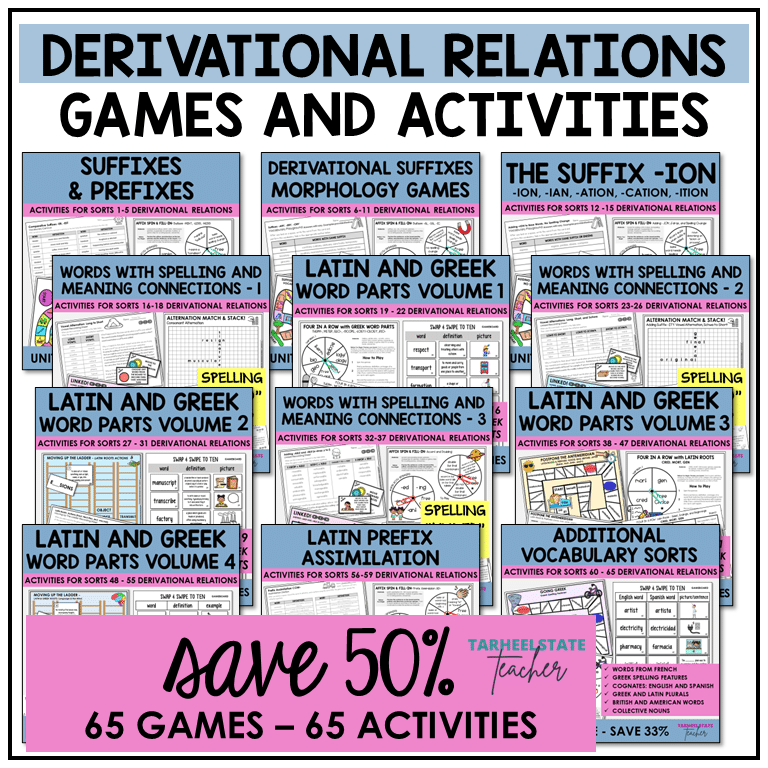
PLAY GAMES: Games give students a low-pressure way to practice affix meanings and the assimilated-prefix spelling rules until they become automatic. My Prefixes and Suffixes Games Bundle includes partner games and independent activities aligned to Words Their Way Derivational Relations sorts, covering comparative suffixes, common suffixes and prefixes, and assimilated prefixes, so you can skip the planning and get straight to the fun.
USE GRAPHIC ORGANIZERS: I use Frayer-like models a lot with my Derivational Relations Spellers small groups because I find they are one of the most effective tools in helping my students absorb the meaning of Greek and Latin roots. I typically divide the four quadrants by asking students to write the Greek or Latin root’s definition in the top left quadrant, an illustration or symbol representing the meaning of the root in the top right quadrant, a collection of words or pictures that the student associates with the Greek/Latin root in the bottom left quadrant, and a list of other words that contain the Greek/Latin root in the bottom right quadrant.
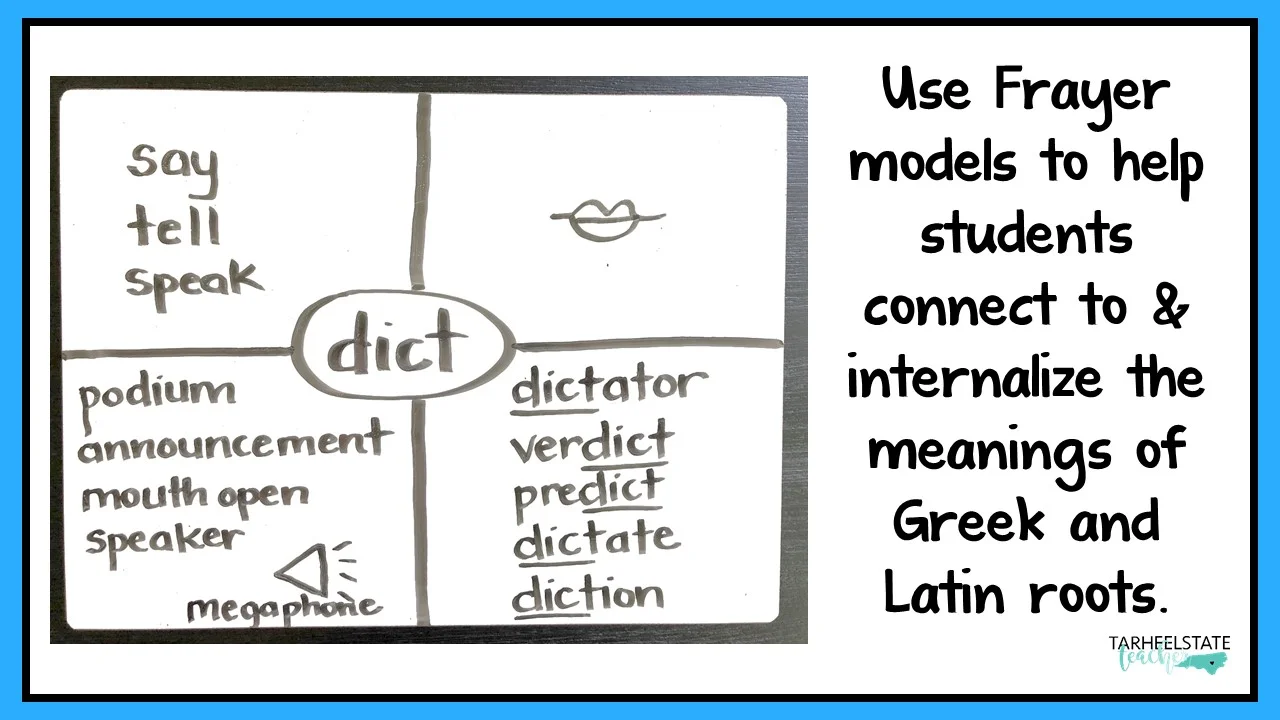
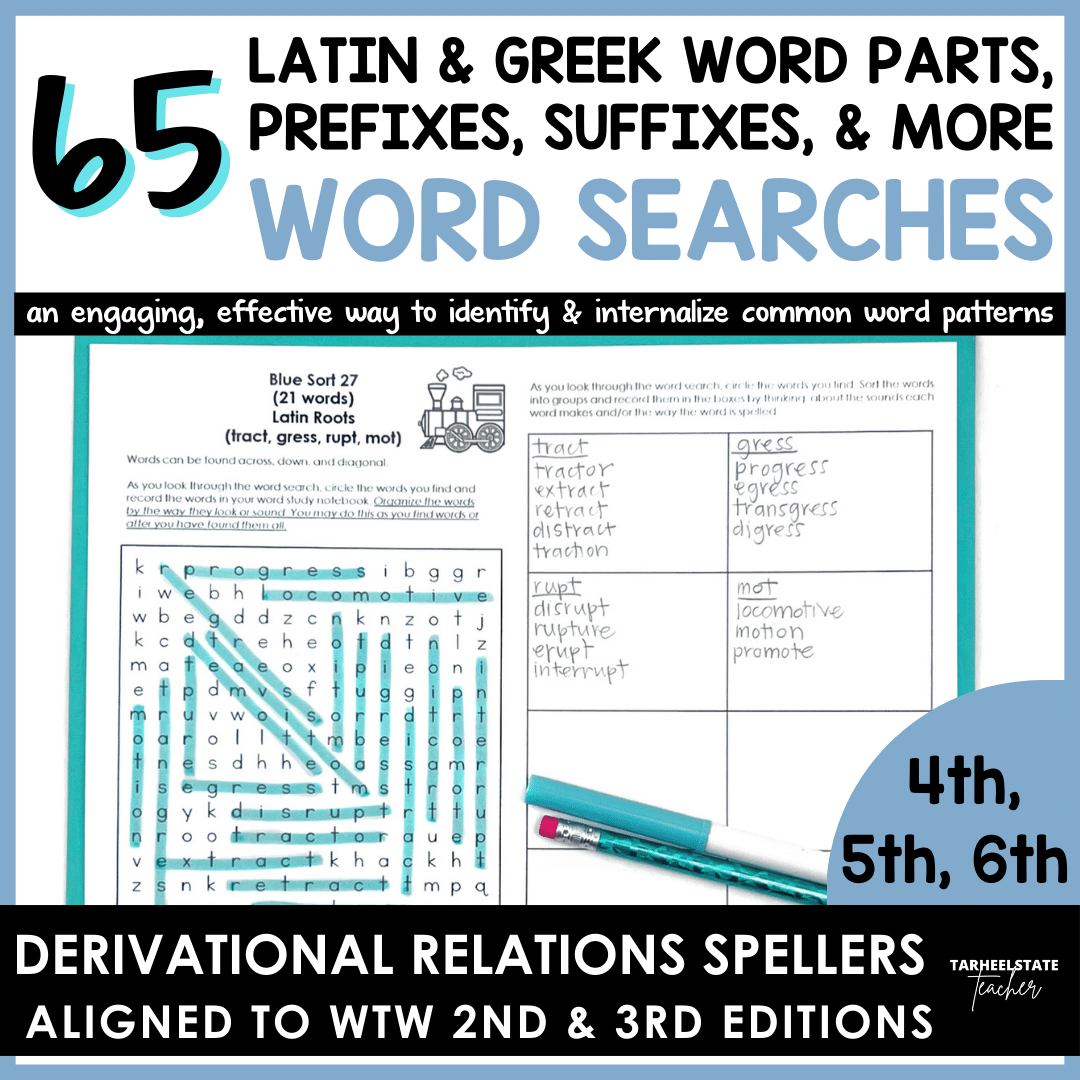
GENERATE WORDS: When introducing a new Greek or Latin root within the small group, I often will teach them the definition and we work together to generate a list of words that contains the Greek/Latin root. I then help scaffold students as they work individually to create an illustration and generate a list of words and/or pictures that they associate with the root. I try to save time for students to share their illustrations and explain what they were thinking with one another, as hearing each other’s examples really helps students build on their understanding of the Greek/Latin root.
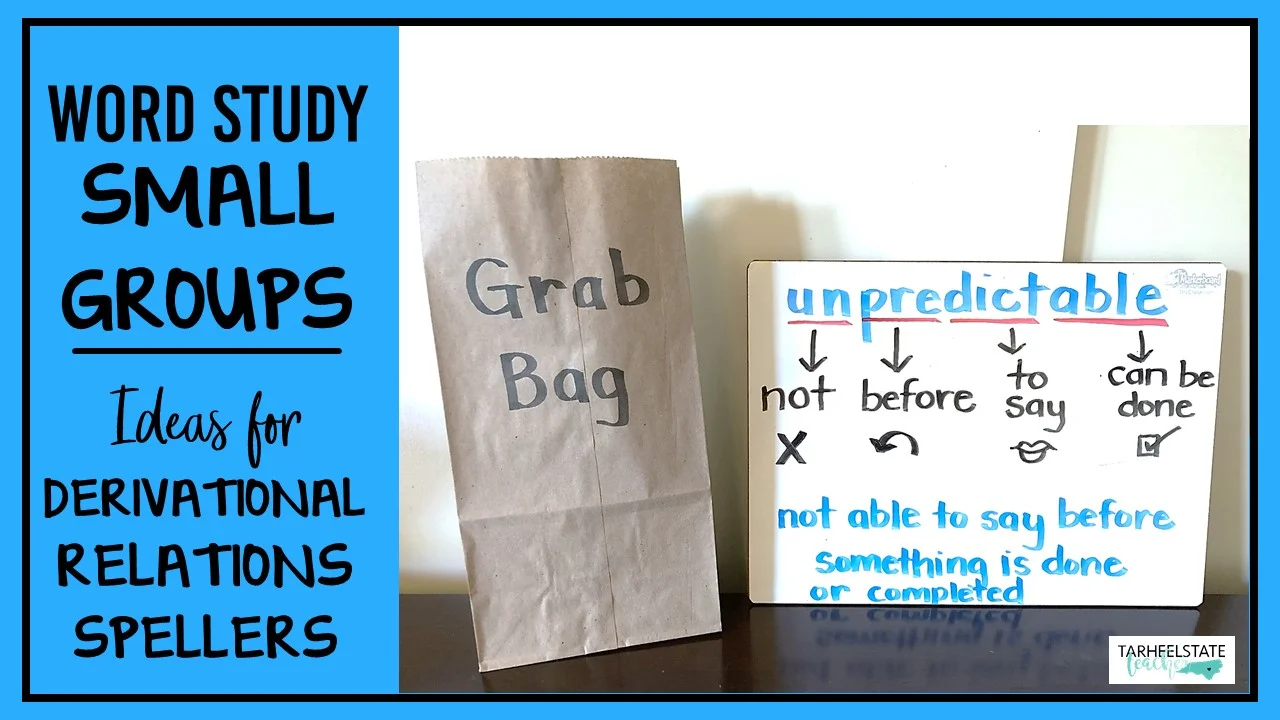
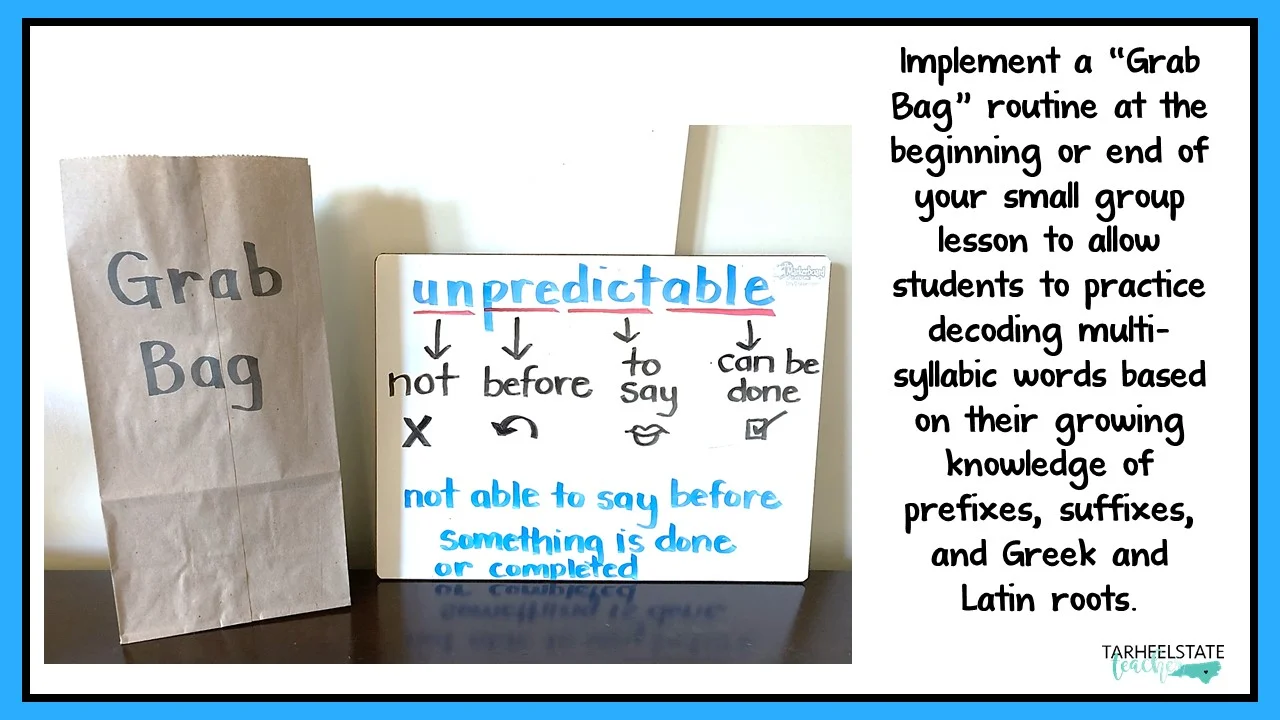
DECODE WORDS: Once students in my Derivational Relations Spellers group have started to build a strong foundation of prefixes, suffixes, Greek and Latin roots and their meanings, I try to spend a few minutes during each of our lessons modeling how to decode multi-syllabic words using what we have learned. I keep a “grab bag” of sample words that I can use to model the process of breaking down a word’s meaning.
Depending on the time I have for this practice, I can have each student pull a word from the grab bag to decode and share back with the group or all students can work on the same word. Doing this often not only provides additional practice to solidify the meanings of prefixes, suffixes, and Greek/Latin roots, but it also gives students authentic opportunities to put the reason we spend time studying word parts into action—to help us when we encounter new words in our reading.
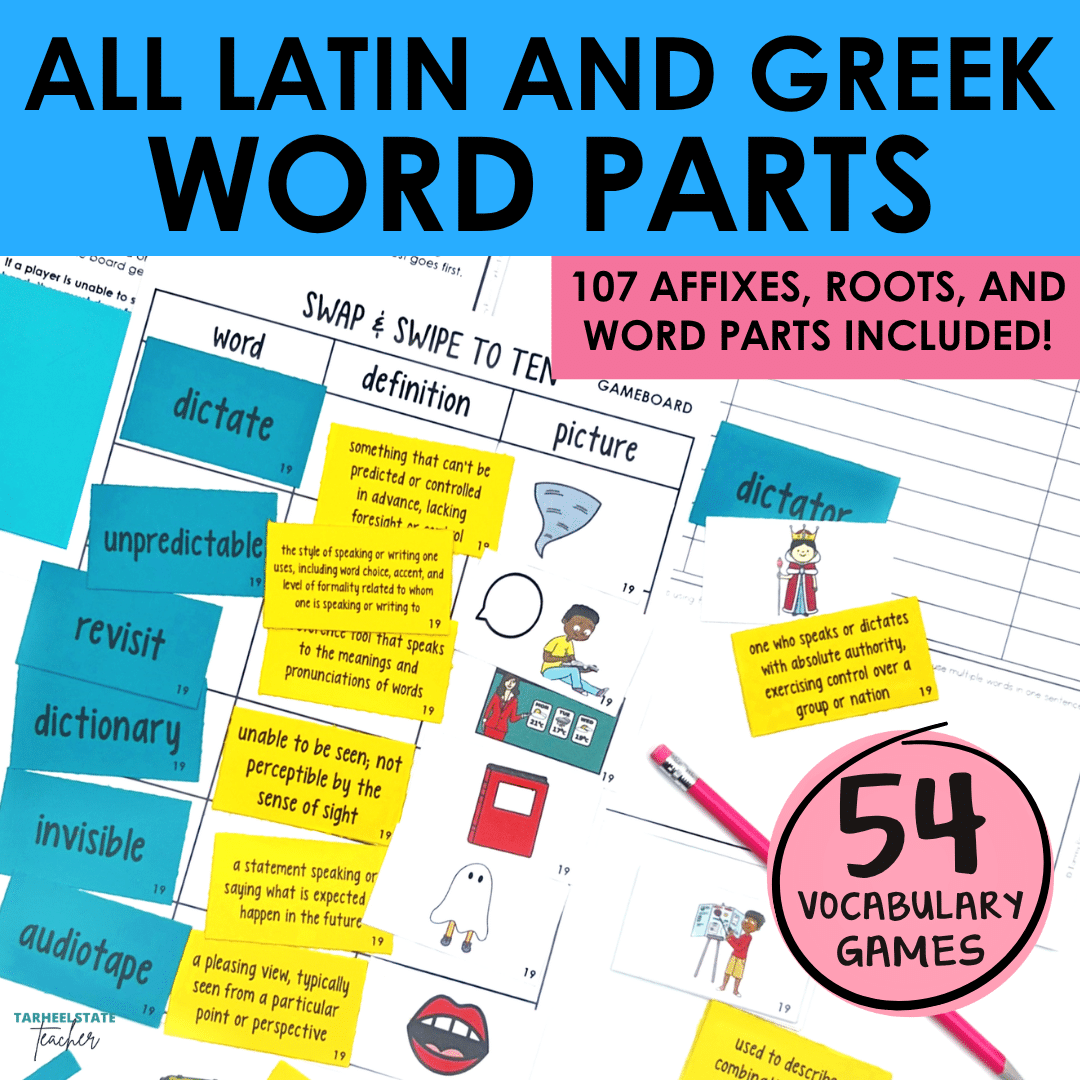
PLAY GAMES: Games are a great way to deepen students’ grasp of roots once they’ve started analyzing them. My All Latin and Greek Roots and Word Parts Games Bundle covers 107 roots and affixes across 27 partner games and 27 independent activities, aligned to Words Their Way sorts and built for 4th-6th graders, so this part of your word study block stays hands-on and engaging.

 While this list of activities is certainly not exhaustive, I hope you’ve got some fresh, new ideas to add to your word study toolbox for your Derivational Relations Spellers group! If you’re looking for small group activity ideas for other stages of Words Their Way, I’ve got you covered — check out my posts for the Letter Name-Alphabetic Stage, Within Word Pattern Stage, and the Syllables and Affixes Stage!