What activities and strategies can you use during your small group lessons for the Syllables and Affixes stage of word study? In this 4-part series, I’m digging into some suggested word study activities for each stage of Words Their Way! Get ready to grab some ideas to spice up your word study small group lessons for the Syllables and Affixes spellers stage!
A successful word study block incorporates both direct instruction, delivered in small, differentiated groups based on developmental assessments and opportunities for students to independently practice and apply what they have learned. After making decisions about the activities you want your students to complete during their word study block, assessing them, and creating word study groups, many of us wonder what we are actually supposed to do with our students during their small group, meet with the teacher time?!?!. Let’s take a look at what makes the Syllables and Affixes stage special first!
A SNAPSHOT OF THE SYLLABLES AND AFFIXES STAGE
Elementary students who fall into the Syllables and Affixes stage of word study are typically able to spell most single-syllable, short and long vowel words, and high-frequency words correctly. They often make spelling errors at syllable juncture points and in unaccented syllables.
Students in this stage are developmentally ready to begin studying the generalizations that rule how syllables are combined and how affixes affect the spelling, meaning, and use of base words. Through their studies, Syllables and Affixes Spellers begin to explore words and discover the patterns of sound, spelling, and meaning that opens the door for thousands of new words. Specifically, students in your Syllables and Affixes group should be studying and making generalizations about:
- compound words, inflected endings
- open and closed syllables
- accented syllables
- unaccented syllables
- prefixes and suffixes
SMALL GROUP ACTIVITIES FOR SYLLABLES AND AFFIXES SPELLERS
Below you’ll find activity ideas organized by topic. I’ve also included a suggested opening routine to kick off your small group time and a section on word study notebooks, which support student learning across all of the topics in this stage.
OPENING ROUTINE: SHARE WORD SEARCH FINDINGS
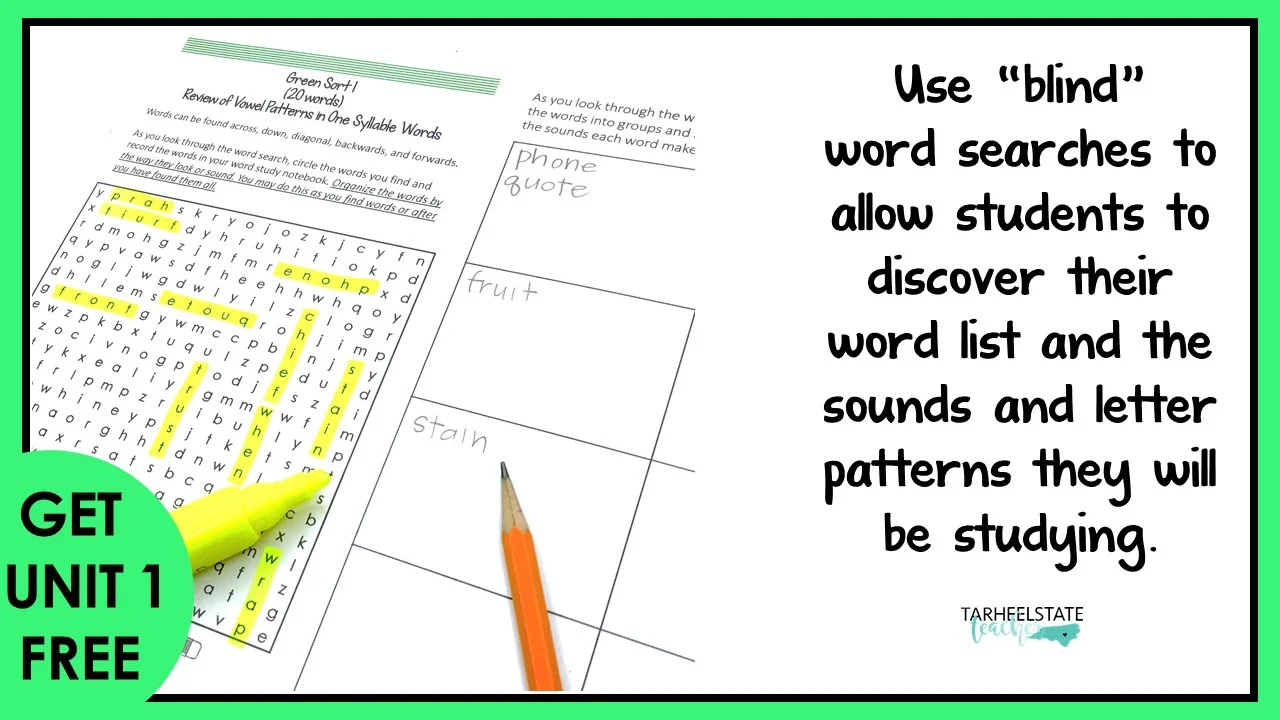
A great way to open any Syllables and Affixes small group lesson is to have students share what they found in their word searches. My students complete discovery word searches based on their word study lists. This means that they are NOT given a word list before trying to find their words in a word search. I may allow students to work side-by-side with a partner to modify this activity for students who may need extra support. Prior to meeting with me in a small group, they have spent 1-2 days searching for words in their word searches and sorting them into categories that make sense to them.
When students gather their word study notebooks and meet at our small group table, they know to turn to their word searches and continue looking for possible words. When I am ready to start the meeting, I ask for volunteers to share the words they found. As students share words, I create a word sort on chart paper asking students to help me sort each new word.
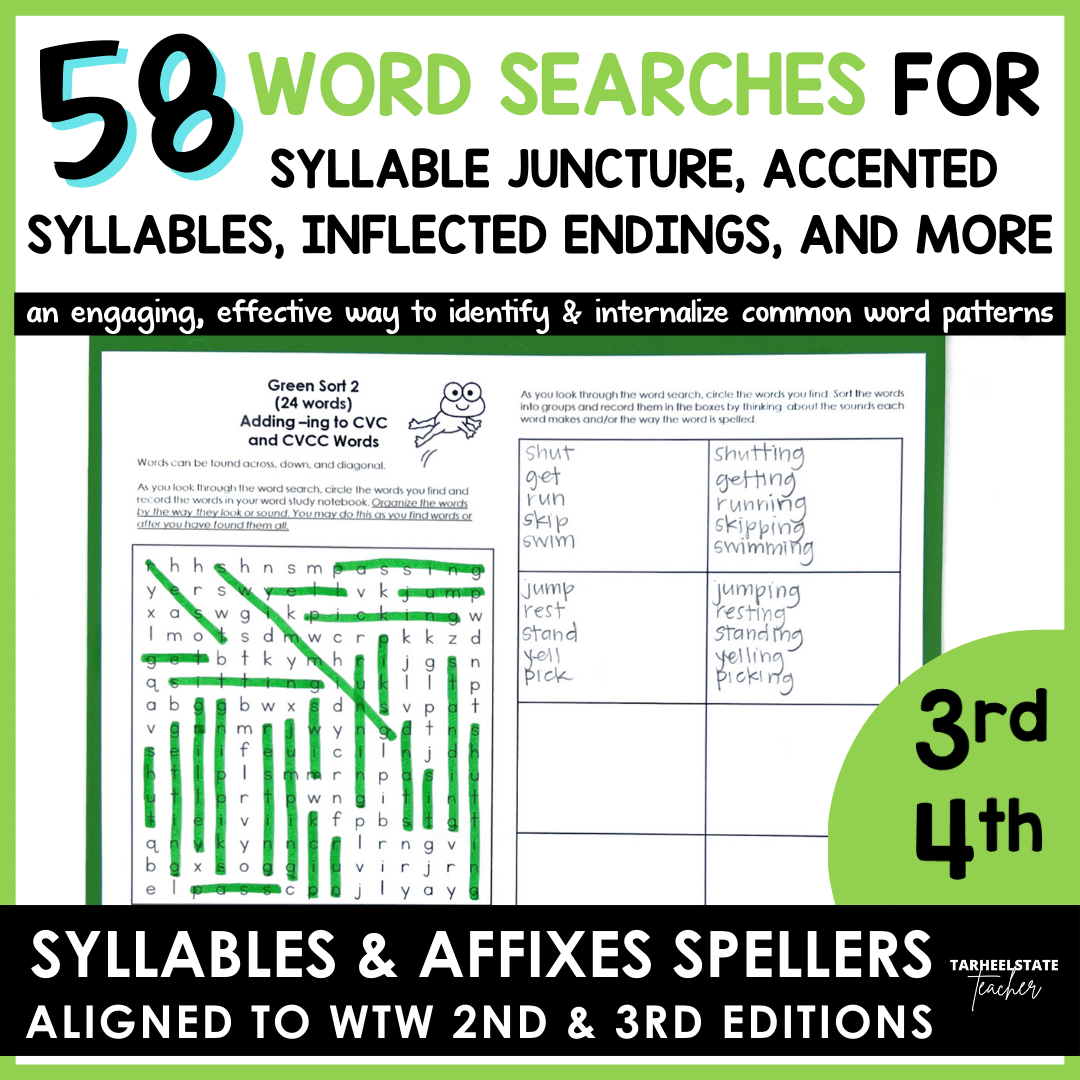
INFLECTED ENDINGS
Inflected endings are one of the first major concepts students explore in the Syllables and Affixes stage. Here are my go-to activities for teaching this topic during small group time.
CLOSED SORTS: Introduce inflected endings. I typically start with -ed and -ing. Provide a closed sort with a list of word cards that include words with both the -ed and -ing endings. Ask students to sort their words into two categories – past and present. Have students share out with the group what they noticed about the new meanings of the word and how they choose to sort their words. Repeat the sort using the inflected ending -s and -es, guiding students to notice how the inflected endings change the meaning of the word when -s or -es is added as they are sorting and sharing their observations with the group.
Begin to ask students to pay attention to how some base words change when inflected endings are added while others do not. Have students do multiple sorts, separating words that require spelling changes from those that do not. I purposefully do not yet explain the spelling rules or reasoning behind them to students, as I think it makes for some powerful future lessons and discussions when students are guided to make these generalizations “on their own”.
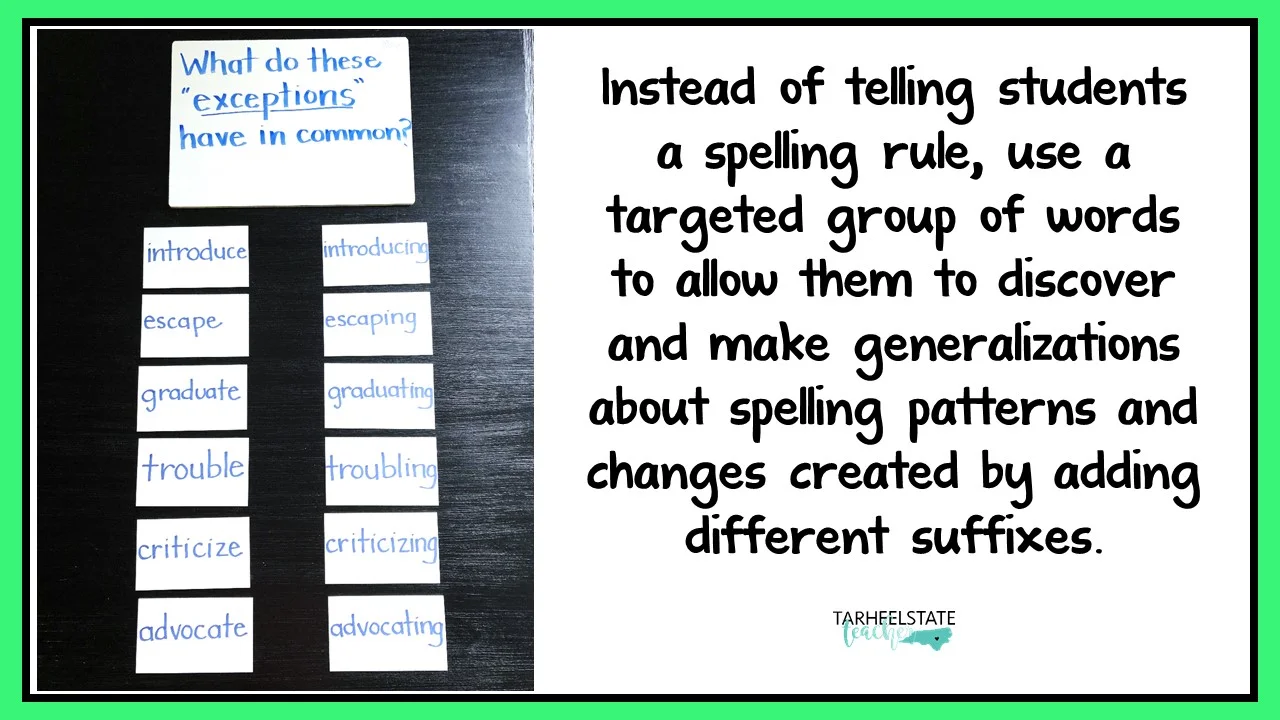
To accomplish this, I start a “bank” of words that we notice are “special” or “exceptions” but I don’t explain anything further. For example, if a student shares that they noticed “winning” has an extra “n” added to it once the “ing” is added, I quickly suggest to the group that we add it to our “bank” and discuss it later.
OPEN SORTS: By the time students are ready to start learning about the spelling rule exceptions and spelling changes, students should have been exposed to lots of words over the last several small group meetings (if there aren’t, you can just add them) and you can start the lesson by asking students what patterns they notice about these words with spelling exceptions.
Ask students to do an open sort to see if they can discover the pattern or the rule that helps them understand what changes to make to the base word before adding the inflected ending. I personally find it more powerful for students to discover the pattern or rule on their own versus me just telling them. You could either do multiple sorts, focusing on one spelling change or rule at a time (as pictured), or combine all of the exceptions together into one big sort.
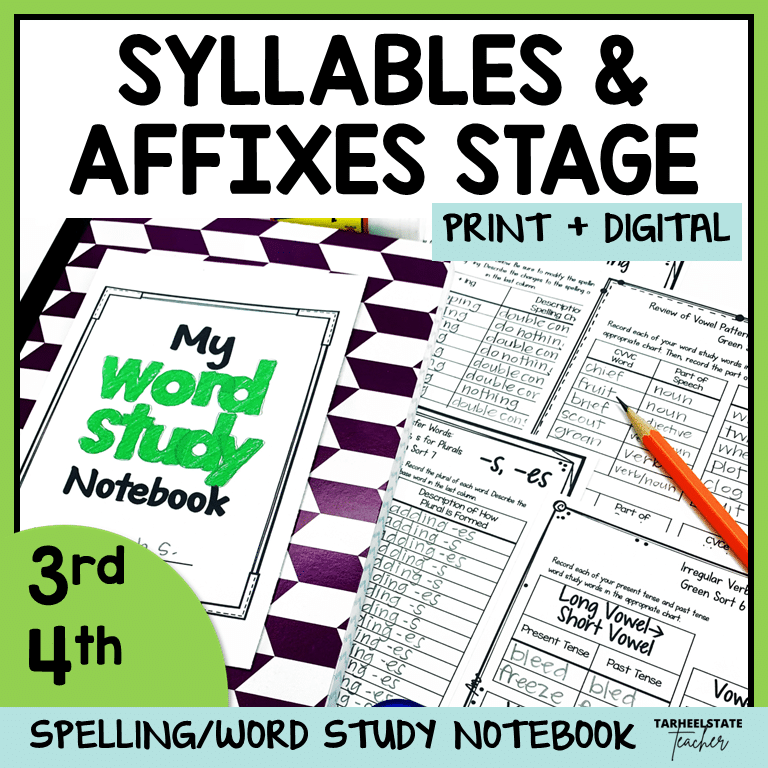
WORD STUDY NOTEBOOKS: The activities in students’ word study notebooks help guide them to the generalizations I want them to discover through their sorts. Here are some examples of inflected ending generalizations that Syllables and Affixes students work through in their notebooks:
Adding -ing: When the base word (verb) ends in one consonant, students can expect to double the consonant before adding -ing. When the base word ends in two consonants (like in “hunt”), we simply add -ing. We call this a “do nothing” word because we don’t have to do anything extra to add -ing.
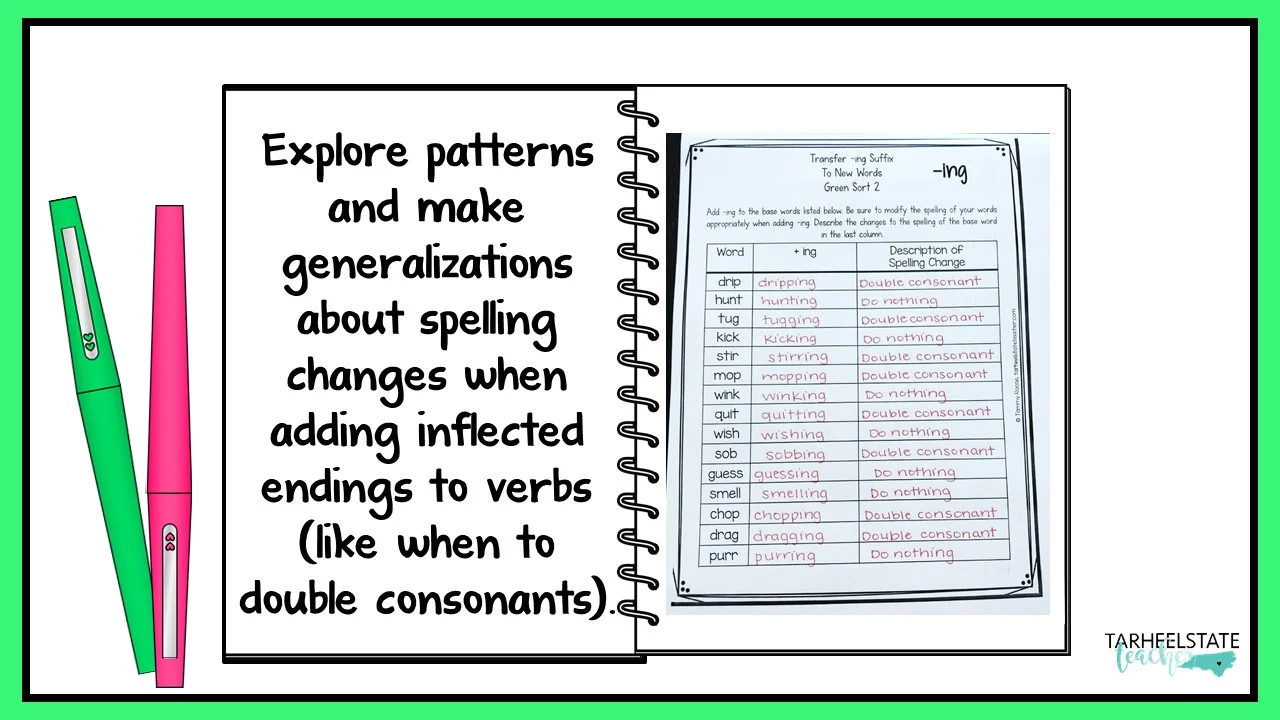
Adding -ing: When the base word (verb) ends in -e students can generalize that they need to drop the -e before adding -ing.
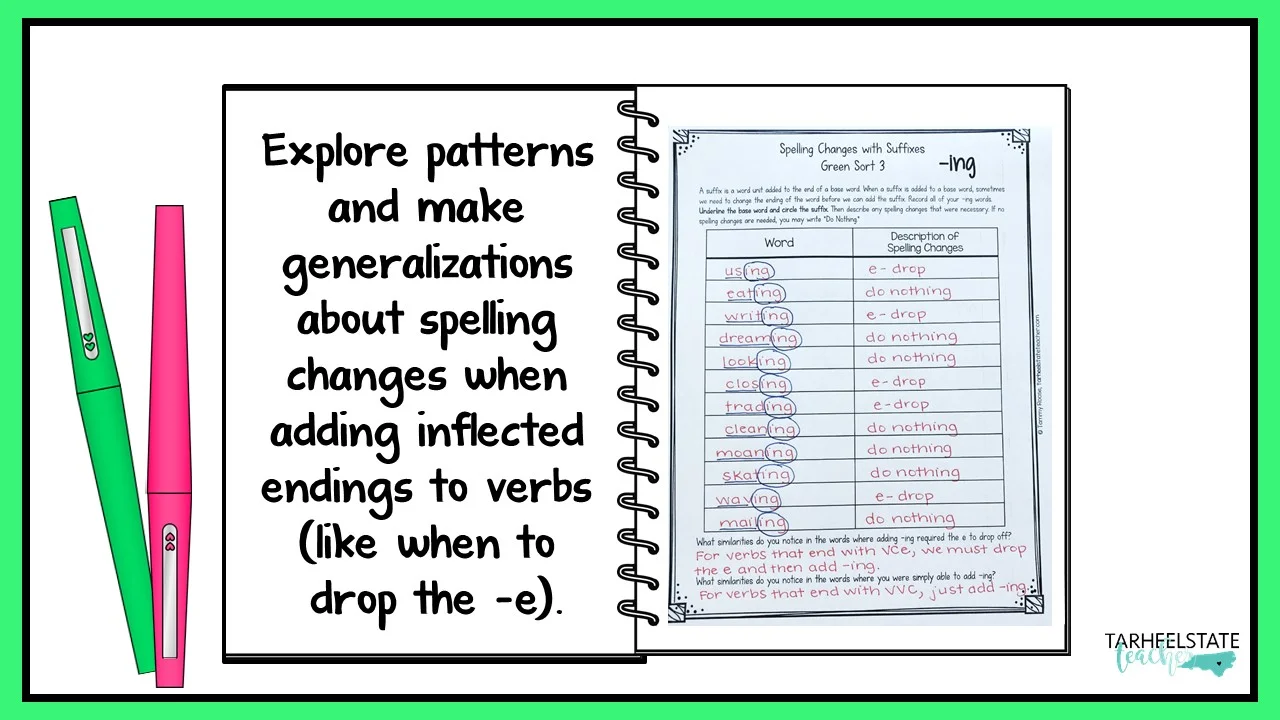
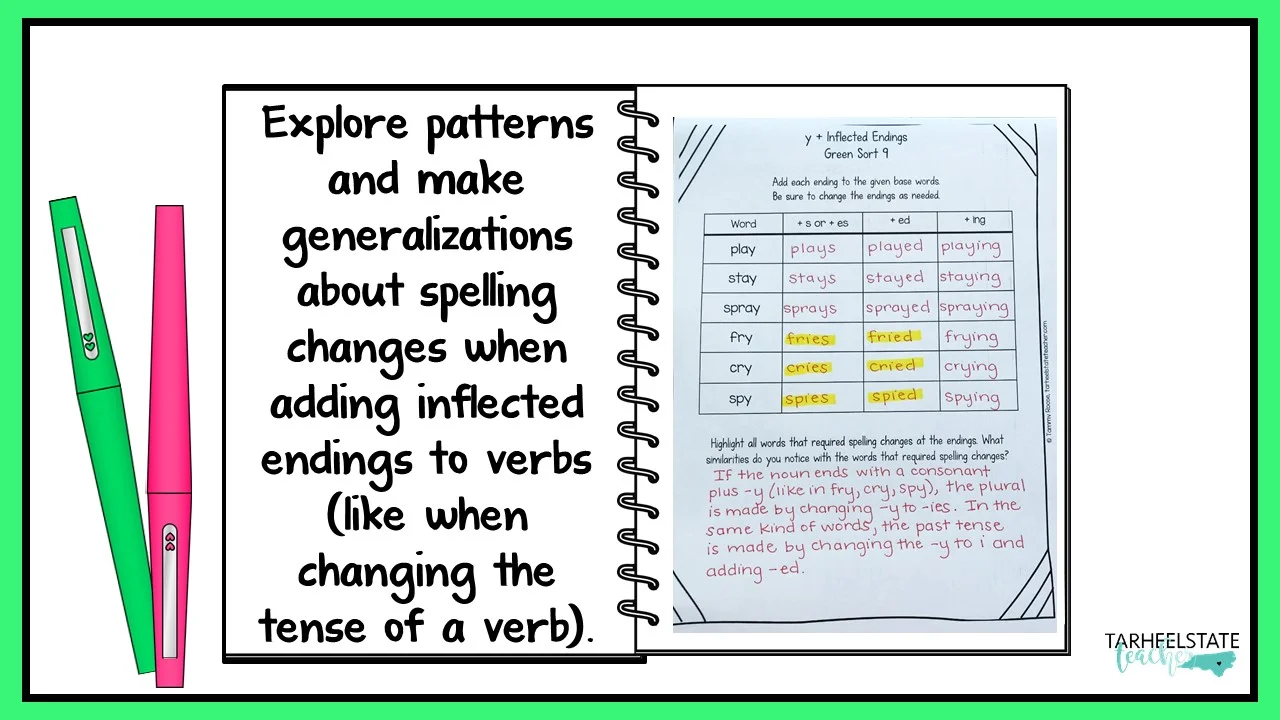
Changing the tense of a verb with -s, -es, -ed, or -ing when a word ends in -y: Students can generalize that when a verb ends in a vowel-y, we simply add the inflected ending. When a word ends in a consonant + y (like in fry, cry, and spy), the plural is spelled by dropping the -y and changing it to -ie in order to add the s. The same is done for making consonant + y words past tense when adding -ed. When adding -ing to a consonant + y word, you don’t have to do anything extra.

PLAY GAMES: Games give students a low-pressure way to practice the doubling, dropping, and do-nothing rules until they’re automatic. My Inflectional Endings Games Bundle covers adding -ing, -ed, -s, and -es across CVC, CVCC, CVCe, and CVVC patterns, plus irregular verbs, unusual plurals, and words ending in -y, with partner games and independent activities aligned to Words Their Way sorts.
COMPOUND WORDS
Compound words are a fun, concrete concept for students in this stage and a great change of pace from sorts. Here are a few of my favorite ways to teach them during small group time.
Teach students that compound words are two words put together to make one word with a new meaning. Use magnetic letters or word cards to show students the concept of two separate words with separate meanings being combined together to create a new word with its own meaning.
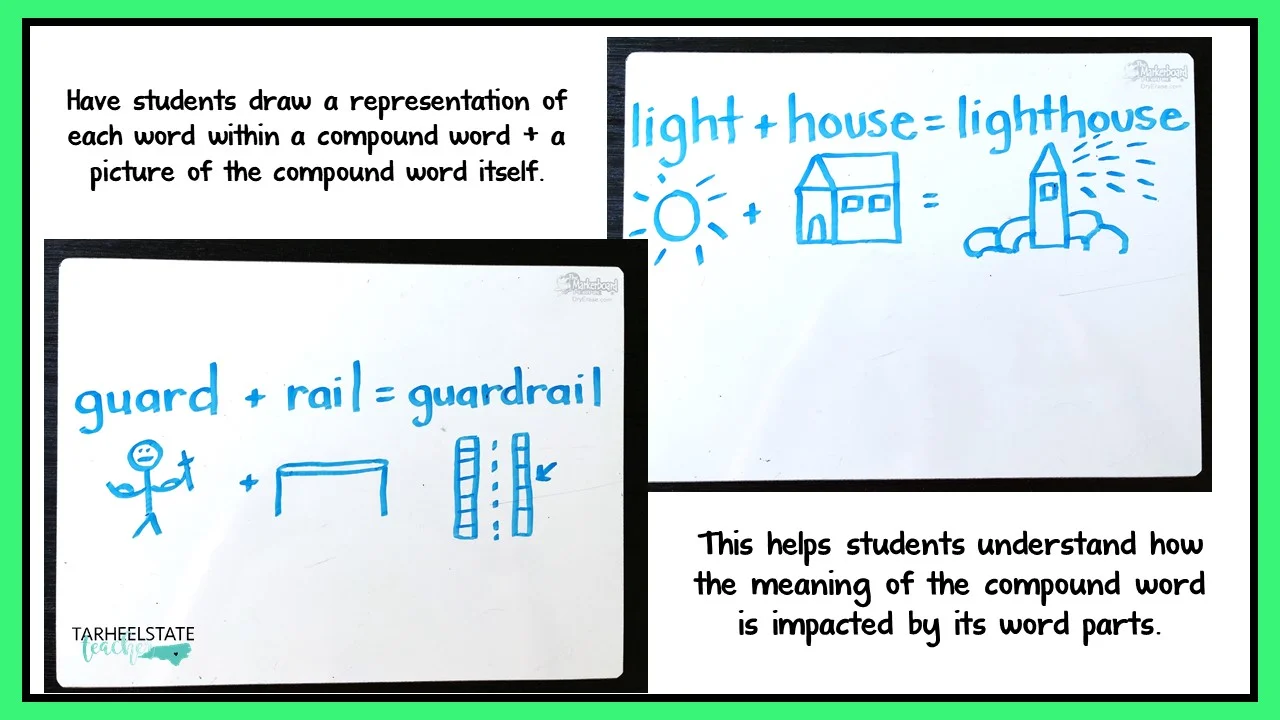
GENERATE WORDS: Create word cards for students to create their own compound words. Ask them to choose two word cards that can be combined together to make a compound word. Have them write each word separately and draw a quick picture or symbol representing the meaning of each word (individual mini whiteboards for this activity would work well).
Then have them combine the words, creating the new compound word and drawing a picture to represent its meaning as well. Have students do this several times after you’ve modeled it, guiding and supporting them along the way. Ask them to share some of their examples with the group at the end.
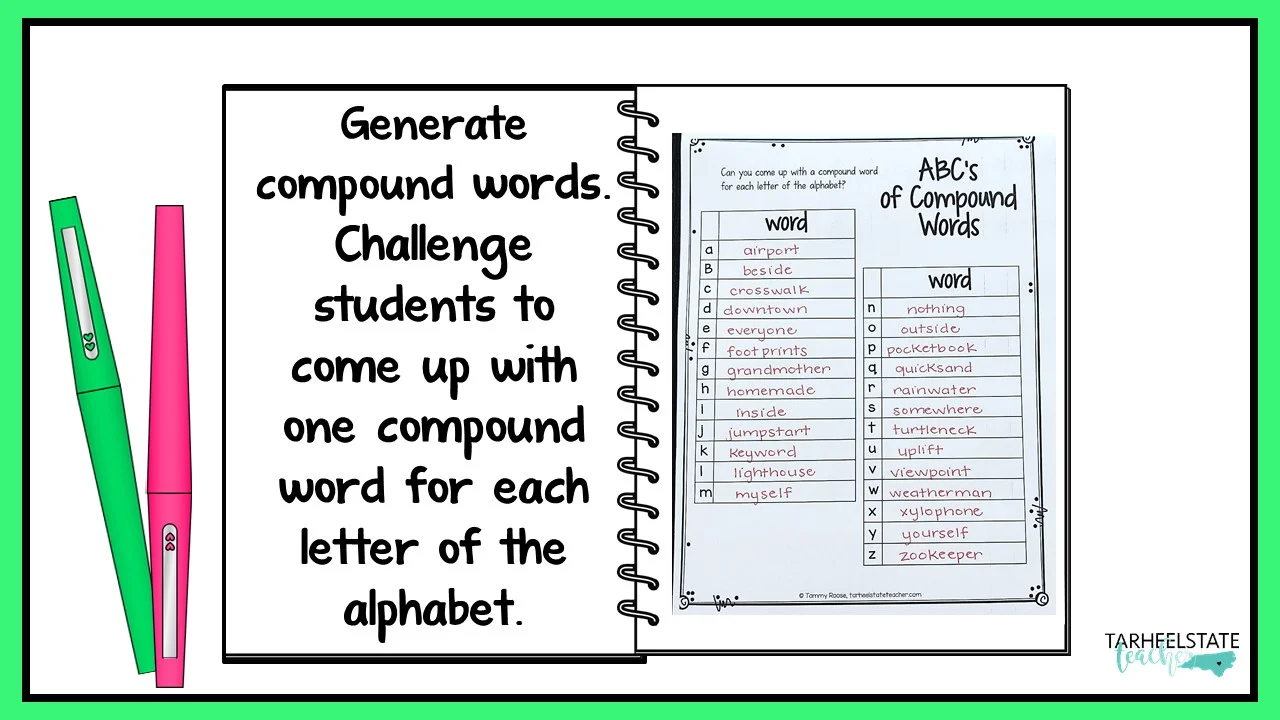
During your study of compound words, challenge students to find a compound word for each letter of the alphabet. You could even make an anchor chart by listing all of the letters of the alphabet down the page and fill in a few new words during each small group meeting.
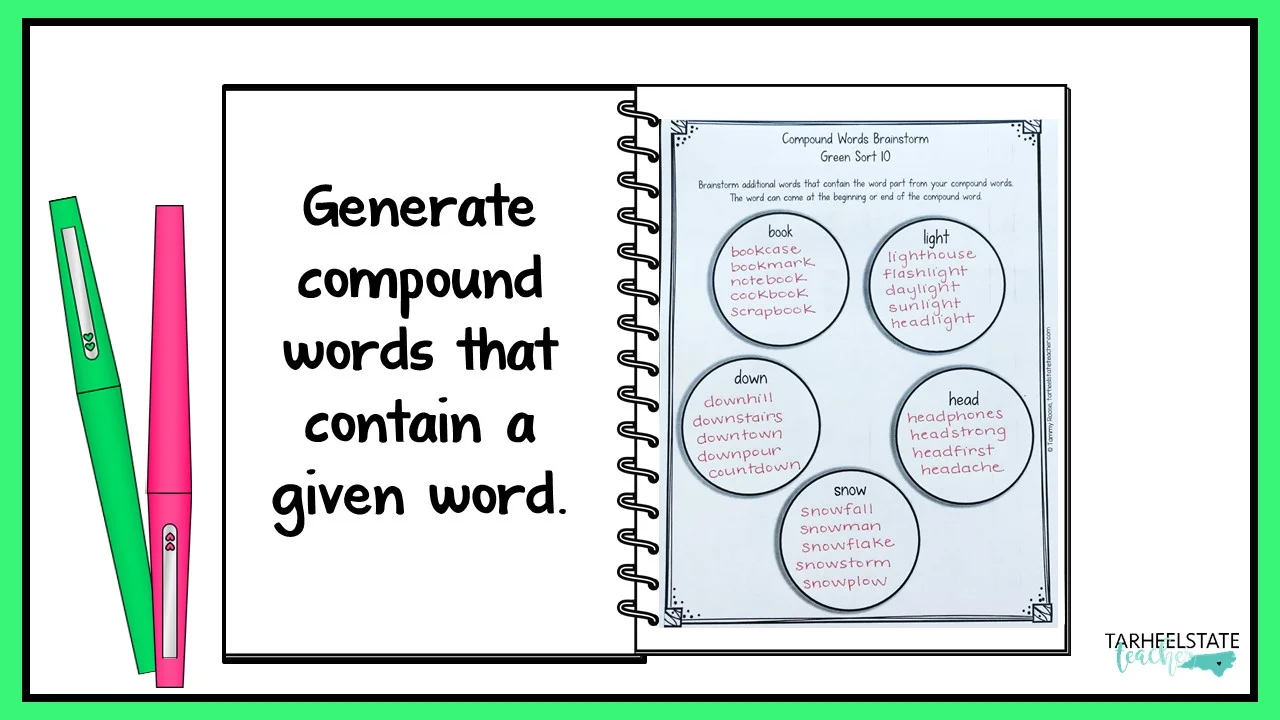
Provide students with words and ask them to help you generate examples of compound words that contain the given word. I like doing this together in the small group so students can all participate and benefit from hearing others’ suggestions. There are often some quality discussions about words that are combined together but are not real words.
READ ALOUD: I always like to fit in reading aloud Thumbtacks, Earwax, Lipstick, Dipstick by Brian Cleary to my small group. It helps teach students what compound words are and provides lots of examples to help drive the concept home.
PLAY GAMES: Games give students a fun, low-pressure way to practice combining word parts and analyzing the meanings they create. My Compound Words, Homophones & Homographs Games Bundle covers advanced compound words, homophones, homographs, and the i before e generalization, with partner games and independent activities that make this part of your word study block something students look forward to.
PREFIXES AND SUFFIXES
Once students have a solid grasp of inflected endings and compound words, prefixes and suffixes take their understanding of how words are built to the next level. Here are the strategies I rely on most during this part of the unit.
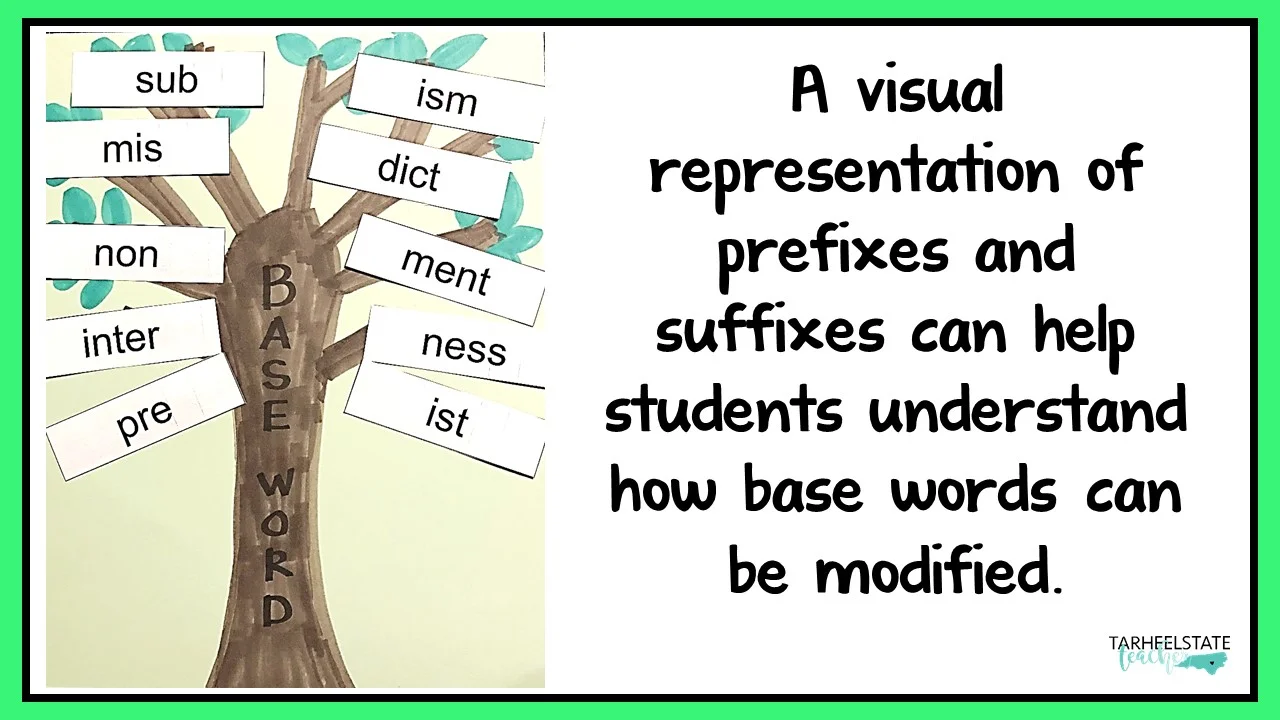
USE VISUALS: Introducing prefixes and suffixes is often easier for students to grasp when they have a visual to refer to. There are many that you can use, but I prefer a tree. For the first couple of initial lessons about prefixes, suffixes, and root words, I have a tree drawn on my whiteboard or chart paper with branches and leaves spread out both to the left and right.
The trunk or base of the tree shows the base or root word, while the small branches and leaves to the left show prefixes that can be added to the root word, and the small branches and leaves to the right show suffixes that can be added to the root word. Students can use this visual as they begin doing sorts and making new words with prefixes and suffixes. (Tree visual idea from https://minds-in-bloom.com/15-ways-to-teach-prefixes-and-suffixes/)
CLOSED SORTS: I use a lot of closed sorts when focusing on prefixes and suffixes. Have students do a closed sort with a group of word cards containing words that have prefixes, suffixes, or both in them. Ask students to sort the words into one of those three columns. As they are deciding where to place words, ask them probing questions like, “How do you know that word has a prefix/suffix?”, “What do you think the prefix/suffix means?”, “How does the prefix/suffix change the meaning of the root word?”. It’s important to remember that the power of the sort comes with the analysis at the end.
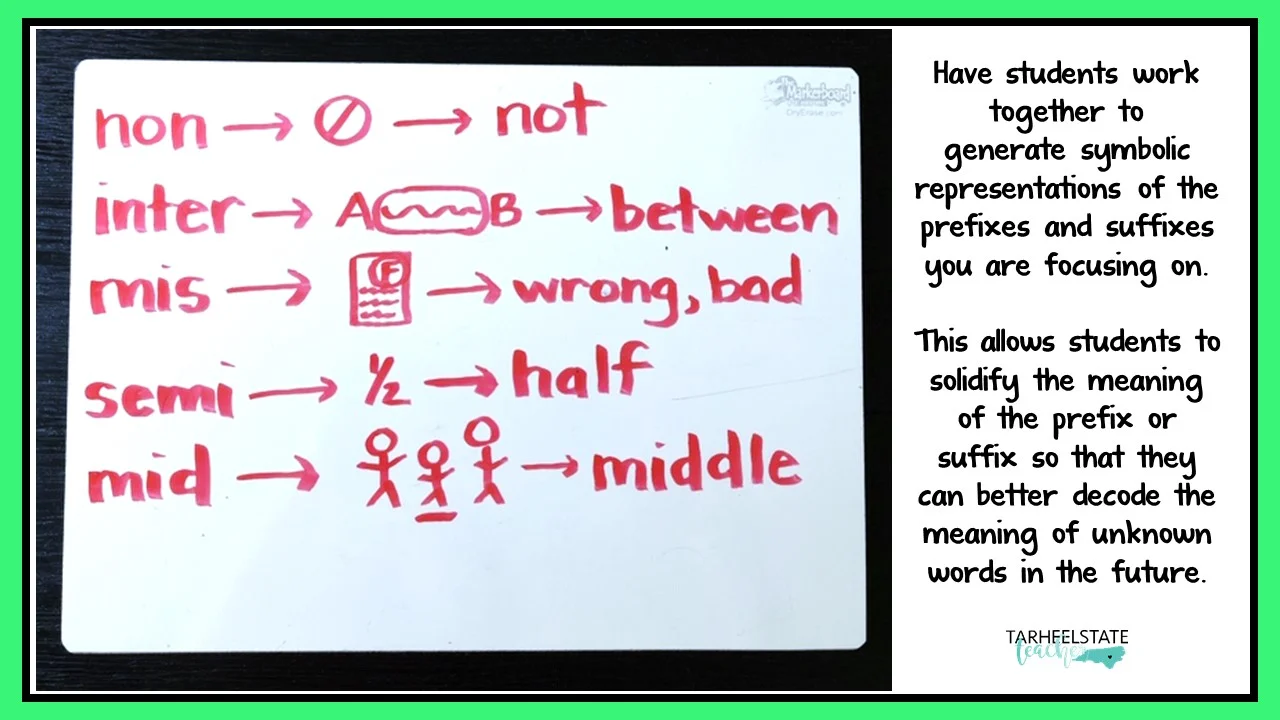
GENERATE DRAWINGS: Once students have really started to learn multiple prefix and suffix meanings, make time for them to generate drawings or symbols for the prefixes or suffixes as a group. Attaching a non-linguistic representation to prefixes and suffixes as you study their meanings helps students remember the implied meaning of unknown words that they may encounter in reading.
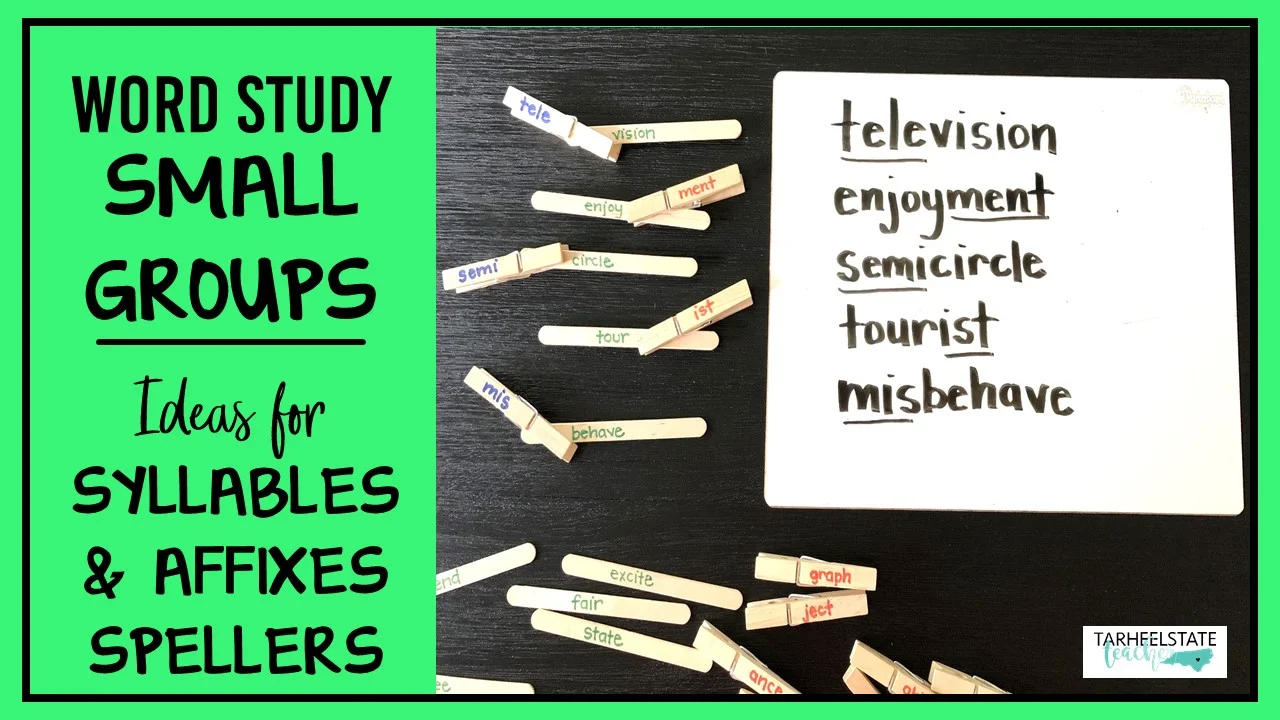
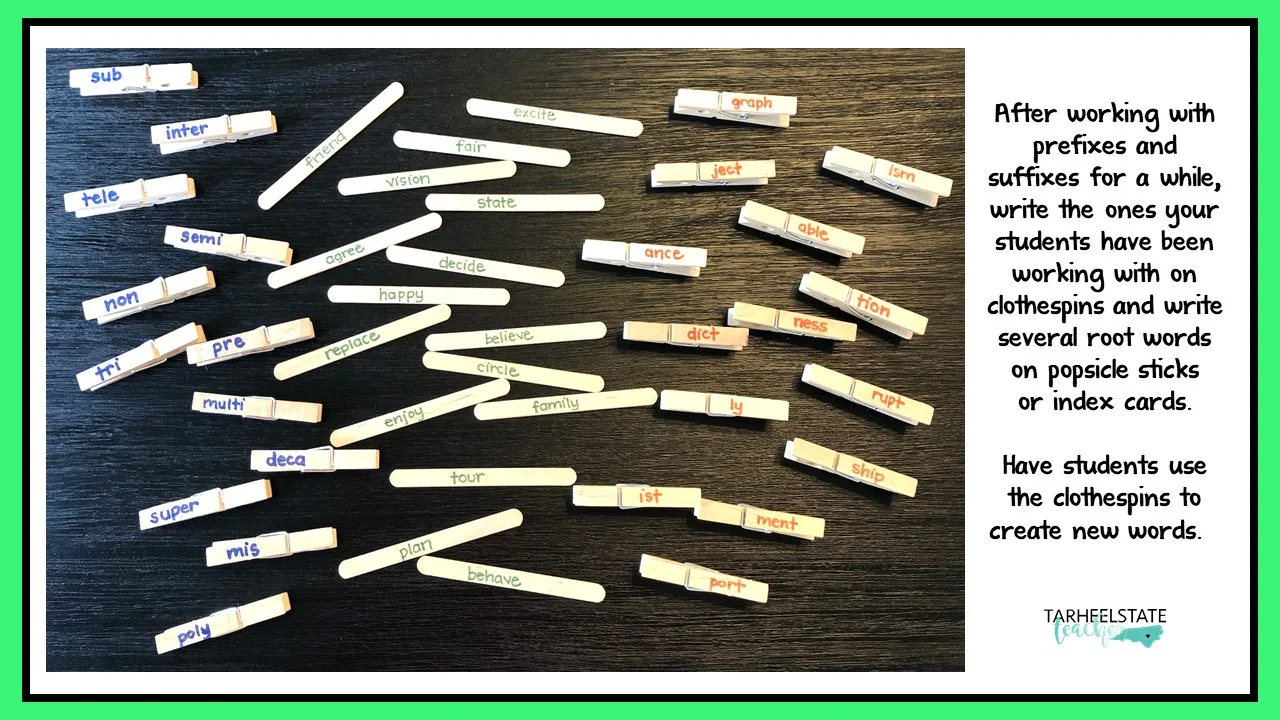
GENERATE WORDS: A fun, kinesthetic way to get students to generate new words using prefixes and suffixes that we’ve been working on is to incorporate some word building. Write root words on popsicle sticks and prefixes and suffixes that you have introduced onto clothespins. Students can use the clothespins to create new words and then write the words down. Ask students to create a picture or symbol to represent the meaning of the word they created.
Gather the words and pictures/symbols together and ask students if they see any similarities or notice anything unique about the symbols. Guide them to see that often once they know the meaning of a particular prefix or suffix, they can discern a lot about the meaning of an unknown word they’ve encountered.
Make an anchor chart to track the prefixes and suffixes you have introduced along with their meanings so that students can refer to it during your small group lessons. Students can be expected to record the same chart in their word study notebooks. (Clothespin and popsicle idea inspired by Minds In Bloom.)
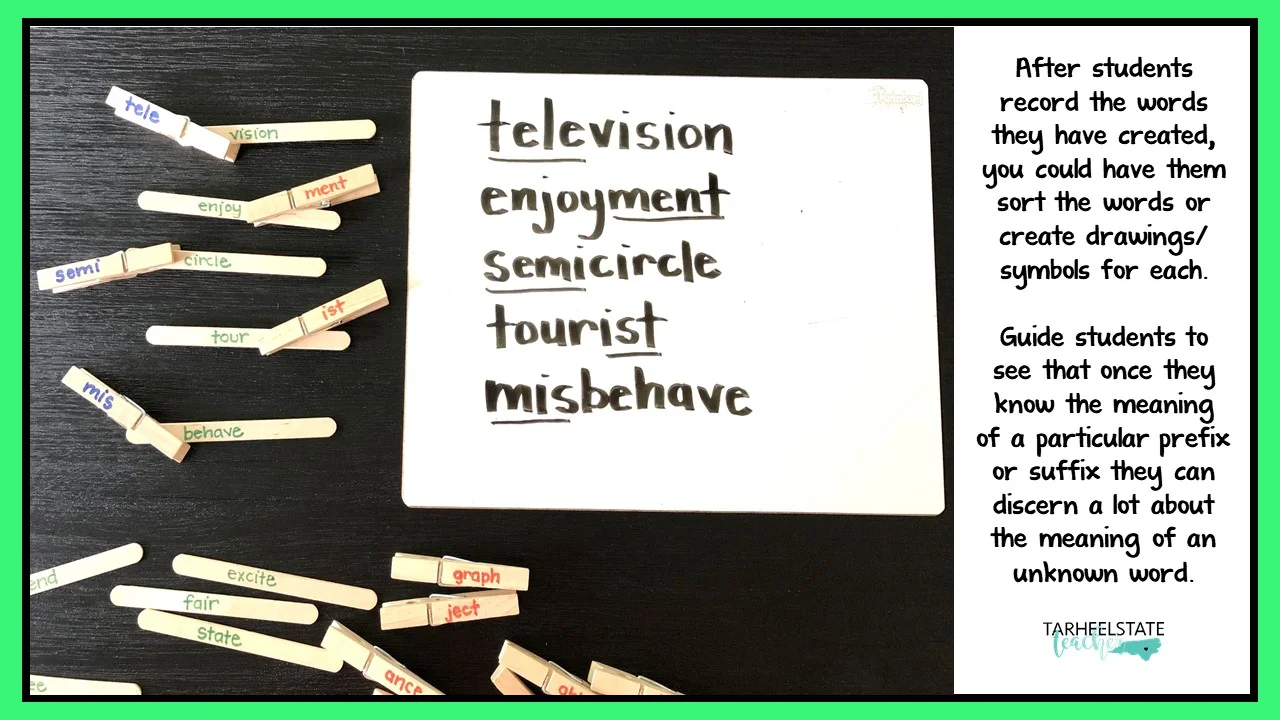
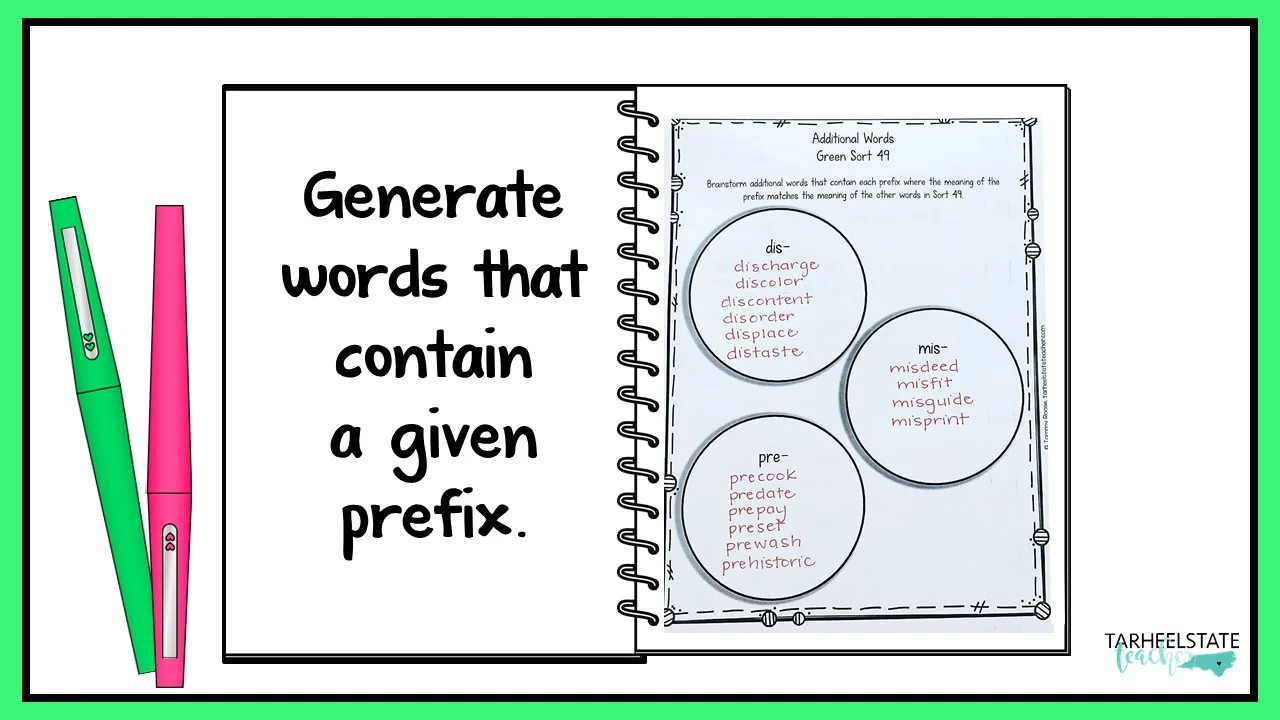
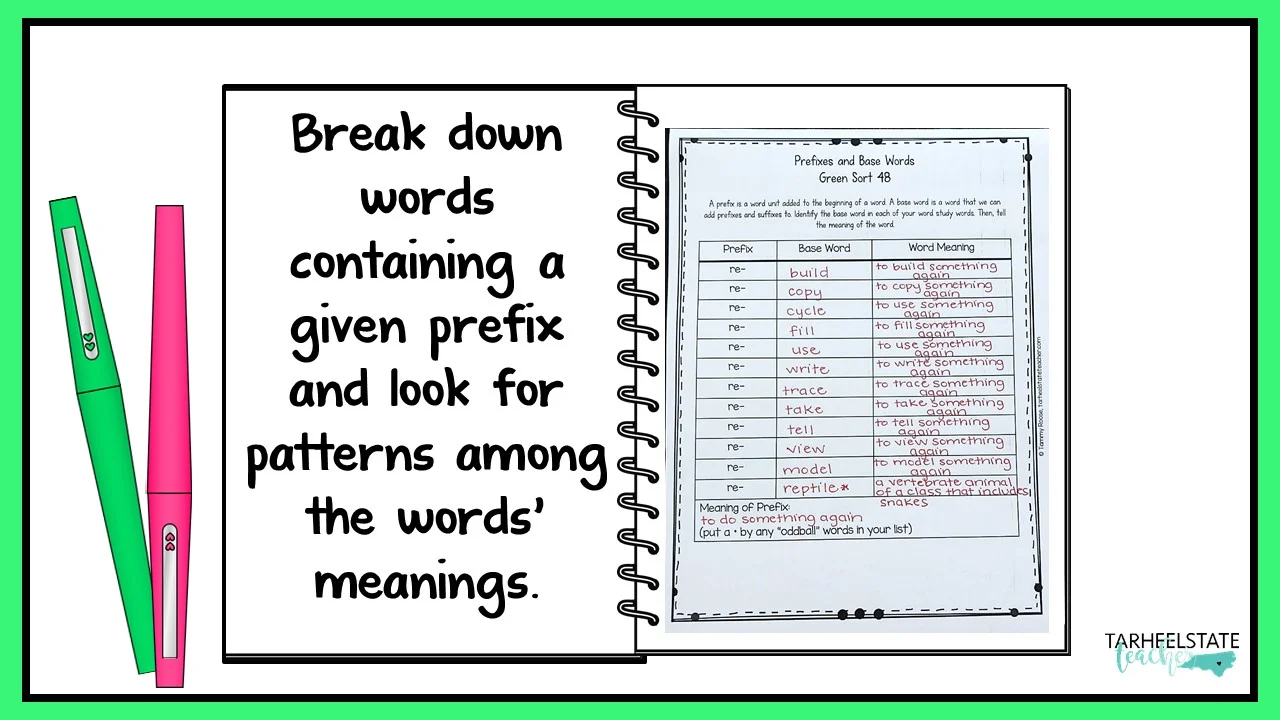
When generating words using common prefixes and suffixes, ask students to either write the meaning of the word or draw a picture to represent the meaning. Guide students to look for patterns among the words and pictures to help them further solidify the meanings of the prefixes and suffixes they are studying.
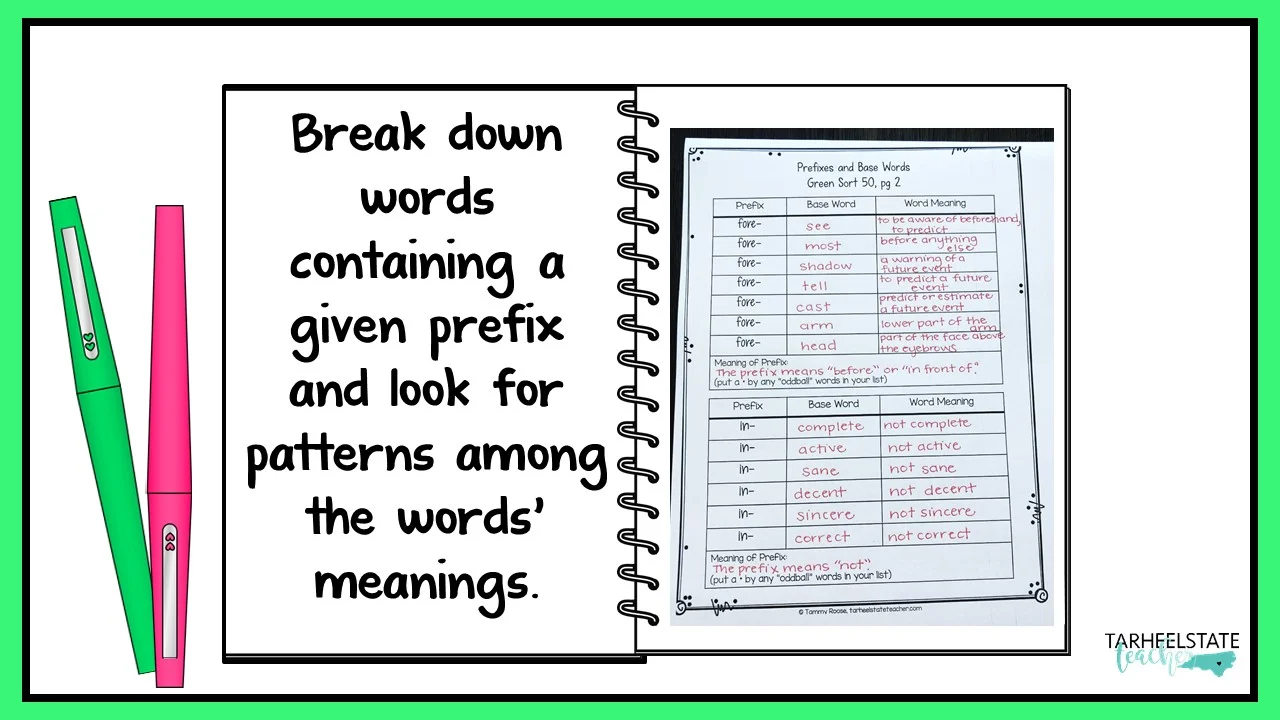
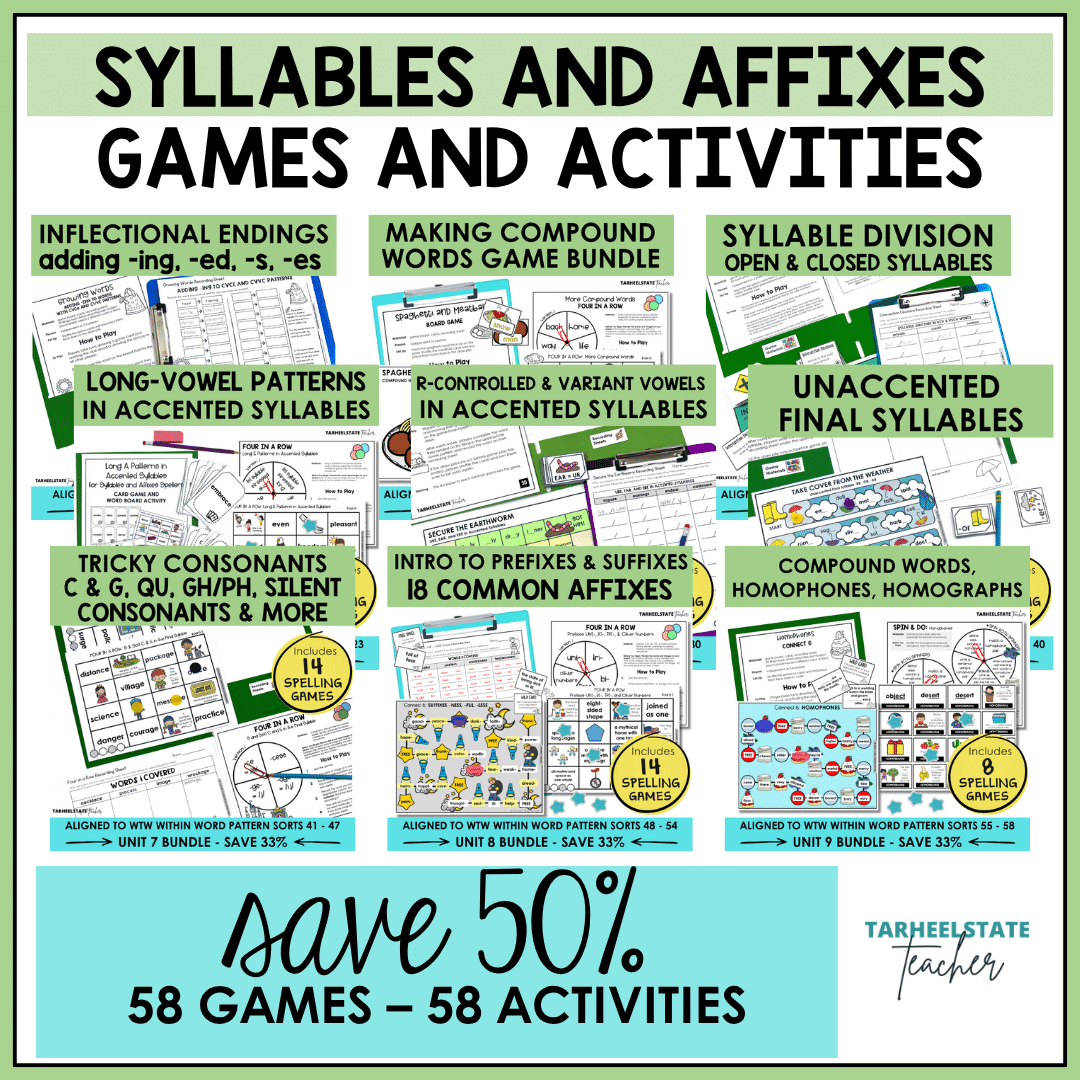
PLAY GAMES: Games are a great way to reinforce affix meanings once students have started analyzing them. My Prefixes and Suffixes Games Bundle for Syllables and Affixes focuses on common prefixes (re-, un-, dis-, mis-, pre-, non-, in-, fore-, uni-, bi-, tri-) and suffixes (-y, -ly, -er, -est, -ness, -ful, -less), with partner games and independent activities that build vocabulary and reinforce how affixes change the meaning and use of base words.
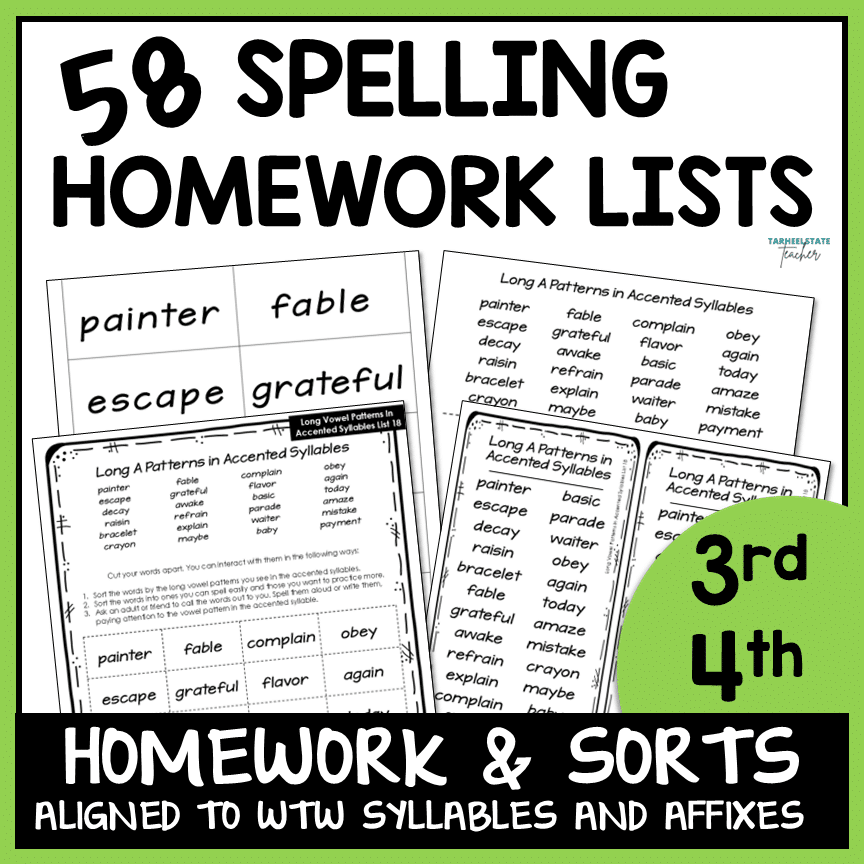
 While this list of activities is certainly not exhaustive, I hope you’ve got some fresh, new ideas to add to your word study toolbox for your Syllables and Affixes Spellers group! If you’re looking for small group activity ideas for other stages of Words Their Way, I’ve got you covered — check out my posts for the Letter Name-Alphabetic Stage, Within Word Pattern Stage, and the Derivational Relations Stage!