Classrooms today can feel like busy intersections—students juggling academic pressure, social dynamics, and constant stimulation from the world around them. With so much noise, it’s easy for kids to lose touch with their own thoughts and emotions. That’s why mindfulness matters.
Mindfulness is the practice of paying attention to the present moment without judgment. For students, it means slowing down enough to notice their feelings, their environment, and even the small joys that often go unnoticed. Research shows that mindfulness improves focus, reduces stress, and supports emotional regulation—all skills that help students thrive both inside and outside the classroom.
Even more, mindfulness creates the mental space for gratitude. When students learn to pause and observe with curiosity, they’re more likely to recognize the people, opportunities, and experiences they can be thankful for. Gratitude and mindfulness together build resilience, empathy, and a sense of everyday calm.
If you’re ready to go deeper into gratitude, you might enjoy my post on Teaching the Types of Gratitude to Inspire Everyday Gratitude in Students.
TEACHING MINDFULNESS IN THE CLASSROOM
Mindfulness is not something most students develop on their own—it needs to be modeled, explained, and practiced. That’s why I like to bring mindfulness activities for students into the classroom in ways that feel short, engaging, and accessible. For upper elementary learners, mindfulness doesn’t need to look like long meditations. Instead, it can be woven into everyday routines and lessons so students see it as a tool they can use anytime.
👉 You can do each of these suggested mindfulness activities for students with a reflection journal and materials you have around the classroom, but if you want some of the work done for you, you can check out my full Gratitude & Mindfulness SEL unit, complete with lesson plans that make it super easy to implement and enjoy!
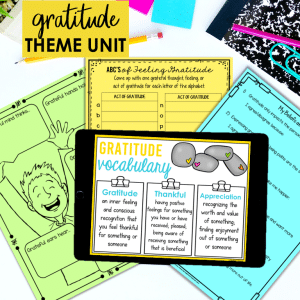
ACTIVITY 1: WHAT IS MINDFULNESS?
Before my students can practice mindfulness, I start by giving them a clear definition: Mindfulness is having a strong awareness of your thoughts, feelings, and surroundings in the present moment—without judgment.
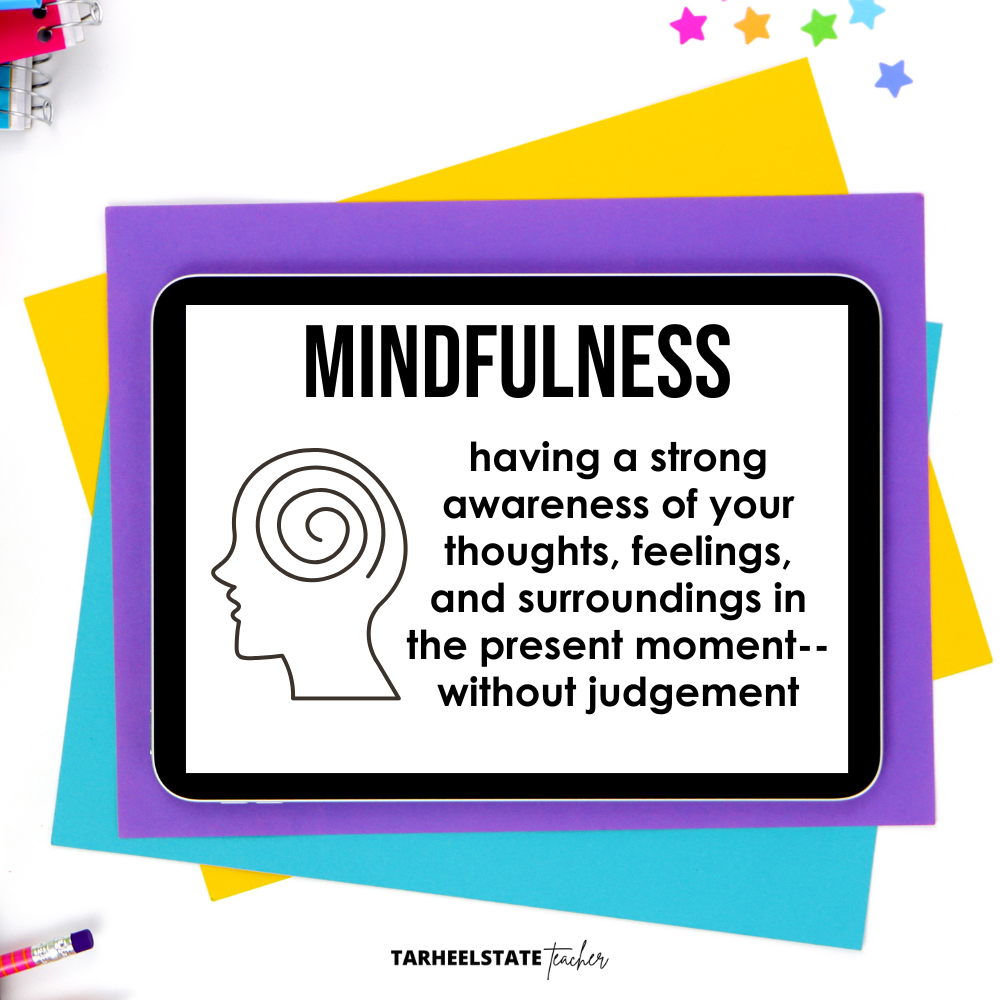
After introducing the definition, I invite students to share what comes to mind when they hear the word mindfulness. Many describe calm colors, quiet places, or objects that help them feel peaceful.
To deepen the discussion, I read aloud A Handful of Quiet by Thich Nhat Hanh. The story gives students a concrete way to think about mindfulness, and afterward we discuss questions such as:
-
What does it mean to be mindful?
-
Why might mindfulness be important in your own life?
-
How can mindfulness help us notice gratitude in small moments?
This activity helps students see mindfulness not as something abstract, but as a skill they can practice daily—and as a doorway to gratitude.
🩵 Click here to see all of my go-to gratitude and mindfulness read alouds for upper elementary!
ACTIVITY 2: MINDFUL GRATITUDE WALK
One of my favorite ways to combine gratitude and mindfulness in the classroom is by taking students on a silent gratitude walk. We step outside—around the school building, playground, or even just a quiet hallway—and I encourage them to pay close attention to what they see, hear, smell, and feel.
When we return, I ask students to share what they noticed that they might usually overlook: the sound of leaves crunching, a cool breeze, or the way the sunlight shines on the sidewalk. These small details become powerful reminders that gratitude isn’t reserved for big moments—it can be found in everyday experiences.
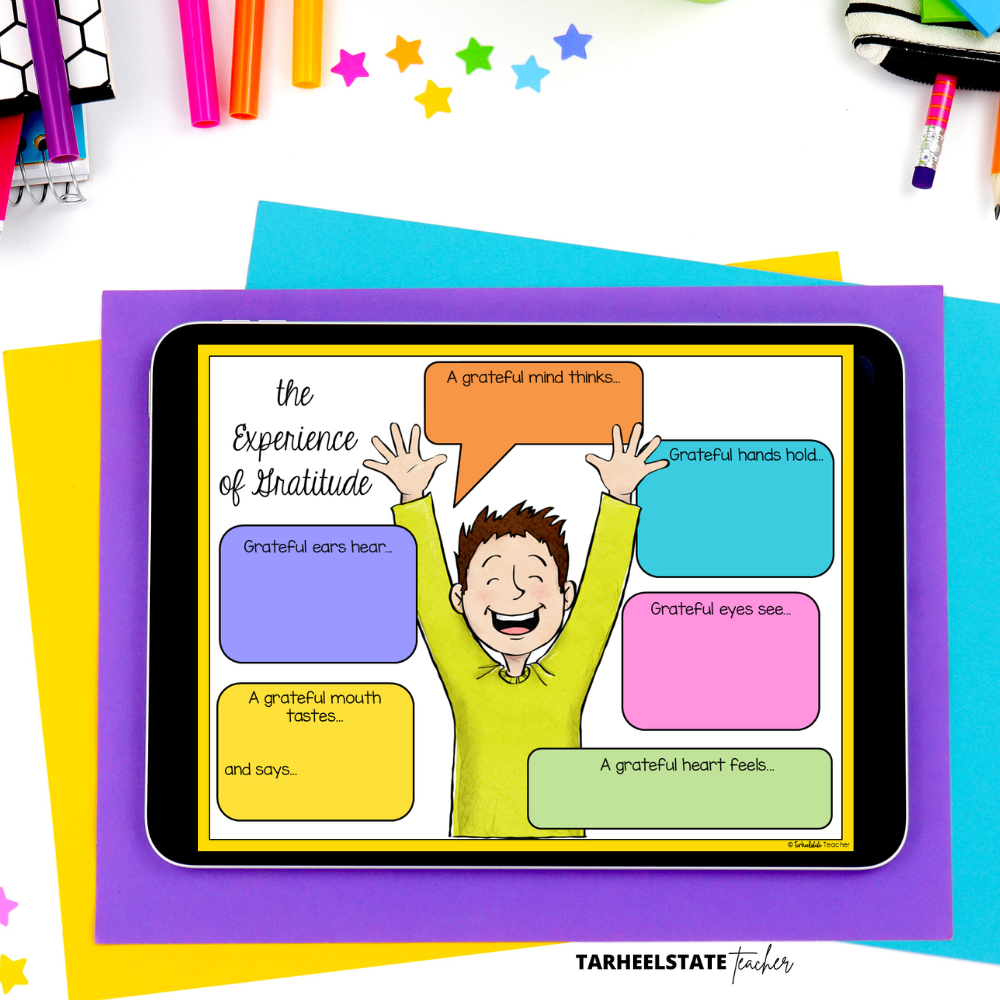
By pairing mindfulness with gratitude in this way, students begin to understand how slowing down helps them recognize and appreciate the good that’s always around them.
ACTIVITY 3: MINDFULNESS BLOCKERS
Another mindfulness activity I use with my students is exploring what I call mindfulness blockers—the thoughts or distractions that make it harder to notice the good around us.
I start by asking a few simple questions: Have you ever felt like your brain was too full to focus? What kinds of things take up space in your mind during the day?
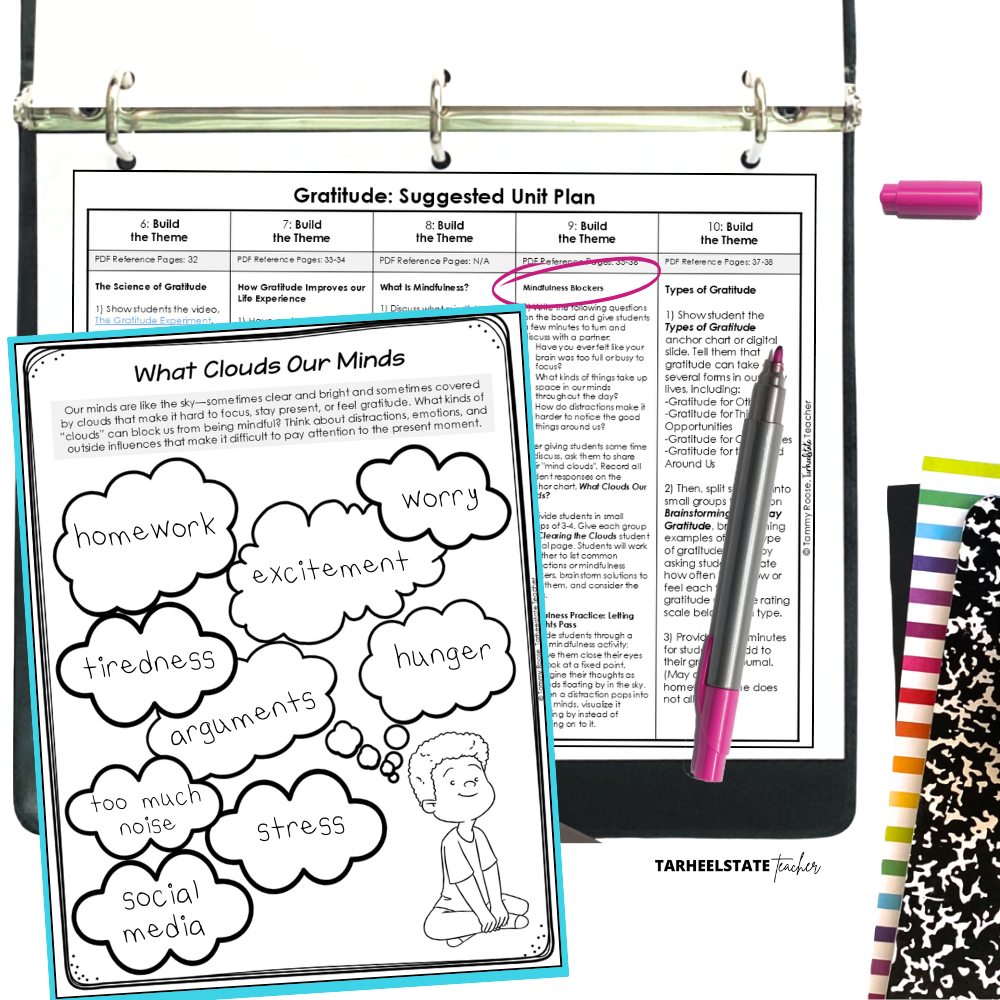
As students share, I record their ideas on an anchor chart titled “What Clouds Our Minds?”. It always fills up quickly with things like homework, worrying about sports, or even just thinking about what’s for lunch.
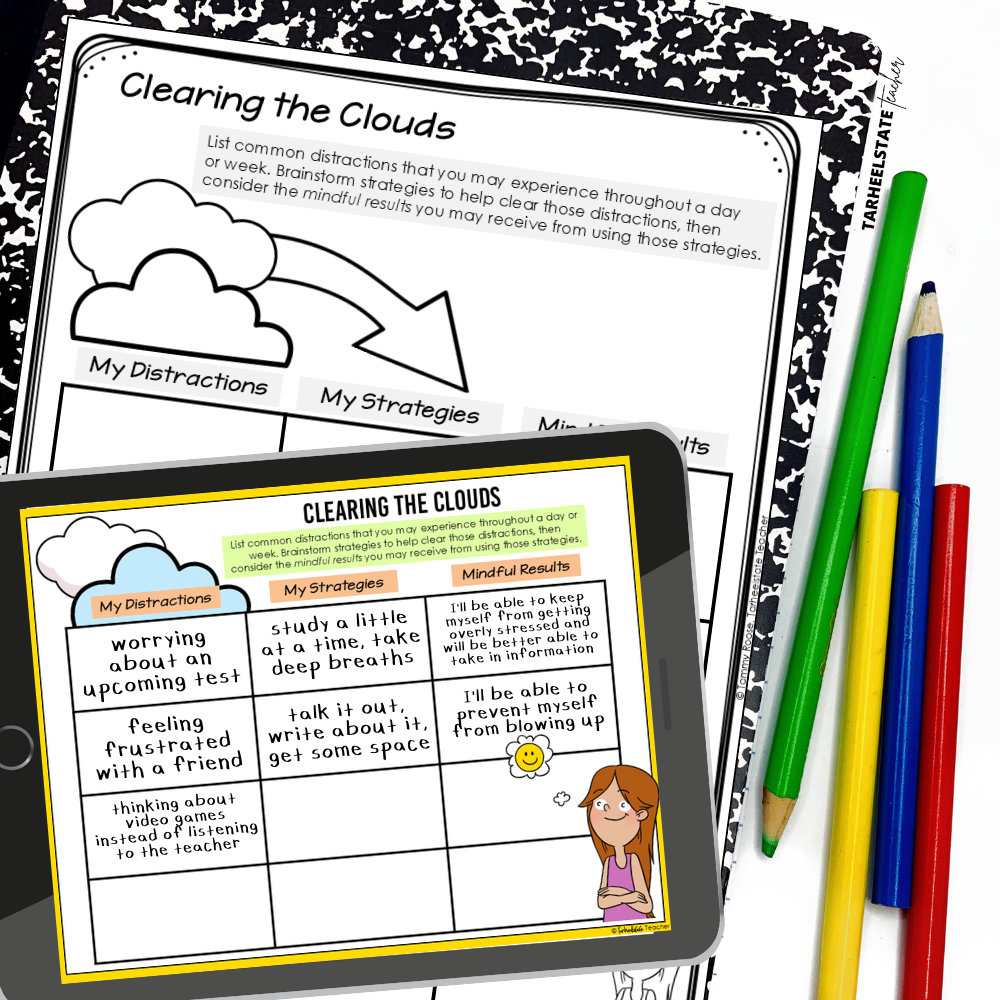
Then, in small groups, students use a reflection page called Clearing the Clouds. They brainstorm their own “mind clouds,” come up with ways to clear them, and think about how that would change the way they feel. It’s amazing to see how even young students recognize that pausing, breathing, and letting go of cluttered thoughts creates space for gratitude and calm.
ACTIVITY 4: LETTING THOUGHTS PASS
One of my favorite mindfulness practices to do with students is guiding them through a short visualization I call Letting Thoughts Pass. I ask them to get comfortable, close their eyes (if they want to), or focus on one spot in the room. Then I explain that their thoughts are like clouds moving across the sky.
When a distraction or worry pops into their mind, instead of holding onto it, I encourage them to imagine it drifting by, just like a cloud carried by the wind. We practice noticing the thought, then gently letting it go.
This simple exercise helps students realize they don’t have to believe or get stuck in every thought they have. With practice, they start to feel calmer and more in control of their focus—and they often share how it makes them feel lighter, like their minds have more room for gratitude and positivity.
WHERE GRATITUDE AND MINDFULNESS MEET
The more I’ve woven mindfulness and gratitude into my classroom, the more I’ve seen students slow down, notice the good around them, and handle challenges with more ease. Whether it’s taking a gratitude walk, practicing letting thoughts pass, or clearing away their “mind clouds,” these small moments add up.
For me, the biggest shift has been watching students realize that mindfulness isn’t just something we “do” during a lesson—it’s a way of moving through the day. Gratitude becomes easier to spot, kindness comes more naturally, and the classroom feels calmer and more connected.
If you’re looking for more ways to keep the mindful momentum going, here are some other resources you may be interested in:
- The Four Types of Gratitude provides a broad lens for helping students see ways that we can experience and show different types of gratitude.
- 16 Engaging Gratitude Activities—these ideas pair perfectly with mindfulness!
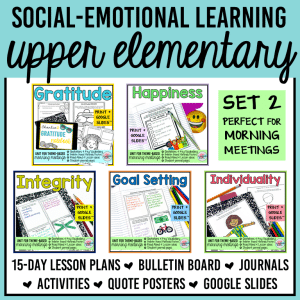
- Complete Gratitude SEL Unit for upper elementary—this unit includes all of the activities you see in this post, editable lesson plans, suggested read alouds, student notebooks, and a bulletin board to help your unit make a lasting impression!
NEED A DONE-FOR-YOU GRATITUDE AND MINDFULNESS UNIT?
The Gratitude SEL-Morning Meeting unit is a 20 day unit for upper elementary. It includes
✨ 20 Days of Printable & Editable Lesson Plans — includes suggested read alouds, discussion questions, gratitude and mindfulness activities, extension ideas, and linked online resources
✨ Student Journals & Activities — gratitude-related discussion prompts, self-reflection and goal setting exercises, and social emotional learning worksheets to deepen students’ understanding of gratitude and mindfulness, with activities like Flipping to an Attitude of Gratitude, Gratitude Scenarios Sort, The Experience of Gratitude, Clearing the Clouds Mindfulness Activity, and more!
✨ Gratitude Bulletin Board that includes important vocabulary like gratitude, thankful, appreciation, mindfulness, and perspective and inspirational quotations for a visual reminder of your gratitude and mindfulness lessons
✨ Google Slides — Teacher and student versions to implement this unit digitally or use as visual prompts and discussion starters on your interactive whiteboard