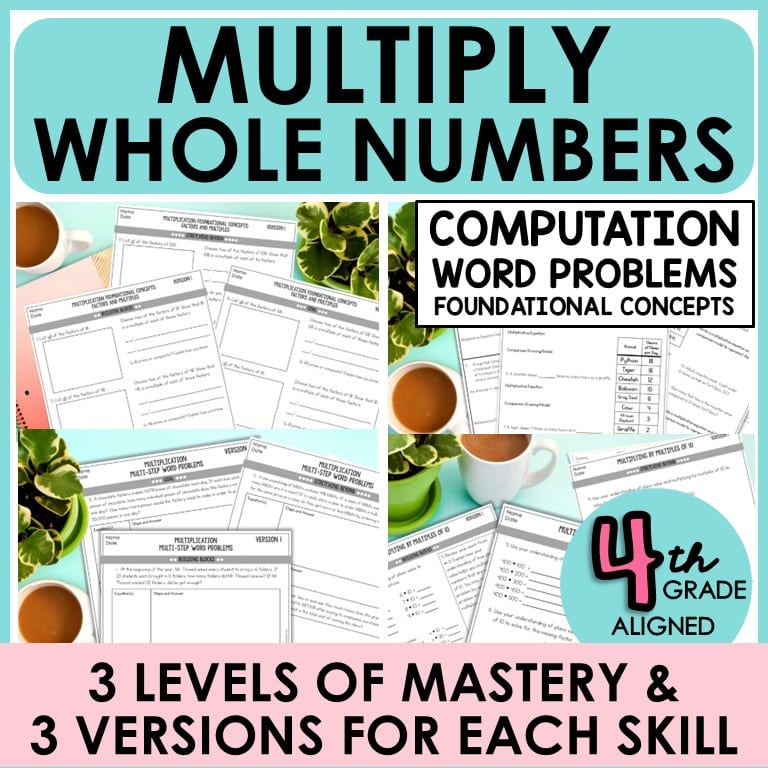
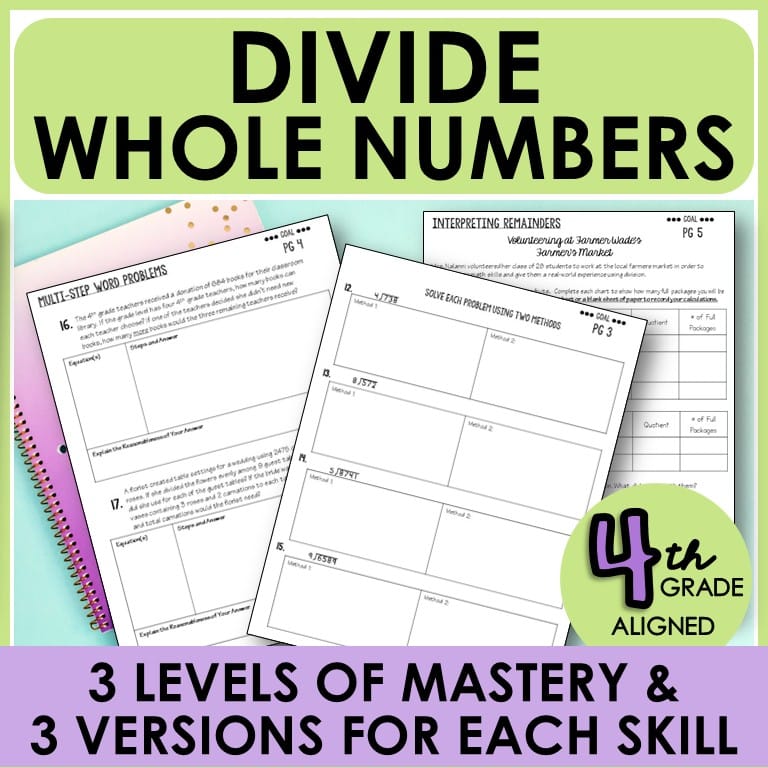
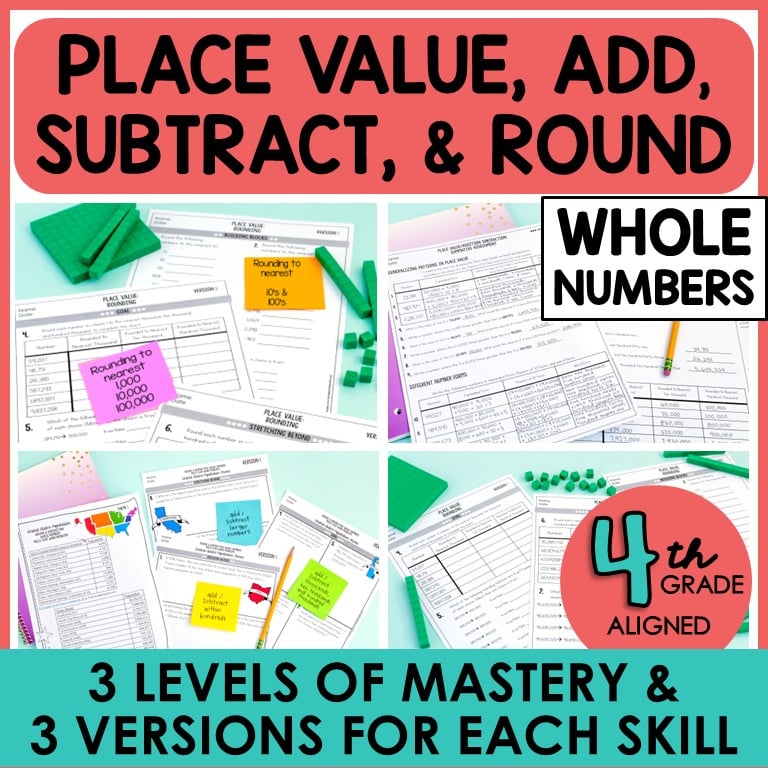
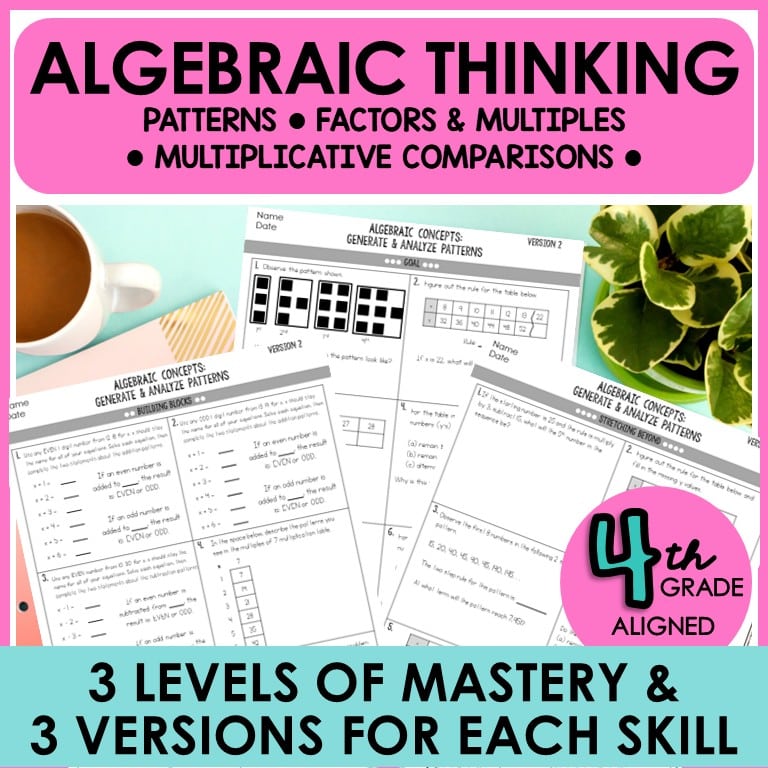
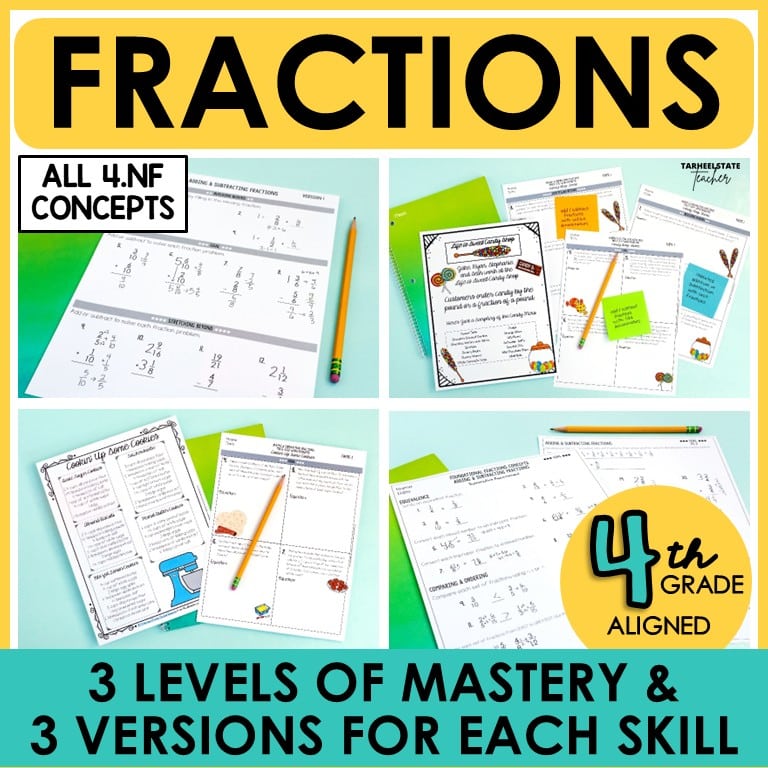
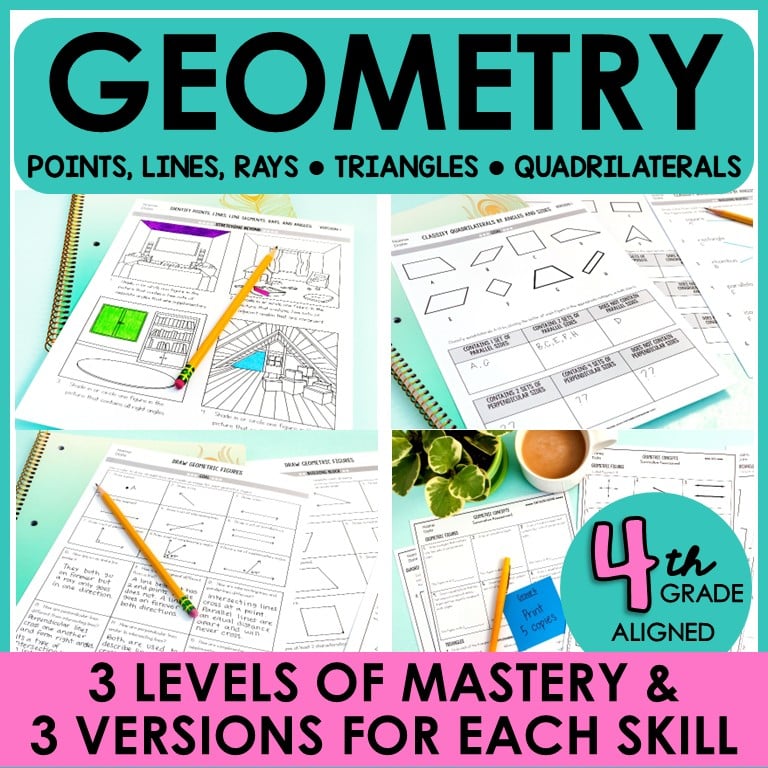
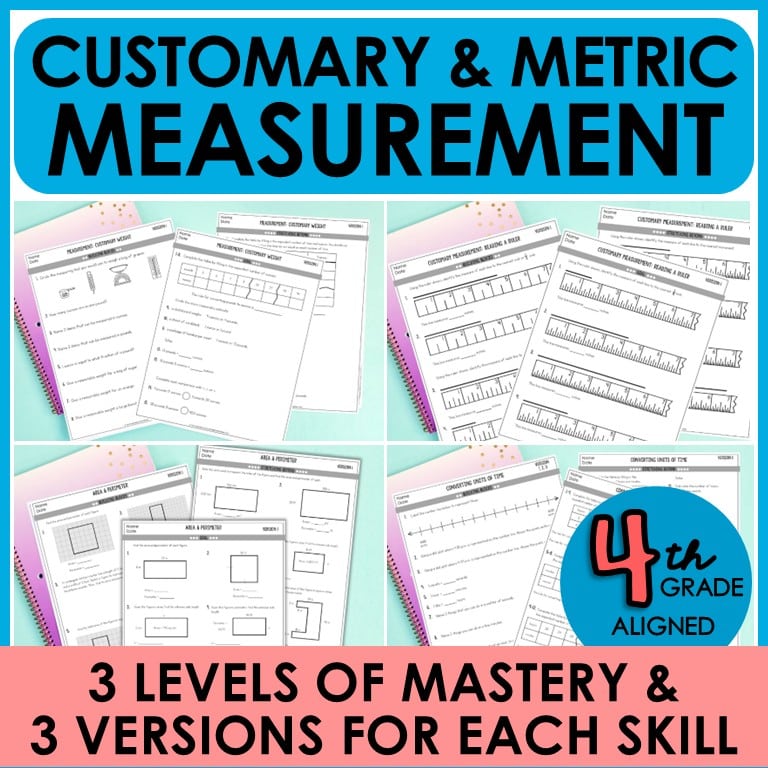
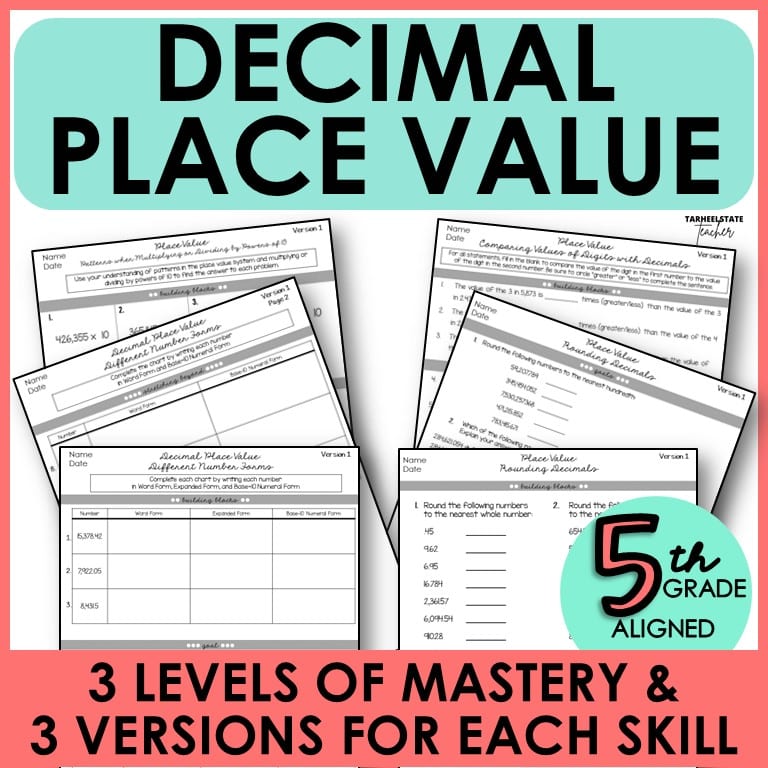
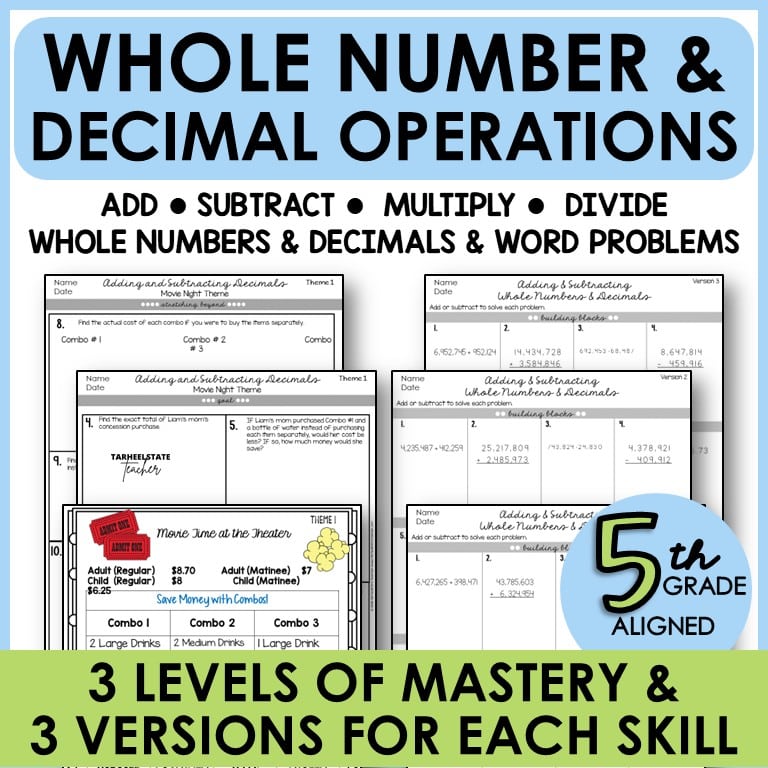
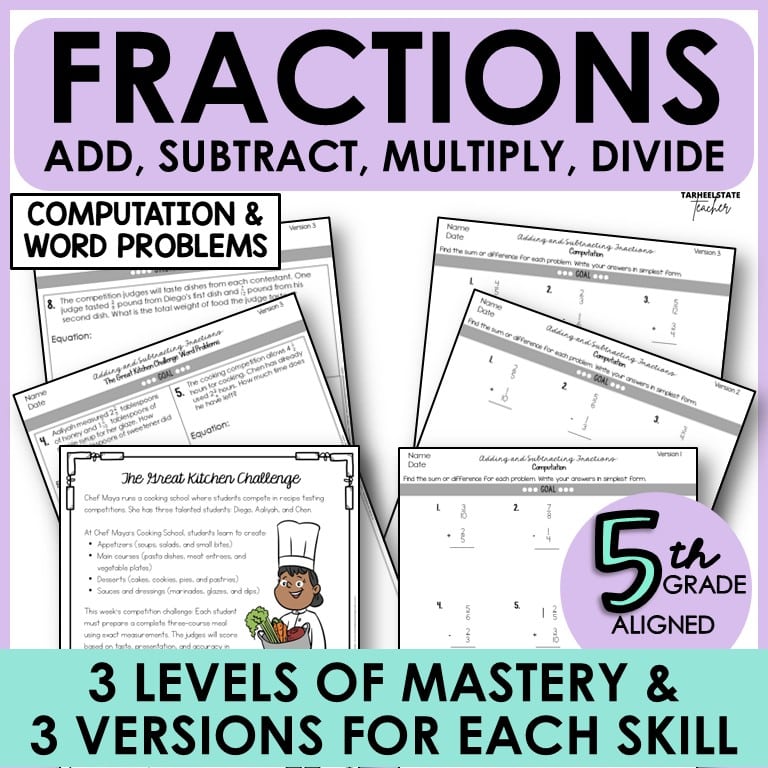
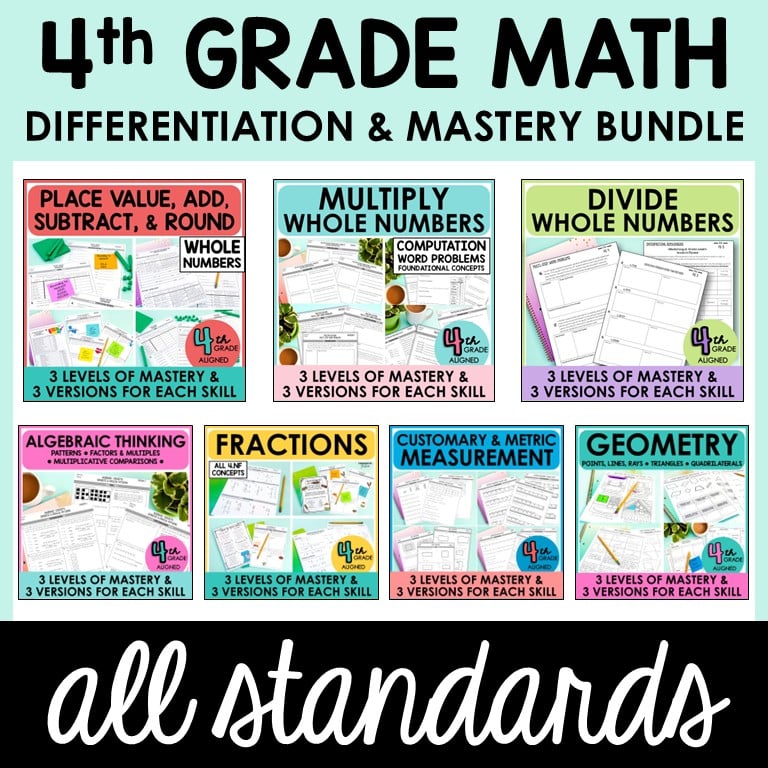
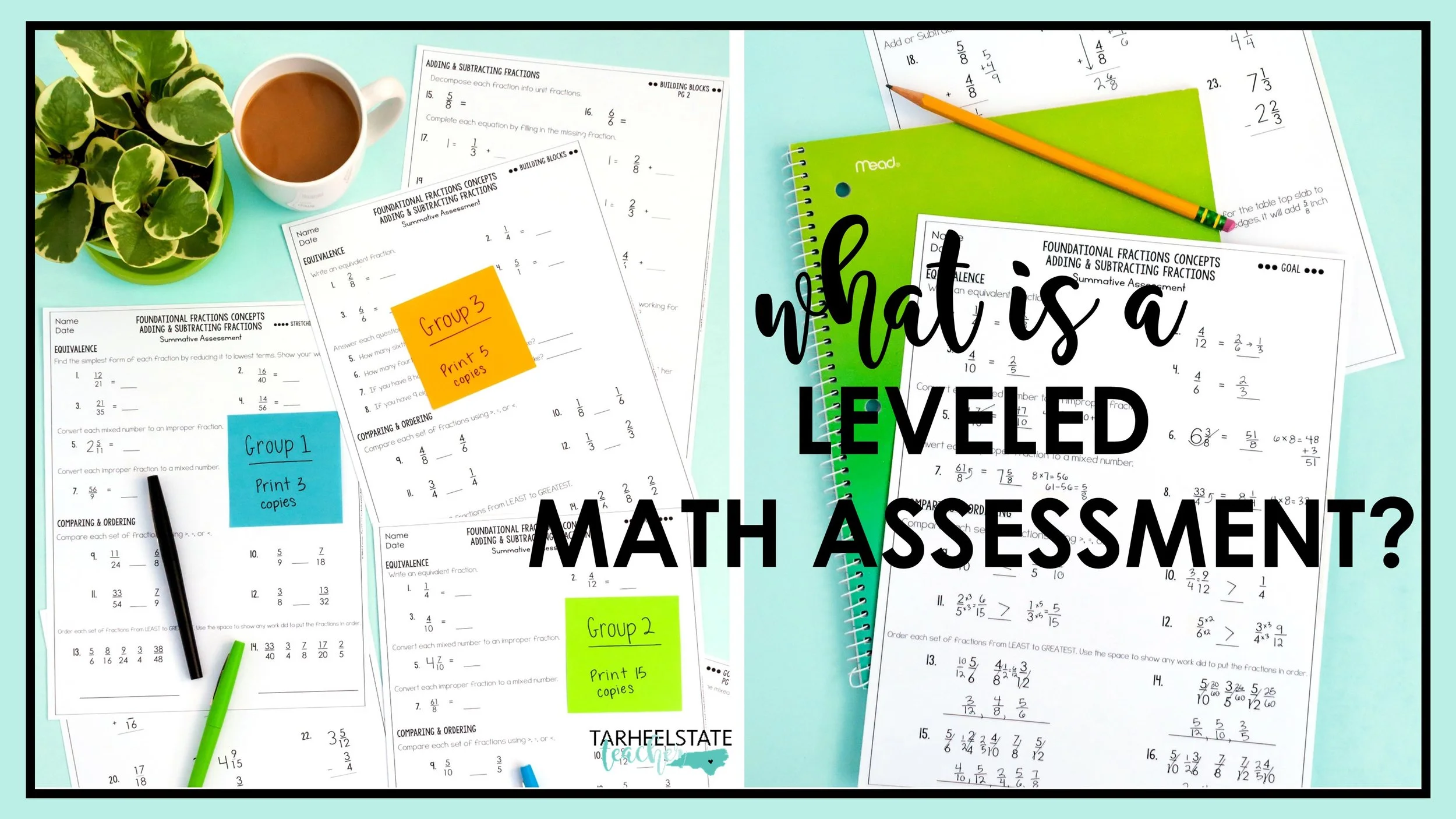
What is a leveled math assessment, you ask? Today I’m going to tell you all about what my leveled math assessments are, the thinking behind them, and how I use them for differentiation and to help students show growth throughout a unit. These same assessments double as leveled practice, so you’ll see me use them for far more than just testing.
WHY I CREATED LEVELED MATH ASSESSMENTS
The idea for differentiated math assessments came from a real need: a better way to communicate how a child is truly doing against grade-level standards in math.
I’ve always had classes with high concentrations of gifted students, along with average and high-average students who can absolutely hang with going beyond grade-level expectations. The resources I use are never busy work and never “easy.” I aim for challenge and rigor because it keeps the math classroom alive and students motivated.
But I knew there had to be a better way to communicate grade-level expectations and student growth to parents and other stakeholders. I also realized I wasn’t always making students aware when a challenging problem was above grade-level expectations, and for students who lack confidence in math, that ambiguity may have caused them undue stress.
Here’s the gap I saw: I could look at a math problem and instantly know whether it was below grade level, on grade level, or above grade level, but I wasn’t making those levels clear to my students.
- My average students deserved to see that even if they couldn’t solve the hardest problems on a test, they were solidly meeting grade-level expectations.
- My highly gifted students deserved questions that let them show they were capable of more than the typical standard.
- My few truly struggling students deserved to start a test at an entry point where they could feel some success.
That’s where the idea to visibly level my instruction and assessments came from.
THE THREE LEVELS OF MASTERY
I landed on three categories for levels of mastery: building blocks, goals, and stretching beyond. I use 2 dots, 3 dots, and 4 dots to represent them. I love the language of “stretching beyond” because it clearly communicates what students working above grade level are actually doing with the standards.
My school uses a leveled report card, and the dots (oo, ooo, oooo) map cleanly onto a leveled grading system where a 3 is “meeting expectations” and a 4 is “exceeding expectations.”
HOW THE LEVELS ARE DEFINED
Building Blocks (oo): Pre-requisite skills and understandings students need in order to meet grade-level expectations. Building blocks may pull from 2nd and 3rd grade standards and are built from a lower form of the 4th grade standard.
Goals (ooo): The “on grade level” expectations based directly on the 4th grade standards. Some Goal questions come from 3rd grade standards taken to the next level, because they represent an understanding 4th graders need to be proficient with the focus concept.
Stretching Beyond (oooo): The “above grade level” expectations. This level gives you ideas to push students who easily meet grade-level goals. You may still expect your 4th graders to reach some of these, but they sit above what the Common Core standards require. (For example, I taught my 4th graders the standard algorithm for multiplication and expected mastery, but Common Core doesn’t require it until 5th grade.)
To build these, I analyzed the Common Core standards for 3rd, 4th, and 5th grade and traced concepts from one grade to the next, thinking about what students needed to know to meet the 4th grade standards. Both the 4th and 5th grade assessment sets are available, and because the assessments include the stretch-level questions, you can even use the 4th grade sets to pre-assess 5th grade students.
Building Blocks grew from previous grade-level standards that directly relate to the 4th grade skill being assessed. When no related standard existed in the earlier grades, I differentiated by reducing the size of the numbers, cutting the number of steps, or thinking about what scaffolded instruction a student would need to reach the grade-level goal. Stretching Beyond questions are based on 5th grade expectations where applicable, or designed to show a student can complete grade-level tasks at a much higher level than expected.
WHAT’S INCLUDED IN A LEVELED MATH ASSESSMENT
Now that we’ve answered what a leveled math assessment is, here’s what each set actually contains and lets your students do. Because each set includes multiple comparable versions, many teachers use them as leveled worksheets and practice pages, not only as tests.
Each assessment set:
- Contains three sections of questions: below grade-level, on grade-level, and beyond grade-level expectations
- Includes three comparable versions of each assessment, giving you plenty of material for pre-assessing, mid-unit checks, post-assessing, and reviewing (I’ve even used some versions for homework practice or unit review)
- Includes one summative assessment version for each level of understanding
- Lets you encourage students below grade level while challenging students beyond it, all within one assessment
- Is aligned to the Common Core Standards for 4th grade (and to previous or 5th grade standards where applicable)
- Uses a growth-mindset approach with the “building blocks,” “goal,” and “stretching beyond” language
- Includes multi-step word problems that work for assessment or as extra leveled practice
- Integrates writing algebraic equations across many concepts
A CLOSER LOOK: THE MULTIPLICATION ASSESSMENT
In the Multiplication Leveled Practice set, each level of understanding contains two problems. The problems get progressively harder, so you can see exactly where a student “taps out” in their understanding. Students solve each problem two ways, and at the stretching-beyond level they’re required to use the standard algorithm, since that’s a 5th grade standard.
Here’s how the problems increase in difficulty:
- Building Blocks: 2 digit by 1 digit, and 3 digit by 1 digit
- Goal: 4 digit by 1 digit, and 2 digit by 2 digit
- Stretching Beyond: 3 digit by 2 digit, and 3 digit by 3 digit
Since students aren’t introduced to multiplication this way in 3rd grade, I give this assessment once I’ve taught multiplication and start to see different levels of ability surfacing in whole-group lessons. After giving it, I can quickly group students to target exactly where they are: remediate, support, and enrich.