Helping students build perseverance can have a lasting impact on their confidence, motivation, and overall academic growth. When children learn to push through challenges—whether by tackling difficult math problems, sticking with a writing assignment, or practicing a new skill—they begin to see that effort leads to progress. Teaching perseverance goes beyond simply praising hard work; it instills a growth mindset and shows students the value of resilience and grit. These strategies and perseverance activities are designed to help students embrace setbacks as part of the learning process and understand the power of adding the word yet to their thinking.
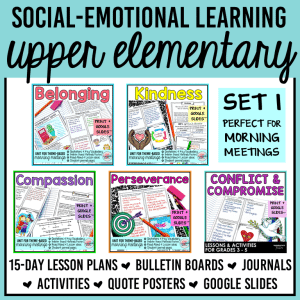
 You can do each of these suggested perseverance activities for students with a reflection journal and materials you have around the classroom, but if you want some of the work done for you, you can check out my Perseverance theme SEL unit, complete with lesson plans that make it super easy to implement and enjoy!
1) EXPLICITLY TEACH WHAT PERSEVERANCE MEANS
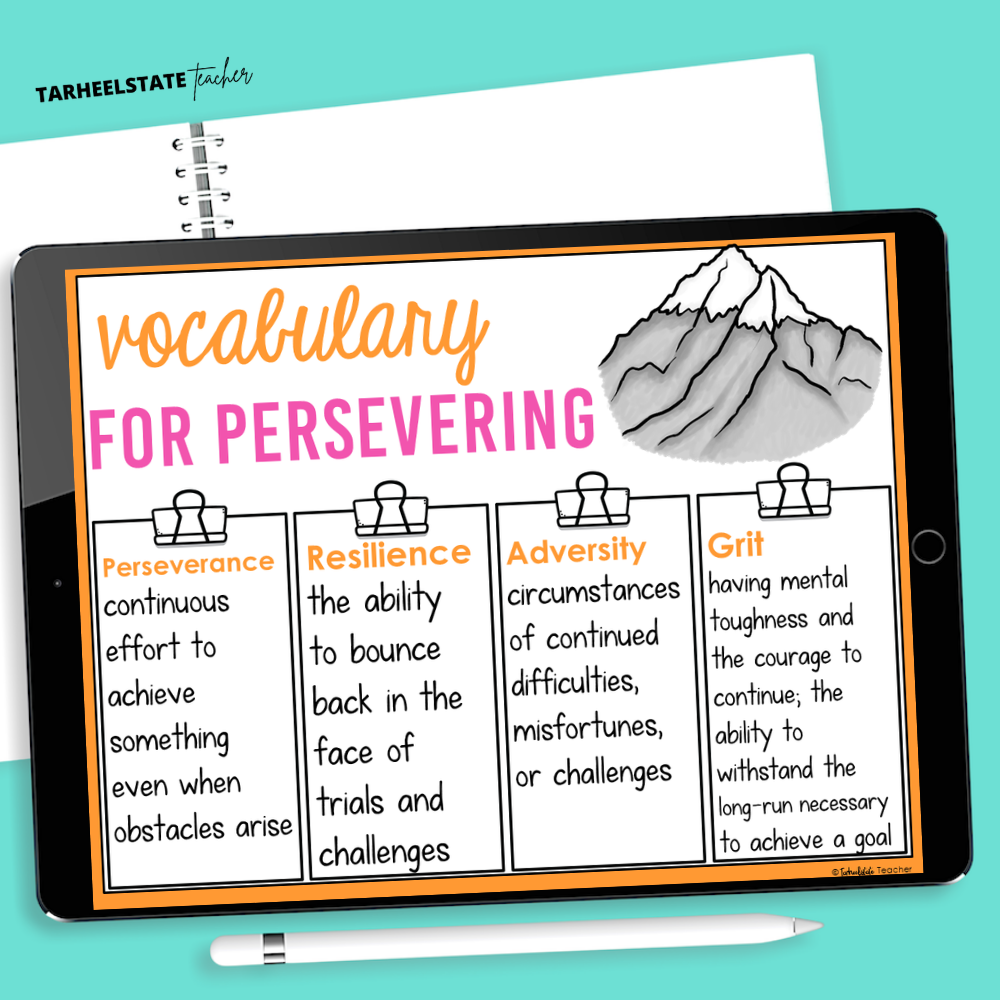
When teaching my perseverance unit, I am sure to give students the vocabulary necessary to learn about the topic and experience it in deep and meaningful ways. I provide them with the definitions for perseverance, resilience, adversity, and grit. I define perseverance as “continuous effort to achieve something even when obstacles arise.”
2) PROVIDE SELF-REFLECTION OPPORTUNITIES
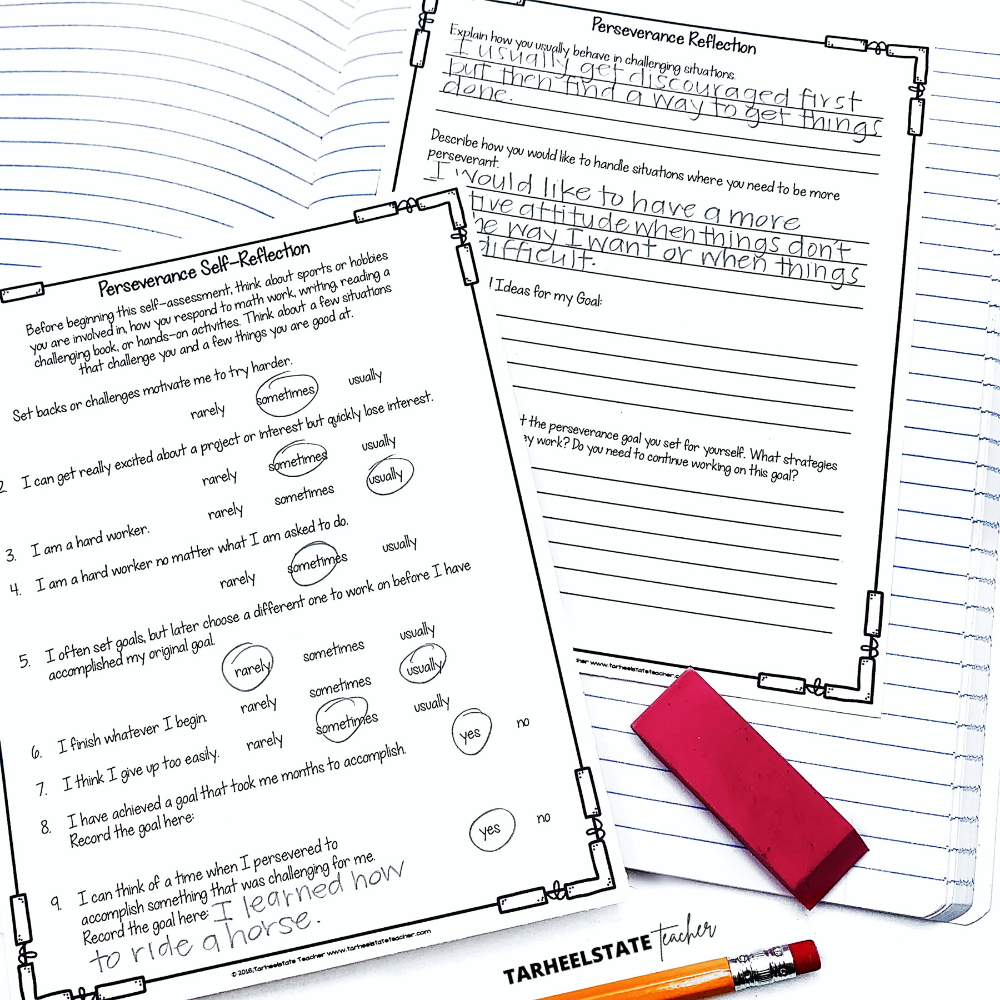
In my SEL Perseverance Morning Meeting Unit, I like to use self-assessments and questionnaires that encourage students to reflect on their relationship with perseverance and how they typically respond to challenges. We also take time to set both personal and whole-class goals related to building perseverance—whether it’s by staying focused during difficult tasks, using positive self-talk, or learning from mistakes instead of giving up.
3) SURROUND STUDENTS WITH PERSEVERANCE EXAMPLES
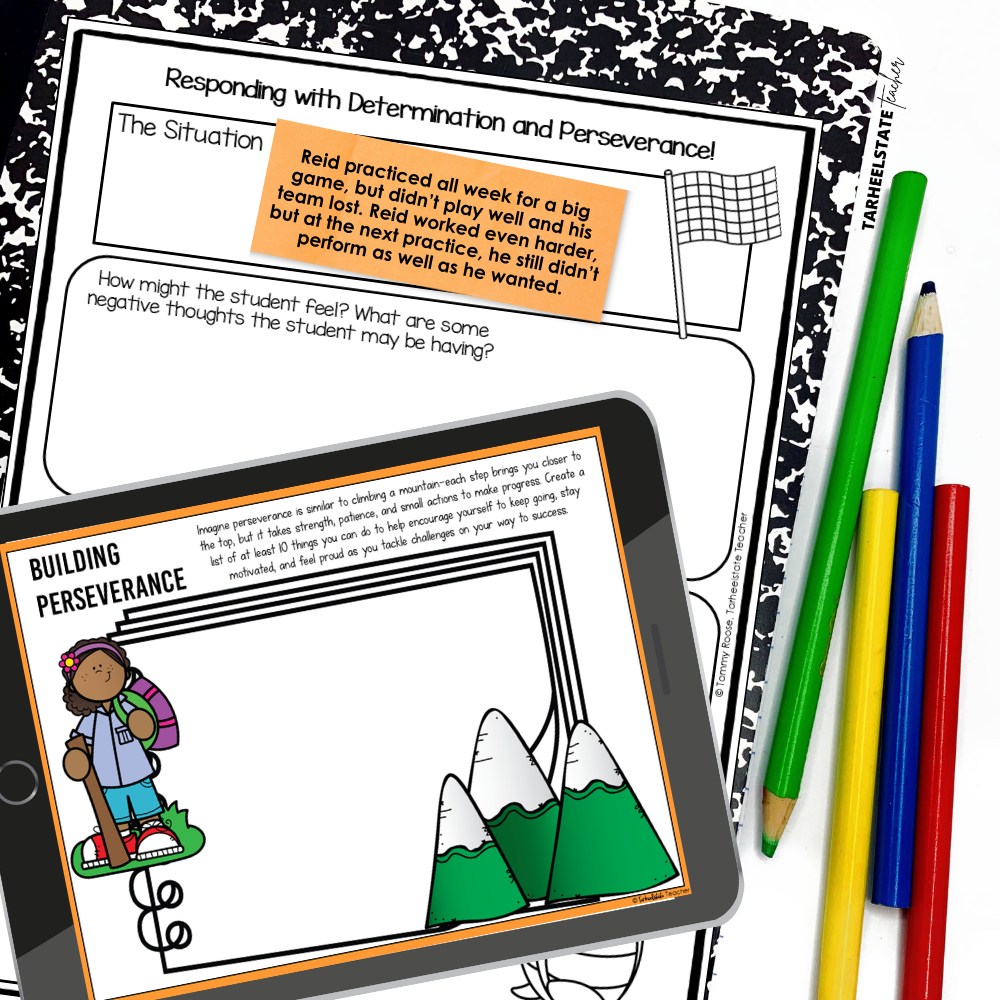
When students regularly see perseverance in action—through stories, classroom discussions, and shared experiences—they begin to understand what it looks like to keep going, even when things get hard. One perseverance activity I love to use with students is practicing how to respond to challenging situations with determination.

I like to model this process with the class first. We choose a few perseverance scenarios to walk through and discuss key reflection questions together.
For example:
“Amara studied hard for a math test but got a low grade. After extra practice, she still didn’t fully understand the concepts, and another test is coming up.”
- How might the student feel?
- What negative thoughts might they be having?
- What are some positive affirmations they could use to stay motivated?
As I model how someone might respond to the challenge, we brainstorm helpful strategies for persevering through it. Then, I invite students to share their own thoughts and ideas. These real-time perseverance examples help make the concept of perseverance more relatable and actionable.
After our group discussion, I encourage students to work in small groups or individually to practice responding to different scenarios. This allows them to reflect on and rehearse the kinds of thinking and actions that build true grit.
4) TEACH THE POWER OF YET WITH POSITIVE AFFIRMATIONS
Sometimes students get discouraged when they can’t do something yet. Helping them understand that learning is a process—and that mistakes and struggles are part of that process—can make a big difference in how they respond to challenges. Begin by introducing the concept of the “power of yet” and how it connects to perseverance. When students shift their thinking from “I can’t do this” to “I can’t do this yet,” they open the door to growth and possibility.
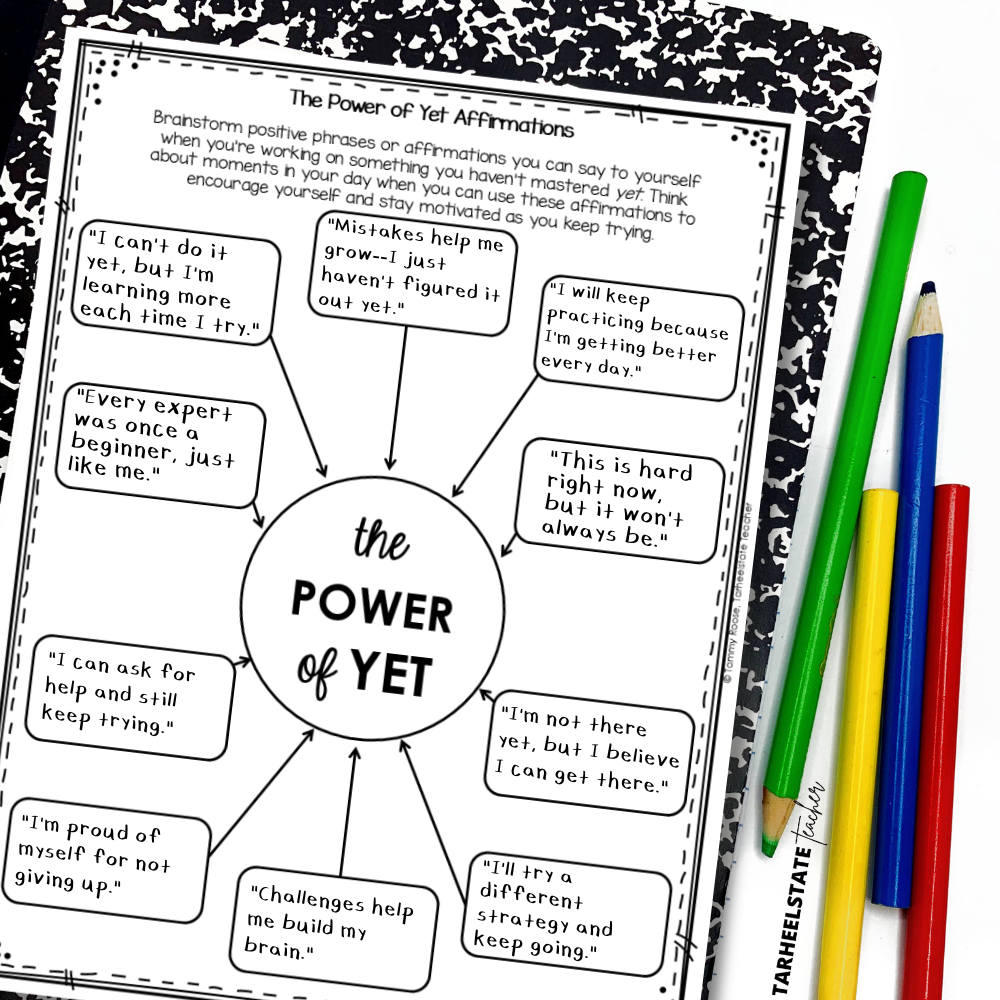
Then, introduce affirmations as short, encouraging statements we can say to ourselves to stay motivated and focused. Work together to brainstorm a list of positive affirmations students can use when they feel stuck or frustrated. Phrases like “I can try again,” “I’m learning,” or “I haven’t figured it out yet, but I will” help students reframe challenges and build confidence over time.
5) ENCOURAGE STUDENTS TO BUILD THEIR OWN PERSEVERANCE TOOLKIT
After introducing positive affirmations and the power of yet, take it a step further by helping students recognize how their actions can also support a strong, perseverant mindset. Explain that while self-talk is powerful, it’s equally important to take action to stay motivated.
Have students generate a list of things they can do—on their own or for themselves—that help them keep going when things get tough. These might include strategies like taking a deep breath, going for a walk, asking for help, listening to music, or remembering a past success.
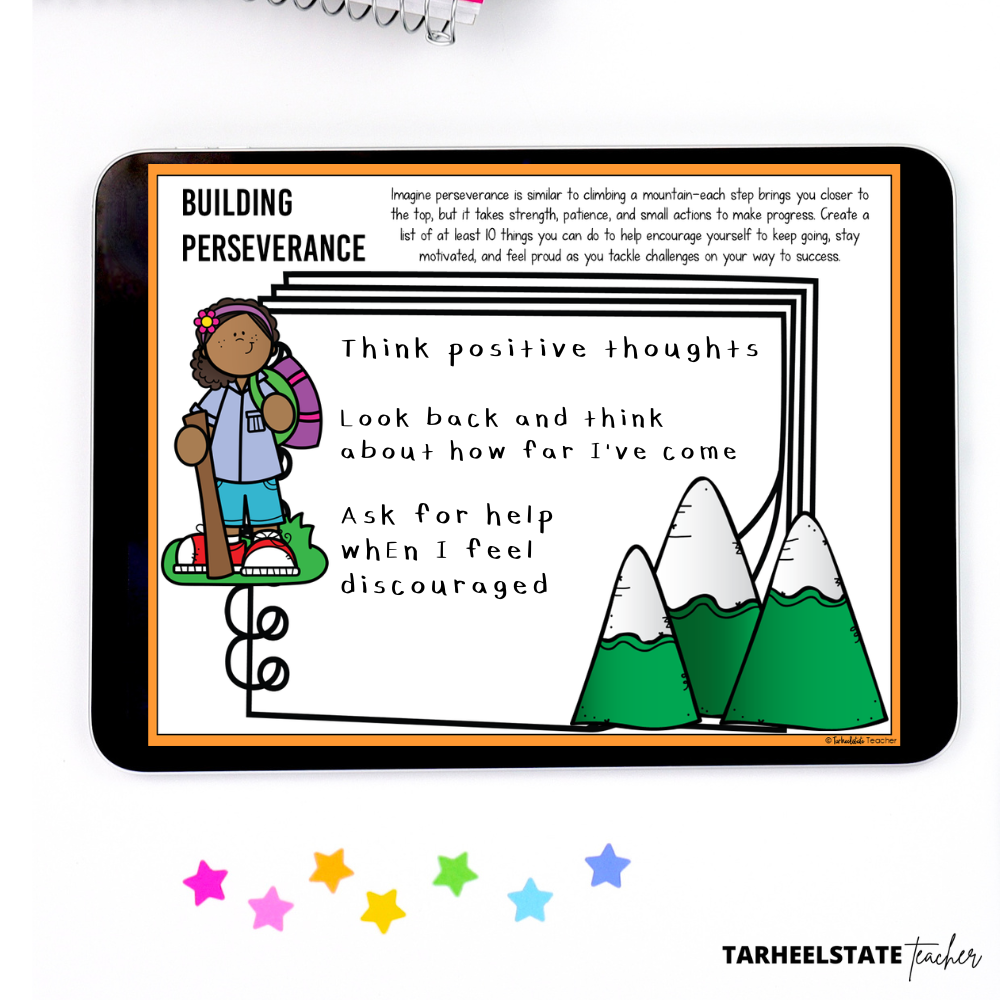
Hold a class discussion about when we most need affirmations and positive actions. Whether it’s before a big test, during a group project, or after making a mistake, students begin to see how they can rely on their own tools to stay strong and push through challenges.
6) ANALYZE PERSEVERANCE QUOTES
Have students reflect on quotes about perseverance to uncover big ideas about determination and grit. I give students opportunities to engage with meaningful perseverance quotes at different points throughout the unit to deepen their understanding. These reflections help students consider what it really means to keep going when things get hard and how a persevering mindset can help them work through obstacles and reach their goals.

 Quotation reflections are woven throughout my perseverance teaching unit. You can find it here!
7) READ ALOUD STORIES ABOUT PERSEVERANCE
Incorporate children’s literature and picture books that highlight perseverance, resilience, and the journey of overcoming obstacles. Look for stories that showcase characters facing challenges, learning from failure, showing grit, or achieving goals through determination. Some of my favorites are The Most Magnificent Thing by Ashley Spires, Wilma Unlimited by Kathleen Krull, and Sixteen Years In Sixteen Seconds by Paula Yoo.
After reading aloud (or viewing) a variety of stories of perseverance, I lead my students through a compare and contrast activity. By examining the situations, characters, and ways perseverance is demonstrated in each story, we’re able to identify common themes and big ideas that help bring the concept to life. Making connections across texts not only strengthens comprehension—it also helps students internalize what perseverance looks and feels like in real life.

8) CREATE A PERSEVERANCE RECIPE
Help students internalize what perseverance really looks like by turning it into something fun and tangible. This creative perseverance activity encourages students to break down the abstract concept of perseverance into concrete actions and traits—reminding them that perseverance isn’t just something you have, it’s something you build over time.
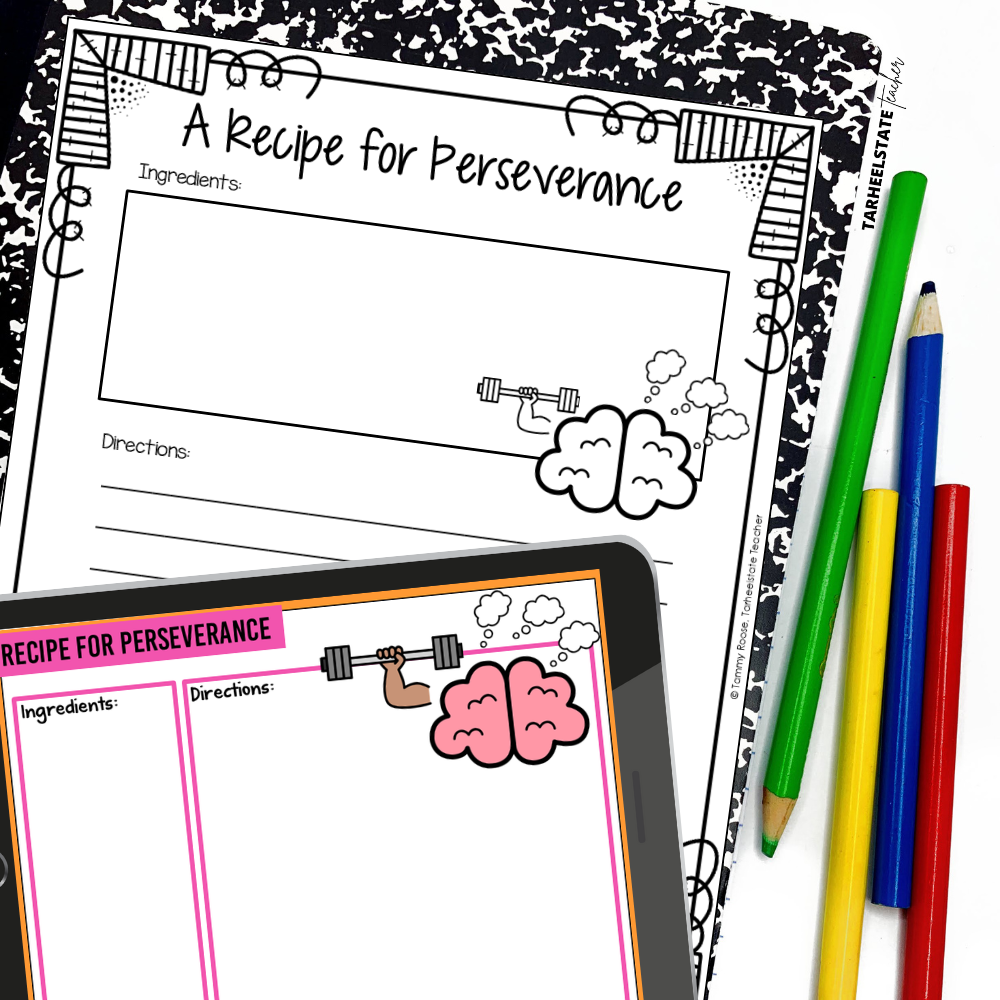
Have students brainstorm the key “ingredients” needed to keep going when things get tough. These might include grit, patience, positive self-talk, courage, focus, problem-solving, and learning from mistakes.
Once students have their ingredient list, guide them in writing out the “steps” for their recipe using each one. Encourage them to be creative by incorporating cooking verbs like “stir,” “whisk,” “fold in,” or “bake.” For example: “Stir in three tablespoons of determination and fold in a pinch of courage when things don’t go as planned.”
Display their finished recipes around the room or compile them into a class “Recipe Book for Perseverance” to serve as a visual reminder that persistence is built one step at a time.
9) SET “YET GOALS” TO EMBRACE GROWTH
One way to help students internalize the power of yet is to build it into goal setting. Invite students to create “Yet Goals” by identifying something they can’t do yet—and turning it into a personal goal they’re willing to work toward over time.
Guide them through writing goals like:
- “I can’t multiply fractions yet, but I will keep practicing.”
- “I haven’t mastered cursive yet, but I’m getting better.”
- “I’m not confident speaking in front of the class yet, but I’m working on it.”
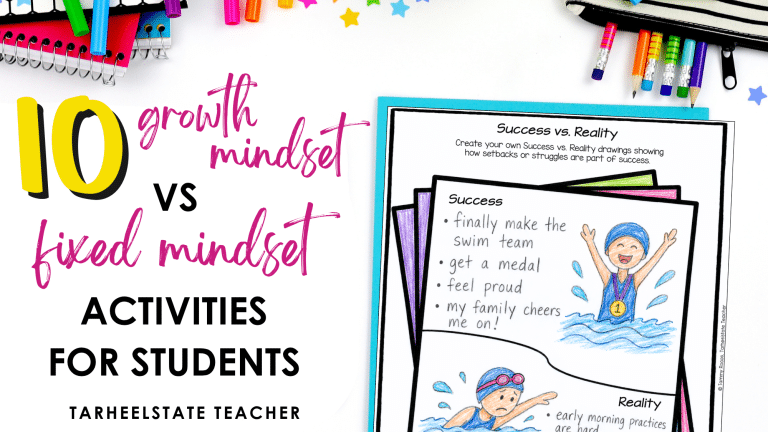
These kinds of goals help students shift from fixed thinking to a growth mindset. Check out my entire Growth Mindset Unit here! By naming what they can’t do yet—and pairing it with an action plan—they begin to view setbacks as temporary and challenges as opportunities to grow.
10) DISCUSS THE CHALLENGES OF REACHING A BIG GOAL
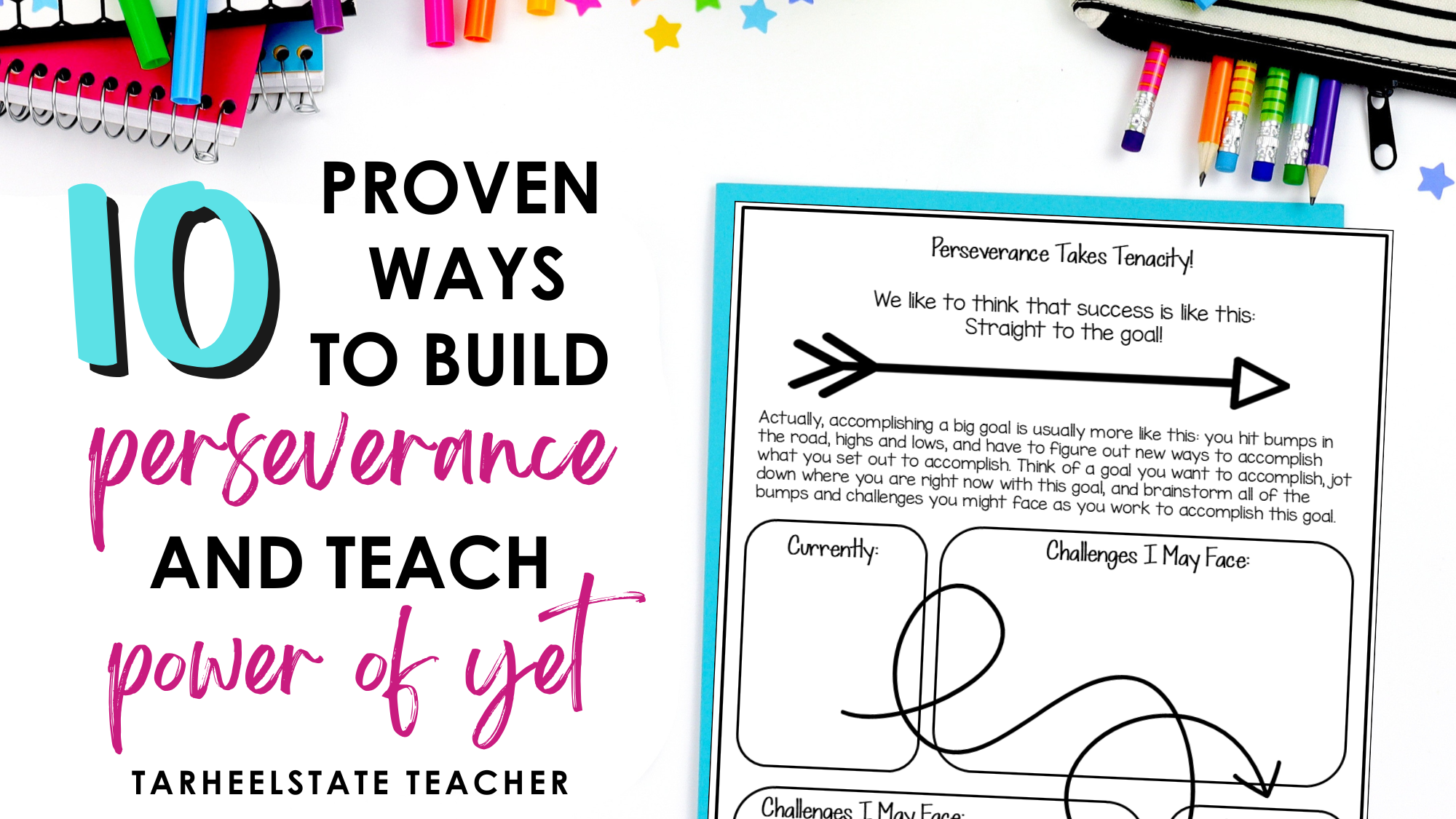
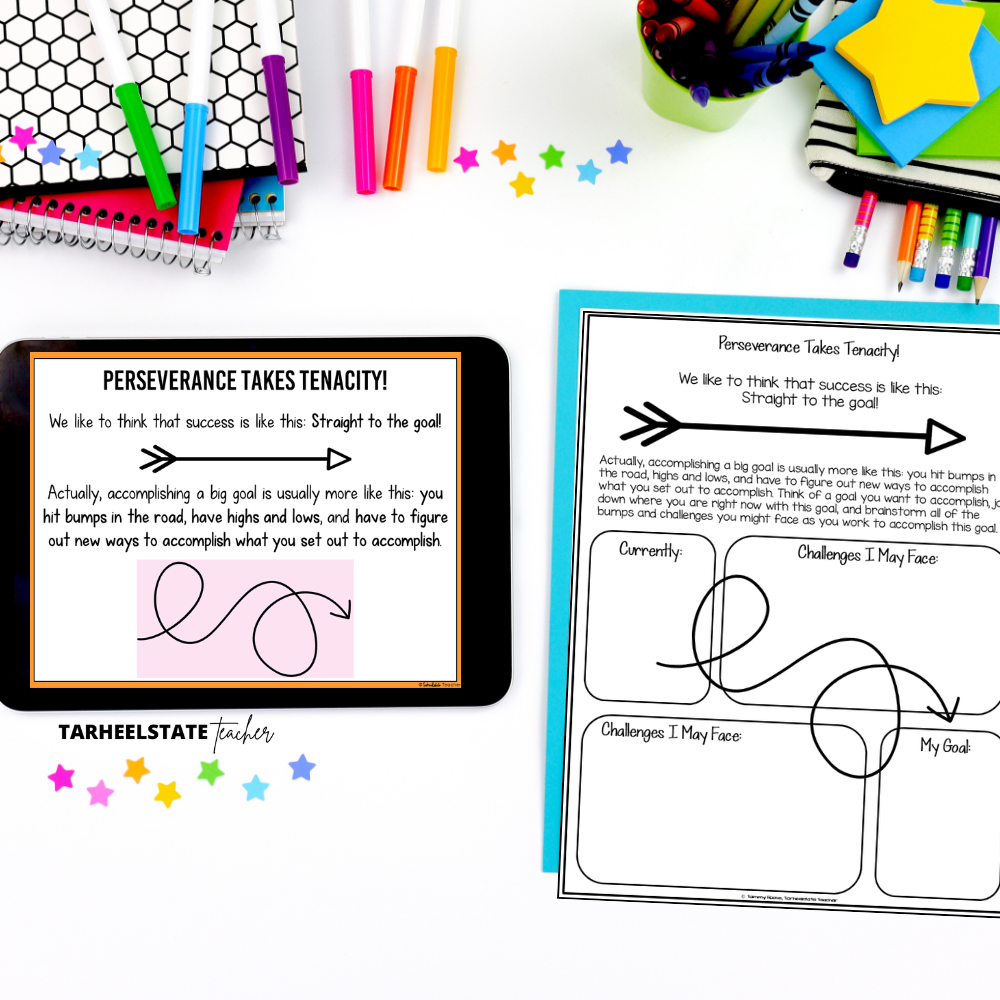
Perseverance comes with its own set of challenges—especially when students are working toward something that feels big or out of reach. Often, students imagine reaching a goal as a straight, easy path, but the reality involves setbacks, detours, and unexpected obstacles. Help your students understand that tenacity means continuing to try even when the journey gets tough.
Have them choose a meaningful goal they want to work toward and use a graphic organizer or anchor chart to brainstorm the challenges they might face. Then, guide a discussion around strategies for overcoming those challenges. This perseverance activity helps students shift their thinking, recognize that bumps in the road are normal, and build the mental tools to keep going when things get hard.
If you’re looking for more ways to keep building perseverance and grit with your students, here are some other resources you may be interested in:
- Using Perseverance Examples to Build Grit in Upper Elementary Students gives you real-world examples you can use to help students connect the concept of perseverance to people and situations they can relate to.
- How to Teach Grit: Strategies to Build Resilience in Students breaks down what grit really looks like in the classroom and offers concrete ways to help students bounce back when things get hard.
- Complete Perseverance SEL Unit for upper elementary—this unit includes all of the activities you see in this post, editable lesson plans, suggested read alouds, student notebooks, and a bulletin board to help your unit make a lasting impression!
Let’s continue helping students grow into resilient, determined learners.
NEED A DONE-FOR-YOU PERSEVERANCE & GRIT UNIT?
The Perseverance SEL-Morning Meeting unitis a 20 day unit for upper elementary. It includes
 20 Days of Printable & Editable Lesson Plans — includes suggested read alouds, discussion questions, perseverance activities, extension ideas, and linked online resources
Student Journals & Activities — perseverance-related discussion prompts, self-reflection and goal setting exercises, and social emotional learning worksheets to deepen students’ understanding of grit and resilience, with activities like The Power of Yet Affirmations, Analyzing Situations That Test Our Perseverance, Responding with Determination & Perseverance, The Challenges of Perseverance + Strategies for Overcoming, and more!
Perseverance Bulletin Board that includes important vocabulary like resilience, perseverance, adversity, and grit and inspirational quotations for a visual reminder of your perseverance and resilience lessons
Google Slides — Teacher and student versions to implement this unit digitally or use as visual prompts and discussion starters on your interactive whiteboard