Teaching students about courage is an important part of our job in the upper elementary classroom. Upper elementary students are typically concerned with their self-image and what their peers think about them. We must encourage them to stand up for what is right and have the courage to act with strong values when needed and in the face of fearful experiences. Incorporating courage activities for students can provide practical opportunities for them to practice and internalize these lessons, helping them to develop the strength to face challenges confidently.
Providing students with opportunities to discuss courage, practice assertiveness skills, and using your classroom time to promote being courageous in situations where being courageous may seem too hard, unpopular, or not worth the risk is crucial for our upper elementary students’ social and emotional growth. I also believe that ensuring students know the value and the power of their courage is important for developing their character.
Enlisting students to be courageous is a key component in creating a classroom community where students feel safe to fail, safe to share fears or ask questions, and safe to be themselves.

HOW DO YOU TEACH COURAGE? START WITH DEFINING THE TYPES OF COURAGE FOR STUDENTS
According to an article titled “The 4 Types of Everyday Courage” by Cathy J. Lassiter, 4 categories of courage exist in our everyday lives: moral courage, disciplined courage, intellectual courage, and empathetic courage. These categories of courage are not about heroism, but about having the determination and skills necessary to make tough calls, confront our peers and colleagues, and fight for equity and inclusion. I teach my students about all of these types of courage in my SEL Courage Morning Meeting Unit.

Moral courage is the courage to stand up for what is right when a person or group of people are being treated unfairly. Moral courage is the outward expression of our personal values and beliefs.
Disciplined courage is the ability to remain focused and unwavering in light of setbacks or failures. With disciplined courage, you stay true to your vision and the impact you want to make on the world, community, or self.
Intellectual courage is the ability to recognize our individual limits in thinking and be open to new ideas and understandings based on new experiences and learning.
Empathetic courage is the courage to put aside our own assumptions and stereotypes and listen to another’s perspective. This opens us up to feel deeply for others and to learn from their experiences.
TYPES OF COURAGE WE WANT TO DEVELOP IN STUDENTS
- The courage to speak up when something doesn’t feel or seem right.
- The courage to stand up to their peers when they are mistreating others.
- The courage to take up for those who cannot take up for themselves.
- The courage to stand up for one’s beliefs and one’s sense of right and wrong.
- The courage to try new things and to persist when they are not immediately successful.
- The courage not to follow the crowd and not succumb to peer pressure.
- The courage to be a leader in peer situations, to be a role model who encourages others who have less-developed courage to do what is right and stand up for their beliefs, too.
- The courage to tell an adult when something uncomfortable happens.
- The courage to have unique interests, independent thoughts, and to be themselves.

“Courage is a muscle. It grows stronger with use. ”
IF WE WANT TO ENCOURAGE COURAGE IN OUR STUDENTS, WHERE DO WE START?
 You can do each of these suggested assertiveness activities for students with a reflection journal and materials you have around the classroom, but if you want some of the work done for you, you can check out my full Courage SEL unit, complete with lesson plans that make it super easy to implement and enjoy!
2) Use a courage activity like the “Courageous Sheet of Paper” to demonstrate how we can all make changes to strengthen our “courage muscles”. I’ve shared the lesson plan for this courage activity in this blog post.
3) Provide opportunities for students to examine their own level of courage. I like to use an agree/disagree questionnaire focused on their beliefs about courage in my SEL Courage Morning Meeting Unit.

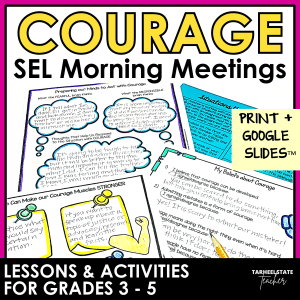
4) Engage students in acting out or thinking about different scenarios where one’s courage is being tested. During our SEL Courage Unit, I like to ask students what their “fearful brain” thinks about the situation, what their “responsible/courageous brain” thinks about the situation, and what mindset and thoughts they would use to respond to the situation with courage.

5) Study historical figures who have demonstrated great courage and include picture books about bravery and nonfiction articles about these figures in your literacy instruction and morning meetings.

6) Engage students in courageous activities that help them develop “courageous thoughts” and mantras that will serve them in different situations and increase their ability to act with courage when necessary. For example, in my SEL Courage Morning Meeting unit, I provide students with courage quotations to add to their student journals for analysis and to reference throughout our discussions on the topic.

Acting courageously is challenging even for adults. By bringing conversations about courage to the forefront of our character education and social-emotional learning discussions, we can support our students as they step into being the most courageous humans they are capable of being.
As we teach students that courage is a muscle and we can make those muscles stronger, we increase their mental toughness, positive self-esteem, and help them gain the confidence to be the best version of themselves…and that’s a worthy goal in my book.
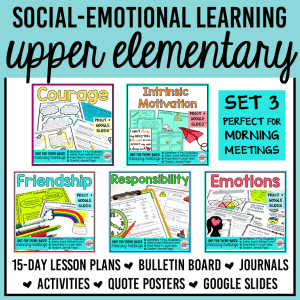
The SEL Courage Morning Meeting Unit is also included in the SEL Activities for Morning Meeting Set 3 resource that contains the social-emotional learning themes intrinsic motivation, friendship, responsibility, and managing emotions. If you’re looking to increase your social-emotional learning focus, you’ve come to the right place!
Which of the suggested courage activities do you think your students would respond to the most?
If you’re looking for more ways to keep building assertiveness and courage with your students, here are some other resources you may be interested in:
- Character Education SEL Courage Activity for Students gives you a ready-made lesson for helping students explore what courage looks like in real-life situations they can relate to.
- Teaching Assertiveness Skills to Upper Elementary Students: Why It Matters and How to Do It breaks down why assertiveness is such a critical skill at this age and gives you a clear roadmap for introducing and practicing it with your students.
- 9 Bravery Books for Teaching Students About Courage highlights diverse, powerful read alouds that spark rich conversations about bravery, assertiveness, and standing up for what’s right.
- Complete Courage SEL Unit for upper elementary—this unit includes all of the activities you see in this post, editable lesson plans, suggested read alouds, student notebooks, and a bulletin board to help your unit make a lasting impression!
Let’s continue helping students grow into confident, courageous advocates for themselves and others.
NEED A DONE-FOR-YOU COURAGE AND ASSERTIVENESS UNIT?
The Courage SEL-Morning Meeting unit is a 20 day unit for upper elementary. It includes
 25 Days of Printable & Editable Lesson Plans — includes suggested read alouds, discussion questions, courage activities, extension ideas, and linked online resources
Student Journals & Activities — courage-related discussion prompts, self-reflection and goal setting exercises, and social emotional learning worksheets to deepen students’ understanding of courage and assertiveness, with activities like Problem-Solving Scenario Cards for Assertiveness Social Scenarios, Big and Small Acts of Courage Sorting Activity, Preparing Our Minds to Act with Courage, Examining Historical Courage in Stories, and more!
Courage Bulletin Board that includes important vocabulary like courage, moral courage, sacrifice, assertiveness, confidence, and conscience and inspirational quotations for a visual reminder of your courage and assertiveness lessons
Google Slides — Teacher and student versions to implement this unit digitally or use as visual prompts and discussion starters on your interactive whiteboard