Looking for a writing project that sparks real wonder and curiosity in your 4th or 5th graders, motivates them to chase down answers on a content-area topic, and ends in a writing celebration that teaches the whole class? “Writing Riddles” does all of that, and it’s a mini-research and writing project students can finish in under a week.
WHY A “MINI” RESEARCH PROJECT?
The Common Core Writing Standards for 4th and 5th grade ask students to conduct short research projects throughout the year and to write routinely over both extended and shorter time frames. The standards behind this project are:
- W.4.7 / W.5.7 — Conduct short research projects that build knowledge through investigation of different aspects of a topic.
- W.4.10 / W.5.10 — Write routinely over extended time frames and shorter time frames (a single sitting or a day or two) for a range of discipline-specific tasks, purposes, and audiences.
When I first sat with these standards, I struggled with the idea of doing something “mini” that was also genuinely meaningful. I tend to dig deep into writing units, turning them into projects that run half a quarter or more. Writing small while still teaching students to write well didn’t come naturally to me.
The idea clicked during our Human Body Systems unit. I’d planned for students to research a disease of interest as an outgrowth of our human body work, with healthy living as a natural theme. But we were teaching the unit during 4th quarter, and a full, in-depth research project wasn’t going to fit the time we had left on top of the core human body research students were already doing. “Writing Riddles” turned out to be the perfect solution: a small, purposeful research-and-writing project that fit right inside the content unit.
WHAT IS A WRITING RIDDLE?
In a Writing Riddle, students write one to two paragraphs in a riddle-like format that describes a topic without naming it. (For once, I encouraged my students to write with intentional vagueness.) A reader has to figure out what the paragraph is describing.
It worked beautifully for our unit for three reasons: it met several writing standards with a small assignment, it tapped into my students’ love of sharing their writing, and the final share-out ran in a task-card-style format my students always enjoy.
HOW WRITING RIDDLES WORKS
The whole project breaks into four short steps:
- Brainstorm a topic using a “Wonder” sheet
- Research the topic for one class period
- Draft the riddle paragraph in Google Docs
- Share in an around-the-room reading celebration
Here’s how each step played out.
STEP 1: BRAINSTORM WITH A “WONDER” SHEET
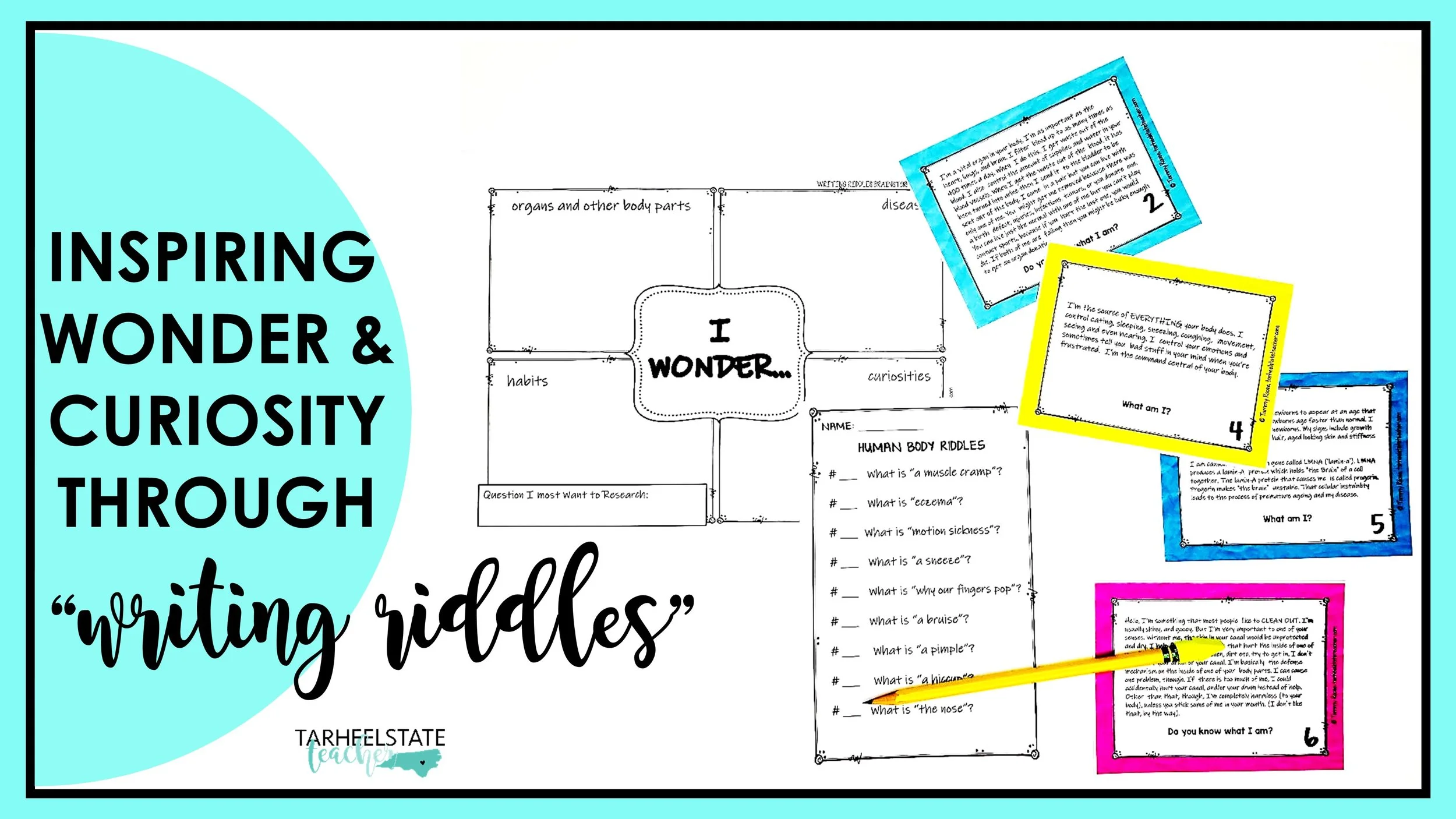
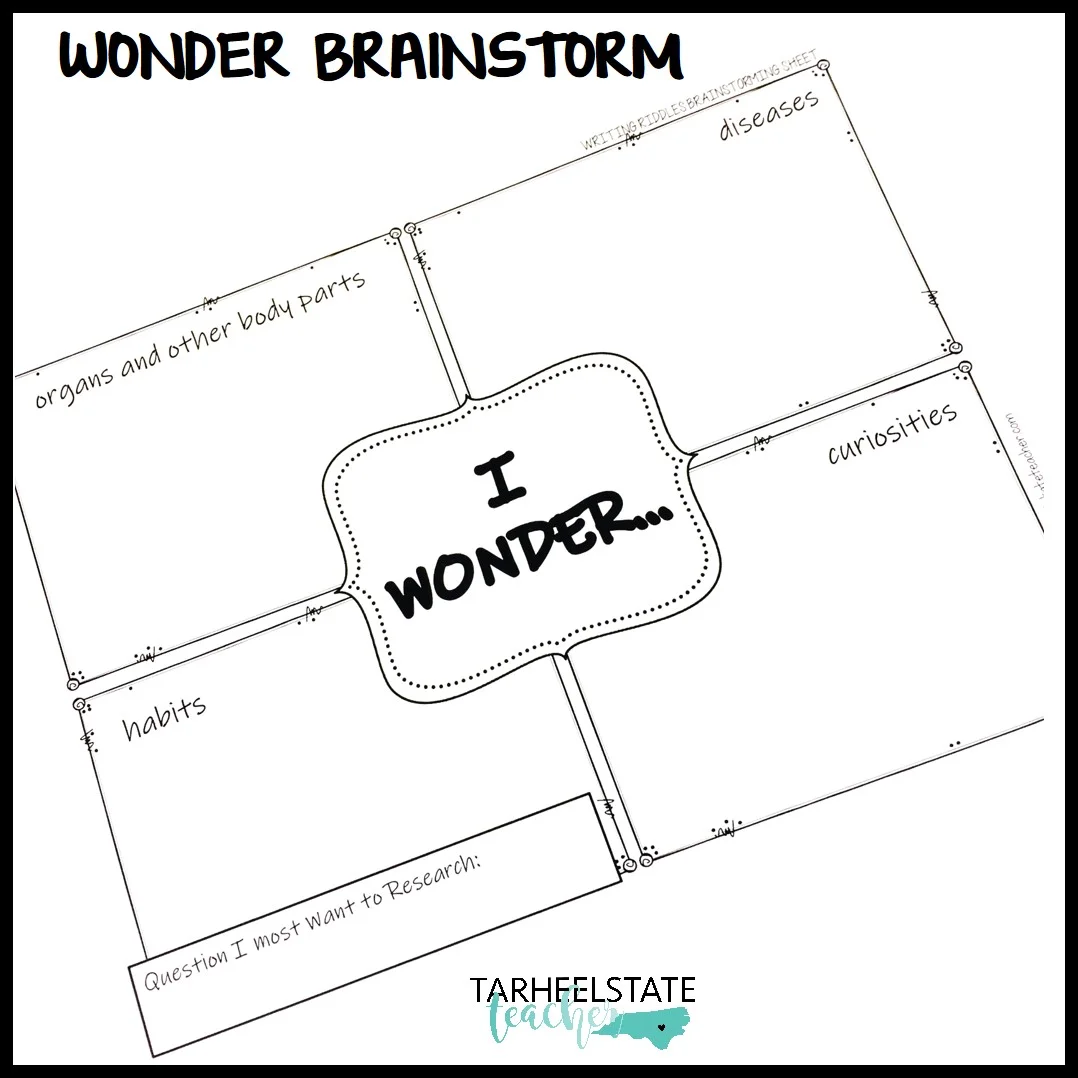
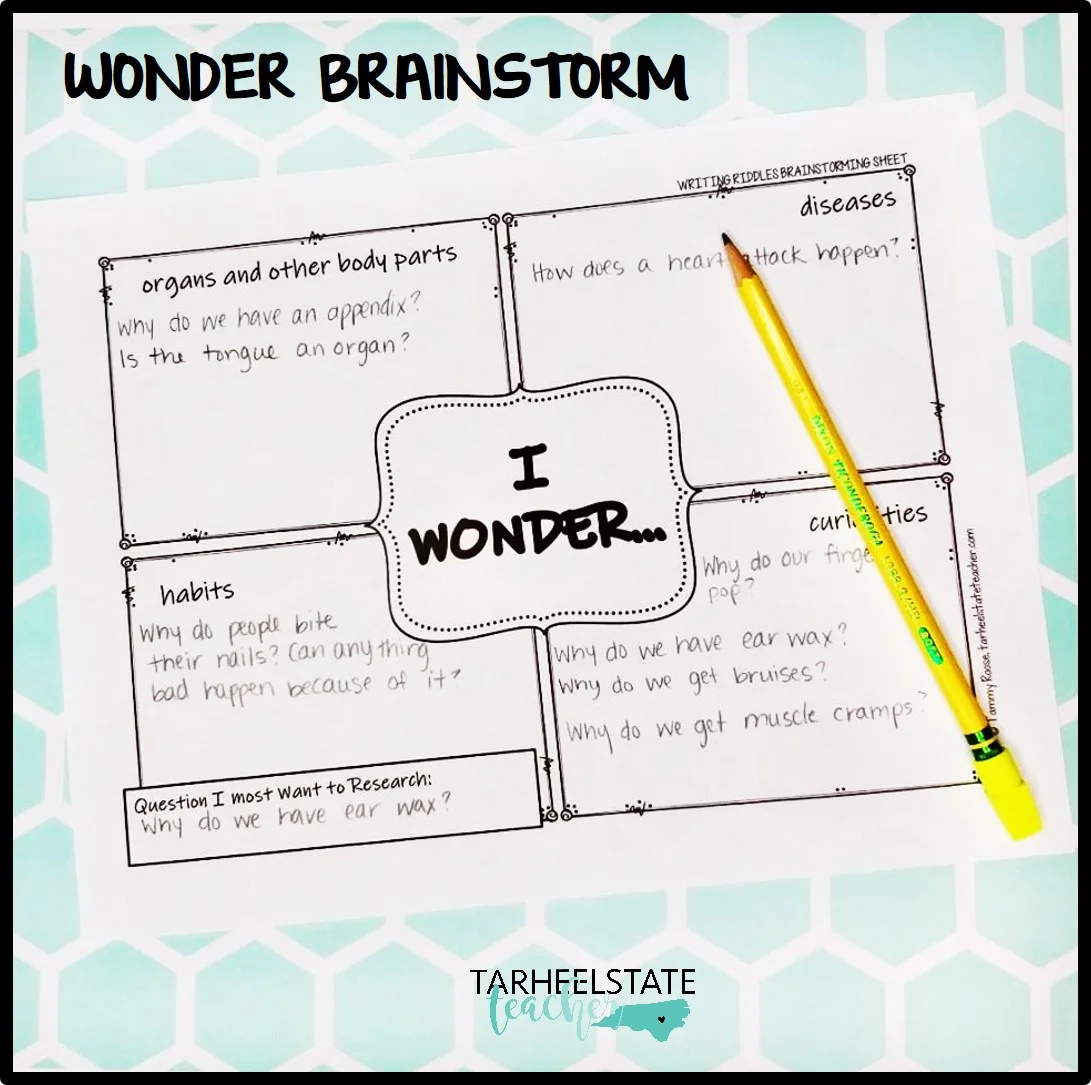
I wanted to use students’ natural curiosity about the human body to my advantage, so I created a simple “Wonder” sheet with four categories for generating topics: organs and body parts, habits, diseases, and curiosities.
After brainstorming, students circled their top two choices. I reviewed each sheet and approved topics to make sure everyone studied something different, so no two riddles covered the same thing.
STEP 2 AND 3: RESEARCH AND DRAFT
Students spent one day researching online and one day typing their riddle paragraphs in Google Docs. Once the paragraphs were drafted, I showed students how to copy and paste them into a shared Google Doc set to landscape orientation (easier prep for me). I downloaded the document, making sure each riddle landed on its own page.
To jazz them up, I added simple backgrounds. You can search TPT for free digital backgrounds, but in a rush, a fun font on colored paper works just as well. I also numbered each page so the riddles were ready for the share-out.
STEP 4: SHARE IN A TASK-CARD CELEBRATION
After printing all the riddles, I set them up around the room like task cards. Each student got a recording sheet listing every topic question.
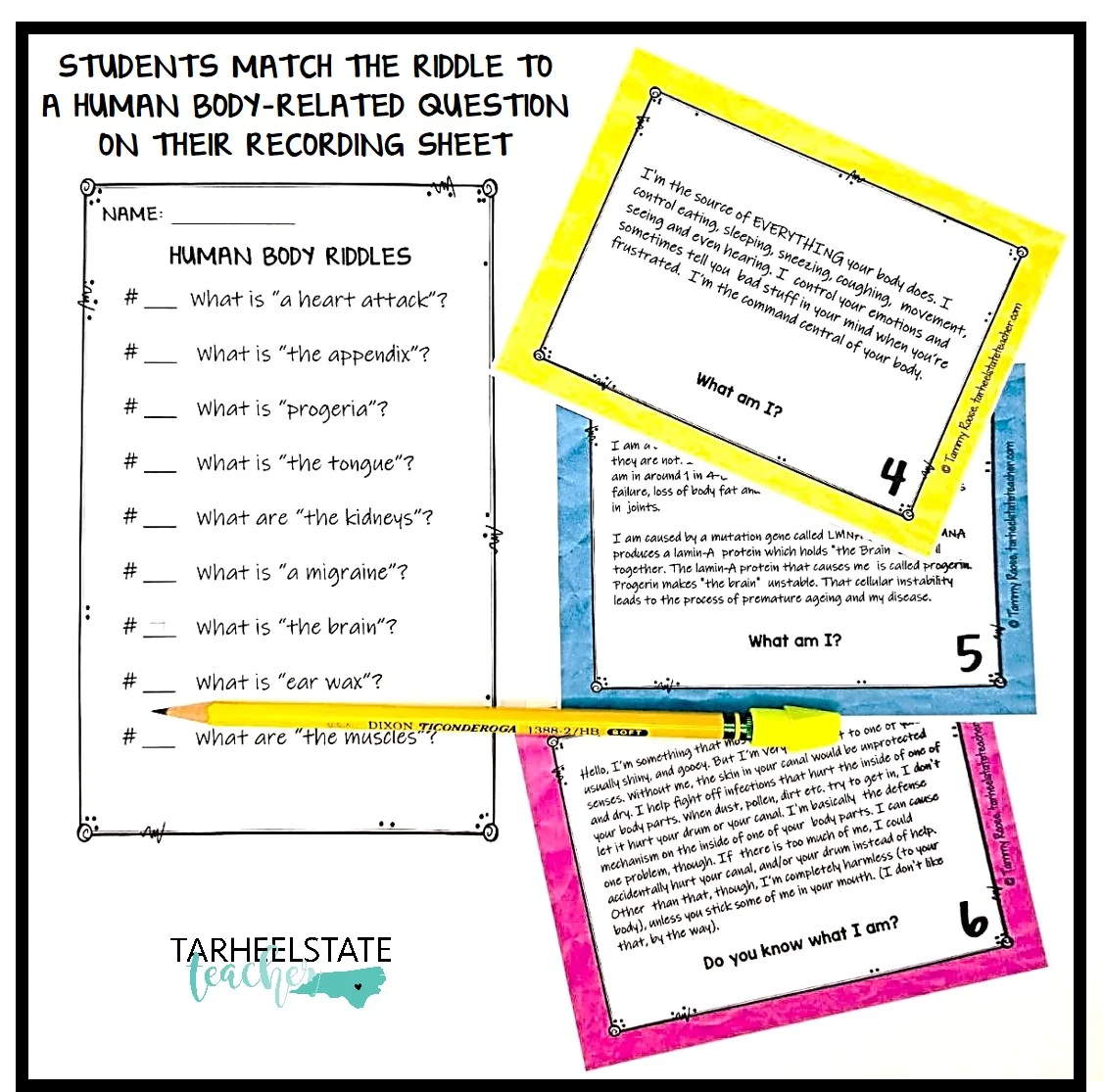
As they moved around reading each riddle, they decided which question it answered. For example, if a student read riddle #4 and recognized it was describing the brain, they’d write “4” next to the question “What is the brain?”
SAMPLE WRITING RIDDLES (AND ANSWER KEY)
The student samples below show how much they learned in a short stretch of time.
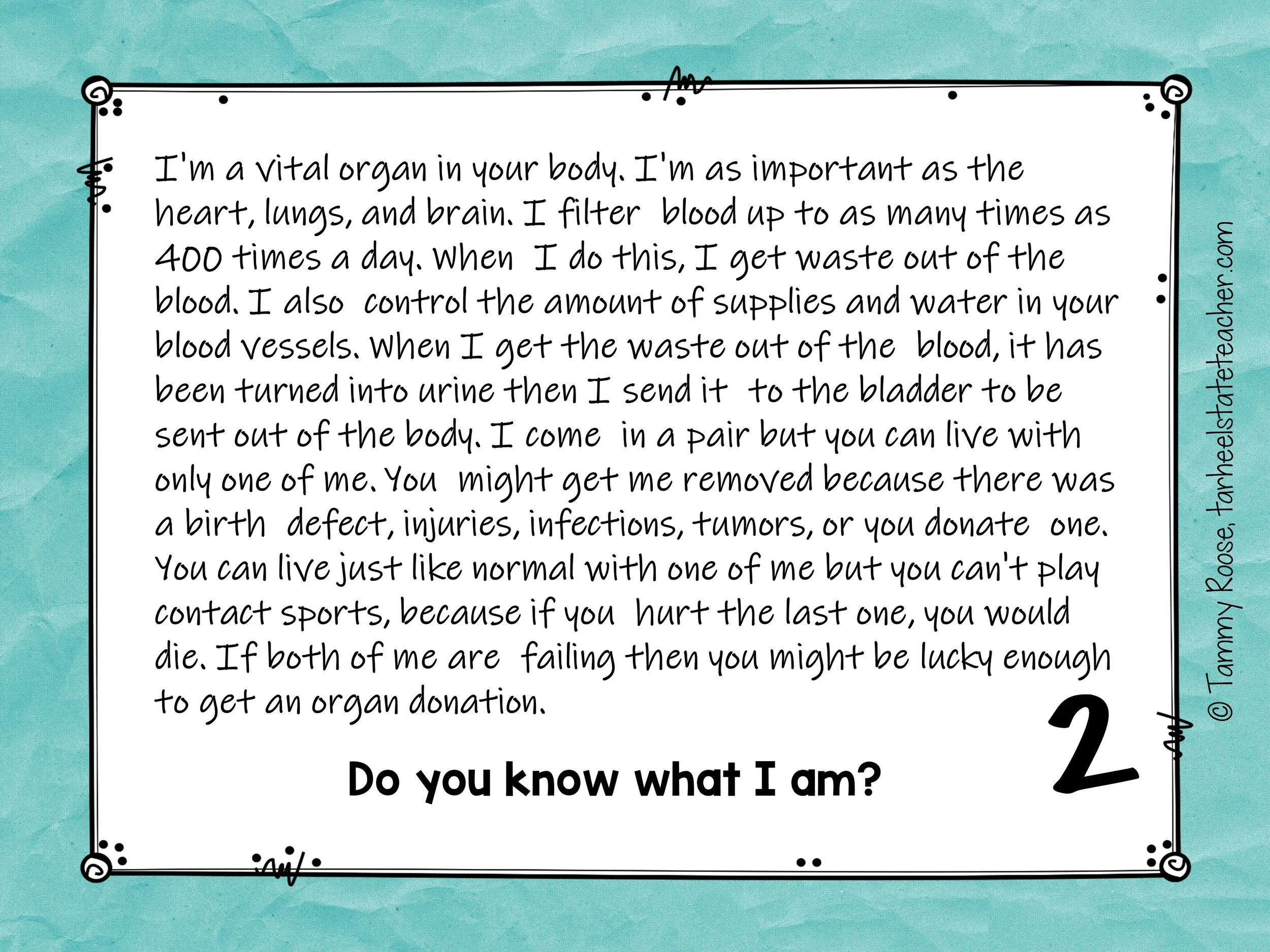
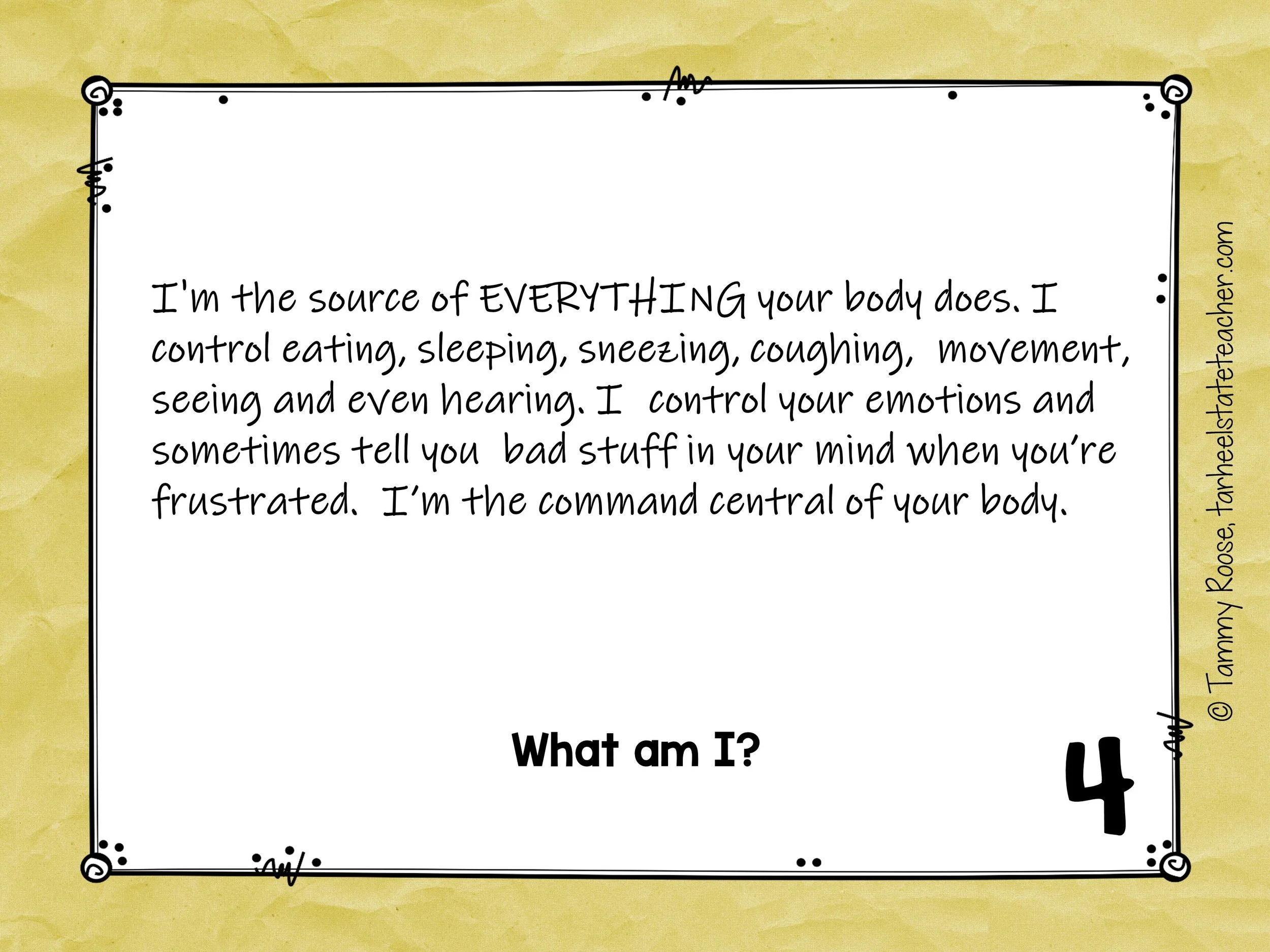
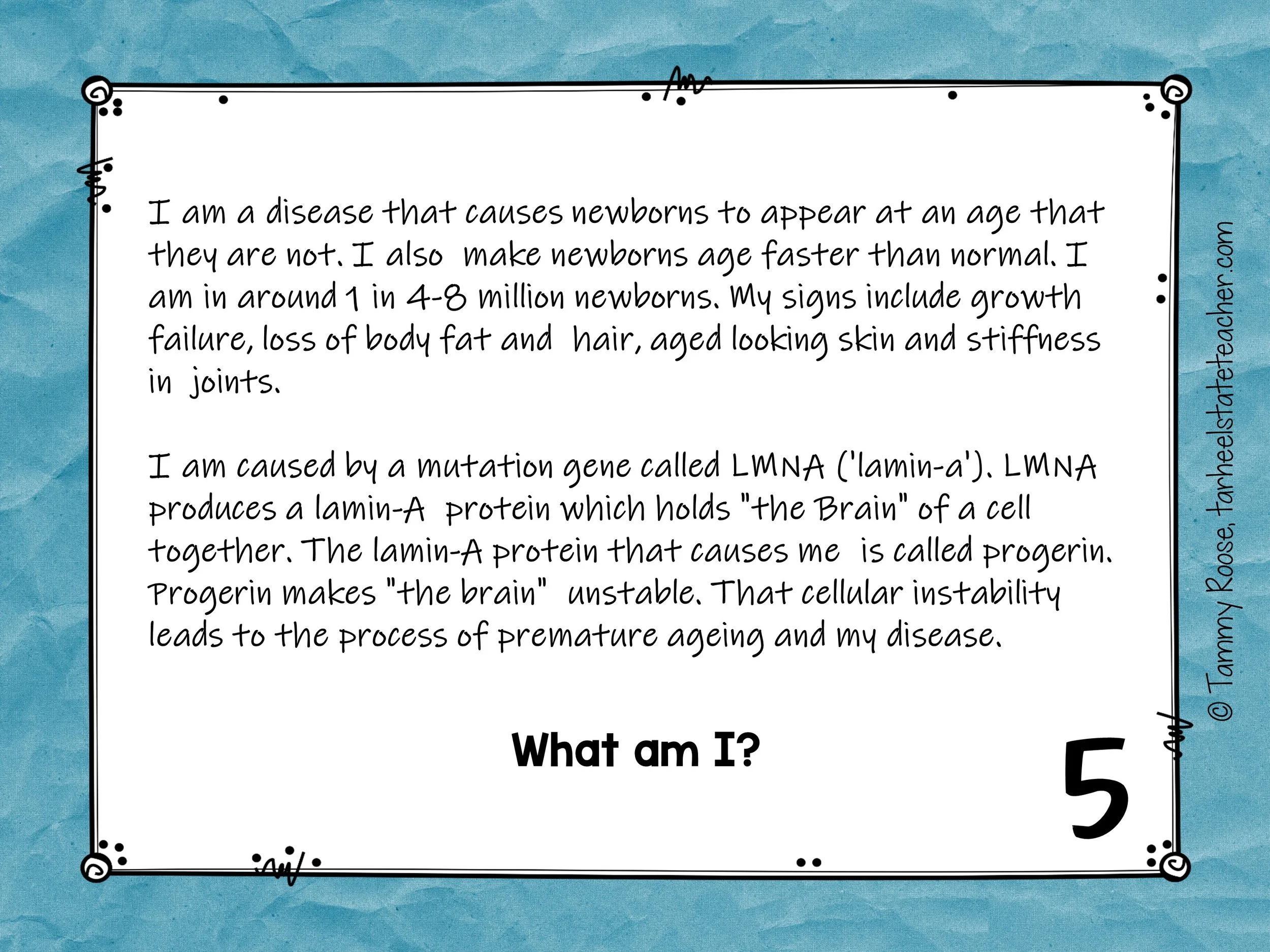
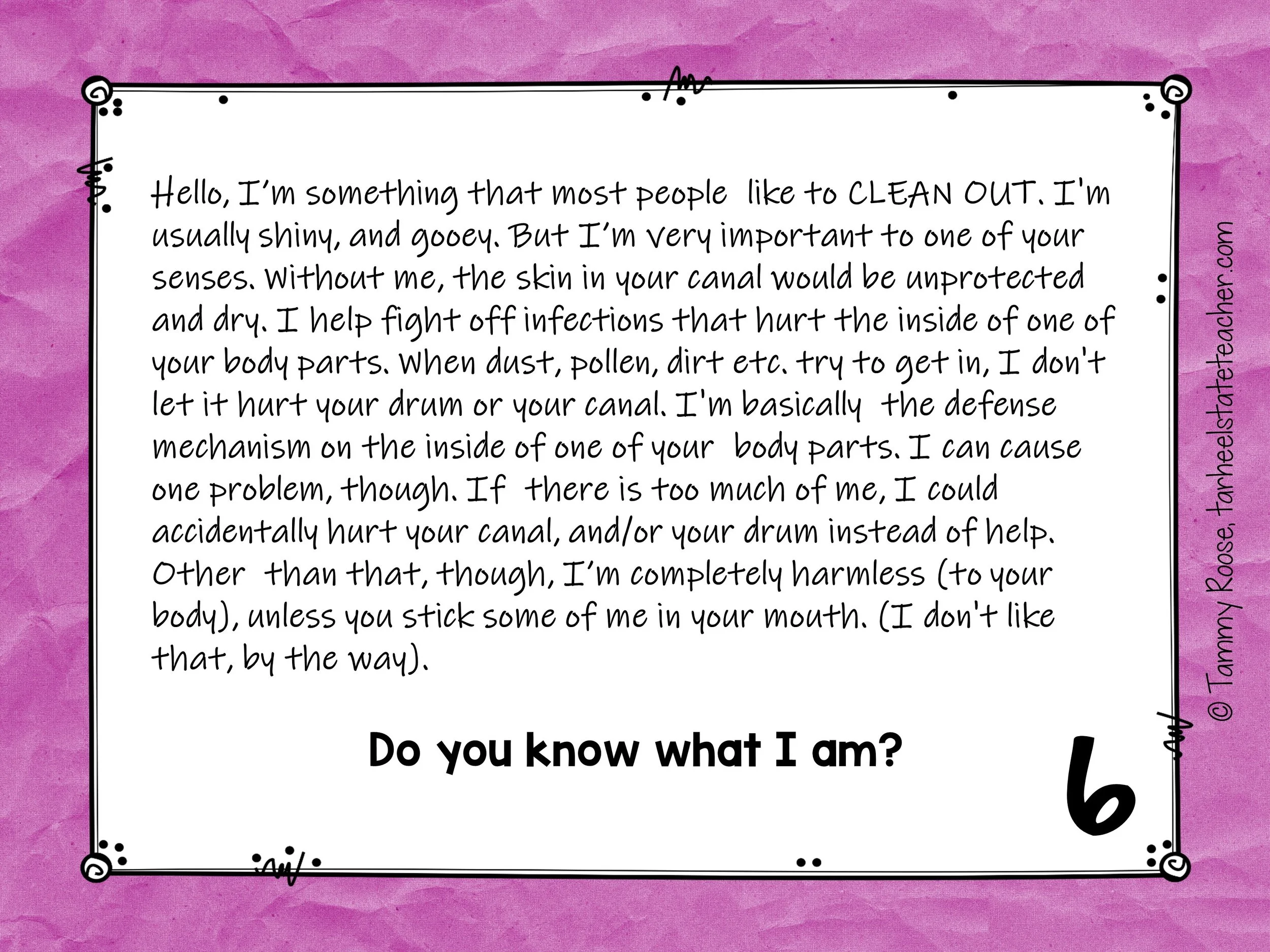
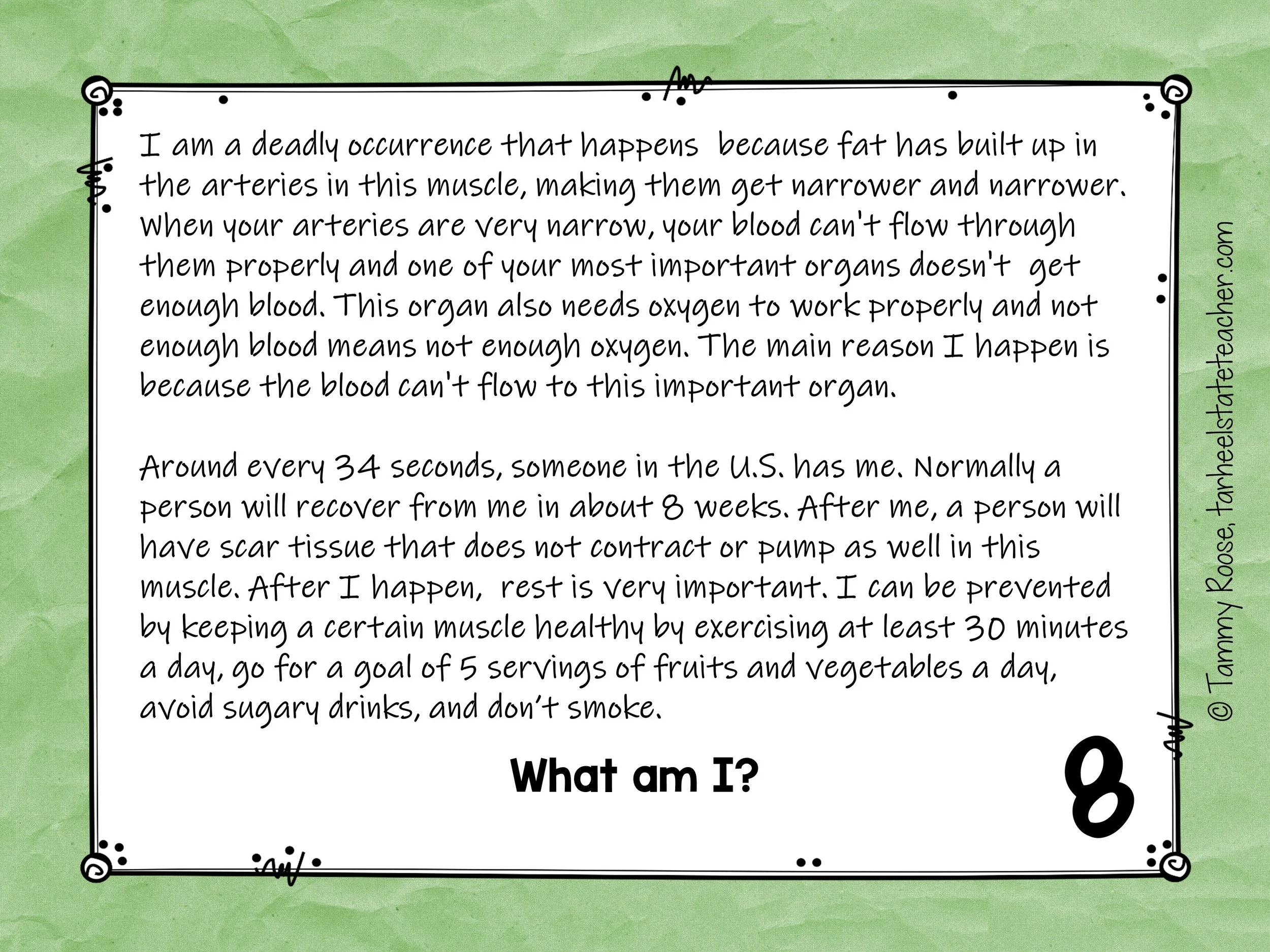
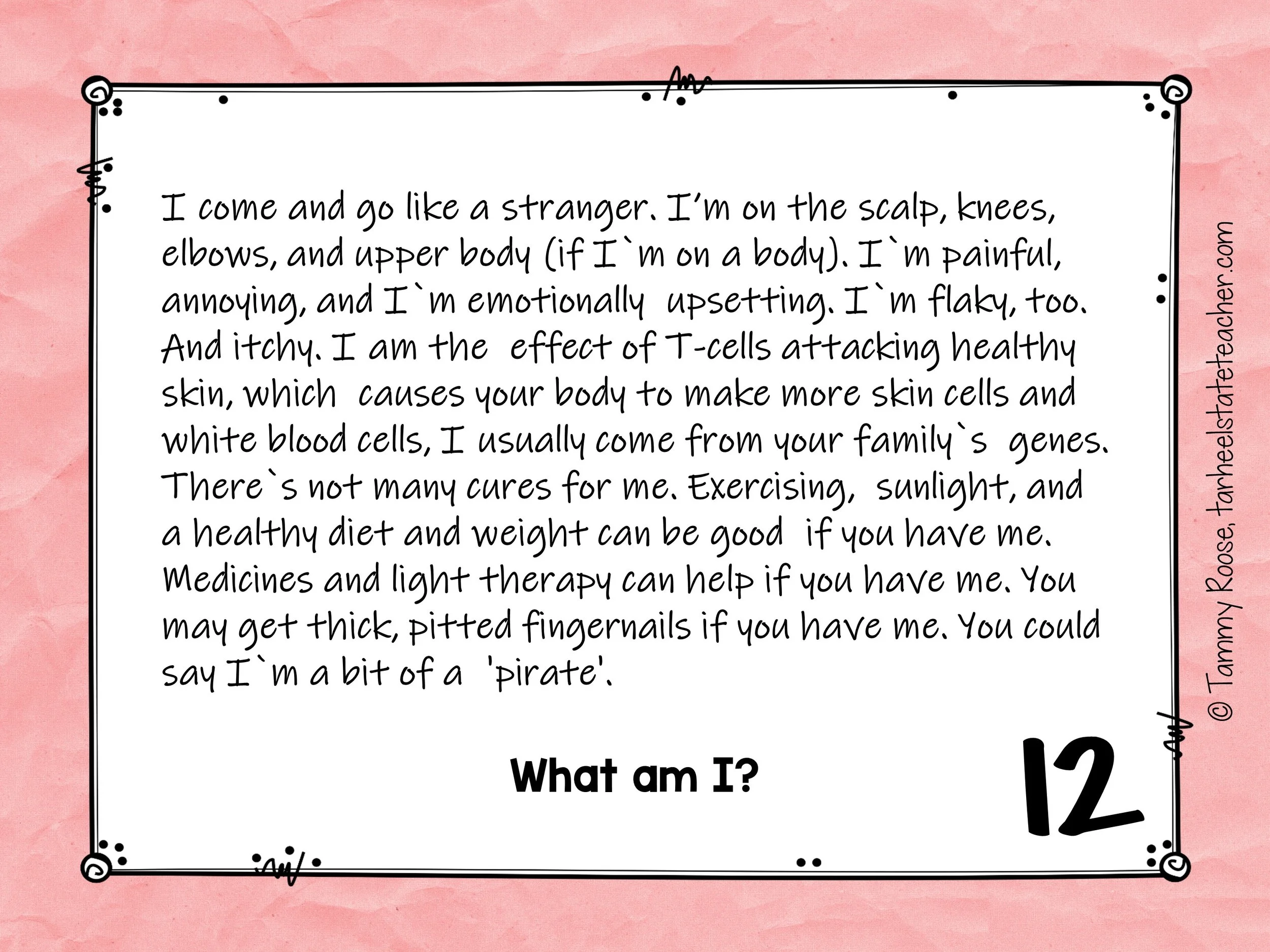
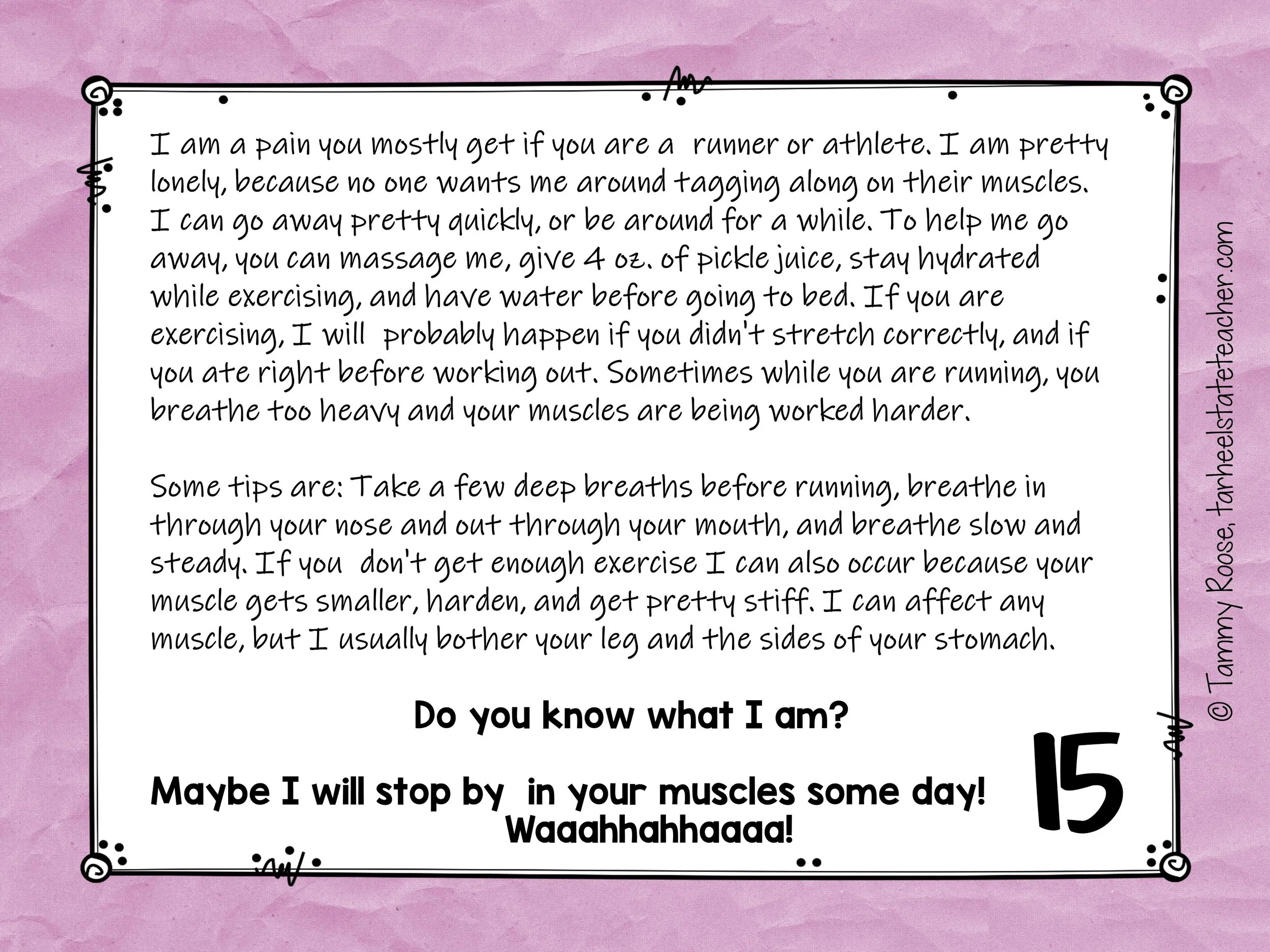
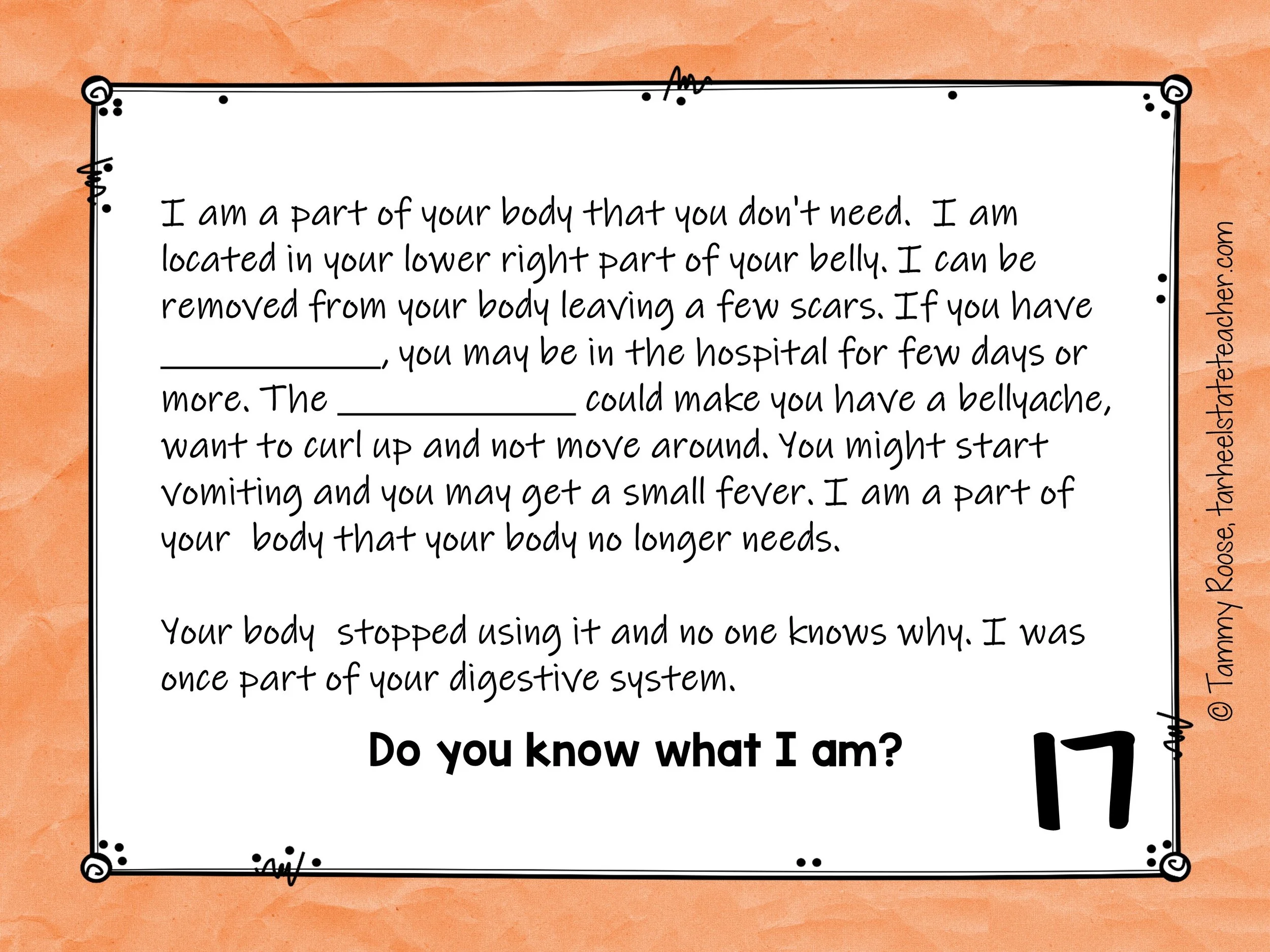
How FUN are students’ writing riddles?!? And can you tell that they did their research and learned a lot in a short amount of time?
Curious about the answers to the numbered samples? Here they are:
- #2 — the kidneys
- #4 — the brain
- #5 — progeria
- #6 — ear wax
- #8 — a heart attack
- #12 — eczema
- #15 — a muscle cramp
- #17 — the appendix
WHY I LOVE THE WRITING RIDDLES PROJECT
I was genuinely stuck on what “short research” was supposed to look like. I understood that short writing could be done, and that a lot of what we do in science and social studies already counts as short research. But I interpret short research to mean a short-term project that still ends in students creating something, not just answering nonfiction questions. I wanted it to be purposeful and to include a sharing component.
Writing Riddles delivered all of that. Start to finish, it took about 20 minutes for students to understand the assignment and generate questions, one day to research, one day to type, and two class periods to read one another’s riddles.
It’s a great way for students to research something they’re interested in, write small, write for a clear purpose, and have fun doing it. Engagement was high the entire time.
NEXT STEPS FOR “WRITING RIDDLES”
The more places I find to use Writing Riddles across the curriculum, the more students sharpen their ability to synthesize research into interesting writing. I picture a year where riddle mini-research projects are woven through science and social studies. You could even use the format with book club books and chapter book read alouds, having students build their own quizzes and study guides.
So, what would your students love to write riddles about? I’d love to hear the topics and content areas where you can picture this working. Drop your ideas in the comments, I’m always looking for new ways to put students’ curiosity to work.
GET THE FREE WONDER GRAPHIC ORGANIZER
Want to run Writing Riddles with your own class? I’ll send the Wonder brainstorming sheet straight to your inbox so your students can generate topics and get started.
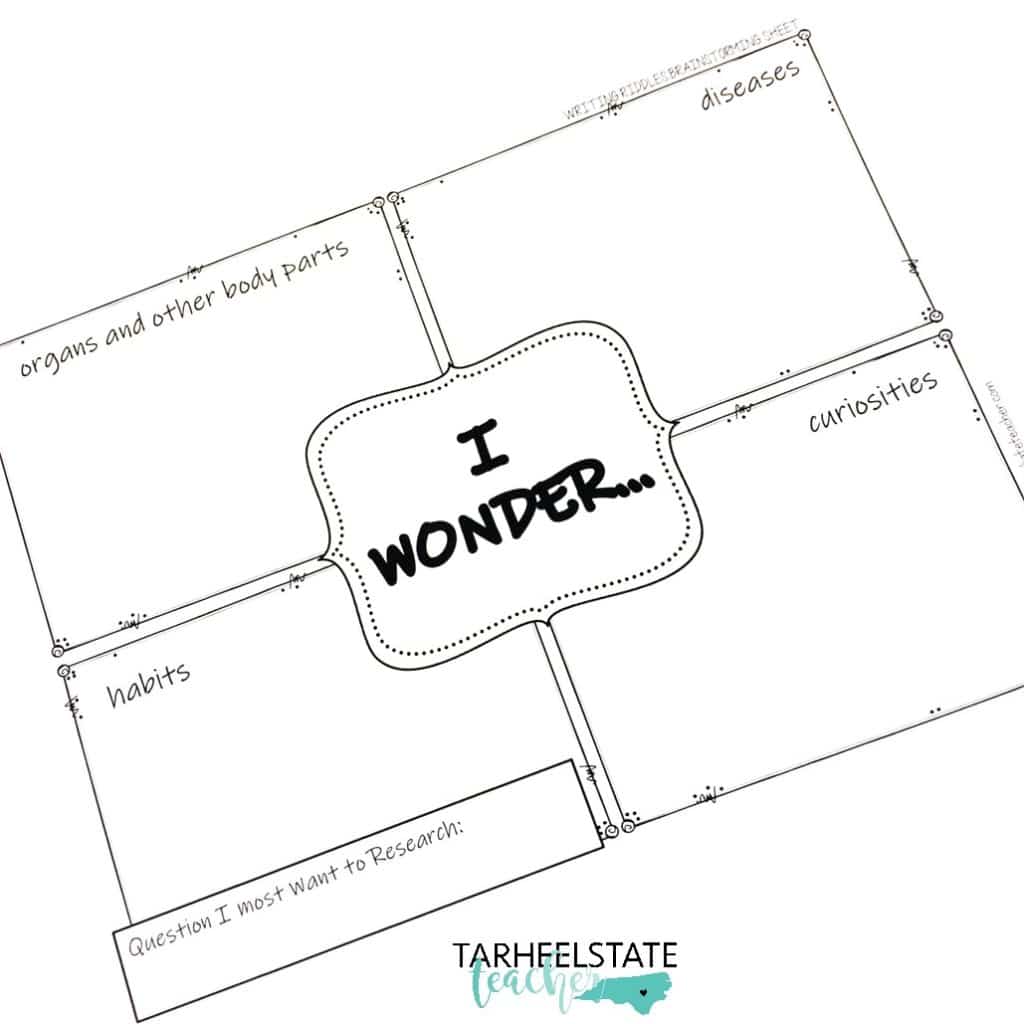
Get your Wonder Graphic organizer to inspire curiosity as you lead your students through a mini-research project on a science or social studies topic!