Have you ever watched two students fall out over something small—like a group project, a misunderstood comment, or even a game at recess? In an upper elementary classroom, friendship challenges happen regularly. While it’s tempting to step in and resolve the issue for them, these moments are rich opportunities to teach students how to manage friendship issues in meaningful, age-appropriate ways.
One of the most effective and engaging ways to support students during these tricky moments is through friendship scenarios. This post walks you through how to use relatable situations and role play to help students reflect on their actions, build empathy, and learn what it truly means to be a good friend.
 Note: If you’re looking for ready-to-use friendship lessons, check out my post: How to Be a Good Friend: Lessons and Activities for Teaching About Friendship.
WHY TEACH FRIENDSHIP SKILLS IN UPPER ELEMENTARY?
Students in grades 3–6 are navigating increasingly complex peer dynamics. Friendships shift frequently, cliques can begin to form, and misunderstandings can quickly escalate. Teaching them how to manage friendship challenges gives them lifelong skills like:
- Communicating clearly
- Setting boundaries
- Practicing empathy
- Resolving conflicts respectfully
When we give students tools to handle friendship issues, we help build a classroom culture of trust, kindness, and inclusivity.
These social-emotional lessons don’t just help students in the moment—they equip them with the tools they need to maintain healthier relationships throughout life. That’s why using friendship scenarios as learning tools is such a powerful strategy for helping students grow.
WHAT ARE FRIENDSHIP SCENARIOS AND HOW DO YOU USE THEM?
Friendship scenarios are short, realistic situations that mirror the kinds of social dilemmas students face every day—being left out, feeling annoyed with a friend, or not knowing how to stand up for someone. These situations encourage students to think critically, respond empathetically, and reflect on how to be a good friend.
You can use friendship scenarios in several ways:
- As discussion starters during class meetings or SEL time
- As journal prompts for individual reflection
- In small groups for collaborative problem-solving
- As the foundation for role play or drama centers
Each scenario gives students a structured way to explore tough social situations and rehearse positive responses before they happen in real life.

FRIENDSHIP SCENARIO CARDS FOR UPPER ELEMENTARY STUDENTS
To support students in building strong, healthy friendships, I created a set of Friendship Scenario Cards designed specifically for upper elementary learners. Each of the 32 cards presents a realistic friendship challenge that students might encounter in or out of the classroom. These scenarios are intentionally open-ended and thought-provoking, inviting students to reflect on different points of view and consider how their choices impact others.

Because the situations feel familiar and relevant, students are more engaged—and more willing to explore complex emotions, social dilemmas, and what it means to respond with empathy and respect. The flexibility of the cards also means they can be easily adapted to fit your classroom’s needs, whether you’re focused on writing, discussion, group work, or social-emotional skill-building.
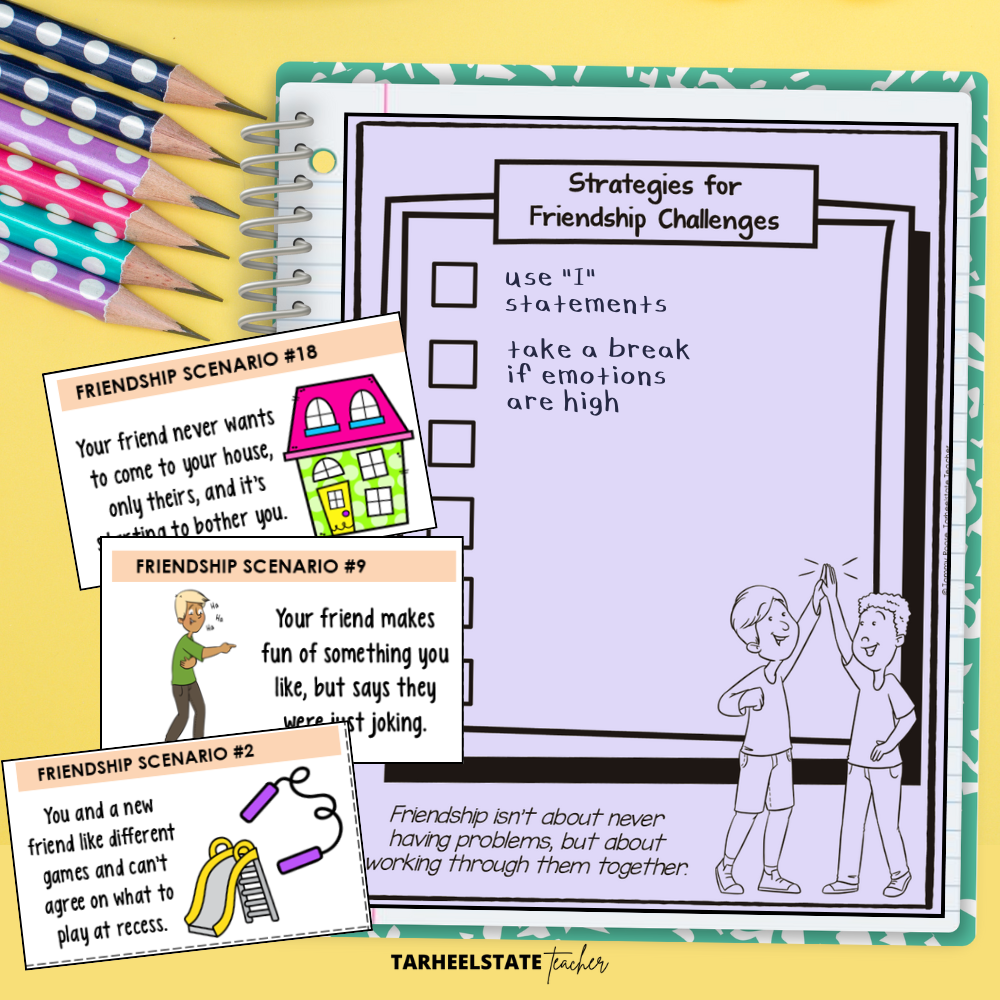
Here are a few examples of the kinds of friendship scenarios students will explore:
-
You’re working with a partner, and they keep ignoring your ideas. You’re starting to feel frustrated and hurt. What do you do?
-
Two of your friends are fighting, and they both want you to take their side. How do you handle it?
-
You were invited to a party, but one of your close friends wasn’t. They seem sad about it. What can you say or do?
-
You told a friend a secret, and they shared it with others. How do you address it?
These scenarios are about more than just solving surface-level problems—they help students dig into emotions, consider different perspectives, and think critically about how to be a good friend in real-life situations that can feel awkward, confusing, or emotionally charged.
TIPS FOR LEADING FRIENDSHIP SCENARIOS DISCUSSIONS
Whether you’re using the scenario cards for a whole-class discussion, partner role play, small group work, or independent reflection, it helps to have a few go-to strategies in mind to guide students through these situations thoughtfully. Here are some tips to help students engage meaningfully—no matter how you’re using the scenarios in your classroom:
-
Set the tone first. Remind students that there are no perfect answers—these scenarios are meant to help us think, reflect, and grow. Encourage honesty and respectful listening.
-
Model your thinking. Walk through a scenario yourself and share your thought process out loud. This shows students how to unpack a situation and consider multiple perspectives.
-
Ask open-ended questions. Prompt deeper thinking with questions like: “What might each person in this situation be feeling?” “Have you ever experienced something like this before?”
-
Use “I” statements. Encourage students to respond using “I would…” or “I feel…” to keep the focus on personal reflection instead of judging others.
-
Create space for multiple perspectives. Let students hear a few different ways someone might respond and discuss the pros and cons of each.
-
Follow up with reflection. Whether through journaling or a short group debrief, give students a chance to process what they’ve learned or how their thinking has shifted.
FOLLOW-UP FRIENDSHIP ACTIVITIES
After students discuss or role-play a scenario, what next? Suggest a few simple, meaningful follow-ups:
-
Write a short reflection on how they would respond differently next time.
-
Create mini-skits based on alternative outcomes.
-
Pair scenarios with mentor texts that model friendship dynamics. (In my Friendship SEL Unit, I’ve included a list of my favorite friendship read alouds.)
-
Have students create their own scenario cards based on personal experiences (anonymously if needed).
If you’re looking for more ways to keep building friendship skills with your students, here are some other resources you may be interested in:
- Teaching Friendship Skills in Grades 2-5: What Upper Elementary Teachers Should Know (SEL Strategies & Activities) covers what upper elementary teachers need to know about teaching friendship skills, with SEL strategies and activities to weave into your classroom.
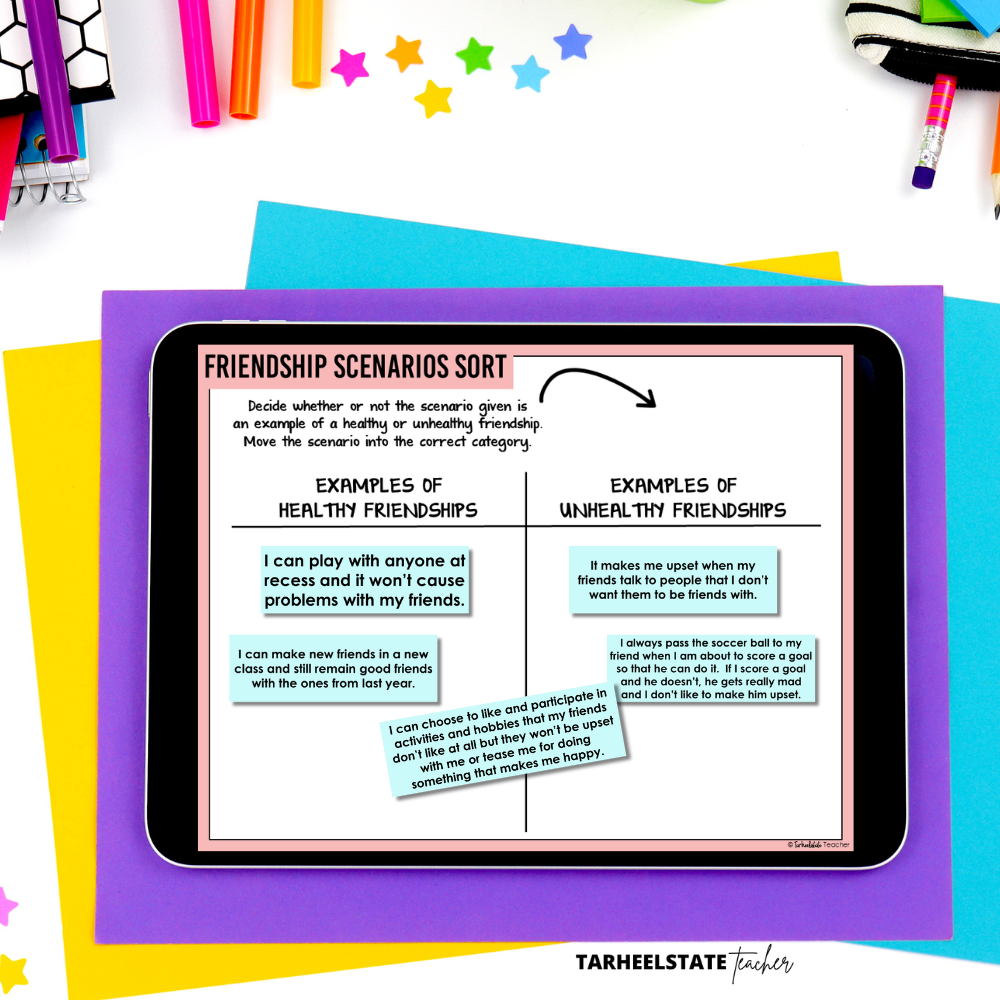
- Healthy Friendships vs Unhealthy: Helping Students Recognize the Difference helps students name what makes a friendship healthy and spot the warning signs when one isn’t.
- How To Be A Good Friend: Lessons and Activities for Teaching About Friendship breaks down what being a good friend looks like in practice, with lessons and activities you can use right away.
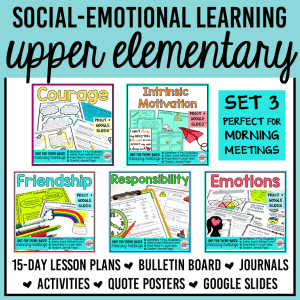
- Complete Friendship SEL Unit for upper elementary—this unit includes all of the activities you see in this post, editable lesson plans, suggested read alouds, student notebooks, and a bulletin board to help your unit make a lasting impression!
NEED A DONE-FOR-YOU FRIENDSHIP UNIT?
The Friendship SEL-Morning Meeting unit is a 20 day unit for upper elementary. It includes
 20 Days of Printable & Editable Lesson Plans — includes suggested read alouds, discussion questions, friendship activities, extension ideas, and linked online resources
Student Journals & Activities — friendship-related discussion prompts, self-reflection and goal setting exercises, and social emotional learning worksheets to deepen students’ understanding of friendship, with activities like How to Be A Good Friend, Role-play with Friendship Scenarios Cards, Seasons of Friendship, Healthy vs Unhealthy Friendship Scenario Sort, and more!
Friendship Bulletin Board that includes important vocabulary like friendship, acquaintance, forgiveness, inclusion, selflessness, and loyalty and inspirational quotations for a visual reminder of your friendship skills lessons
Google Slides — Teacher and student versions to implement this unit digitally or use as visual prompts and discussion starters on your interactive whiteboard