That’s the whole philosophy behind the schedule I’m sharing today, built on Stephen Covey’s “Big Rocks” metaphor: put the big stuff first, before the smaller, more urgent-feeling tasks crowd it out. I call this list of priorities my Big Rocks First Week, five must-do’s I protect before anything else pushes its way into the schedule:
- Establishing a strong classroom community with expectations for belonging, inclusion, and personal growth
- Creating an environment where everyone loves to read and establishing the routines and norms we need in reader’s workshop
- Introducing the concept of a growth mindset
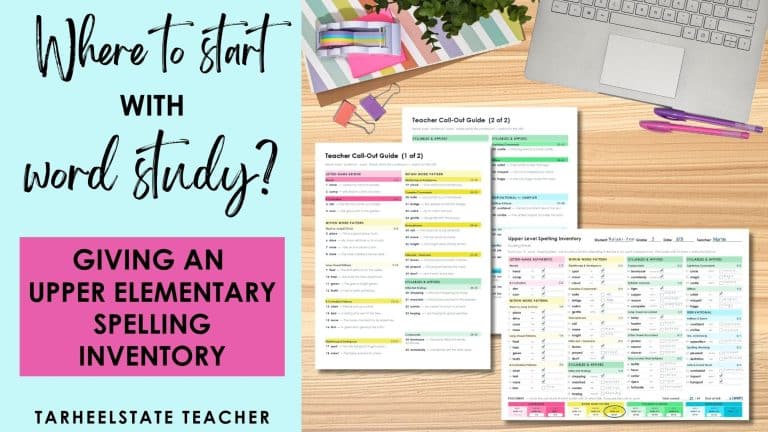
- Administering my spelling inventory so that I have some assessment data for beginning word study
- Getting those writer’s notebooks decorated so students love their journals
When you read through my schedule and what I plan to accomplish during the first week of school, you will see that my plans are literacy heavy and discussion heavy. I do A LOT of reading aloud during the first week of school.
 FAQ: How do I balance SEL and community-building with everything else I need to accomplish that first week?
Structure your week around a small number of protected priorities instead of trying to fit everything in equally. My Big Rocks First Week approach protects five priorities, community and belonging, love of reading, growth mindset, spelling assessment, and writer’s notebooks, before all of the other subjects take over.
This schedule spans the first two weeks. I’ve labeled each section by week.
PRIORITY 1: BUILDING CLASSROOM COMMUNITY (WEEK 1-2)
You’ll notice that my plans are intentionally discussion-heavy from day one. Research on classroom community shows that a student’s sense of belonging in their classroom leads to a more positive connection with school, along with stronger self-efficacy and intrinsic motivation. When students feel accepted and respected, they feel safe taking the intellectual risks needed in a learning environment.
FAQ: When should I start teaching math and core curriculum content?
During the first week of school, I need some extra time and I free that up by not starting my heavy core subjects like math and science yet. We can start those subjects in week 2, once our community routines and ELA blocks are in place. Most of your first week should be spent in building community, reading life, and routines instead, because students who feel safe and know your routines engage with new content faster than ones still figuring out where the pencils go. Investing your time this way during week one will pay off.
WHY I START THE YEAR WITH BELONGING AND INCLUSION
I run theme-based morning meetings, which means my social emotional learning time isn’t just a rotating set of greetings and share sessions. Each theme gets a full 3-4 week unit built around picture books, quotations, videos, vocabulary, discussion, and student journaling. I’ve got 16 themes I teach across the year this way, everything from kindness and empathy to growth mindset, perseverance, responsibility, managing emotions, courage, and friendship. If you want the full breakdown of how the framework works, I’ve written about the theme-based morning meeting framework here.
But the first two weeks of school belong to one theme: belonging, and specifically teaching students to be includers.
I start here on purpose. Before students can do the harder social-emotional work of the other 15 themes, they need to know this classroom is a place where nobody gets left out. Belonging is the foundation of our interactions with one another. If students don’t feel a responsibility to including everyone, everything we do this year will be harder.
WHAT ACTUALLY HAPPENS DURING MORNING MEETING
Morning meeting isn’t a single lesson type. My theme units move through five phases, and knowing which phase you’re in tells you the focus of each day:
1. Launching the theme. I open a new unit with a read aloud, a quotation, or a video, and I deliberately don’t tell students the theme upfront. I want to hear what they notice first. This takes 1-2 days.
2. Introducing the theme, self-reflection, and goal setting. Now I name the theme and define the key vocabulary, posting both on our morning meeting bulletin board so we can reference them all unit. Students complete a self-reflection with rating scales that get them thinking honestly about where they stand, then set one personal goal for the unit. We set a whole-class goal too, usually after our first big discussion.
3. Student discussion. Students get a journal page with three discussion questions and space to illustrate. They jot ideas independently first, which is the single biggest thing I’ve found that improves discussion quality, more students participate when they’ve had a minute to think. Then we discuss as a whole group and I build anchor charts to capture their ideas.
4. Building the theme. This is the longest phase. We keep layering on read alouds (at least 3 per theme), videos, quotations, and journaling. Students start making connections between texts on their own.
5. Consolidating. We put the pieces together: students check back in on the goal they set, we chart text-to-text connections across the stories we’ve read, and we do a final reflection on a quotation. This is where the big ideas get pulled out and where I’m quietly hitting ELA standards like theme, character analysis, making connections, and comparing how different authors treat the same idea.
WEEK 1-2 BELONGING UNIT SCHEDULE
- Day 1: Launch the theme. Read aloud Big Al by Andrew Clements. Discuss what happens to Big Al and why.
- Day 2: Name the theme and define vocabulary (belonging, inclusion, exclusion). Post to the bulletin board. Students set up their morning meeting journals.
- Day 3: Self-reflection and personal goal setting. Students rate their sense of belonging and history of including others and set one goal for the unit. This is where I set the class goal and expectation that we included others.
- Day 4-5: Discussion phase. Journal page with three questions, then whole-group discussion and anchor charts.
- Week 2: Building phase. Read aloud Each Kindness by Jacqueline Woodson and Babushka Baba Yaga by Patricia Polacco. Students start comparing how each character experiences exclusion. Add in a video and a quotation analysis.
- End of Week 2: Consolidating. Compare and contrast to make text-to-text connections across all three books. Students revisit their goal and reflect on how they did.
Throughout both weeks, I remind students at lunch and recess to make sure everyone is included and nobody feels like a “Big Al.” That phrase becomes shorthand as a reminder to be inclusive. I use the unstructured time during lunch and recess to watch how students actually interact with one another, which helps me decide on what themes will be important to teach early on this year.
Other community-building tasks that fit here: brainstorming necessary classroom jobs (usually later in week one, once students have seen what our needs actually are) and giving students time to complete job applications.
FAQ: Is there a free resource to start building classroom belonging right away?
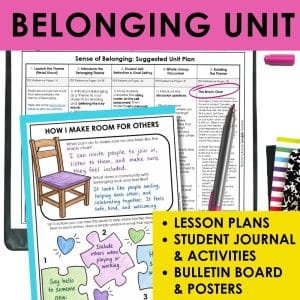
The Belonging theme unit is completely free, including teacher lesson plans, student journal pages, self-reflections, discussion prompts, and bulletin board materials. It’s the unit I use for the first three weeks of school. Grab the unit so you can implement it in your own classroom.

Let’s help students build a reading life! I’ll send you the “Reading is the WORST for Us When…” minilesson notes, anchor charts and student journal pages for the first lesson! Just subscribe below for your plans to help students build an amazing reading life this year! 
WEEK 2: LAUNCH WRITING WORKSHOP
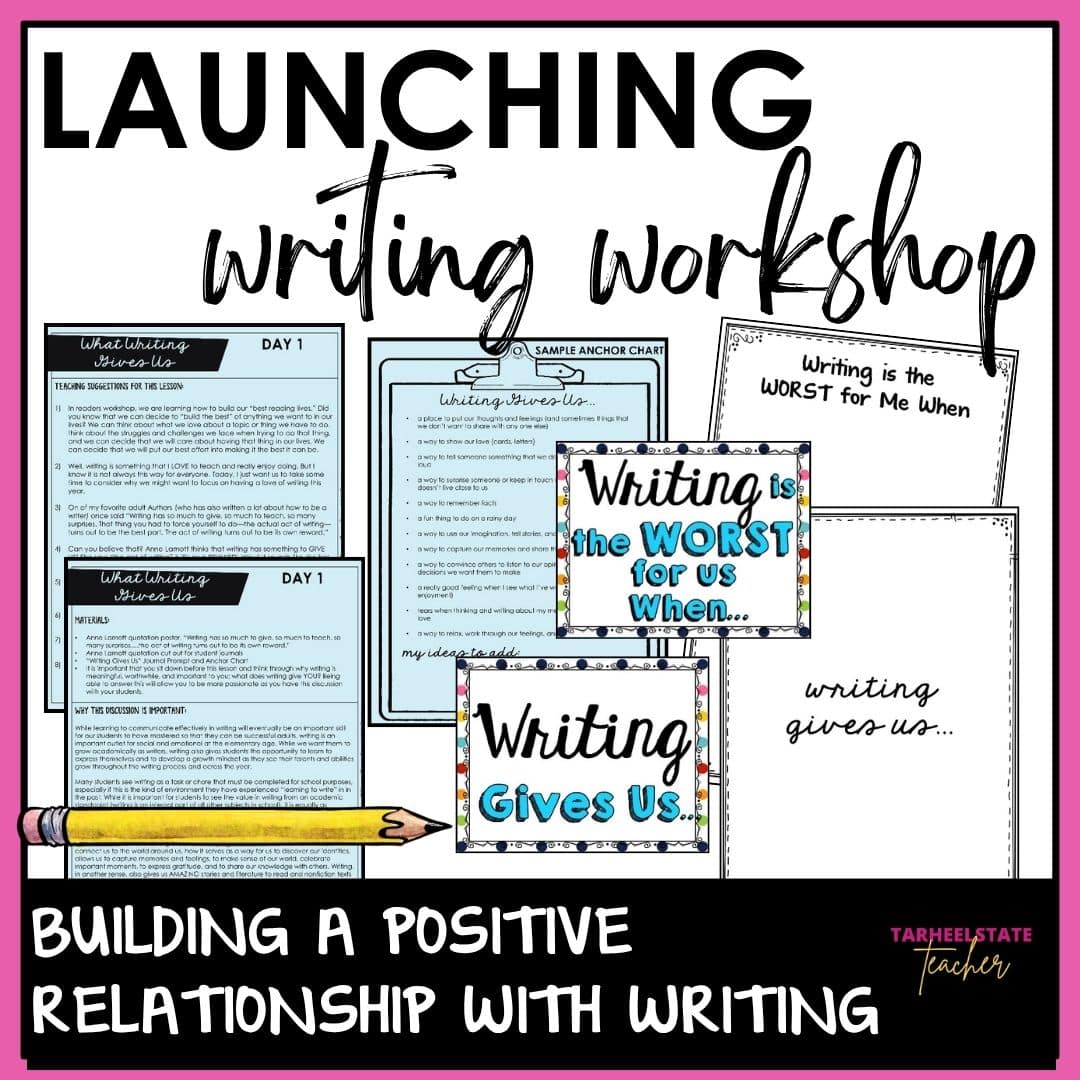
During week two, I launch my Penciling in a Worthwhile Writing Life unit, where students verbalize their best and worst writing experiences. It deliberately mirrors the Building a Reading Life unit from week one, so students see the same reflective structure applied to writing.
FAQ: Where can I find ready-made resources for launching reader’s workshop and writer’s workshop the first week?
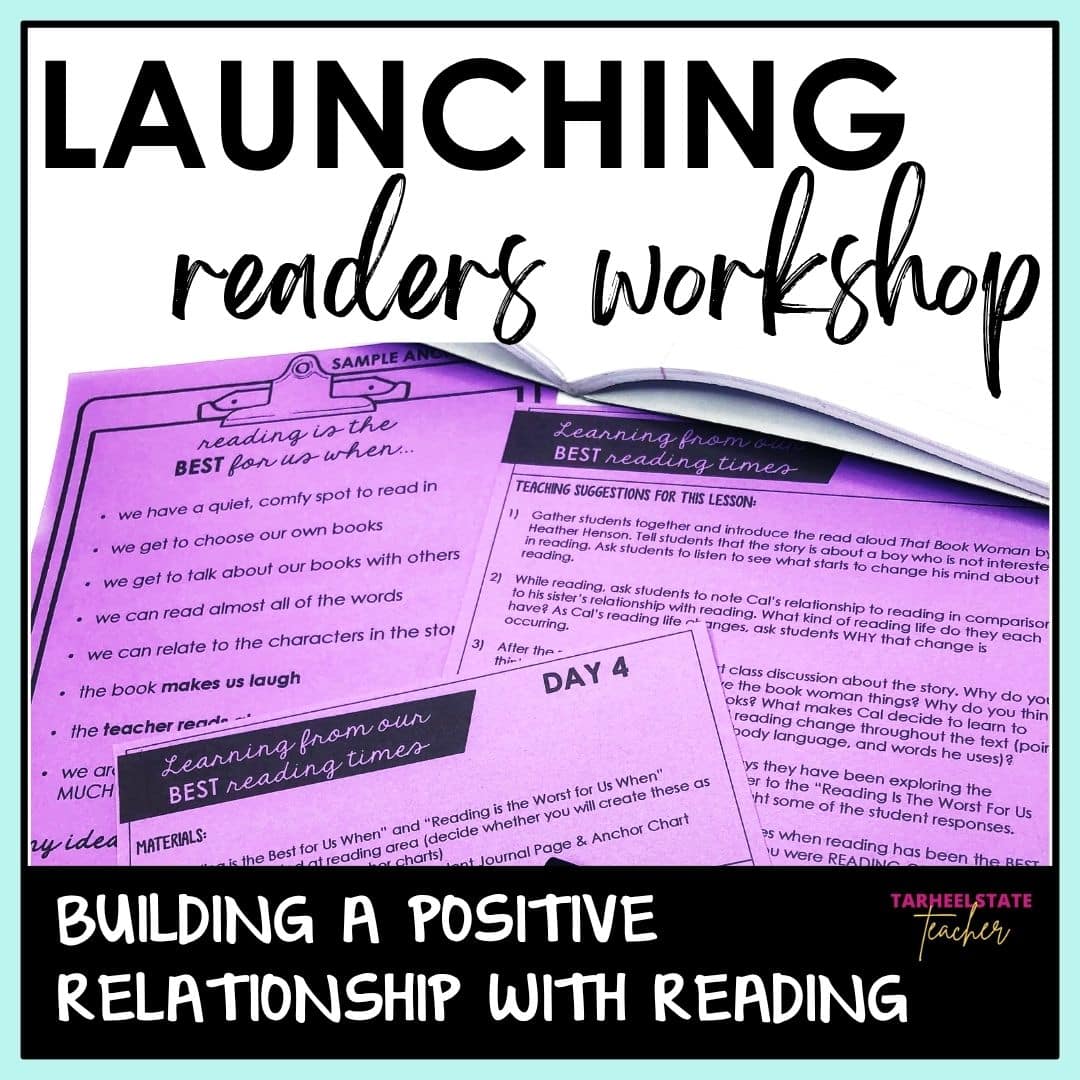
The Launching Reader’s Workshop and Launching Writer’s Workshop guides walk through the exact minilesson sequences referenced in this post, including the Building a Reading Life and Penciling in a Worthwhile Writing Life units. Both are built to mirror each other, so once one is launched, the second follows a structure students already recognize.

PRIORITY 3: INTRODUCING GROWTH MINDSET (WEEK 1 INTO WEEK 2)
Growth mindset gets its own spot on my list. While Belonging is about how my students treat each other, growth mindset is about whether or not they believe in themselves and will try hard when things are challenging. I want my students to understood the research behind growth mindsets, the difference between fixed and growth mindsets, and learn how to re-frame negative thinking. I also want them to realize that this school year is a fresh start and they have the opportunity to grow more, regardless of their past school experiences.
I never manage to fit my growth mindset lesson into day one, but I am sure to get this conversation started on day two, often using my science block (perfect since I’m teaching students how their brain works!)
FAQ: How do I fit growth mindset instruction into an already packed first week without it feeling like an extra lesson?
Give it its own time on the schedule. I start on day two with one lesson a day, and I don’t try to squeeze it into another block to save minutes. It stops feeling like an add-on once you stop treating it like one, and honestly, growth mindset earns that slot as much as anything else I’m teaching that week. Learning to say “I can’t do this yet” instead of “I can’t do this” is the same kind of work as learning to include the kid nobody sits with at lunch. It’s just pointed inward.
WHAT I ACTUALLY TEACH THE FIRST TWO WEEKS
Before I teach my full SEL growth mindset unit later in the year, I pair a handful of pieces from it with Angela Watson’s growth mindset materials.
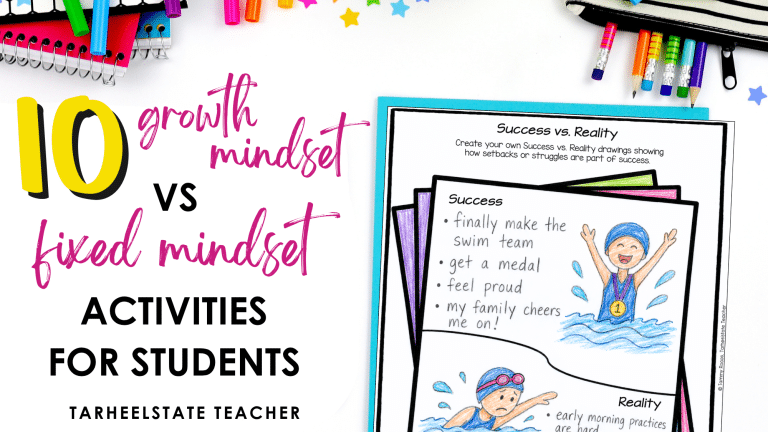
I pull the following activities from my own unit, all focused on helping us create shared language around growth mindset:
- The growth mindset versus fixed mindset sort, so students can actually name the difference instead of nodding along to a definition
- The vocabulary for our bulletin board: growth mindset, fixed mindset, neuroplasticity, effort, resilience, perseverance, posted where we can point at it all year
- The Power of Yet brainstorming exercise, which is an important distinction that I want in their heads before the first genuinely hard assignment
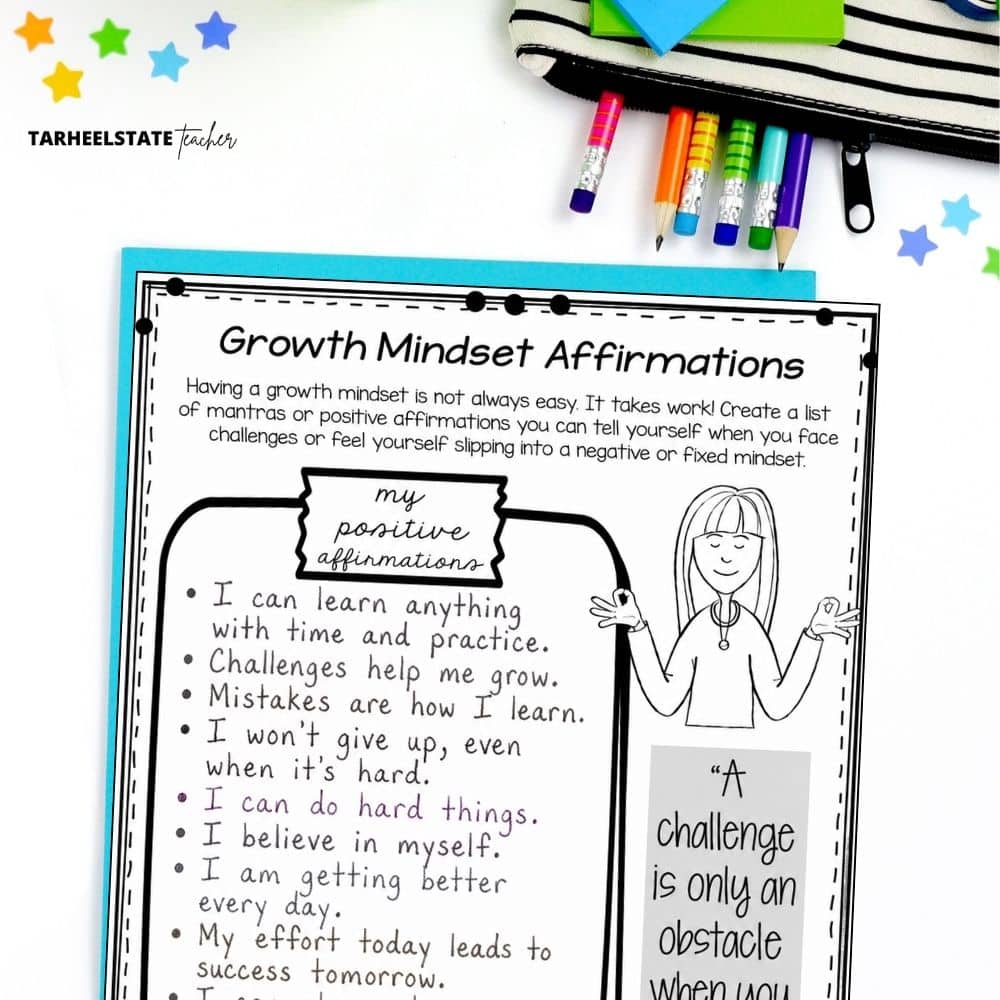
- Growth mindset affirmations, so when a student is stuck, they’ve got something to say to themselves that isn’t “I’m bad at this”
PRIORITY 4: ADMINISTER MY SPELLING INVENTORY (WEEK 1)
While I don’t do a lot of formal assessments during the first week of school, I am sure to squeeze in my Engaged Spelling Inventory (aligned to WTW).

This inventory builds on the 24-word Words Their Way inventory and contains 64 words spanning the Late Letter-Name Alphabetic Stage, Within Word Pattern, Syllables and Affixes, and the Derivational Relations Stage. It gives me specific insight into the instructional level of my students down to which word study unit they are ready to start. I break this assessment into 3 sessions of 15-20 minutes. I recently added a PowerPoint with a clipart clue that makes administering this spelling inventory more pleasant. (Wait, what word was that? I missed one! Can you repeat that again?  )
)
WHAT ACTUALLY MATTERS BY THE END OF WEEK ONE
My best advice for planning your first week back to school is to be sure to get the time consuming stuff done early on. That’s covering writer’s notebooks (contact paper and all), setting up binders, completing any crucial assessments, and organizing reading journals with the sections you want. Those tasks eat up entire afternoons, and they’re much harder to squeeze in once real instruction starts.
FAQ: What’s the biggest mistake teachers make when planning their first week of school?
Treating the first week as review time or diving straight into curriculum content, rather than protecting it for community and routines. After 11 years of first days I realize that kids will always sit through more teacher talk and directions than any of us would like that week. What determines whether the rest of the year goes smoothly is whether that time built toward genuine community and clear routines, not whether content got covered.
My real goals for the week come down to two things: I want my students to understand that I expect an inclusive classroom where everyone is respected, included, and treated with care, no one should ever feel like a “Big Al”. And I want them to understand that building a reading life full of passion for stories and books matters, and that I’ll be right there helping them fall for it.
If I have ended my first week of school and accomplished those two things, I can rest easy and let go of the stress of all the things I didn’t accomplish. If I have kind students who are working as a team, who are eager to build the best reading lives ever, and who are putty in my hands when I read aloud, who go home telling their parents they had a great day at school, I know it is going to be a great year!