If you’ve been saving math word problems for the end of a unit, waiting until students “get” the computation first, this post is for you. I taught that way for years. I was wrong about it, and the change I made had a bigger effect on my students’ math confidence than almost anything else I tried.
Here’s what I want you to walk away with: students can learn to do the math while they are learning to solve word problems. You do not have to wait. In fact, waiting is what creates the fear you’re trying to avoid.
Below are the four things that changed how I taught word problems, plus a problem-solving method you can start using this week.
WHY WE HOLD BACK ON MATH WORD PROBLEMS
My hesitation came from the way my math textbook was built. Computation lessons came first. Word problem lessons came near the end of the unit. A few obvious word problems were tucked at the bottom of the homework sheet, but the structure told me clearly: don’t overwhelm them too soon.
The other reason was learned behavior. My students would freak out when word problems came out. That reaction made me afraid to go there, so I went there less, which made the reaction worse. It was a loop, and I was the one keeping it going.
Then came the state test, where nearly everything asked students to demonstrate their thinking through word problems. My students walked into that test intimidated by the exact format they’d seen the least.
I look back on the decision to wait as a rookie teacher mistake. Circa 2005.
What eventually broke the loop was a grade-level team that met weekly to plan. When we hit a math unit, we forced ourselves to answer one question:
How does this concept connect to the real world, and how do we help students relate it to something tangible?
We figured out how to bring the math to life at the beginning of a unit, not after students had already “mastered” it in isolation.
1. DIG FOR QUALITY WORD PROBLEMS IN WHAT YOU ALREADY HAVE
Start with your existing materials. When I went back through my math textbook, I found word problems for every single lesson. They were just buried in a section labeled “Enrichment.”
This was before Teachers Pay Teachers existed, so my textbook and my copy budget were the whole toolkit. Check the supplemental pages, the enrichment sections, the assessment banks. There is usually more there than the pacing guide points you toward.
2. HOLD YOUR MATH TASK CARDS TO A HIGHER STANDARD
I use task cards constantly in math, but not just any set. I almost exclusively use task cards built around word problems and higher-level application, not bare computation.
When I do use computation-only cards, like a comparing and ordering fractions set, I build in leveling and scaffolding for differentiation.
The question I keep coming back to: what is the point of multiplying and dividing fractions if a student has no idea how anyone uses that in real life?
3. LOOK FOR REAL-WORLD THEMED WORD PROBLEM SETS
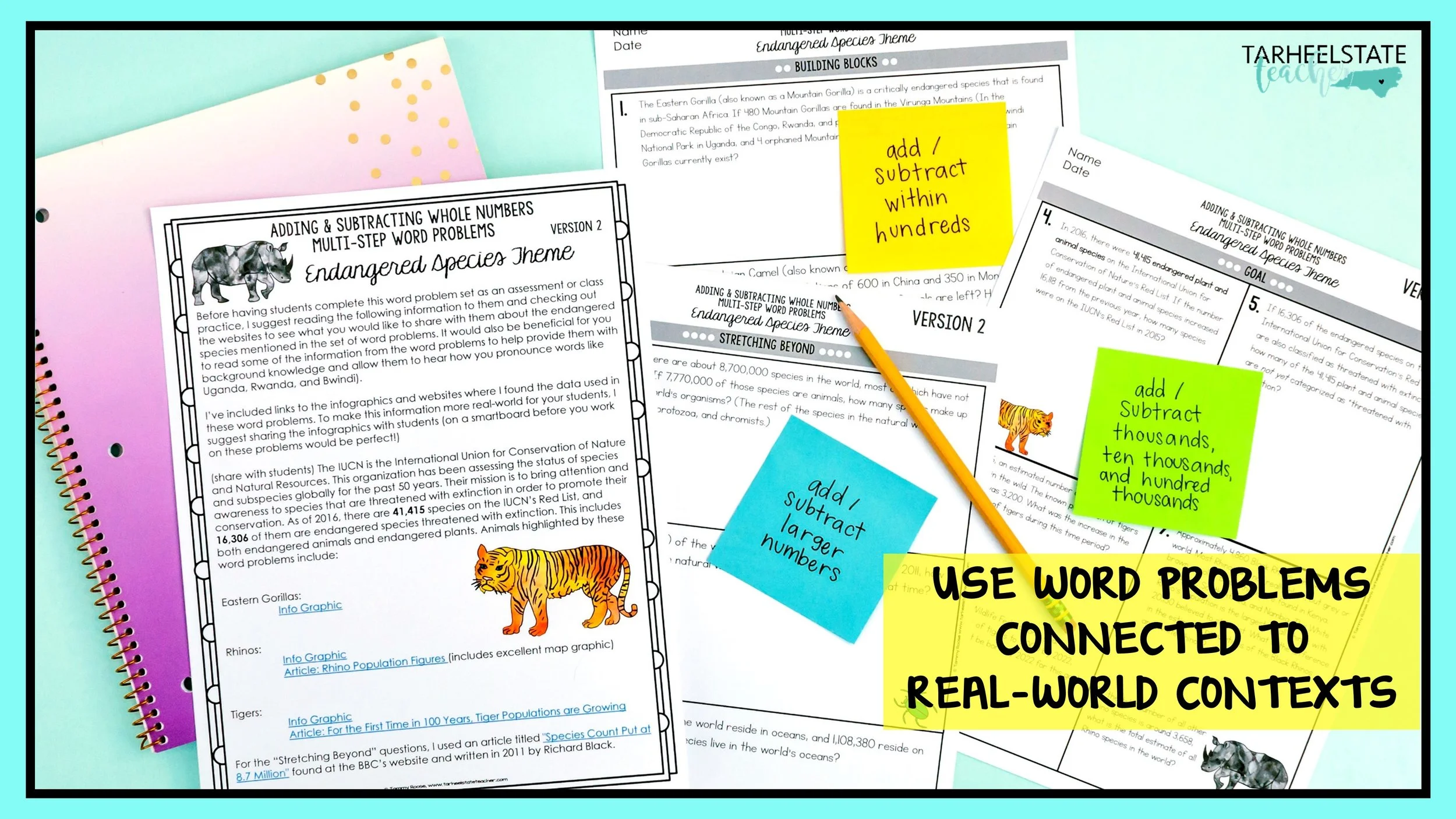
This is where the shift really happened for me. I started building word problem sets and task cards around real contexts, either using real-world data or scenarios students actually care about.
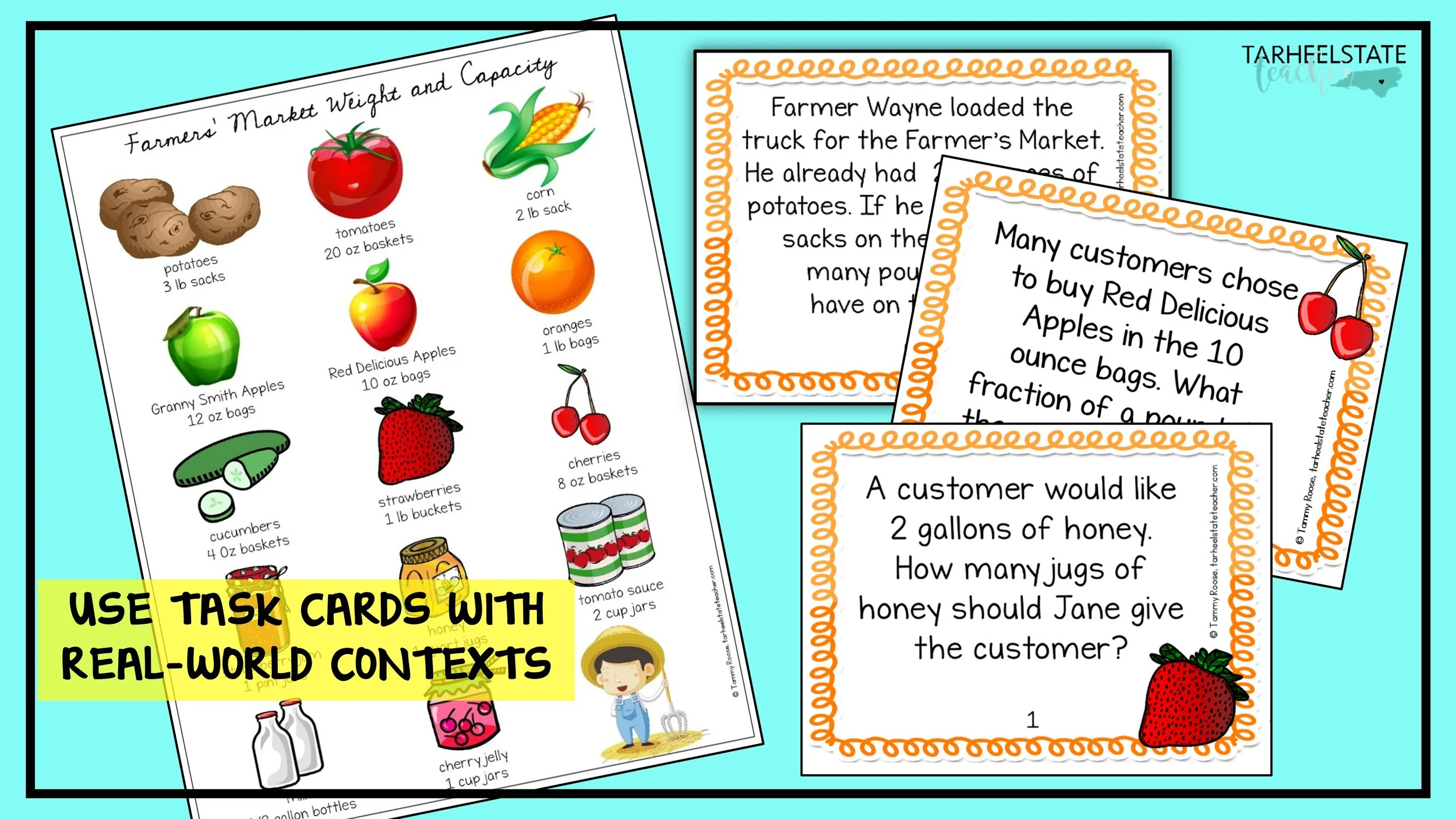
A few that consistently land with 4th and 5th graders:
- Mixed Up at the Farmers’ Market — converting customary capacity and weight
- House Plan Themed Problems — multiplying and dividing decimals through area
- Cupcake Shop — multiplying and dividing fractions
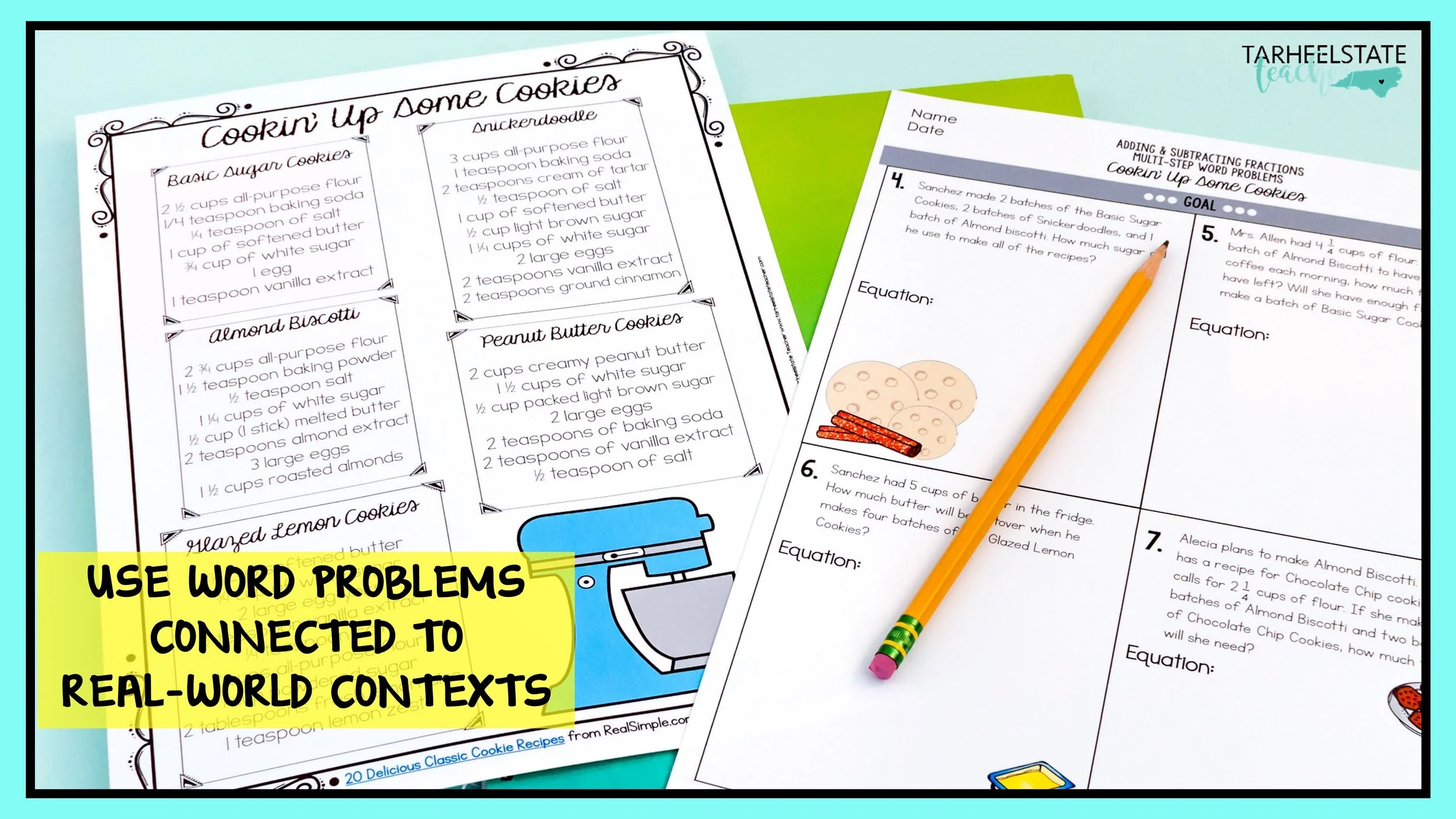
- Cooking Up Some Cookies — adding and subtracting fractions
- For the Love of Reading — whole number division
- Movie Theater — adding and subtracting decimals
The theme is doing real work here. It is not decoration. When a student can picture the farmers’ market, the conversion stops being an abstract rule and starts being a thing that has to be true for the vendor to get paid correctly.

4. FIND A PROBLEM-SOLVING METHOD AND TEACH IT AS A PROCESS
Part of what got me over the fear was realizing there is an actual process students can run when a word problem stops them cold. Not a trick. A process.
Pick a method you like, teach it explicitly, model it, guide it, and repeat until students can move through the steps without you.
Mine has four steps:
- Understand the problem
- Make a plan
- Do the work
- Answer the question and check the work

One important caveat: not every problem written in words needs all four steps. Running the full method on a one-step problem would make me want to bang my head against the wall, and it would absolutely make a student hate word problems. That is not the goal.
This method is for multi-step problems. Use it when the problem is genuinely hard, and teach students to reach for it when they get stuck and don’t know how to proceed. Used that way, the method has real value. Used on everything, it becomes busywork and students tune it out.
Think of it like a pro/con chart. You would never make one for every decision in your day. But when the decision is hard, you pull it out, or at least run through it in your head.
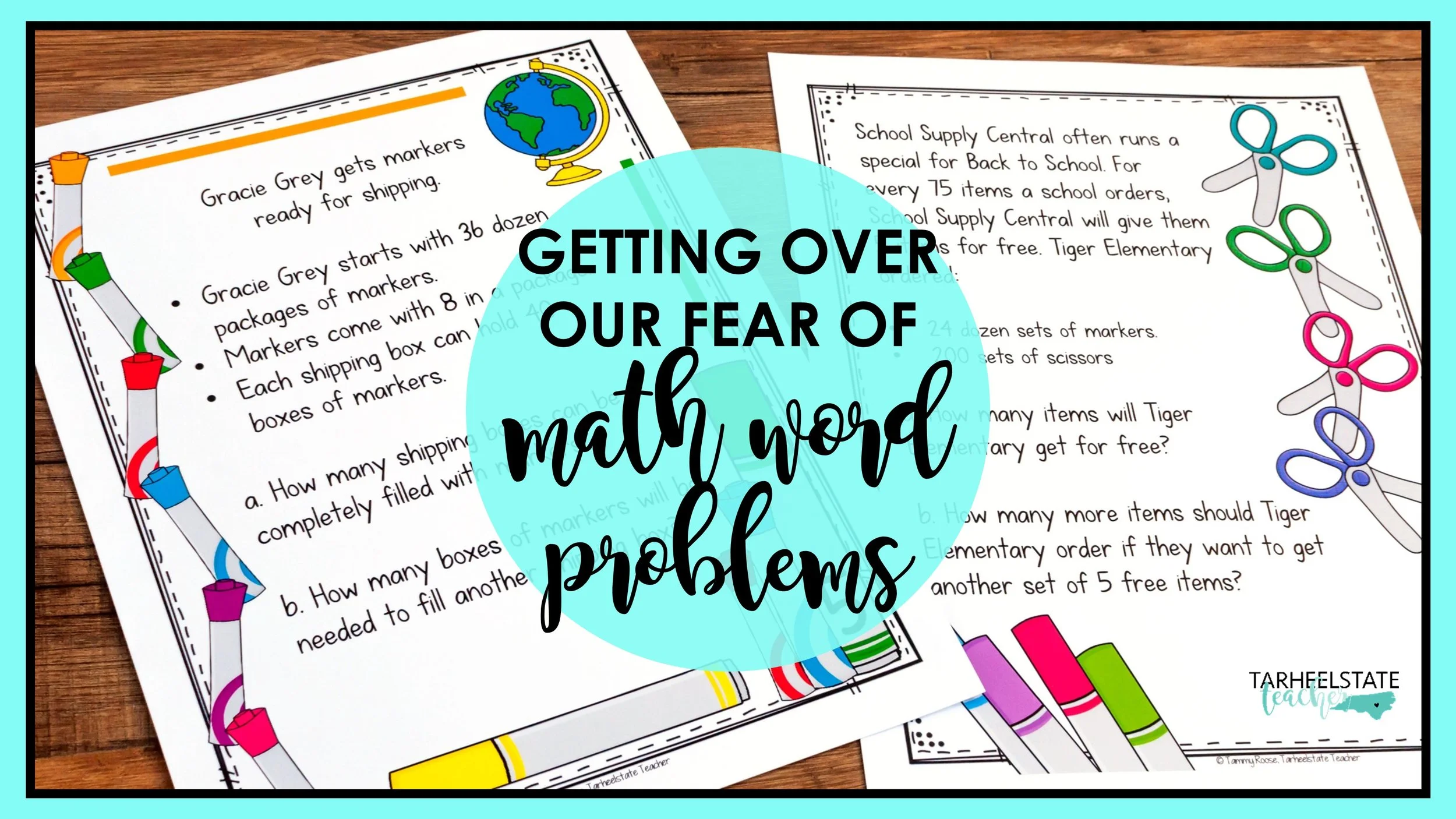
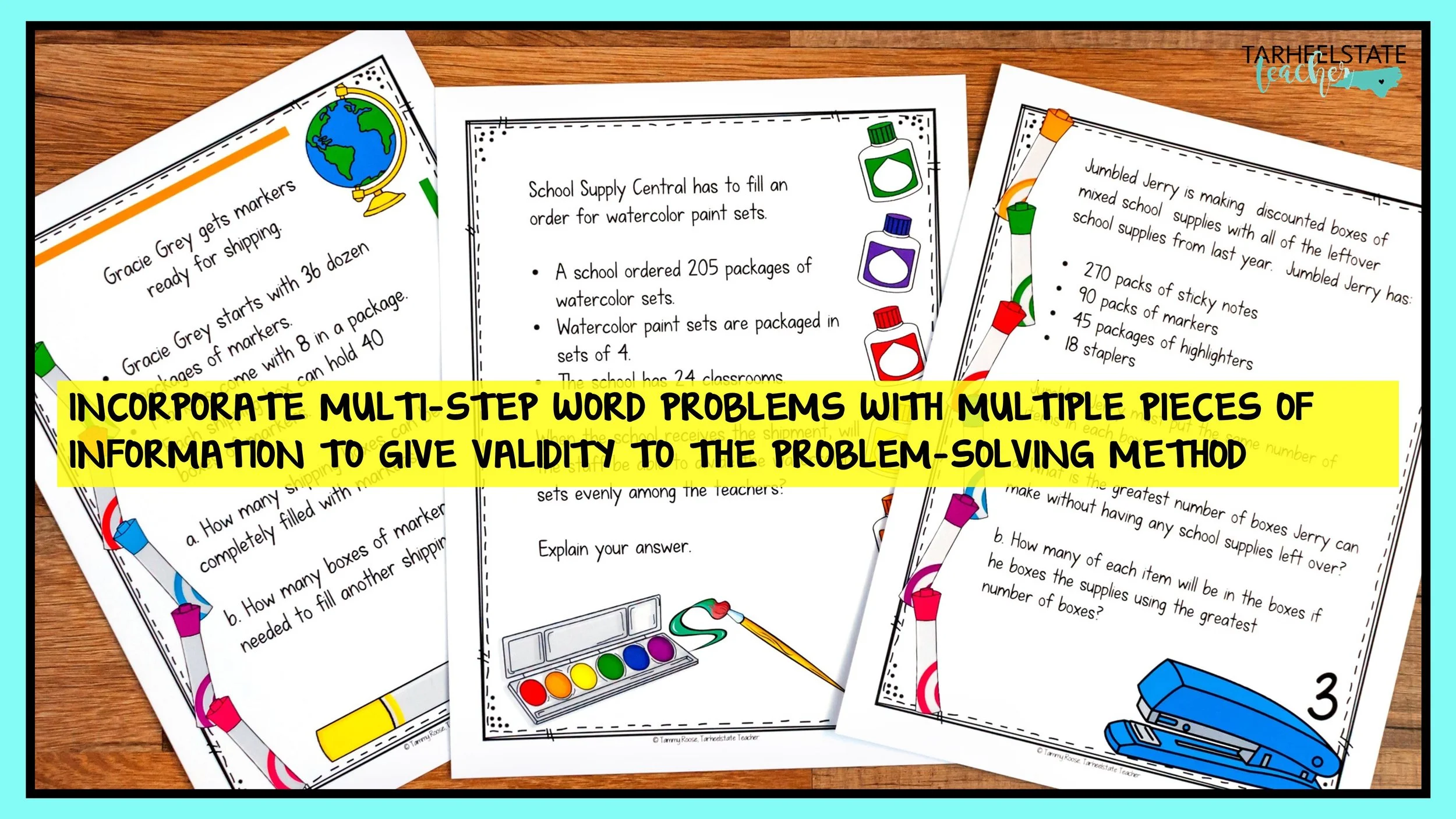
THE SCHOOL SUPPLY WORD PROBLEMS
The School Supply themed problems are what I use to build buy-in to the method. The premise is a school supply packaging company where employees are prepping boxes to ship out.
When students first see them, they are overwhelmed. There is a lot of information on the page and no obvious place to start. That is the point. Taking time to explain the real-world context helps students visualize what actually needs to happen, and as you model the process with the template, students get more comfortable with both the problem and the method.
Students want to jump straight to solving. This method forces them to slow down and comprehend first.
Get the School Supply multistep word problems free, along with the problem-solving graphic organizer and step-by-step directions for teaching it, by entering your email below.