We know that teaching students to be responsible is important for their academic success, for building strong character, and for helping them be successful in life. We all appreciate people who are responsible and we teachers LOVE those students who have a natural inclination for being responsible with their actions. But, how do we help students learn to become MORE responsible? I introduce “habits of highly accountable students” with my responsibility unit during morning meeting lessons. I incorporate a number of activities to teach and discuss responsibility with my upper elementary students. Let me share with you!
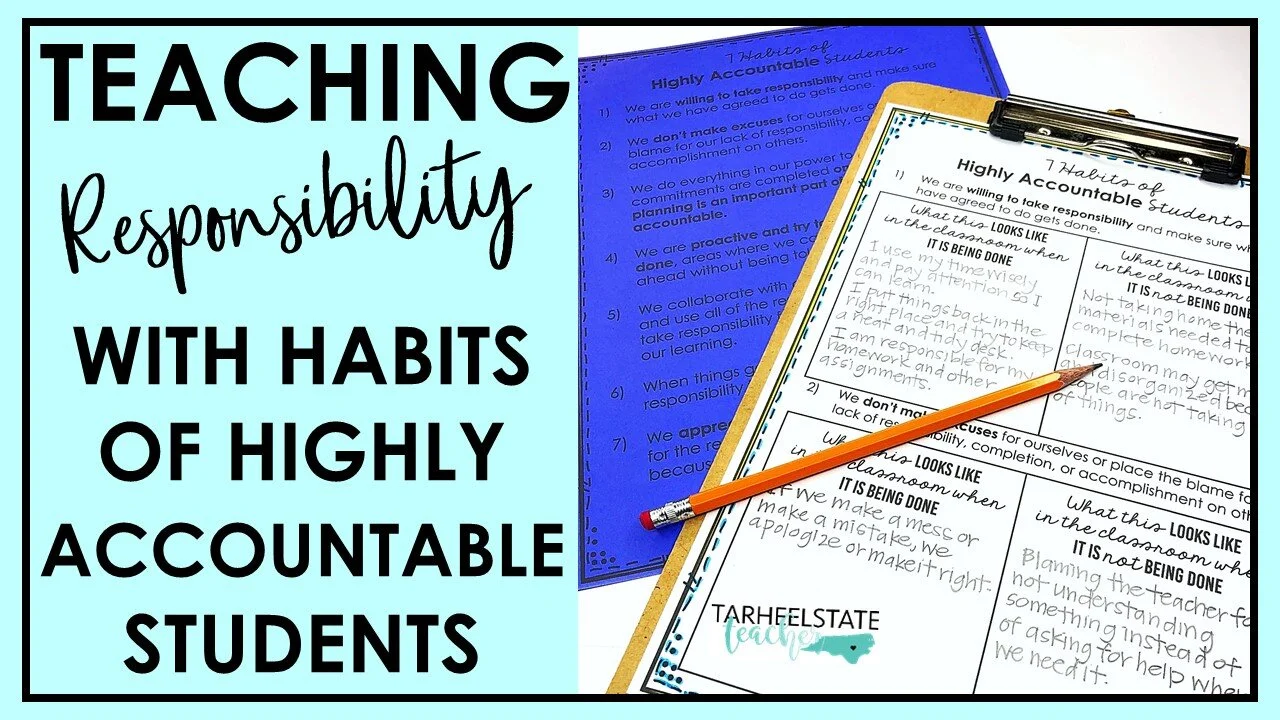
 You can do each of these suggested accountability activities for students with a reflection journal and materials you have around the classroom, but if you want some of the work done for you, you can check out my full Responsibility SEL unit, complete with lesson plans that make it super easy to implement and enjoy!

FIRST, DEFINING RESPONSIBILITY AND ACCOUNTABILITY
We must give students the language to properly discuss these ideas. I define responsibility as “being accountable for one’s own actions; choosing to be one who takes responsibility when others may not think it is important.”
Accountability is a willingness to take responsibility for one’s actions—including the things we should do, should not have done, and when mistakes are made. An accountable person does not make excuses or place blame on others.
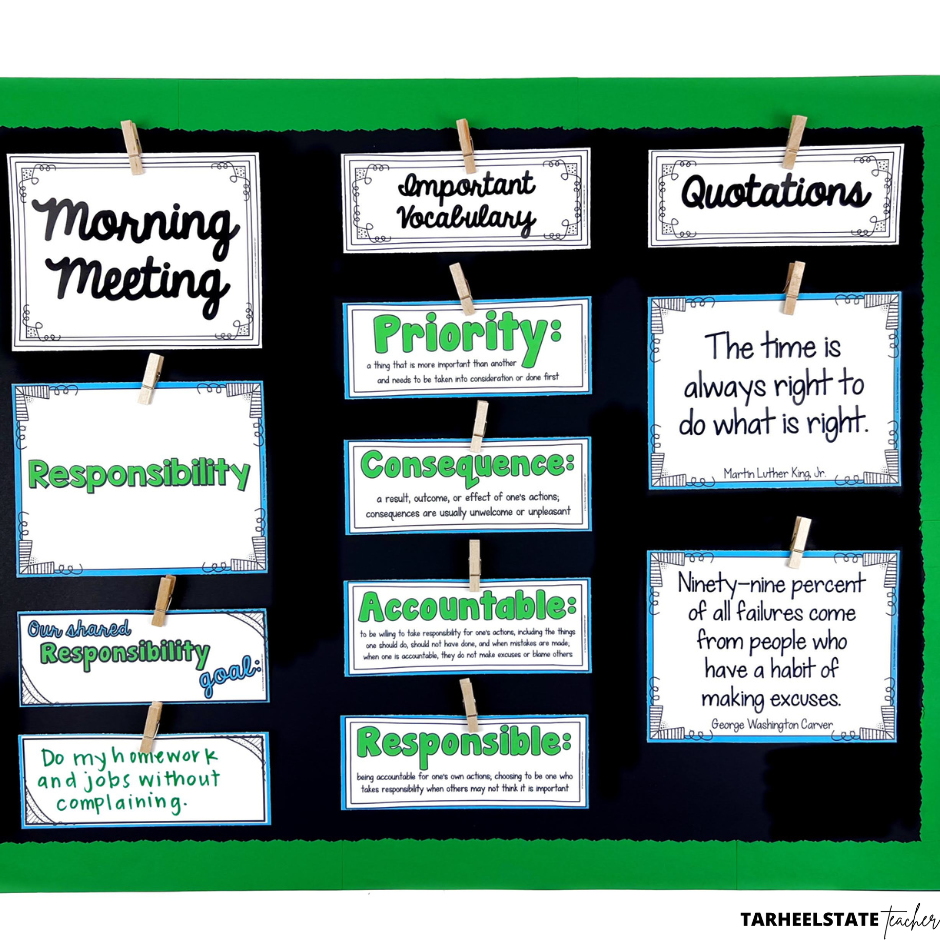
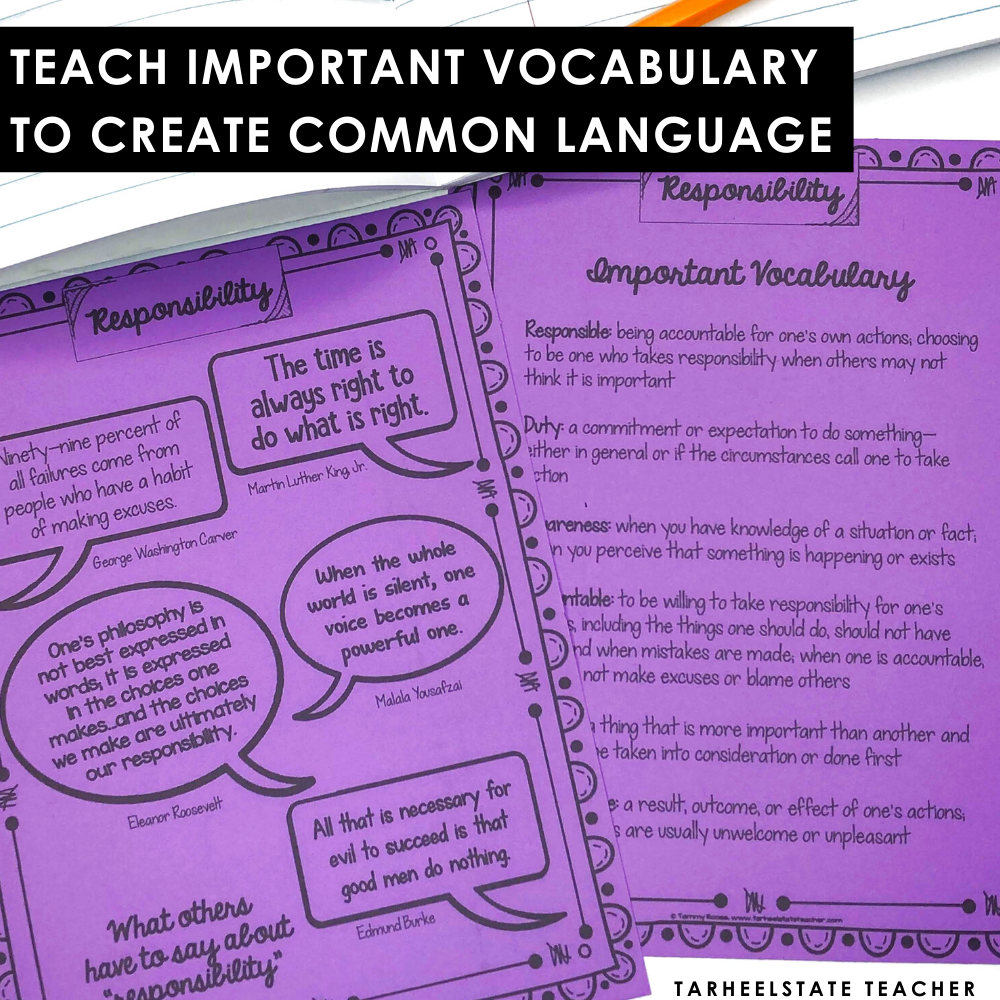
I post all of our key vocabulary about responsibility on our morning meeting bulletin board near our meeting carpet. This makes the terms and definitions really accessible to students and helps them internalize the concepts. Students also receive a copy of the vocabulary to put in their morning meeting journals.
7 HABITS OF HIGHLY ACCOUNTABLE STUDENTS (A LIST OF RESPONSIBILITY HABITS TO TEACH!)
In my research for what it truly means to be responsible and in thinking about how I can impart those characteristics to students, I came up with a list of 7 habits of highly accountable students.
- Responsible, accountable students are willing to take responsibility and make sure what they have agreed to do gets done.
- Responsible, accountable students don’t make excuses for themselves or place the blame for their lack of responsibility, completion, or accomplishment on others.
- Responsible, accountable students do everything in their power to make sure commitments are completed on time. They know that planning is an important part of being responsible and accountable.
- Responsible, accountable students are proactive and try to predict what needs to be done, areas where they can be more helpful, or move ahead without being told to do so.
- Responsible, accountable students collaborate with others, ask for help when needed, and use all of the resources available to them in order to take responsibility for themselves and their learning.
- When things go wrong or they get off track, responsible, accountable students take responsibility to think of other options and solutions.
- Responsible, accountable students appreciate but do not expect a pat on the back for the responsibility they have taken. They are satisfied because they have kept their word and done their best!
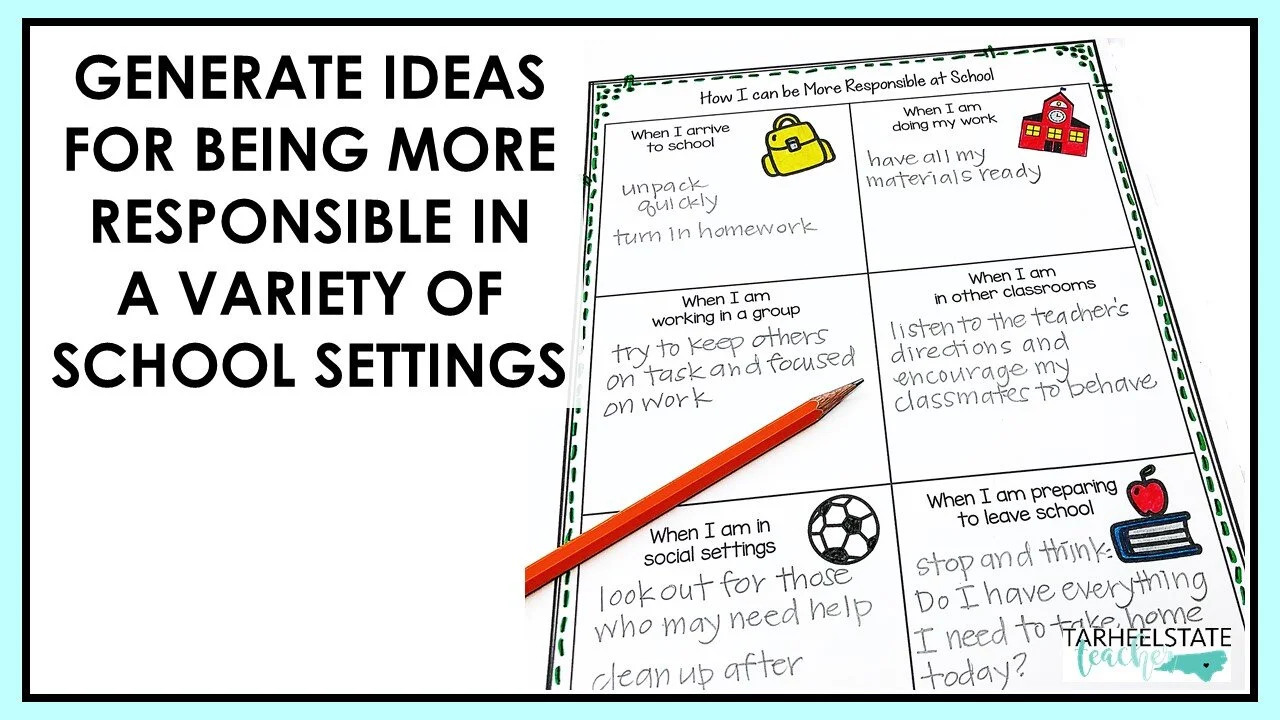
In our responsibility morning meeting unit, students take each of these 7 responsibility habits and think about what the habit looks like in the classroom when it is being followed and when it is not being followed. Students consider how they can be more responsible in different school settings and in different aspects of their personal/home life.
OTHER STRATEGIES FOR TEACHING AND DISCUSSING RESPONSIBILITY
1) Read Alouds: We read picture books like But It’s Not My Fault by Julia Cook and What If Everybody Did That? by Ellen Javernick to develop a better understanding of what it means to be responsible. Picture books provide concrete examples of the effects of irresponsible actions and make for great discussions. I’ve compiled all of the responsibility-themed books I use during this unit into an Amazon list so that you can easily browse these books. (Note: As a participant in the Amazon Services LLC Associates Program, I may earn advertising fees at no cost to you by linking to amazon.com. Read my full disclosure here. )
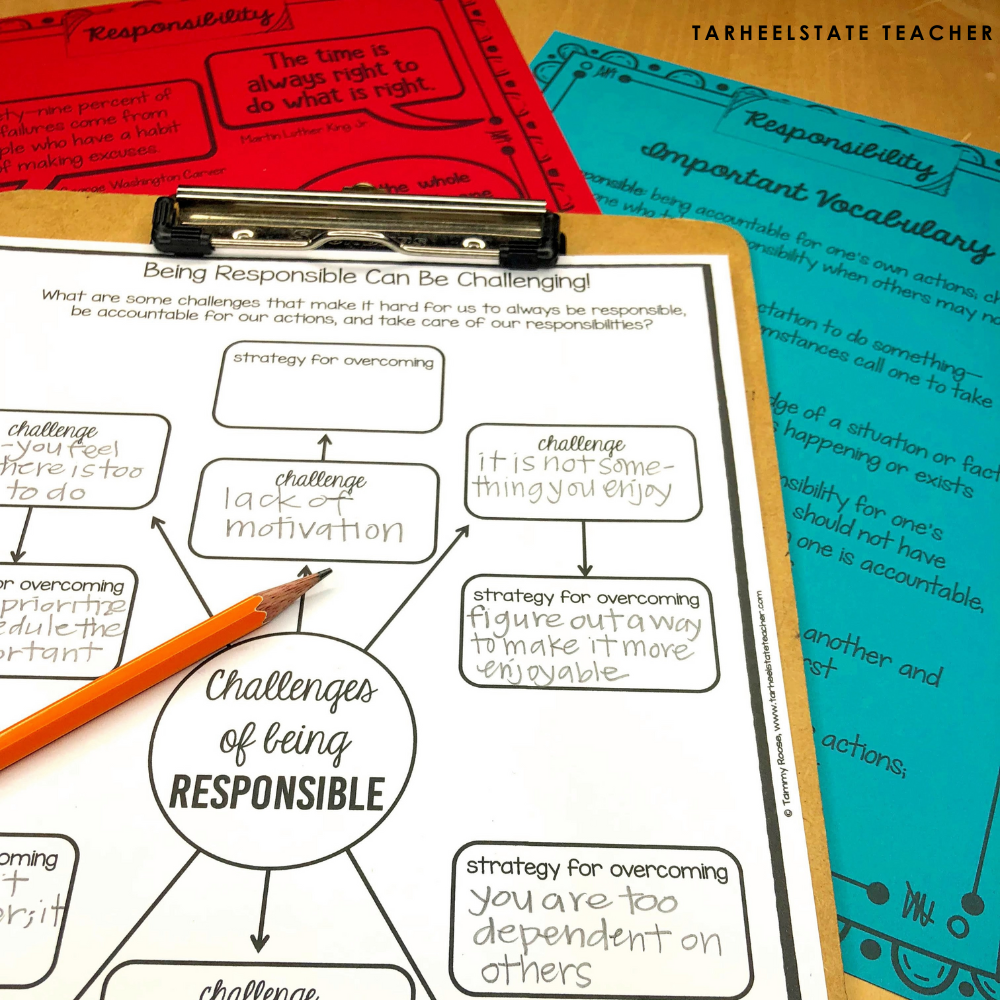
2) Discussions and Scenarios: During our responsibility-focused unit, I even acknowledge that being responsible can be a real challenge. We work through different challenges we may face when trying to be responsible, then we brainstorm strategies for overcoming those challenges.
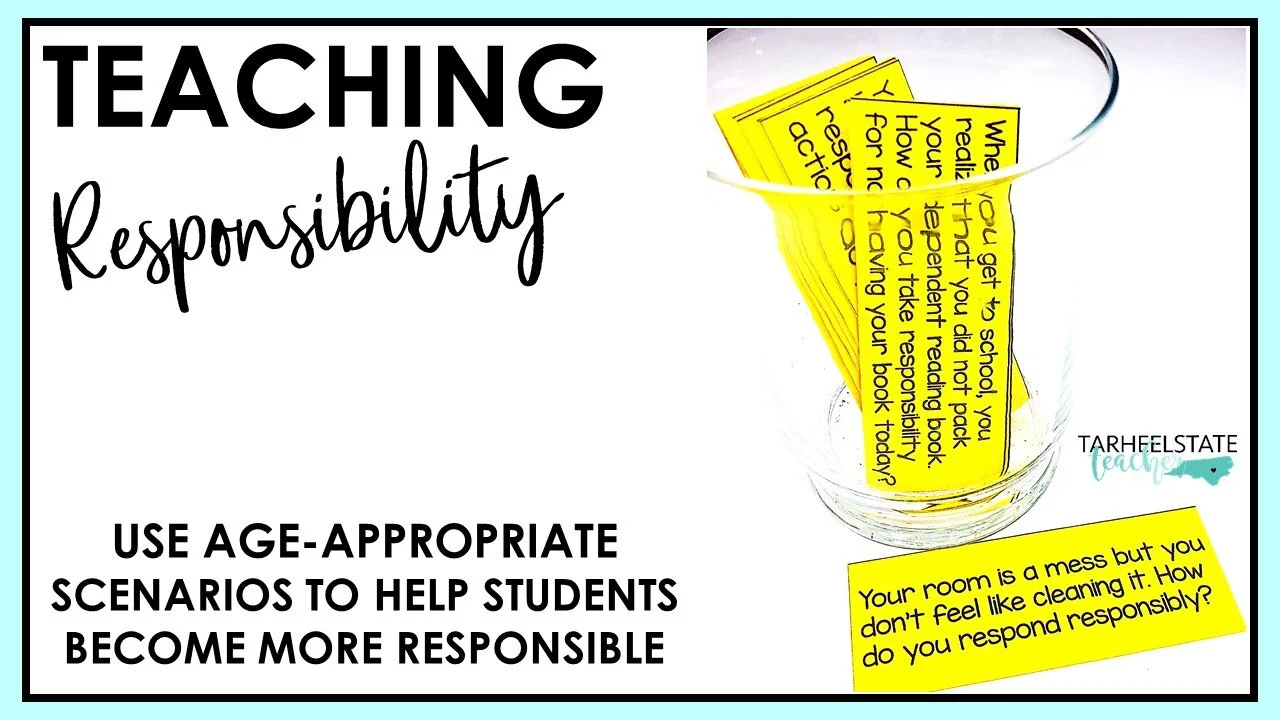
Using some situation slips I keep in a jar by our meeting space, we use any extra time to go through different “responsibility” scenarios and answer questions like, “How do you respond responsibly in this situation?” and “What proactive actions do you need to take?” These scenarios are relevant to students’ school, home, and community home settings.
3) Using Quotations: “The time is always right to do what is right!” and “99% of all failures come from people who make a habit of making excuses!” Responsibility quotes like these encourage and inspire my students to do their best, make strides to become more responsible, and care about the impact of their actions. I hang quotations like these on our morning meeting bulletin board and students get a copy of the quotations for their morning meeting journals.
If you’re looking for more ways to keep building responsibility and accountability with your students, here are some other resources you may be interested in:
- Books for Self-Regulation and Self-Awareness highlights a diverse collection of read alouds that help students explore what it means to take ownership of their actions, manage their emotions, and show up responsibly for themselves and others.
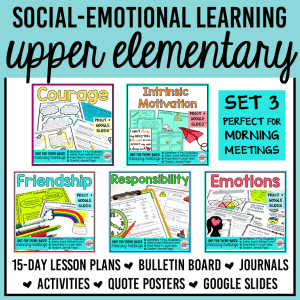
- Complete Responsibility SEL Unit for upper elementary—this unit includes all of the activities you see in this post, editable lesson plans, suggested read alouds, student notebooks, and a bulletin board to help your unit make a lasting impression!
Let’s continue helping students grow into dependable, accountable humans who take pride in doing the right thing.
NEED A DONE-FOR-YOU RESPONSIBILITY UNIT?
The Responsibility SEL-Morning Meeting unit is a 20 day unit for upper elementary. It includes
✨ 20 Days of Printable & Editable Lesson Plans — includes suggested read alouds, discussion questions, responsibility activities, extension ideas, and linked online resources
✨ Student Journals & Activities — responsibility-related discussion prompts, self-reflection and goal setting exercises, and social emotional learning worksheets to deepen students’ understanding of responsibility and accountability, with activities like Responsible vs Irresponsible Scenarios Sort, Accountability in Action: Who Inspires You?, Responsibility Hacks Multimedia Project, 7 Habits of Highly Accountable Students, and more!
✨ Responsibility Bulletin Board that includes important vocabulary like responsible, duty, awareness, and accountable and inspirational quotations for a visual reminder of your responsibility and accountability lessons
✨ Google Slides — Teacher and student versions to implement this unit digitally or use as visual prompts and discussion starters on your interactive whiteboard