Have you ever noticed a student sitting quietly, afraid to speak up when something bothers them? Or maybe you’ve seen a student lash out aggressively when things don’t go their way. Both of these responses reflect a struggle with assertiveness — a skill that when developed can empower students to express themselves confidently and respectfully. Teaching assertiveness to upper elementary students not only helps them communicate more effectively but also builds their confidence and strengthens classroom relationships.
In this post, we’ll explore what assertiveness means, why teaching assertiveness matters, how to help students distinguish between passive, assertive, and aggressive communication, and how to use Assertiveness Scenario Cards and activities from my SEL Courage Unit to develop assertiveness skills in your classroom.
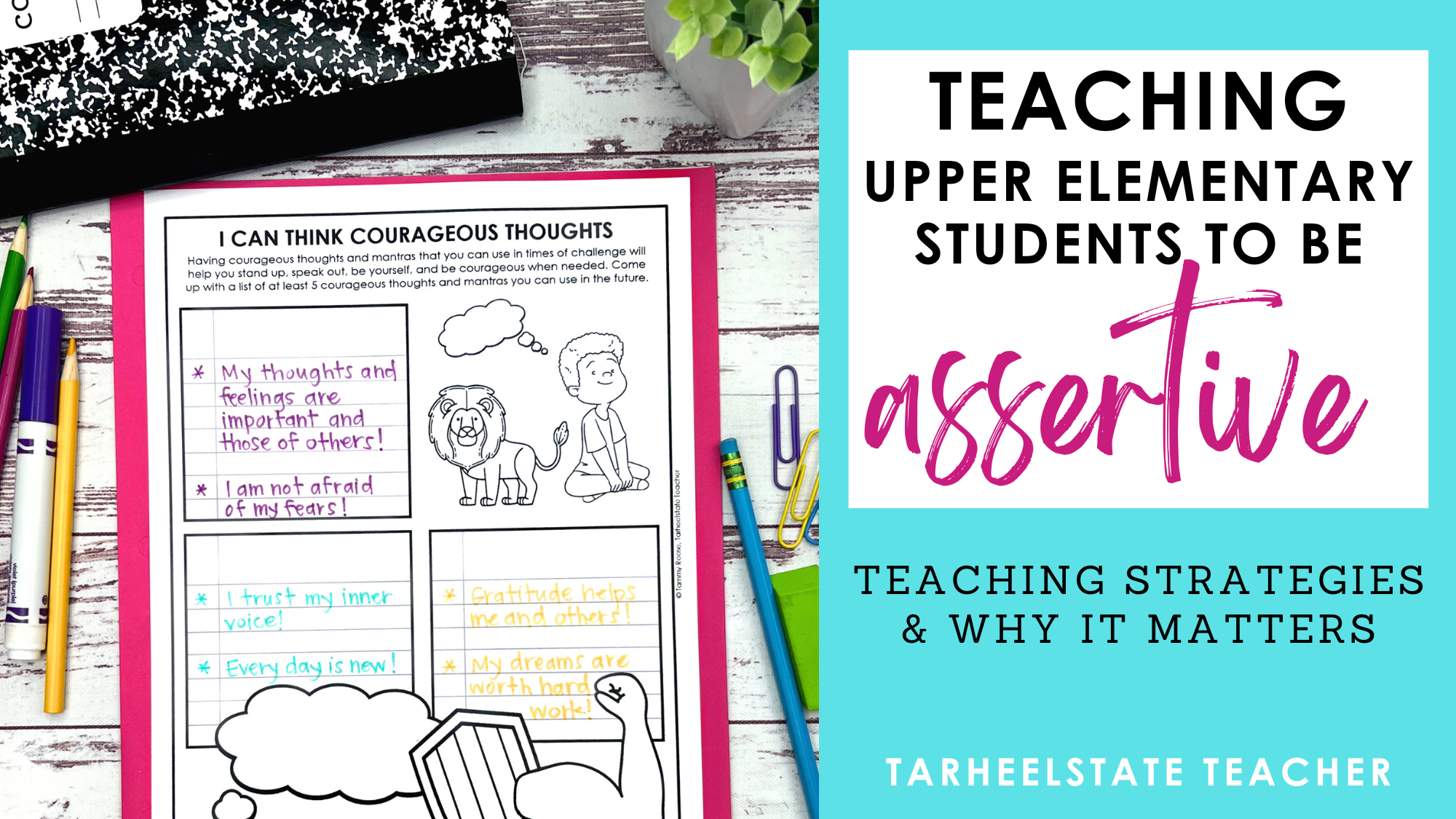
WHAT ASSERTIVENESS MEANS
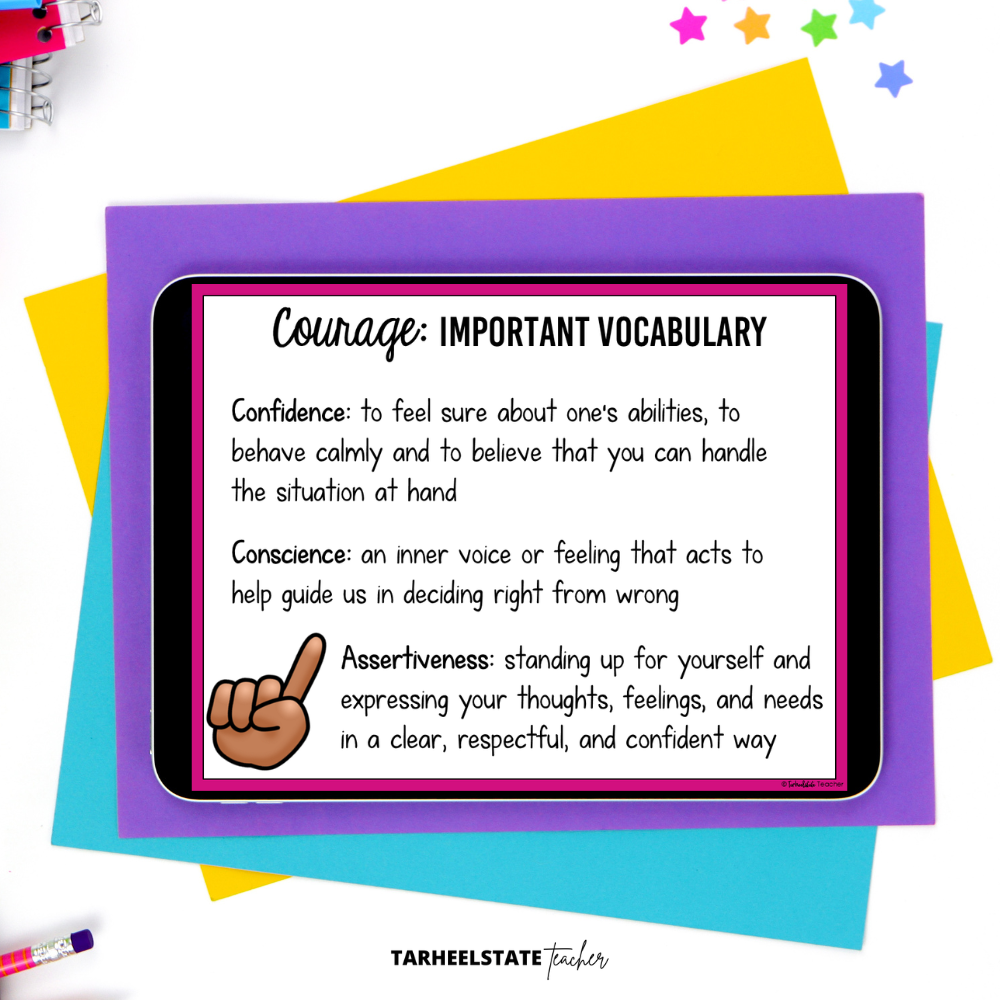
When introducing assertiveness to my students, I define it as “standing up for yourself and expressing your thoughts, feelings, and needs in a clear, respectful, and confident way “.
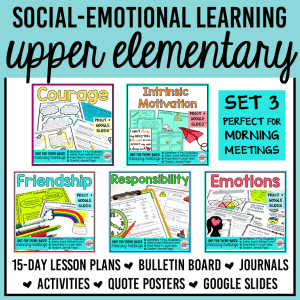
🌟 During my SEL Courage Unit, I display a bulletin board containing key vocabulary, related quotations, and anchor charts that we develop together and refer back to throughout the unit.
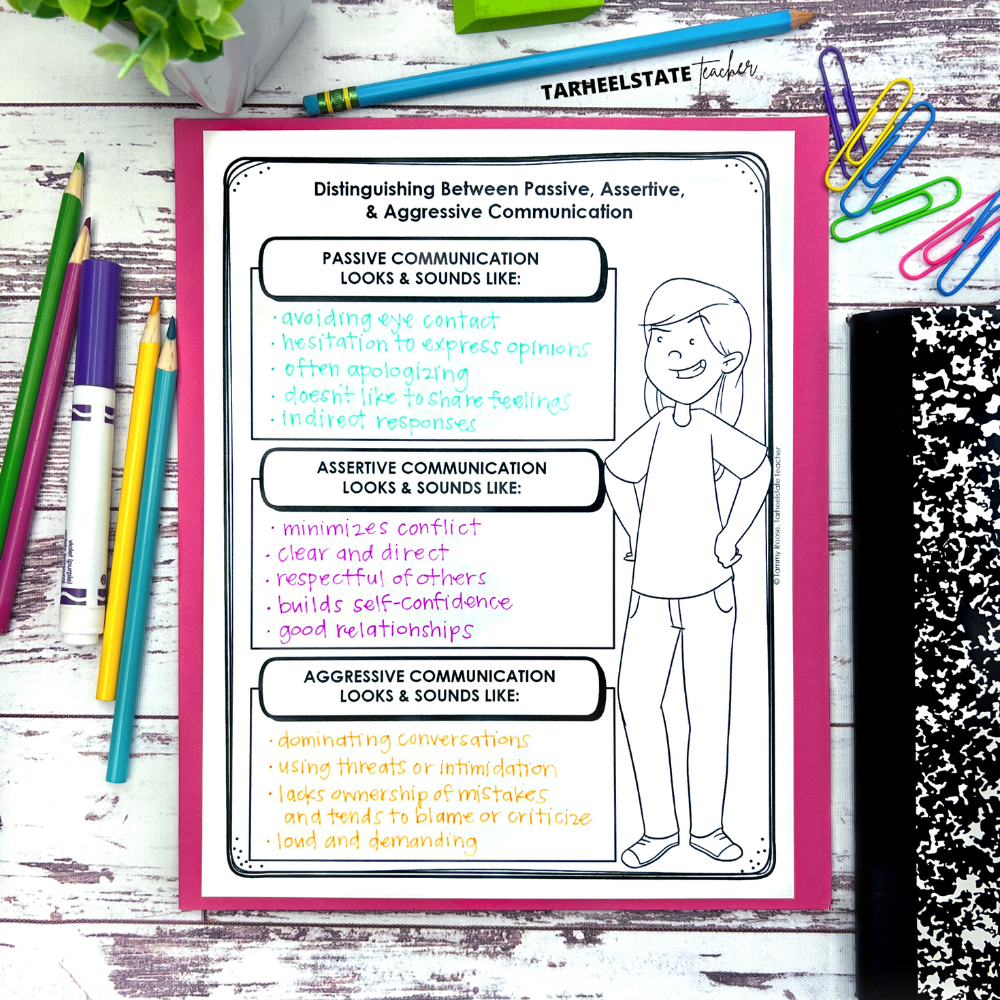
One of the first steps in teaching assertiveness is helping students understand the difference between passive, assertive, and aggressive communication styles. Here’s a simple breakdown to use with students:
- Passive: Not speaking up for oneself, allowing others to take control, and avoiding conflict.
- Aggressive: Speaking or acting in a way that is hurtful, forceful, or disrespectful to others.
- Assertive: Expressing one’s thoughts, feelings, and needs confidently and respectfully while considering others’ feelings.
To help students better understand these communication styles, I start by showing two short video clips: “What Is Assertiveness?” and “Communicate Assertively”. After watching, we discuss the differences between responding in a passive, assertive, and aggressive way — especially in situations that require courage.
Next, students complete the Distinguishing Between Passive, Assertive, & Aggressive Communication journal page. This activity encourages students to reflect on their own communication style and practice identifying examples of passiveness, assertiveness, and aggressiveness. I also make time for students to share their examples with the whole group, which helps reinforce the differences and gives them a chance to hear how others navigate similar situations.
SHARPENING ASSERTIVENESS SKILLS
Once students understand the difference between passive, aggressive, and assertive communication, the next step is to practice assertiveness in real-life situations. I love incorporating role-playing in my SEL Morning Meeting units and I think it is one of the most effective ways to help students sharpen their assertiveness skills and build confidence in their ability to respond assertively.
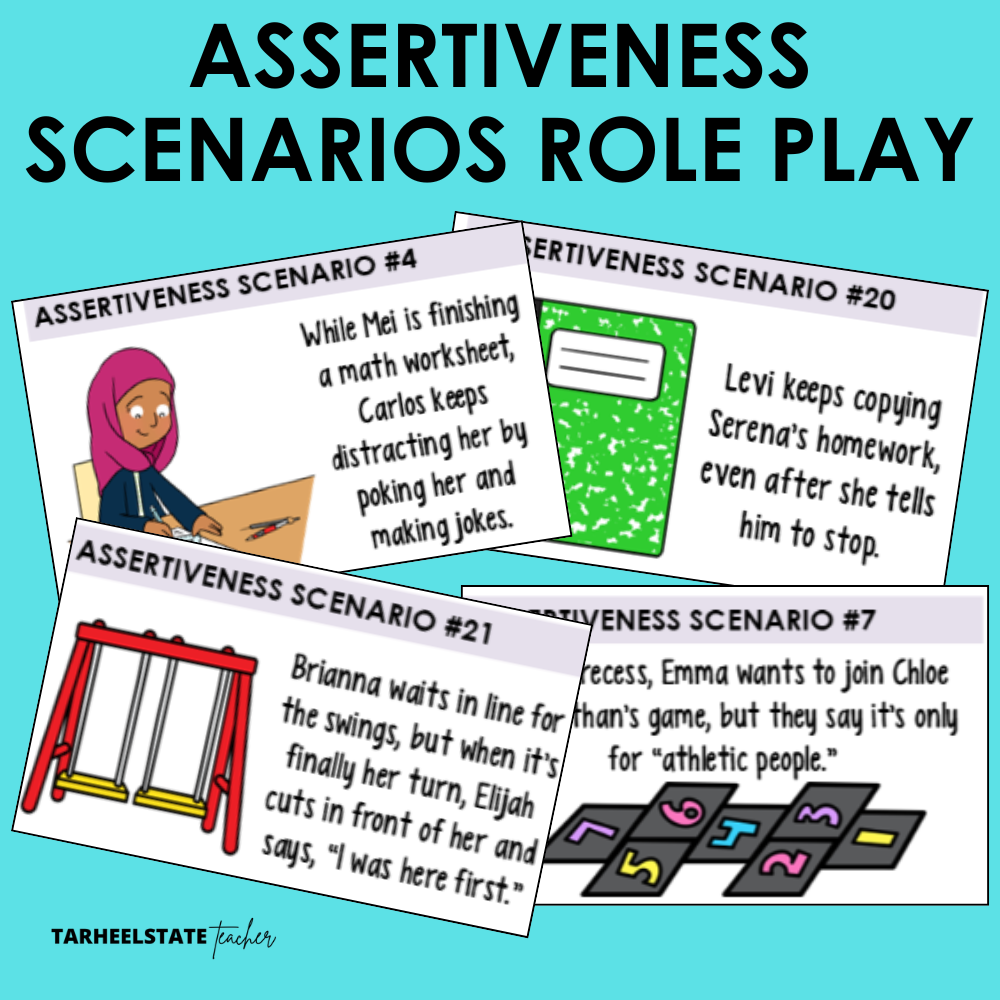
To give students meaningful practice, I use Assertiveness Scenario Cards as part of my SEL Courage Unit. In small groups, students work through different scenarios and model how to respond assertively. Here’s how I structure the activity:
- Divide students into small groups and ask them to choose 3–4 Assertiveness Scenarios to role-play together. Encourage them to focus on modeling how to respond assertively in each situation.
- After they’ve acted out the scenarios within their groups, invite each group to choose one scenario to perform for the whole class. This helps students learn from each other and see multiple examples of assertive responses.
After the role-plays, we hold a class discussion to reflect on the experience:
- How did it feel to respond assertively?
- What made the response assertive rather than passive or aggressive?
- Would it be easy or difficult to use this response in real life? Why?
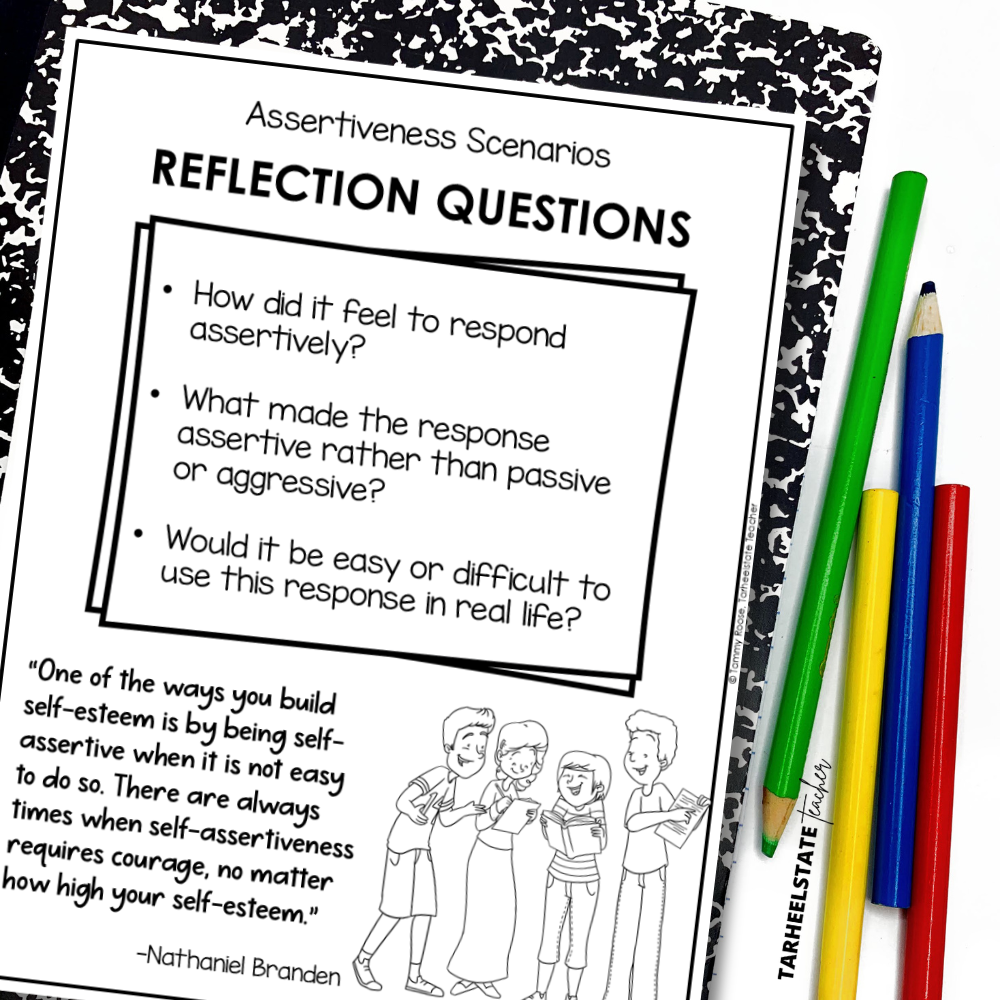
This activity not only reinforces the concept of assertiveness but also gives students the chance to practice responding confidently and respectfully in a low-stakes environment. It helps them see that being assertive doesn’t mean being rude or aggressive—it’s about standing up for themselves while still respecting others.
BUILDING ASSERTIVENESS AND COURAGE IN THE CLASSROOM
Once students understand what assertiveness looks like, the next step is to give them meaningful opportunities to strengthen their assertiveness skills. Just like courage, assertiveness is a skill that can be practiced and developed over time. Here are some effective ways to help students build confidence in expressing themselves assertively.
 You can do each of these suggested assertiveness activities for students with a reflection journal and materials you have around the classroom, but if you want some of the work done for you, you can check out my full Courage SEL unit, complete with lesson plans that make it super easy to implement and enjoy!
Reading aloud books where characters demonstrate courage and assertiveness — such as standing up for themselves, speaking up when they see something wrong, or asking for what they need — helps students see assertiveness in action. Look for books that highlight themes like friendship, fairness, and self-advocacy. As you read, pause to discuss how the character’s response was assertive rather than passive or aggressive. Encourage students to reflect on how they might respond in a similar situation. (You can see my recommended list of bravery books for teaching assertiveness and courage here).

2) Define the types of courage for students.
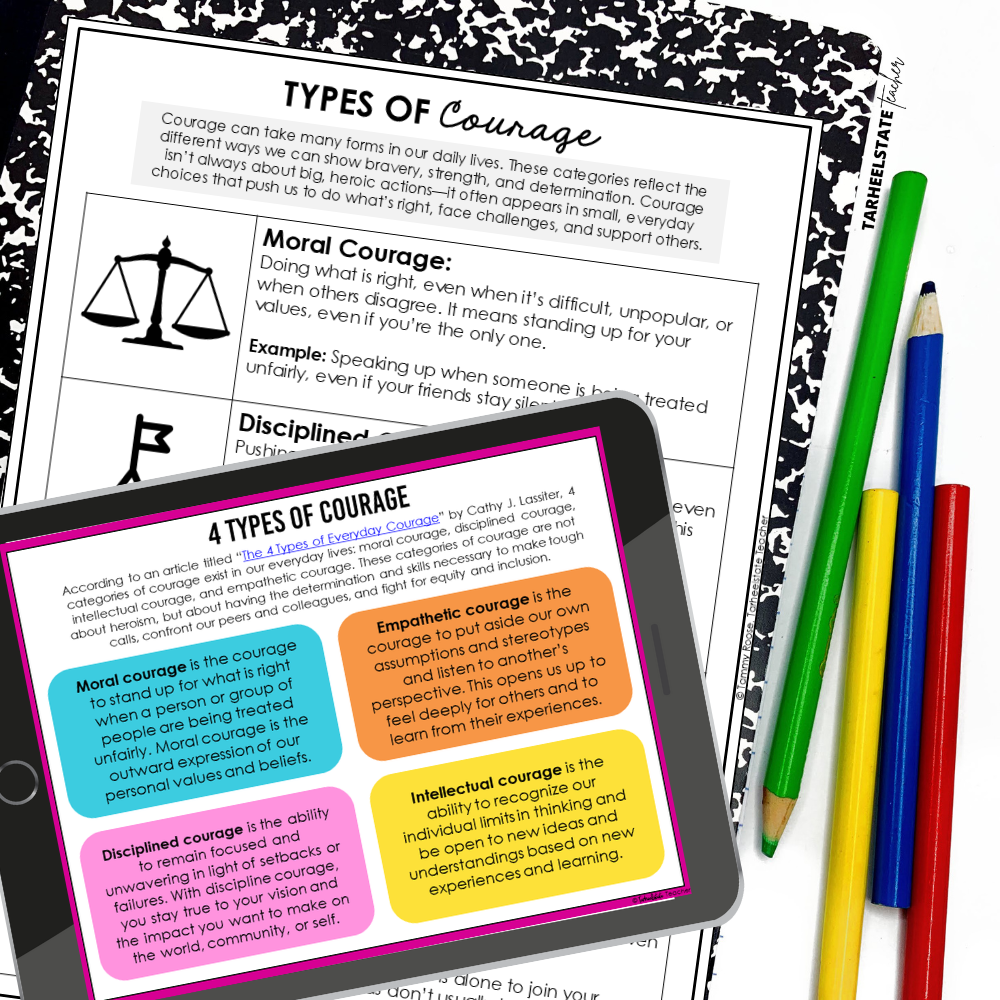
Teaching students about the different types of courage helps them understand that being assertive isn’t just about speaking up — it’s about recognizing what kind of courage a situation calls for. Here are the four types of courage I introduce to students and how they connect to assertiveness:
- Moral Courage – Standing up for what’s right when others are being treated unfairly or when something goes against personal values. Assertiveness requires moral courage when students speak out against bullying or unfair treatment, even when it’s uncomfortable.
- Disciplined Courage – Staying focused and determined even when things don’t go as planned. Students need disciplined courage to stay calm and assertive when facing setbacks or when their message isn’t immediately heard.
- Intellectual Courage – Being open to new ideas and understanding different perspectives. Assertiveness requires intellectual courage when students need to adjust their approach or listen to feedback while still holding firm to their core message.
- Empathetic Courage – Listening to others’ perspectives and understanding their feelings, even when it’s difficult. Assertiveness isn’t just about expressing your own thoughts; it also involves empathetic courage to listen respectfully and respond with understanding.
Helping students see how courage and assertiveness are connected empowers them to respond confidently in a variety of situations — whether they are advocating for themselves, supporting a friend, or speaking up about something important.
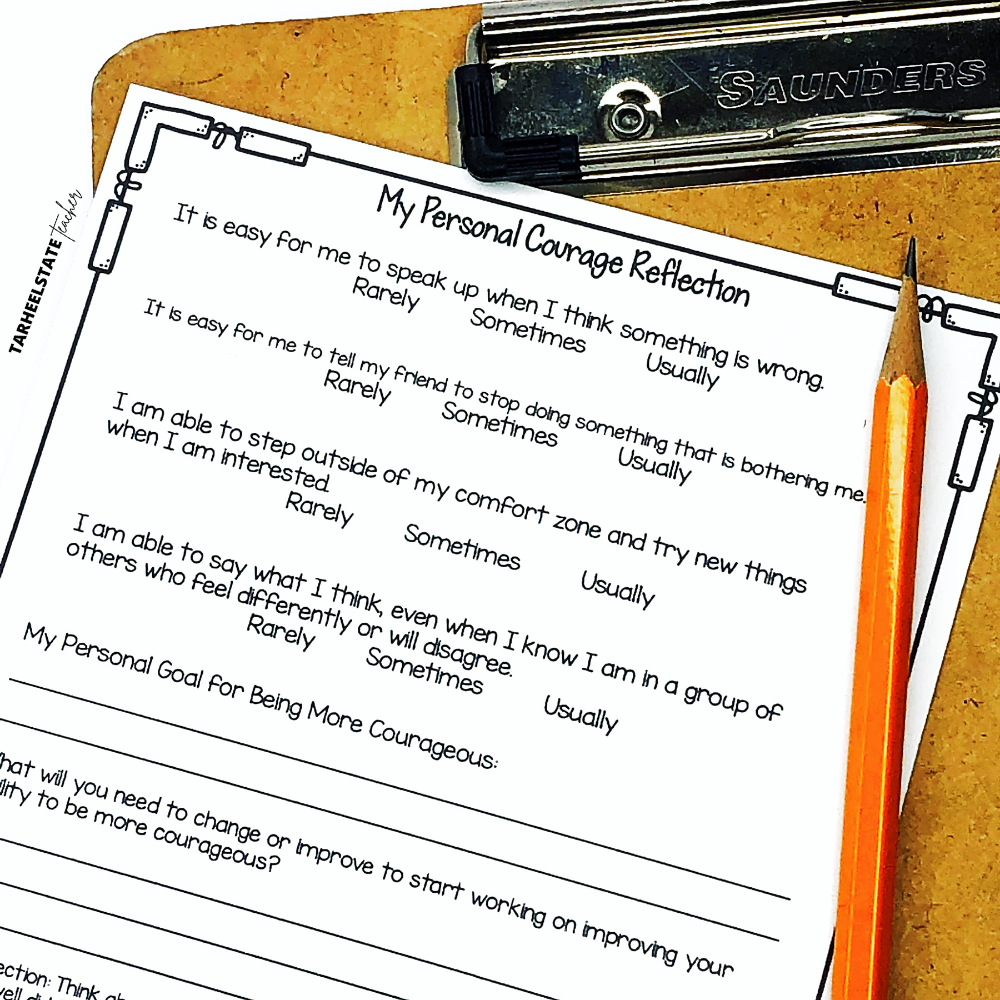
3) Encourage students to reflect on their own level of courage.
Self-awareness is a key step in helping students grow more assertive. I like to use personal courage reflections focused on how comfortable students feel standing up for themselves, expressing their thoughts clearly, and asking for help when needed.. This helps students recognize where they feel confident and where they might need more practice.
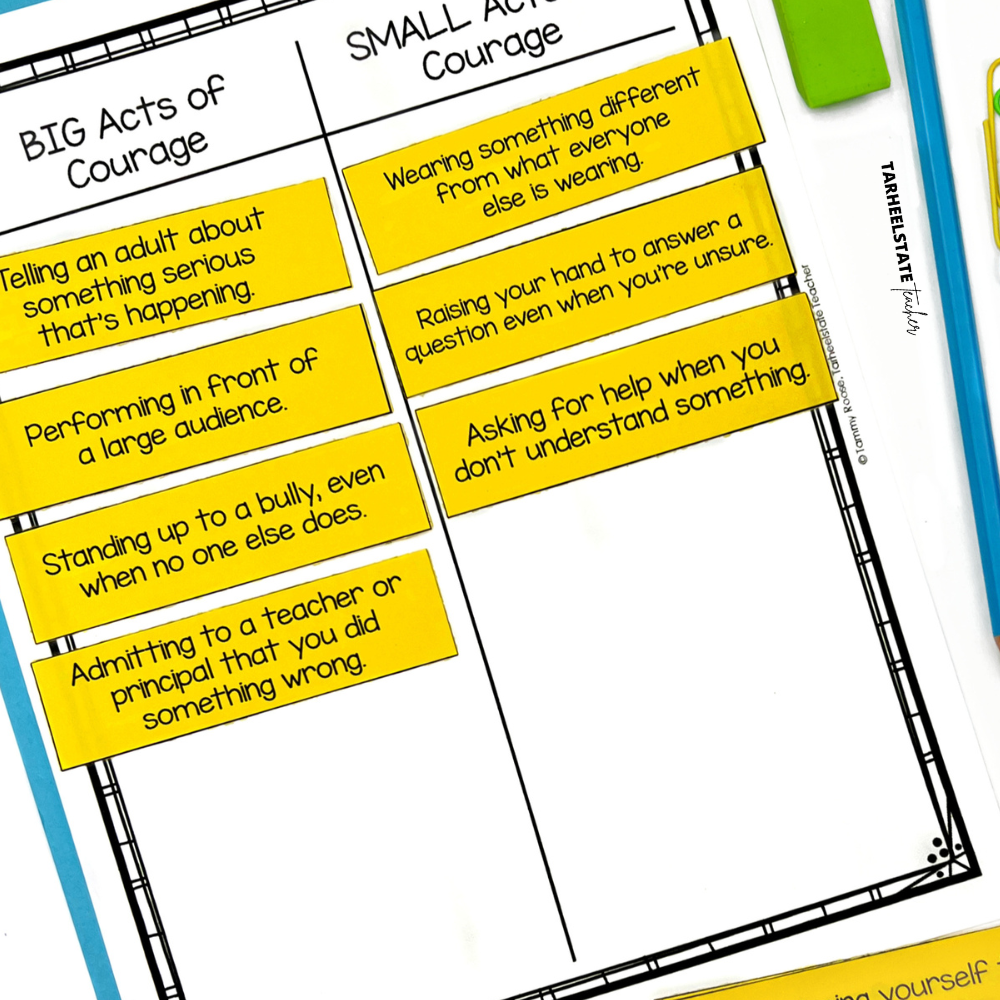
4) Highlight the importance of small acts of courage.
Courageous doesn’t always require big, bold actions — small, everyday acts of courage can be just as powerful. Teaching students to recognize and value these small acts helps them build confidence and strengthen their ability to be courageous and assertive over time. Discussing the difference between big and small acts of courage encourages students to see how even small moments, like asking for help or standing up for a friend, can have a meaningful impact.
Connecting this idea to the concept of a domino effect helps students understand how one small act of courage can lead to bigger positive changes. Encouraging students to reflect on their own small but courageous actions reinforces that assertiveness is built through consistent, everyday bravery.
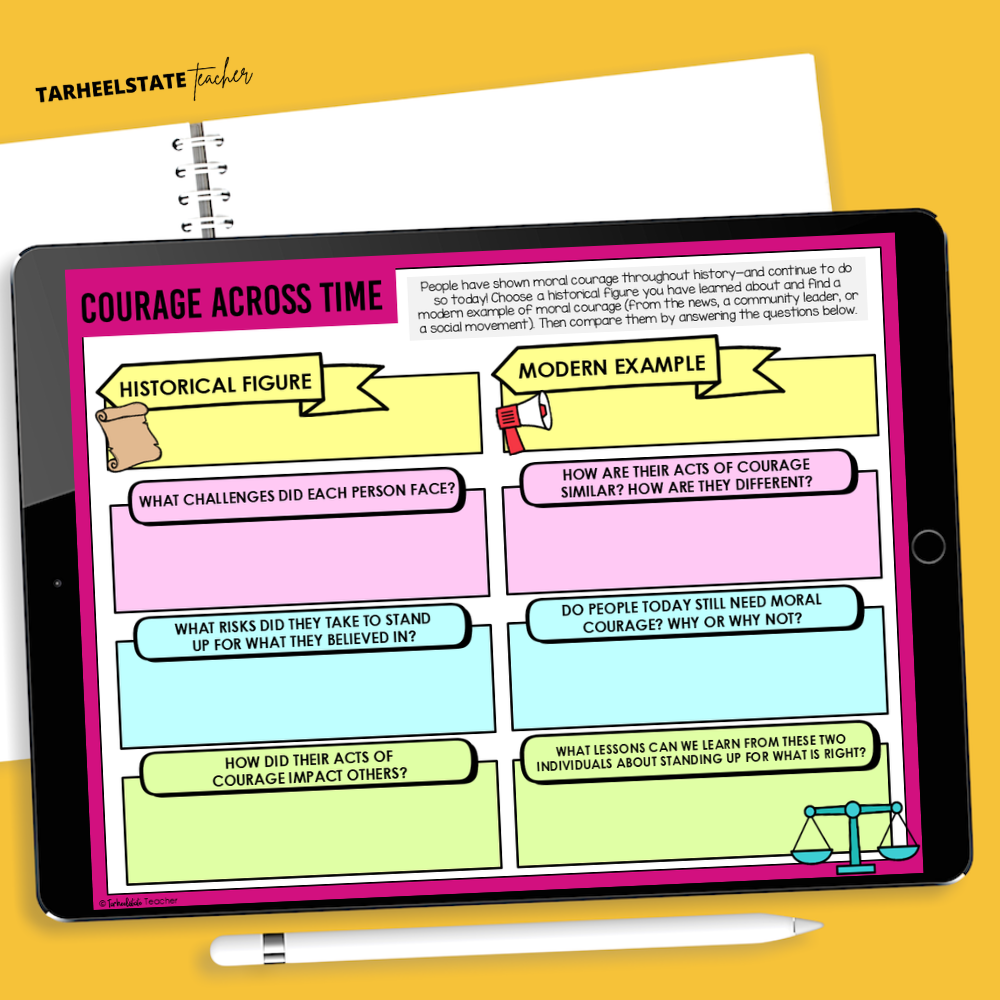
5) Study courageous and assertive role models.
Highlight historical figures, activists, or even fictional characters who have demonstrated courage and assertiveness in meaningful ways. Discuss how these individuals used courage to express their beliefs, solve problems, or stand up for others. Encourage students to reflect on how they can apply similar strategies in their own lives.
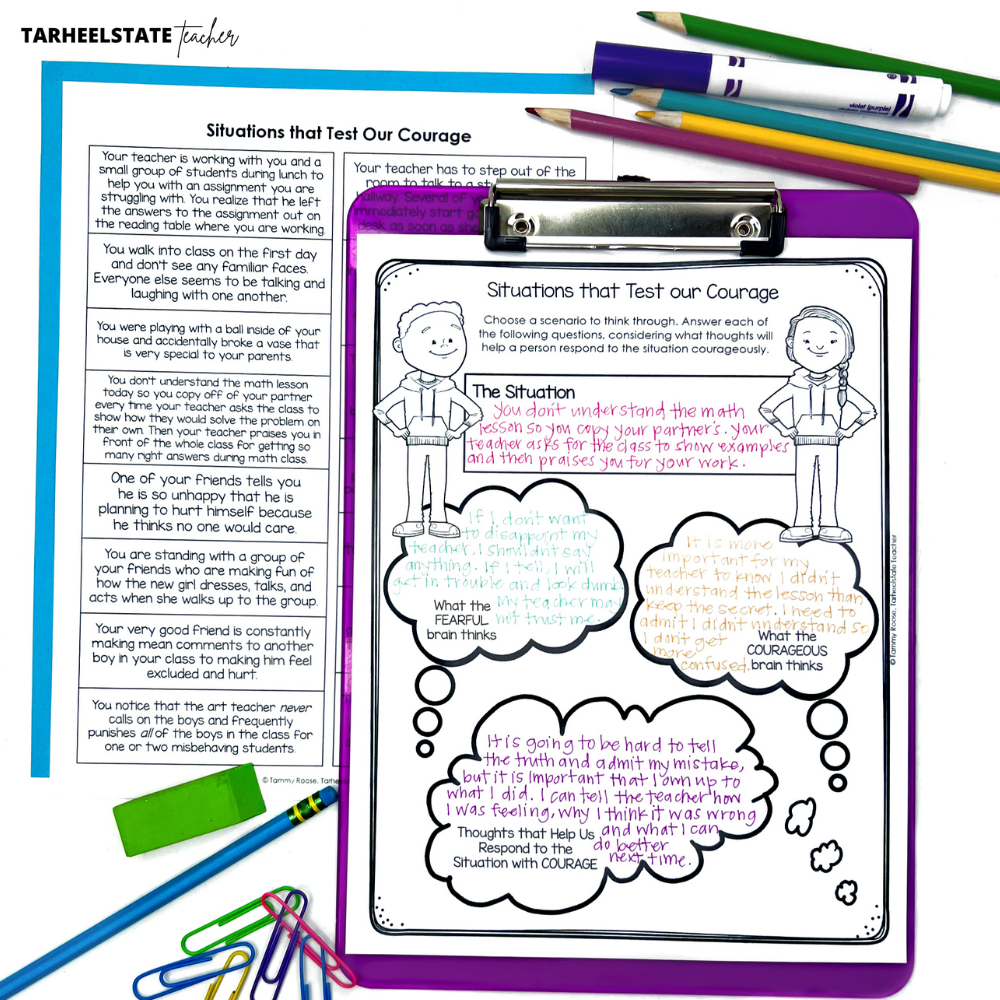
6) Develop assertive self-talk and mantras.
Helping students develop positive inner dialogue strengthens their ability to communicate assertively. In my SEL Courage Unit, I engage students in thinking through situations that test our courage and ask students what their “fearful brain” thinks about the situation, what their “responsible/courageous brain” thinks about the situation, and what mindset and thoughts they would use to respond to the situation with courage. This helps them develop “courageous thoughts” and mantras that will serve them in different situations and increase their ability to act with courage when necessary.
Assertiveness, like courage, takes time and practice to develop. By integrating these strategies into your daily classroom routines, you empower students to communicate confidently and respectfully — setting them up for stronger relationships and greater success both in and out of the classroom.
If you’re looking for more ways to keep building assertiveness and courage with your students, here are some other resources you may be interested in:
- Character Education SEL Courage Activity for Students gives you a ready-made lesson for helping students explore what courage looks like in real-life situations they can relate to.
- Courage Activities and Lessons for the Classroom shares a variety of engaging ways to bring courage to life in your classroom and give students meaningful practice speaking up and taking positive risks.
- 9 Bravery Books for Teaching Students About Courage highlights diverse, powerful read alouds that spark rich conversations about bravery, assertiveness, and standing up for what’s right.
- Complete Courage SEL Unit for upper elementary—this unit includes all of the activities you see in this post, editable lesson plans, suggested read alouds, student notebooks, and a bulletin board to help your unit make a lasting impression!
Let’s continue helping students grow into confident, courageous advocates for themselves and others.
NEED A DONE-FOR-YOU COURAGE AND ASSERTIVENESS UNIT?
The Courage SEL-Morning Meeting unit is a 20 day unit for upper elementary. It includes
 25 Days of Printable & Editable Lesson Plans — includes suggested read alouds, discussion questions, courage activities, extension ideas, and linked online resources
Student Journals & Activities — courage-related discussion prompts, self-reflection and goal setting exercises, and social emotional learning worksheets to deepen students’ understanding of courage and assertiveness, with activities like Problem-Solving Scenario Cards for Assertiveness Social Scenarios, Big and Small Acts of Courage Sorting Activity, Preparing Our Minds to Act with Courage, Examining Historical Courage in Stories, and more!
Courage Bulletin Board that includes important vocabulary like courage, moral courage, sacrifice, assertiveness, confidence, and conscience and inspirational quotations for a visual reminder of your courage and assertiveness lessons
Google Slides — Teacher and student versions to implement this unit digitally or use as visual prompts and discussion starters on your interactive whiteboard