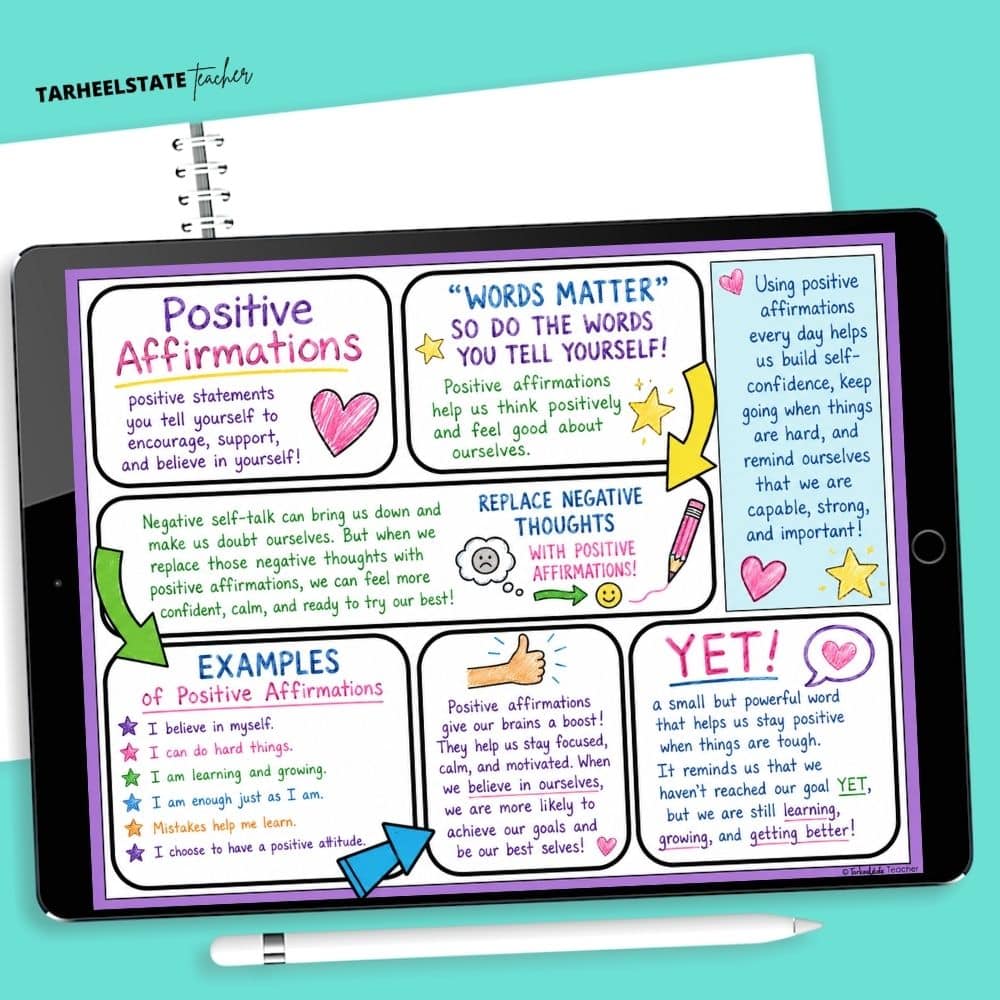
WHY ARE POSITIVE AFFIRMATIONS IMPORTANT?
Research on self-talk and mindset shows a clear connection between how students speak to themselves and how they perform. Negative self-talk like “I’ll never get this” or “I’m just not smart enough” raises stress, increases avoidance, and shuts down learning. I’m sure you know, this builds a wall to learning that is hard for a teacher to get through.
Positive affirmations do the opposite. They lower anxiety, build self-efficacy, and give students a way to talk themselves through difficult moments.
For upper elementary students especially, this matters. Kids at this age are starting to compare themselves to peers, develop strong opinions about what they’re “good at” or “bad at,” and form beliefs about their own intelligence that can stick with them for years. Teaching students positive affirmations gives them a tool to catch and revise those fixed-mindset beliefs before they harden into something more permanent.
The good news is that affirmations are teachable. With a few intentional activities and some consistent reinforcement, students can build a personal toolkit of phrases they actually use.
 You can do each of these suggested growth mindset activities for students with a reflection journal and materials you have around the classroom, but if you want some of the work done for you, you can check out my full Growth Mindset SEL unit, complete with lesson plans that make it super easy to implement and enjoy!
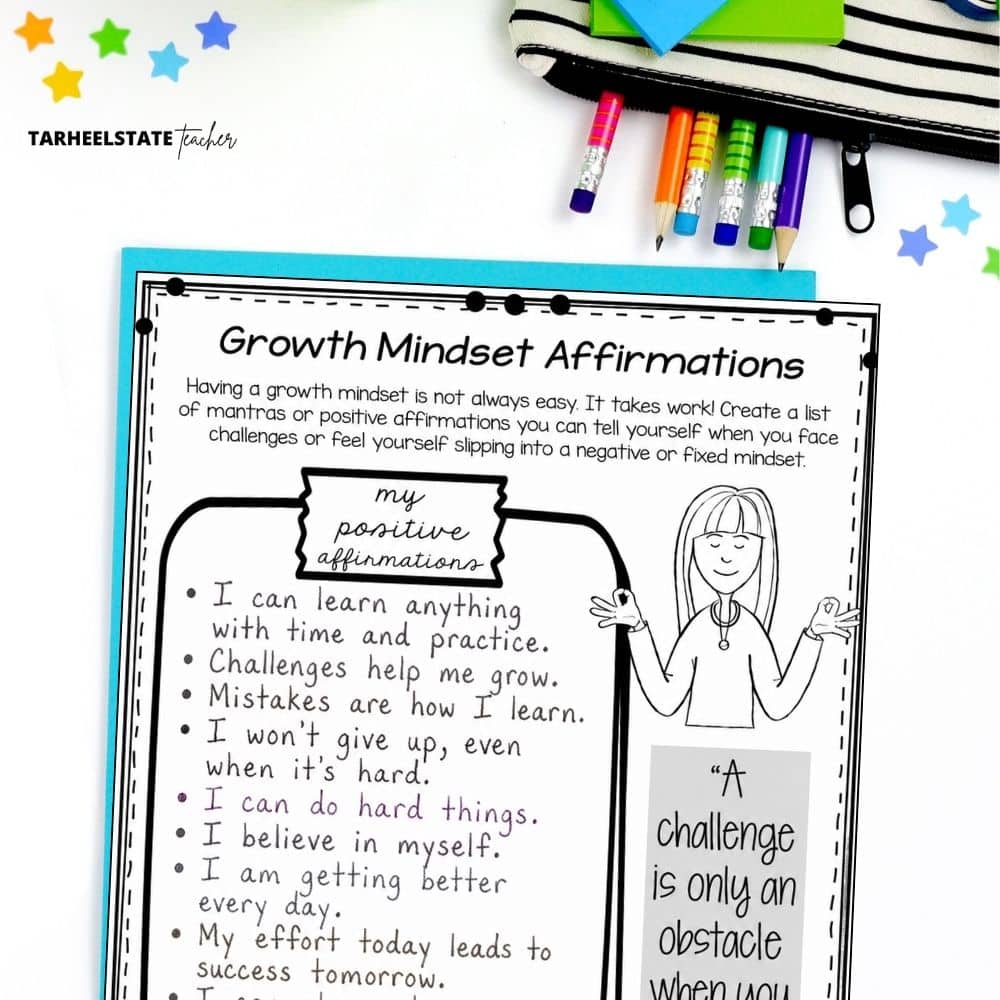
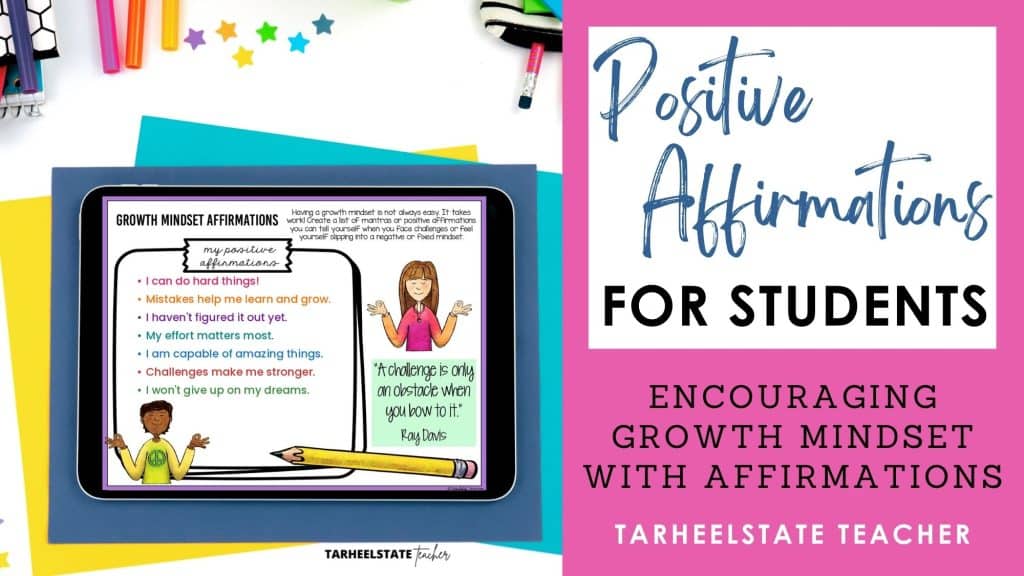
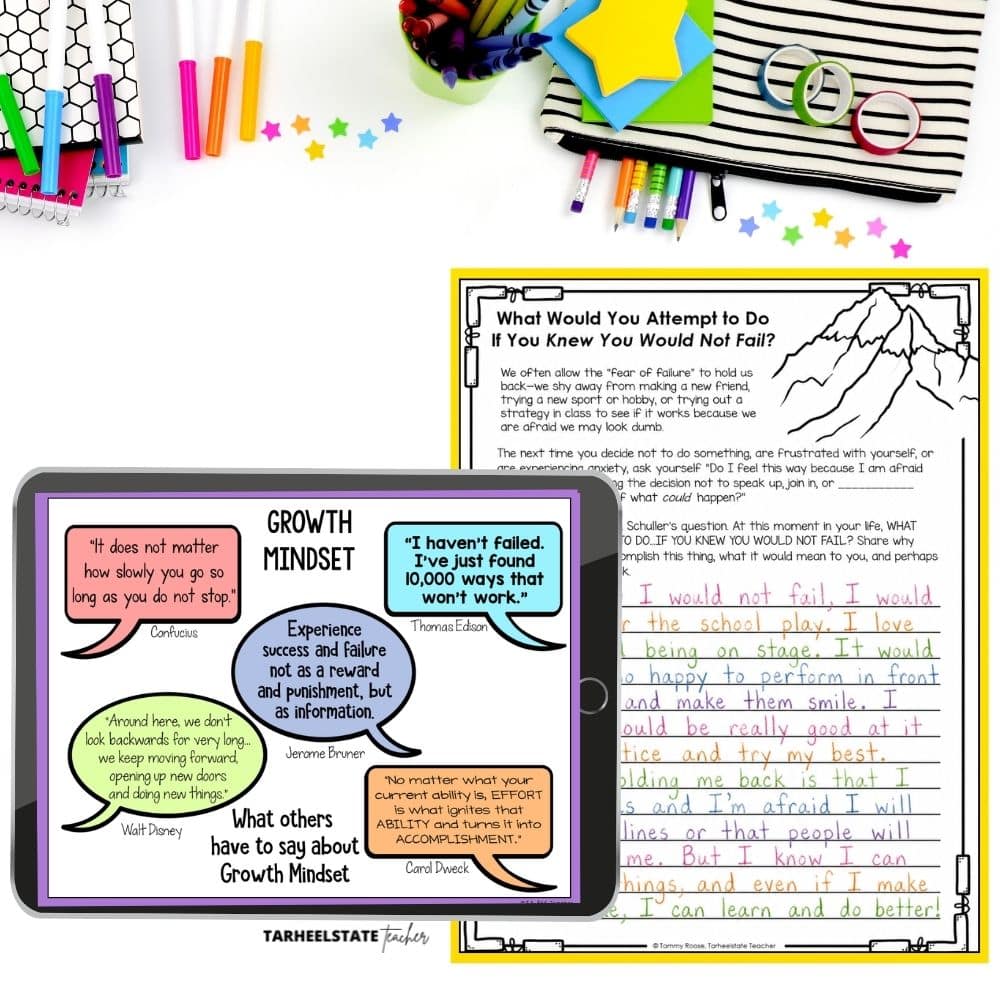
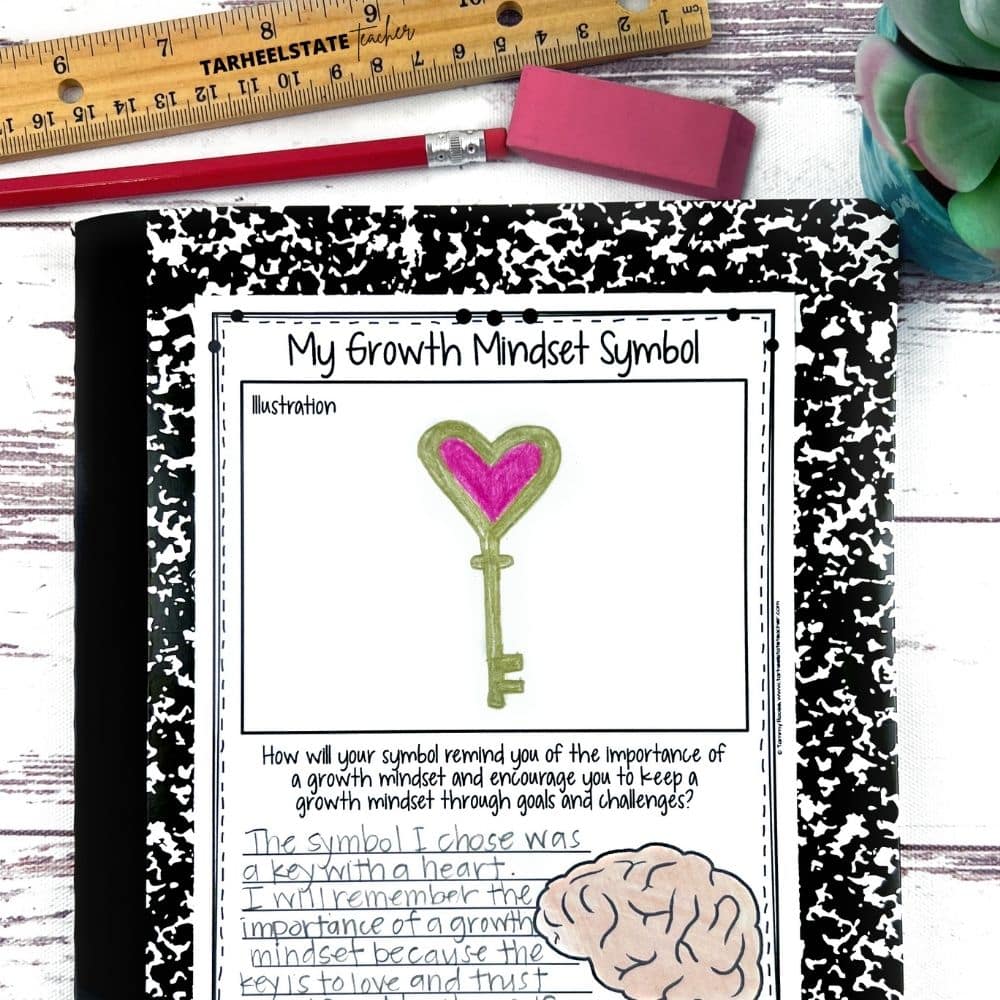
 In my Growth Mindset SEL Unit, the Growth Mindset Affirmations journal page gives students a quiet space to build their own list of mantras, paired with the Ray Davis quote “A challenge is only an obstacle when you bow to it” as inspiration. I love coming back to this page later in the unit so students can add new affirmations as their thinking grows.
2) FLIP FIXED-MINDSET STATEMENTS INTO GROWTH MINDSET AFFIRMATIONS
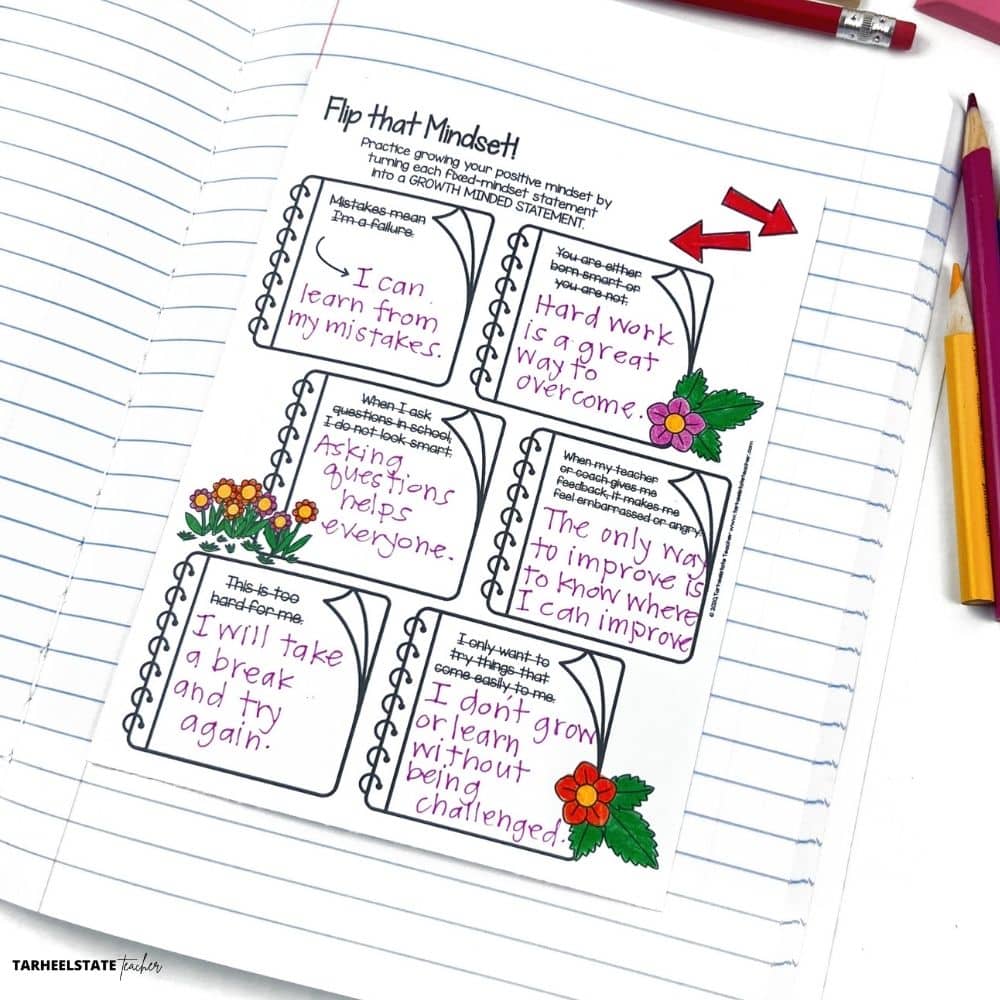
One of my favorite positive affirmations activities is asking students to take a fixed-mindset statement and rewrite it as something a growth-minded person would actually say. “Mistakes mean I’m a failure” becomes “Mistakes help me learn.” “I’m not smart enough for this” becomes “I haven’t figured this out yet.” This activity does double duty. Students practice catching fixed-mindset thinking, and they build a real bank of growth mindset affirmations they can pull from later.
The Flip That Mindset journal page in my unit gives students six fixed-mindset statements to rewrite. It works great for partner work, and watching kids workshop their rewrites is one of the clearest ways to see whether the affirmation skill is really sticking.
GIVING STUDENTS A STRONGER INNER VOICE
Affirmations work best with consistency. A single journal page won’t permanently change how a student talks to themselves. Daily exposure to growth-minded language slowly shifts the default. When paired with the bigger growth mindset conversation about effort, mistakes, and the power of yet, affirmations become part of how students approach their own learning. For more on that bigger conversation, take a look at my post on the difference between growth mindset and fixed mindset for the activities and examples that build the foundation affirmations sit on top of.
The clearest sign that the practice is working is when students start reaching for these phrases on their own, often during the messiest moments of the school day, without anyone reminding them to.
NEED A DONE-FOR-YOU GROWTH MINDSET UNIT?
The Growth Mindset SEL Morning Meeting unit is a 20 day unit for upper elementary. It includes
 20 Days of Printable & Editable Lesson Plans — includes suggested read alouds, discussion questions, growth mindset activities, extension ideas, and linked online resources
Student Journals & Activities — growth mindset-related discussion prompts, self-reflection and goal setting exercises, and social emotional learning worksheets to deepen students’ understanding of growth mindset and the power of yet, with activities like “Flip That Mindset” for Revising Fixed Mindset Statements, Growth Mindset Story Rewrite to Incorporate the Power of Yet, Analyzing Situations That Test Our Mindset, Growth Mindset Affirmations, and more!
Growth Mindset Bulletin Board that includes important vocabulary like growth mindset, fixed mindset, neuroplasticity, effort, resilience, and perseverance and inspirational quotations for a visual reminder of your growth mindset and power of yet lessons
Google Slides — Teacher and student versions to implement this unit digitally or use as visual prompts and discussion starters on your interactive whiteboard